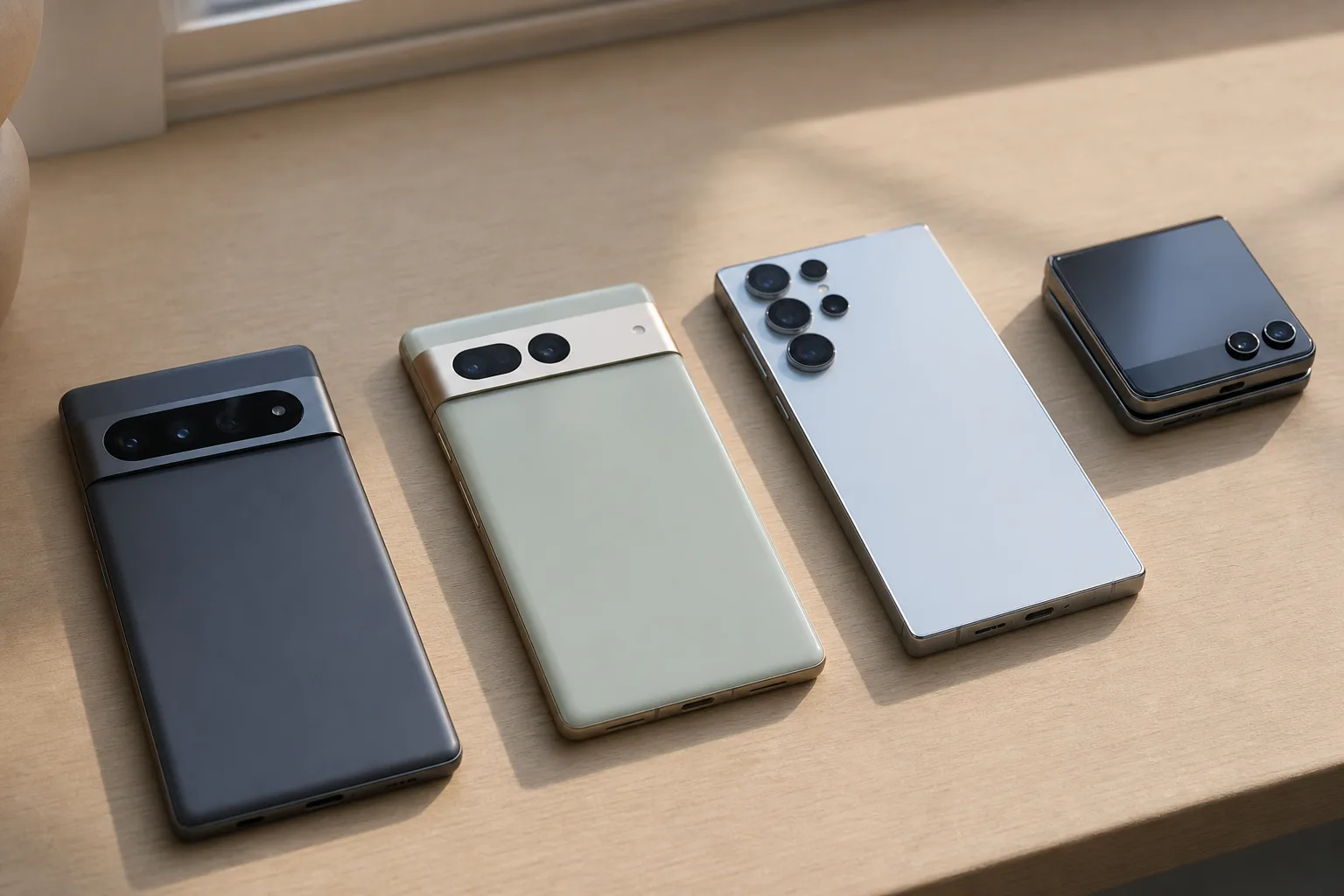
- The best Pixel 11 alternatives give you flagship speed and serious cameras without asking you to swallow the full upfront price.
- Samsung’s Galaxy S26 is among the strongest Pixel 11 alternatives for buyers who refuse to compromise on flagship chip performance.
- The Pixel 10a delivers much of Google’s everyday Android experience for $400 less, though its older silicon has obvious limits.
- A compact foldable such as the Galaxy Z Flip 8 offers a different answer to increasingly large conventional flagship phones.
Table of Contents
The Pixel 11 alternatives make more sense than usual
The regular Pixel has always been Google’s sensible flagship: the one you buy when you want the clean Android experience and Google’s camera processing without crossing into four-figure-phone territory. That calculation gets harder with the $899 Pixel 11. At that price, the best Pixel 11 alternatives aren’t fringe picks. They expose exactly where Google chose to economize.
The Pixel 11 still has a lot going for it. Its 6.3-inch display is compact by 2026 standards, it carries a 4,985mAh battery, and Google remains better than almost anyone at turning a phone camera into a point-and-shoot tool that produces a shareable photo. But this year’s base model is also caught in an awkward spot: too costly to be a casual recommendation, while its own Pro sibling and Samsung’s direct rival make sharper arguments at either end of the value equation.
Google says its Tensor G6 brings 20% better efficiency, 25% quicker web browsing, and 15% faster app launches. Those are welcome claims, but they’re also carefully selected ones. The company hasn’t published the chip’s detailed CPU arrangement or GPU model, which leaves performance-minded buyers comparing Pixel 11 alternatives and waiting for independent testing before treating those percentages as a verdict.
My read is simple: $899 is where a buyer should stop accepting vague promises. These are the phones I’d consider before defaulting to the standard Pixel.
Samsung Galaxy S26: the performance-first Pixel 11 alternative
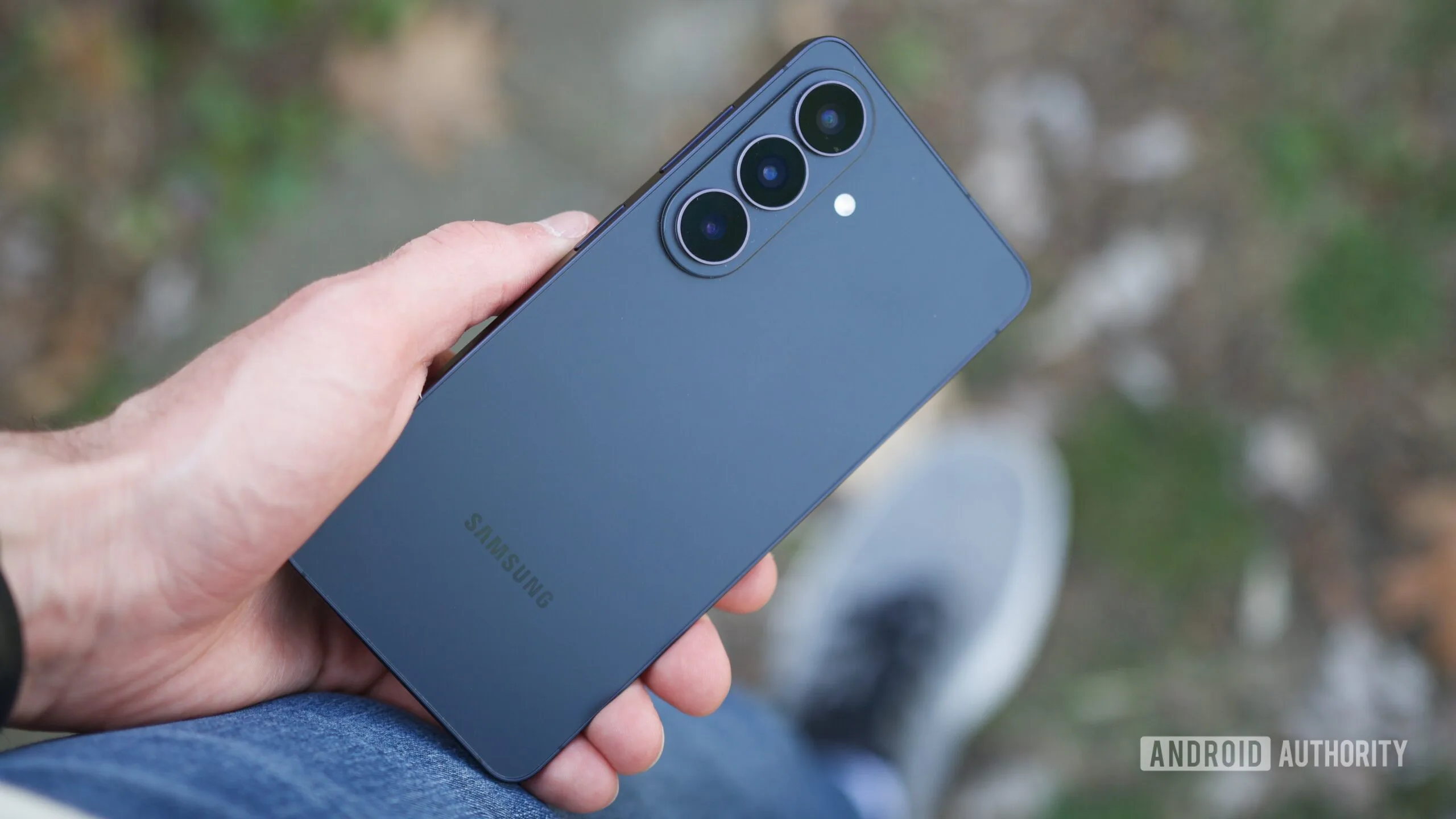
Among the Pixel 11 alternatives, the Samsung Galaxy S26 is the obvious choice for someone who wants a small flagship but doesn’t want to gamble on Tensor performance. Samsung’s 6.3-inch model occupies nearly the same physical category as Google’s phone, with three rear cameras and a familiar premium slab design. The difference is the processor.
Qualcomm’s Snapdragon 8 Elite Gen 5 for Galaxy is already the known quantity here. It should have plenty of headroom for demanding games, video work, sustained multitasking and the inevitable pile of AI features that now ship on every expensive phone whether we asked for them or not. Tensor chips have improved, but Google’s track record still includes the sort of heat, modem and peak-performance complaints that make spec-conscious shoppers nervous.
Samsung also has a stronger case for people who like to arrange their phone their way. One UI 8.5 generally offers more multitasking tools and customization than Google’s stripped-back Android 17 vision. Samsung has packed its software with Galaxy AI and Google AI options, yet it also offers a single setting to disable cloud-based AI features. That’s a practical privacy control, not merely a line in a keynote.
The trade-off is real. The Galaxy S26 is thinner and lighter, but it has a smaller battery and a less ambitious camera package than Google’s offering. Still, if your personal definition of a flagship starts with no-compromise speed, this is one of the Pixel 11 alternatives that needs no special pleading.
Pixel 11 Pro: pay more, but get the phone Google really built
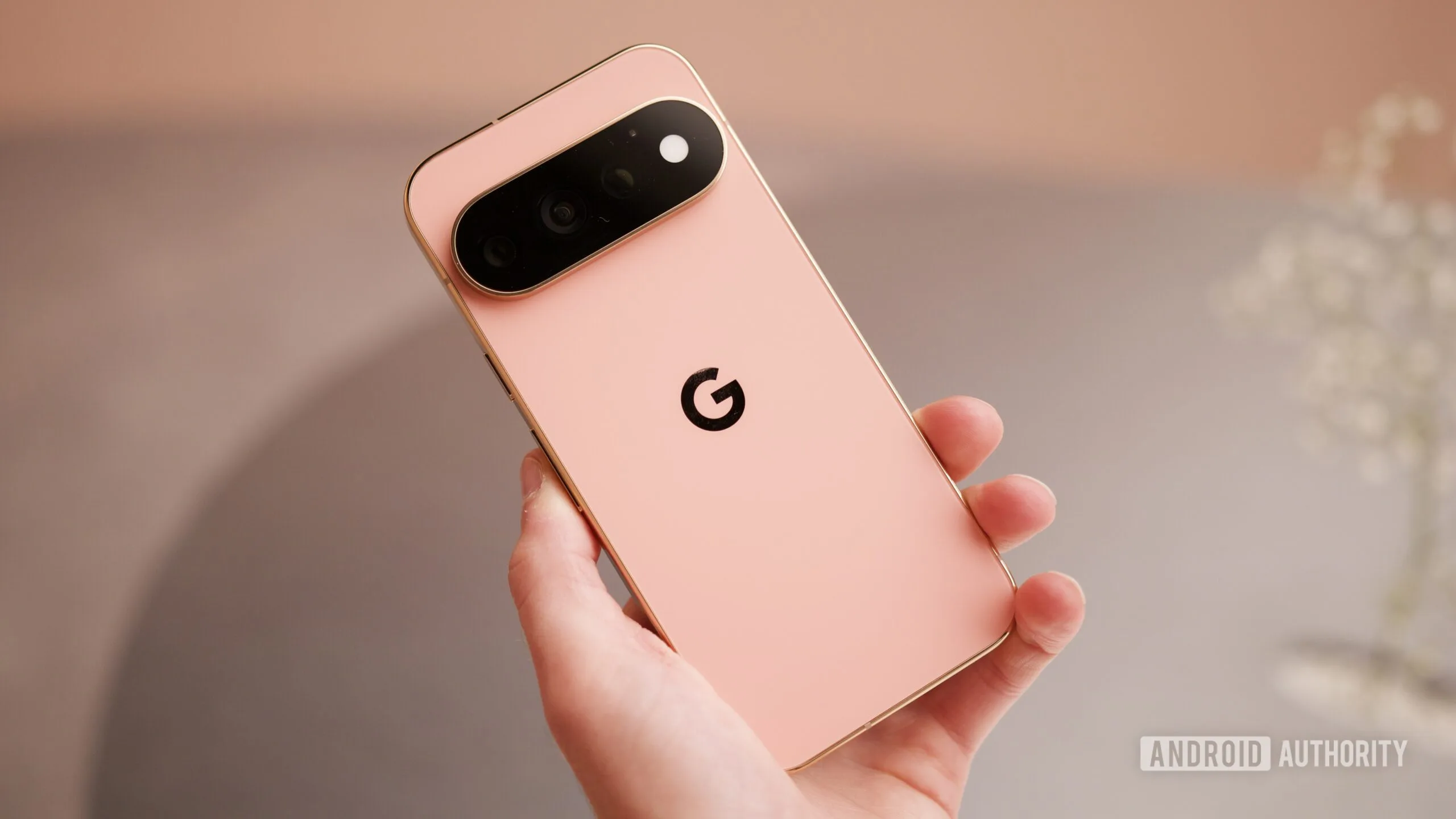
This may sound like a frustrating answer, because it is: the most persuasive upgrade from the Pixel 11 is often Google’s own Pixel 11 Pro. It adds $200 to the bill while retaining the same 6.3-inch footprint, but the spec gap is wide enough that the Pro feels less like a luxury trim and more like the fully realized version of the product.
The Pixel 11 Pro gets a 1,280 by 2,856 display rated at up to 3,600 nits, compared with the regular phone’s less detailed panel. More importantly, it has the camera hardware buyers expect at this price: a 50MP main camera, 48MP ultrawide, and 48MP 5x telephoto. The standard Pixel 11 makes do with a 13MP ultrawide and a 10.8MP telephoto. Google’s computational photography can narrow some gaps, but it can’t create the light gathering or detail that more capable hardware starts with.
The front camera tells the same story. The Pro’s 42MP sensor is built for people who actually use video calls, selfies and social video regularly; the base model’s 10.5MP unit reads like an uncharacteristically conservative choice from Google. The Pro also receives HiLight, the colored dot integrated into its camera bar, though its practical purpose remains limited for now.
For shoppers weighing Pixel 11 alternatives, the Pixel 11 Pro is the most defensible choice if the Google experience is what you want. It’s expensive, frankly, but at least the extra money is visible in the hardware you’ll use every day.
Pixel 10a: the $499 reality check
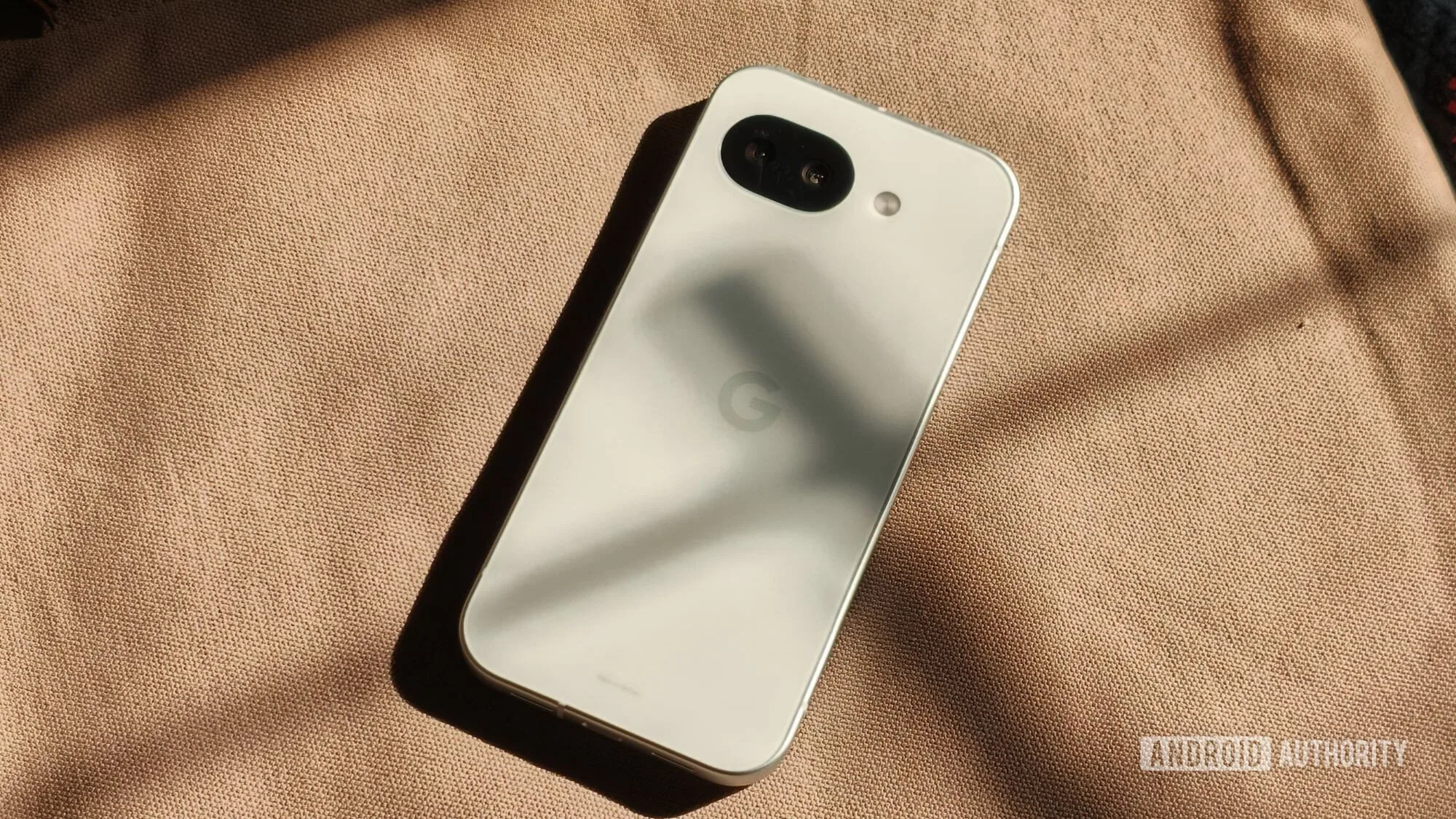
The Pixel 10a is the phone that makes the Pixel 11’s price increase look particularly bold. At $499, it costs $400 less and still gives buyers a 6.3-inch 120Hz screen rated at 3,000 nits, matching the headline display figures of the newer flagship. That is a remarkable overlap, and it puts the Pixel 10a near the top of any honest list of Pixel 11 alternatives.
It does look and feel more budget-conscious. The bezels are larger, the body is 9mm thick, and its Tensor G4 chip, 8GB of RAM and UFS 3.1 storage are clearly behind current flagship hardware. Don’t buy it expecting benchmark glory or console-class gaming. Buy it because the basics are unusually well covered: a flat rear panel, a larger 5,100mAh battery, a 48MP main camera and a 13MP ultrawide.
The larger omission is magnetic hardware. The Pixel 10a lacks internal magnets for Qi2, MagSafe-compatible and Google Pixelsnap accessories. Anyone who has built a desk or car setup around magnetic charging will notice. For everyone else, that missing ring may be far easier to live with than an additional $400 on a credit-card statement.
Galaxy Z Flip 8: choose a form factor, not another slab
There’s one more reason to look beyond the ordinary Pixel 11 alternatives: conventional phones have quietly become big again. A 6.3-inch handset is no longer tiny in the hand or especially unobtrusive in a pocket. If compactness is the real goal, Samsung’s Galaxy Z Flip 8 offers an entirely different proposition by folding a large inner display into a smaller shape.
Foldables still demand compromises. They cost more, durability remains a consideration, and their camera systems rarely beat the best traditional flagships at the same price. But a Flip is not for the buyer running a spreadsheet of sensor sizes. It’s for the person who wants a phone that takes up less space when it’s closed and can handle quick notifications on an outer display. That everyday convenience is hard to communicate in a specification table, much like trying to explain why a hatchback is easier to live with than a sedan.
Motorola’s Razr line is also worth watching in this category, especially for shoppers who prefer its cover-screen approach and often aggressive promotions. The broader point is that at $899, Google is no longer competing only with similar glass rectangles.
What the Pixel 11 decision really comes down to
The right choice among these Pixel 11 alternatives depends less on brand loyalty than on the compromise you care about most. Choose the Galaxy S26 for speed and software flexibility. Choose the Pixel 11 Pro for Google’s best camera hardware in a manageable size. Choose the Pixel 10a if value matters more than benchmarks. Choose a Galaxy Z Flip 8 if you’re tired of carrying what amounts to a small television in your jeans.
Google’s own official store makes the family resemblance clear, but it also reveals the problem: the base Pixel no longer has much room to hide between a genuinely cheaper Pixel and a visibly superior Pro. The Pixel 11 may prove excellent once serious testing lands. Yet if Tensor G6 results are merely adequate, Google will have made the regular Pixel the hardest phone in its lineup to recommend—and that’s a strange place for what used to be the default Android flagship.
Frequently Asked Questions
What are the best Pixel 11 alternatives for performance?
Samsung’s Galaxy S26 is the clearest choice for buyers prioritizing speed. Its Snapdragon 8 Elite Gen 5 for Galaxy chip is expected to outperform Google’s Tensor G6, whose detailed CPU and GPU specifications were not disclosed at launch.
Is the Pixel 10a a better value than the Pixel 11?
For many people, yes. At $499, the Pixel 10a costs $400 less while retaining a 6.3-inch 120Hz display and a 5,100mAh battery. Buyers give up newer performance hardware, faster storage, slimmer hardware, and built-in Qi2-style magnetic accessory support.
Should I buy the Pixel 11 Pro instead of the regular Pixel 11?
The Pixel 11 Pro makes sense for people who care deeply about photography and display quality. It costs $200 more, but adds a sharper, brighter panel, stronger ultrawide and telephoto cameras, 5x optical zoom, and a much higher-resolution selfie camera.