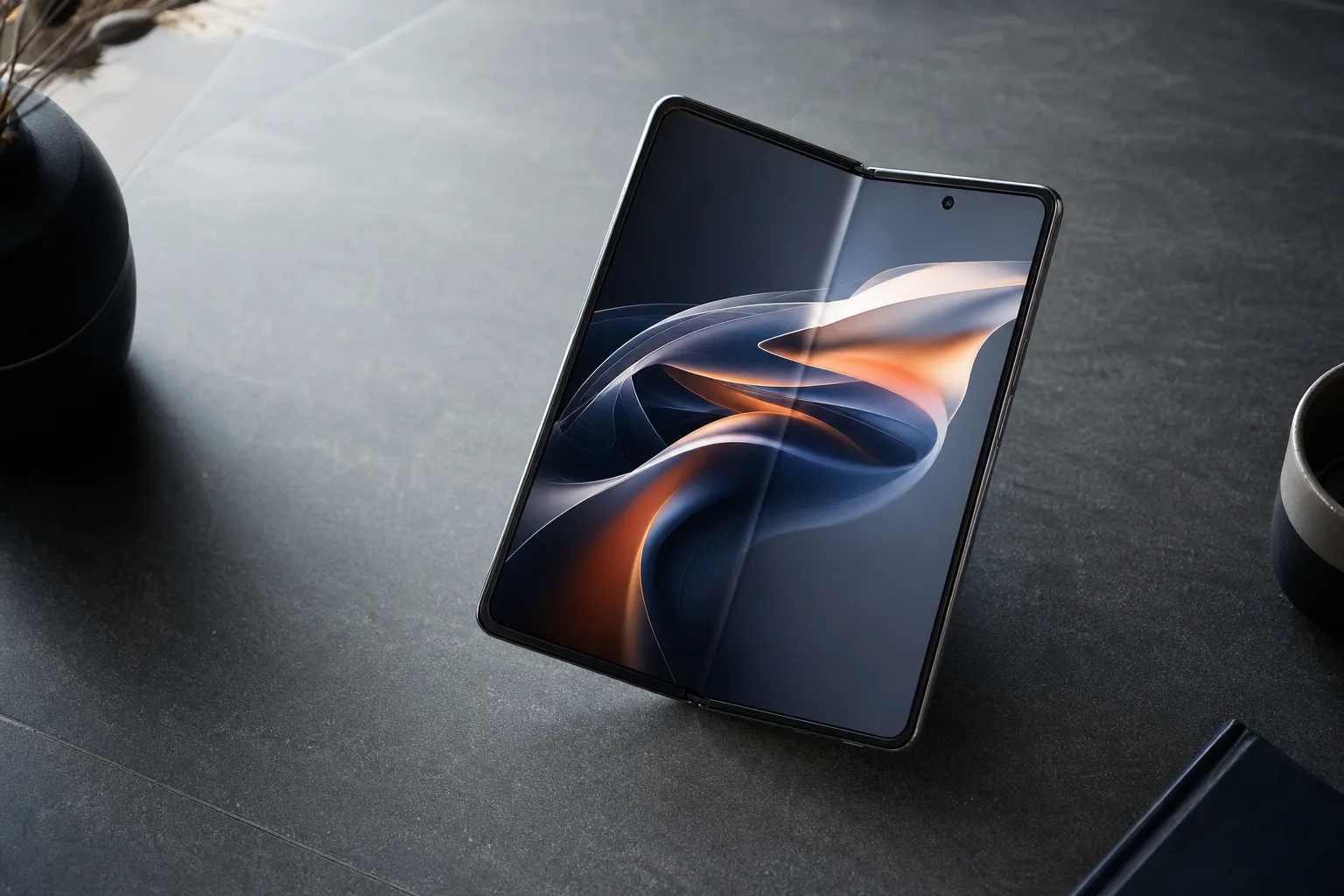
Apple’s long-rumored foldable iPhone Ultra may be close enough to touch, but the first buyers could face the sort of availability headache that turns a product launch into a weekly refresh ritual. New supply-chain chatter points to a September debut, potentially across several markets, with one big catch: there may simply not be many of them.
- The foldable iPhone Ultra is reportedly still on track for a September reveal, though launch-day inventory could be exceptionally tight.
- Early foldable iPhone Ultra availability may extend beyond the United States, despite earlier suggestions of a US-only rollout.
- Reports point to hinge assembly as Apple’s toughest production task, even as suppliers appear to be moving into mass production.
- The Ultra branding remains unsettled, with one leaker expecting Apple to save it for a future twentieth-anniversary iPhone.
Table of Contents
Foldable iPhone Ultra supply could define the launch
The most consistent detail in the latest reporting is not the display, the cameras, or the price. It’s scarcity. Weibo leaker Fixed Focus Digital says the initial shipment will be “extremely limited,” while citing the expectation that Apple’s supply chain will need roughly three to five months to reach a 10 million-unit production target.
That figure needs a little perspective. Ten million phones is hardly a boutique run in the broader smartphone business, but it is a serious ramp for an entirely new iPhone form factor. Apple can build standard iPhones at a scale few companies can match; folding hardware is another matter. A device with a large flexible display, a complex hinge, two usable screen configurations, and iPhone-level reliability expectations is much closer to building a watch with a tiny mechanical joint than assembling another slab of glass and aluminum.
My read is that Apple will deliberately accept scarcity if the alternative is shipping a foldable that creases badly, gathers dust around its hinge, or develops display problems a year later. Samsung has spent seven generations working through those compromises with the Galaxy Z Fold line. Apple has watched from the sidelines, which gives it the benefit of hindsight but also removes any excuse for a half-baked first effort.
For prospective buyers, that likely means preorders will matter more than usual. The foldable iPhone Ultra could be one of those products that is technically available at launch but practically unavailable unless you order within minutes. Anyone who remembers the earliest Apple Watch or iPhone X shipping windows knows the drill.
A global debut looks more plausible than a US-only release
A second thread from Fixed Focus Digital pushes back on the idea that Apple will confine its first foldable to the US. According to the leaker, Apple has not signaled a delay to Chinese suppliers, and mass production is reportedly progressing despite challenges around hinge assembly. That doesn’t guarantee a simultaneous launch in every Apple market, of course. Apple often staggers products when local approvals, carrier arrangements, or inventory demand it.
But a limited multi-country release makes more commercial sense than a US-only experiment. China is both a vital iPhone market and a place where foldables are already familiar hardware. Huawei, Honor, Oppo, Xiaomi, and Vivo have made the category far less exotic there than it is in North America. Leaving China out of the initial plan would hand a ready-made comparison opportunity to local rivals.
Going broad would also give Apple a strategic advantage. It needs to learn how people use the foldable iPhone Ultra in the real world: whether they read, watch video, work in split-screen apps, use it as a camera viewfinder, or mostly keep it shut. Usage patterns will differ by region, and that data will shape the second-generation model far more than marketing copy ever could.
Apple has remained publicly silent on the device, and that silence is normal. Its official iPhone lineup still presents the familiar iPhone range, with no folding model in sight. Until Apple takes the stage, every release plan should be treated as informed reporting rather than settled fact.
The name may be the least settled part
Then there’s the branding question. Another Weibo leaker, Instant Digital, has cast doubt on whether Apple will actually call the phone the foldable iPhone Ultra. The argument is largely based on Apple’s existing use of Ultra: the Apple Watch Ultra is positioned as the harder-wearing, more specialized watch, while the M-series Ultra chips represent Apple’s top-end silicon configuration.
That logic is reasonable, but I wouldn’t bet heavily on it. “Ultra” has become Apple’s easiest shorthand for premium hardware that sits above Pro. A foldable iPhone would almost certainly occupy that role, especially if the widely reported price lands well above the Pro Max. Calling it iPhone Fold would be clearer, frankly, but Apple has rarely chosen the most obvious label when a product category needs a little theater.
Instant Digital’s suggestion that Apple might reserve Ultra for the twentieth-anniversary iPhone is plausible too. There have been recurring reports of a major redesign. Still, Apple can use a name across product families without exhausting it. The company sells a Watch Ultra, an Apple silicon Ultra, and an iPhone Pro Max without anyone confusing the shelves.
Why Apple waited while rivals learned in public
The foldable iPhone Ultra matters because Apple has been conspicuously late to a category that Samsung effectively defined in the West. That delay is not automatically a weakness. Apple’s standard playbook is to enter after the spectacle fades and aim for the version ordinary buyers can trust. It did that with smartwatches, tablets, and, arguably, modern smartphones themselves.
Yet foldables remain a difficult category to crack. They cost more, add moving parts, and ask consumers to tolerate a compromise: a thicker phone in exchange for a bigger screen when opened. Samsung’s latest Fold devices are thinner and more polished than their predecessors, but they still aren’t the default recommendation for someone who just wants a dependable phone. Google’s Pixel Fold efforts have shown the same tension. Nice idea, expensive habit.
Apple’s opportunity is to make that compromise feel less like a compromise. If it can offer a nearly invisible crease, a hinge that feels boringly durable, software that treats the expanded display as useful rather than decorative, and battery life that doesn’t collapse by dinner, the foldable iPhone Ultra could pull the category out of its enthusiast corner.
That’s a tall order, and the supply warnings hint at why Apple has taken its time. September may bring the company’s most interesting iPhone in years. The harder test comes afterward: whether Apple can make enough of them, and whether people who pay for one still want to unfold it every day six months later.