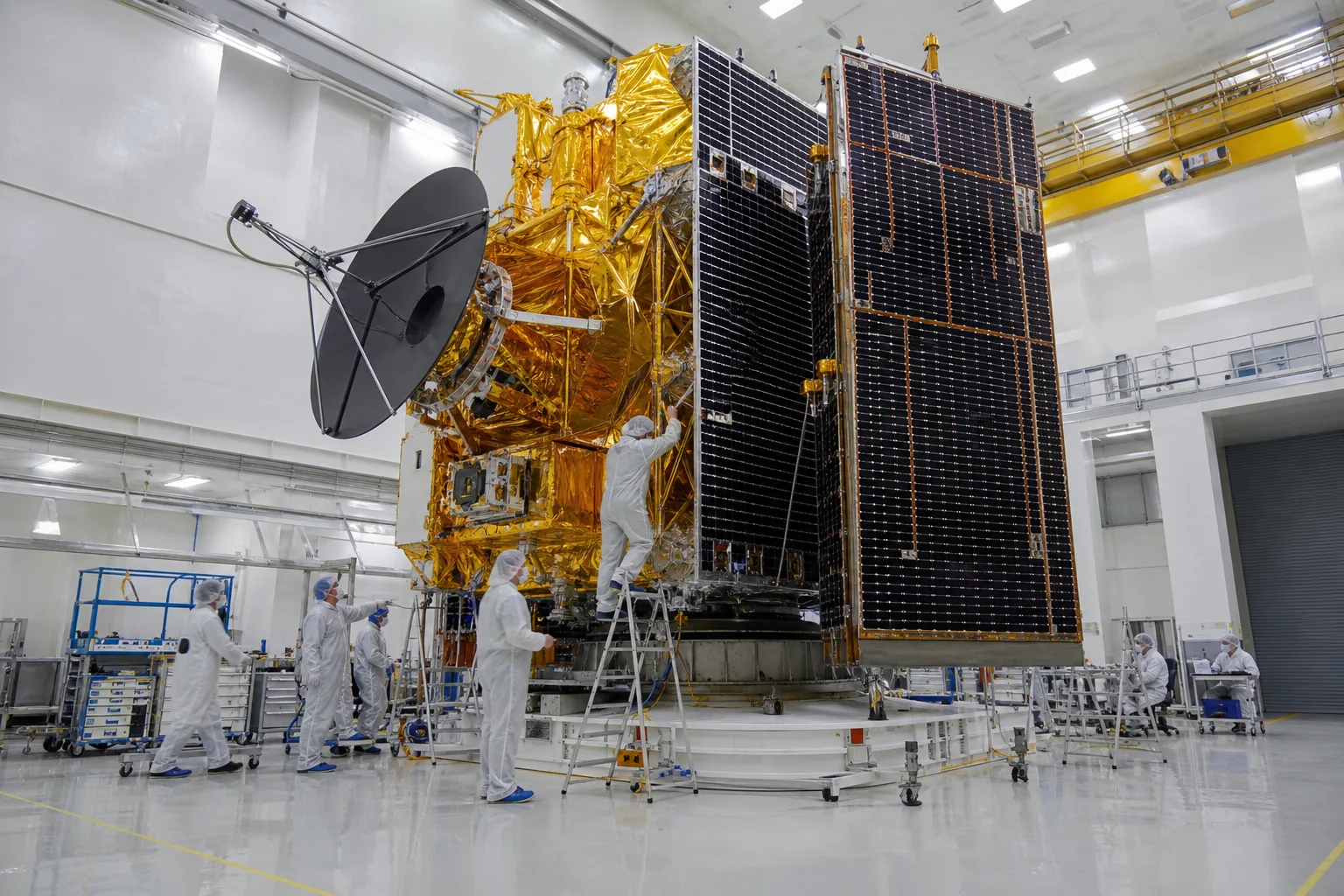
The U.S. Space Force has spent years positioning itself as the Pentagon’s fast-moving, reform-minded branch — leaner than the legacy services, quicker to procure, and savvier about commercial technology. A new report from the Government Accountability Office suggests that reputation needs some serious qualification. Space Force satellite costs are climbing, launch bottlenecks are worsening, and the workforce responsible for keeping it all on track is shrinking. Released July 2, the GAO’s annual assessment of major defence acquisition programs reviewed more than 100 Pentagon efforts — including 13 Space Force procurements — and the picture it paints is one of an organisation still wrestling with the same structural problems that have dogged defence buying for decades.
- Space Force satellite costs are rising sharply, with Next Gen OPIR GEO alone estimated at $9.5 billion by GAO.
- The GAO report covering Space Force satellite costs reviewed 13 programs, flagging workforce cuts and launch bottlenecks.
- Blue Origin and ULA’s rocket setbacks leave SpaceX as the dominant certified national security launch provider.
- The GPS ground control replacement program OCX was quietly cancelled in late 2025 after years of software failures.
Table of Contents
Space Force Satellite Costs: The Numbers That Stand Out
The headline figure belongs to the Next Generation Overhead Persistent Infrared geosynchronous constellation, known as Next Gen OPIR GEO. Built by Lockheed Martin, this two-satellite system is the United States’ next-generation missile warning capability — designed to detect ballistic missile launches against American forces, allies, and the homeland. GAO pegs the programme’s acquisition cost at $9.5 billion, and notes it ‘continues to progress but has experienced significant cost growth.’ A roughly $340 million overrun from the mission payload subcontractor, driven by software development complexity and engineering difficulties, is the main culprit. When analysts examine Space Force satellite costs across the portfolio, Next Gen OPIR GEO consistently emerges as the most striking example of how quickly figures can escalate.
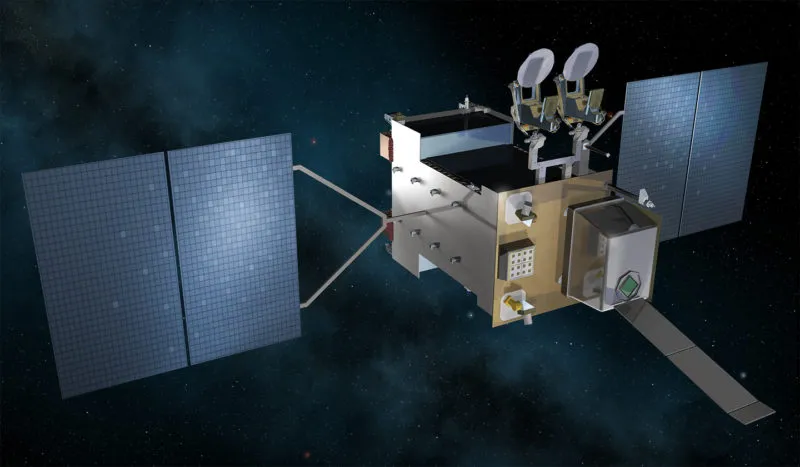
The first Next Gen OPIR GEO satellite was completed in January, which is genuinely encouraging progress for a programme of this complexity. The problem is what happens next. The satellite was assigned to United Launch Alliance’s Vulcan Centaur rocket — which is currently grounded after a launch anomaly. Vulcan is reportedly expected to return to flight later this year, but ‘expected’ is doing a lot of work in that sentence. A completed $9.5 billion satellite sitting in a processing facility waiting for a rocket that hasn’t flown successfully since its debut mission is not exactly the rapid acquisition story Space Force likes to tell. Space Force satellite costs in this case include not just development and production, but the compounding burden of delays that no budget line ever fully captures.
Space Force satellite costs extend well beyond OPIR. GAO also assessed the companion Next Gen OPIR Polar programme, a Northrop Grumman effort designed to track ICBMs, submarine-launched ballistic missiles, and tactical launches from highly elliptical polar orbits. That programme is estimated at $5.9 billion, with first launch expected in 2028. But its future is genuinely uncertain. The Trump administration’s fiscal 2027 budget proposal zeroed out funding, effectively signalling intent to kill it. Congress has pushed back — both House and Senate appropriators have restored money — but the programme is caught in a budget fight that could drag on for years, which is exactly the kind of stop-start uncertainty that inflates Space Force satellite costs further.
Digital Engineering: More Aspiration Than Reality
One of the more damning threads running through the GAO report is its assessment of the Pentagon’s adoption of digital engineering. The Defence Department has been loudly championing digital twins, model-based systems engineering, and integrated digital threads for years. In practice, GAO found these tools ‘largely absent’ or ‘only partially implemented’ across multiple programmes. This matters because digital engineering was supposed to be part of the solution to the chronic cost and schedule problems that plague major acquisitions — catching design flaws earlier, reducing physical prototyping costs, and enabling faster iteration. If programmes aren’t actually using these tools, the theoretical benefits evaporate, and Space Force satellite costs remain exposed to the same old risks.
This isn’t a Space Force-specific problem — the GAO’s broader conclusion covers the entire Pentagon. But for a branch that explicitly markets itself on speed and modernity, the gap between the digital engineering rhetoric and the on-the-ground reality is particularly pointed. The full GAO report makes clear that the acquisition system’s foundational problems — starting programmes before technologies are mature, continuing to use procurement approaches designed for a different era — haven’t been solved by the creation of new pathways or the adoption of commercial-style contracting language.
The Quiet Death of GPS OCX
The GAO report also adds important detail to one of the more embarrassing chapters in recent defence acquisition history. The Next Generation Operational Control System, known as OCX, was the Raytheon-built replacement for the ageing ground infrastructure that controls the GPS constellation. It became a cautionary tale: years of software delays, repeated cost overruns, and schedule slips that stretched on so long that the programme became practically synonymous with acquisition dysfunction. Rising Space Force satellite costs were not the only dimension of the problem — ground segment programmes proved just as capable of consuming resources without delivering results.
According to GAO, the Air Force acquisition executive recommended cancelling OCX in late 2025 — months before the decision was publicly acknowledged in April 2026. The Space Force will now pursue modernisation of the existing GPS Operational Control Segment to fulfil the requirements OCX was supposed to deliver. That’s a significant retreat. The existing system was considered inadequate enough to justify a full replacement programme; now the plan is to patch and upgrade it instead. Whether that approach can actually meet the capability requirements remains an open question, and it’s one the GAO report doesn’t fully answer.
Launch Bottlenecks and a Thinning Workforce
Perhaps the most operationally urgent section of the report concerns the National Security Space Launch programme and the converging pressures it faces. Space Force satellite costs are one problem; actually getting those satellites into orbit is becoming another entirely.
The NSSL programme is planning a major ramp-up — roughly 50 Phase 2 missions through fiscal 2028, followed by approximately 85 Phase 3 missions after that. That’s a lot of launches. The problem is that the roster of certified providers has narrowed at precisely the wrong moment. Vulcan is grounded. Blue Origin’s New Glenn suffered a launch failure that is expected to push back its certification for national security missions. That leaves SpaceX and ULA as the only currently certified providers, which is a precarious position for a programme of this scale and strategic importance. SpaceX’s dominance of commercial launch has been a running concern for the Pentagon for years; this situation doesn’t make that concern any smaller. Elevated Space Force satellite costs mean every launch delay carries an outsized financial and strategic penalty.
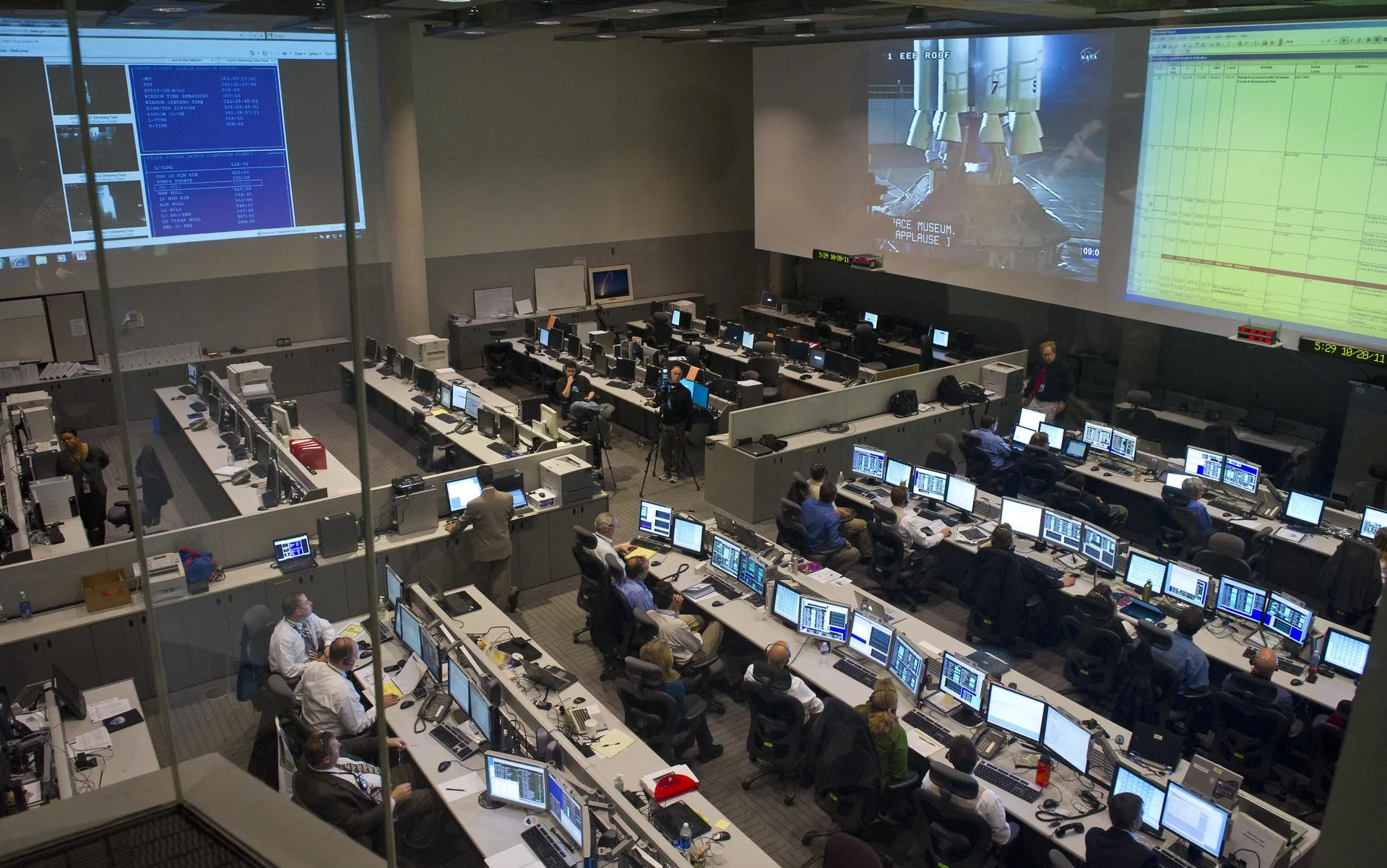
Compounding the launch availability problem is workforce erosion. GAO flagged that recent staff departures under the federal deferred resignation programme, voluntary early retirements, and a hiring freeze are collectively draining the engineering and oversight workforce responsible for launch certification and mission assurance. As GAO put it directly: ‘The NSSL program plans to significantly increase the number of launches over the coming years, at a time when the program faces workforce reductions.’ Doing more with fewer people is a management mantra that rarely survives contact with the complexity of certifying rockets to carry billion-dollar national security payloads. Controlling Space Force satellite costs under these conditions becomes even harder when the human infrastructure needed for rigorous oversight is itself under strain.
Commercial Integration: Promise and Peril
Not every programme in the GAO review is struggling in the same ways. The Protected Tactical Satcom-Global programme offers a window into Space Force’s broader push toward commercially derived military communications. Rather than committing immediately to four production satellites, the service opted to procure two spacecraft — one from SES and one from Viasat — and continue evaluating both designs before scaling up. GAO estimates the full 24-satellite constellation will cost $2.9 billion. Measured against other Space Force satellite costs in the portfolio, that figure looks relatively contained — for now.
The cautious approach makes sense in principle. Buying time to assess competing designs before committing to a full production run is the kind of disciplined acquisition thinking the GAO tends to praise. But the watchdog also flagged a real risk: integrating commercial technologies onto military systems can create interface and integration problems that inflate costs or delay schedules. The history of defence acquisition is littered with programmes that started with commercial-off-the-shelf solutions and ended up paying to militarise them to a degree that erased the original cost advantage. Protected Tactical Satcom-Global hasn’t fallen into that trap yet — but the GAO’s warning is worth taking seriously.
What the report ultimately reveals is that Space Force satellite costs and schedule pressures aren’t just a procurement management problem — they reflect deeper structural tensions between the ambition of the national security space architecture the U.S. wants to field and the resources, workforce, and industrial base available to build it. Patching the GPS ground system instead of replacing it, relying on two rocket providers for a rapidly expanding launch manifest, and watching workforce capacity shrink while mission requirements grow: these aren’t problems that reorganisation charts or new acquisition pathways can fix on their own. The GAO has been saying variations of this for years. The question is whether anyone in a position to act is listening.
Frequently Asked Questions
Why are Space Force satellite costs increasing so dramatically?
GAO attributes the cost growth to software development complexity, immature technologies entering programs too early, and continued reliance on outdated acquisition practices. For Next Gen OPIR GEO, a single payload subcontractor overrun of roughly $340 million was linked to engineering and software challenges.
Which Space Force programs did the GAO review in 2025?
GAO reviewed 13 Space Force acquisition programs spanning missile-warning satellites, military satellite communications, national security launch, and the Space Development Agency’s low Earth orbit constellation as part of its broader assessment of over 100 major Pentagon programs.
What is the current status of the Vulcan rocket and New Glenn for national security launches?
As of the GAO report, Vulcan remains grounded following a launch anomaly, and Blue Origin’s New Glenn suffered a launch failure that is expected to delay its certification for national security missions, leaving SpaceX and ULA as the only currently certified providers.
What happened to the GPS OCX ground control program?
The Air Force acquisition executive recommended cancelling OCX in late 2025, months before the decision became public in April 2026. The Space Force will instead modernise the existing GPS Operational Control Segment to meet the requirements OCX was originally meant to deliver.