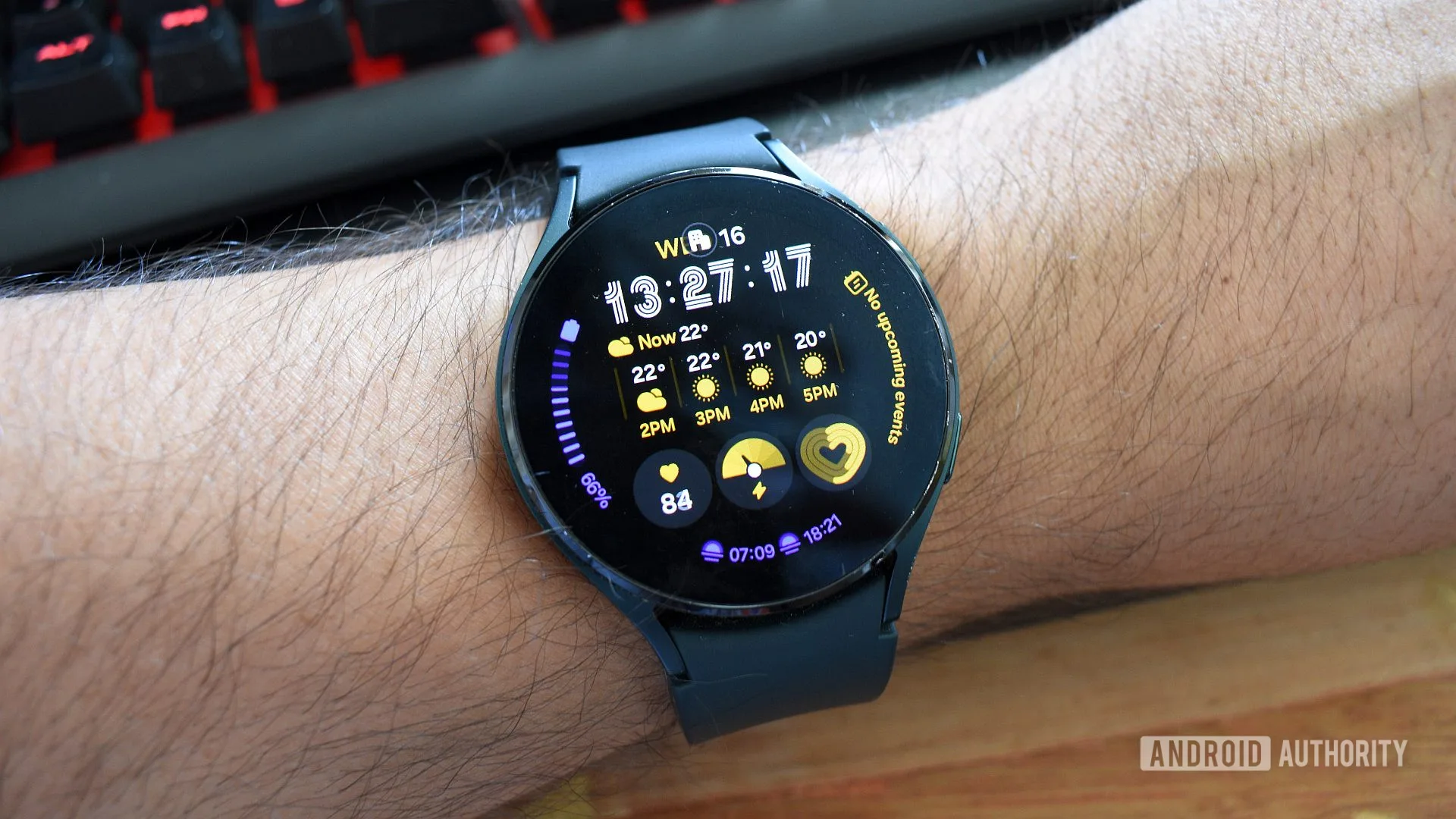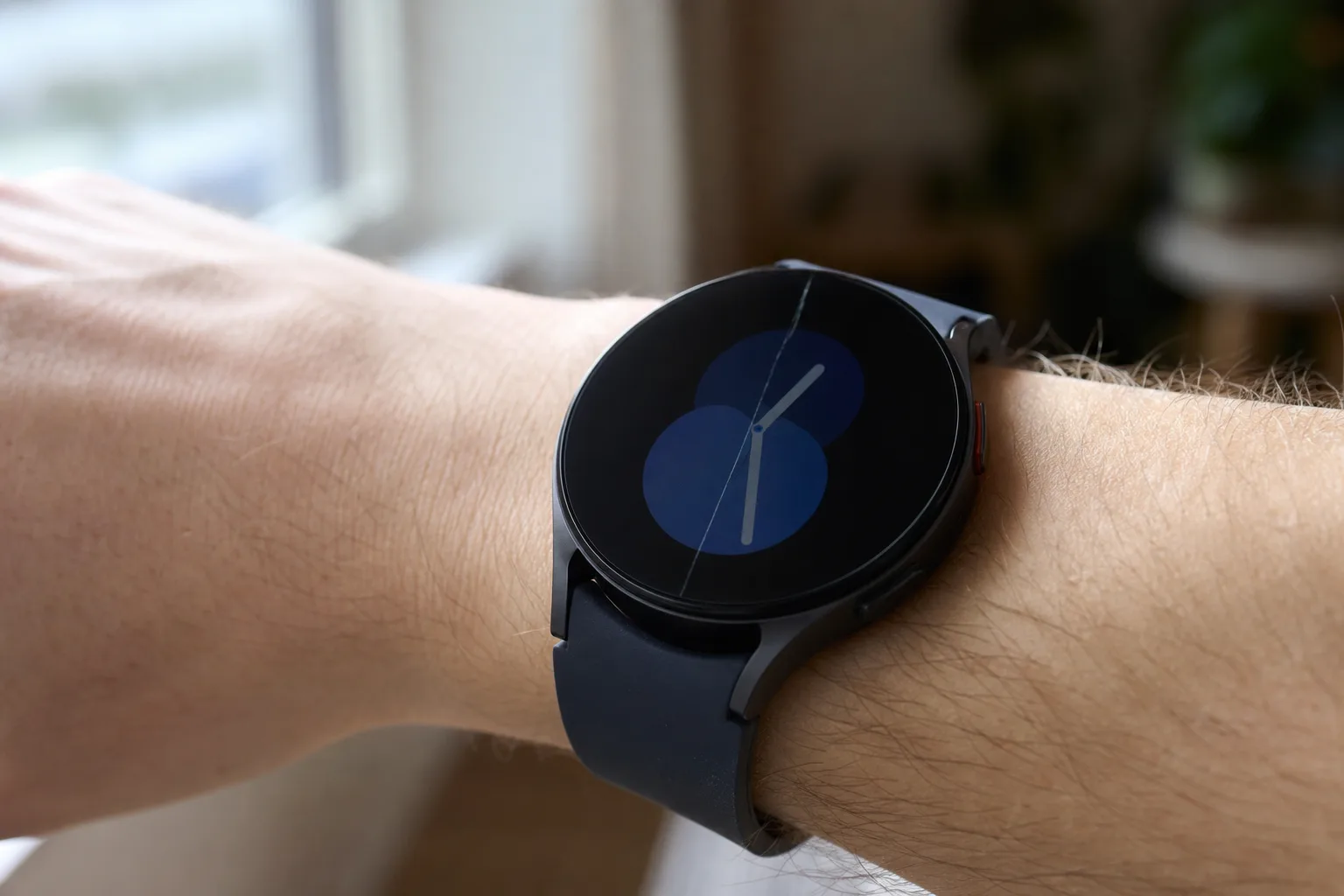
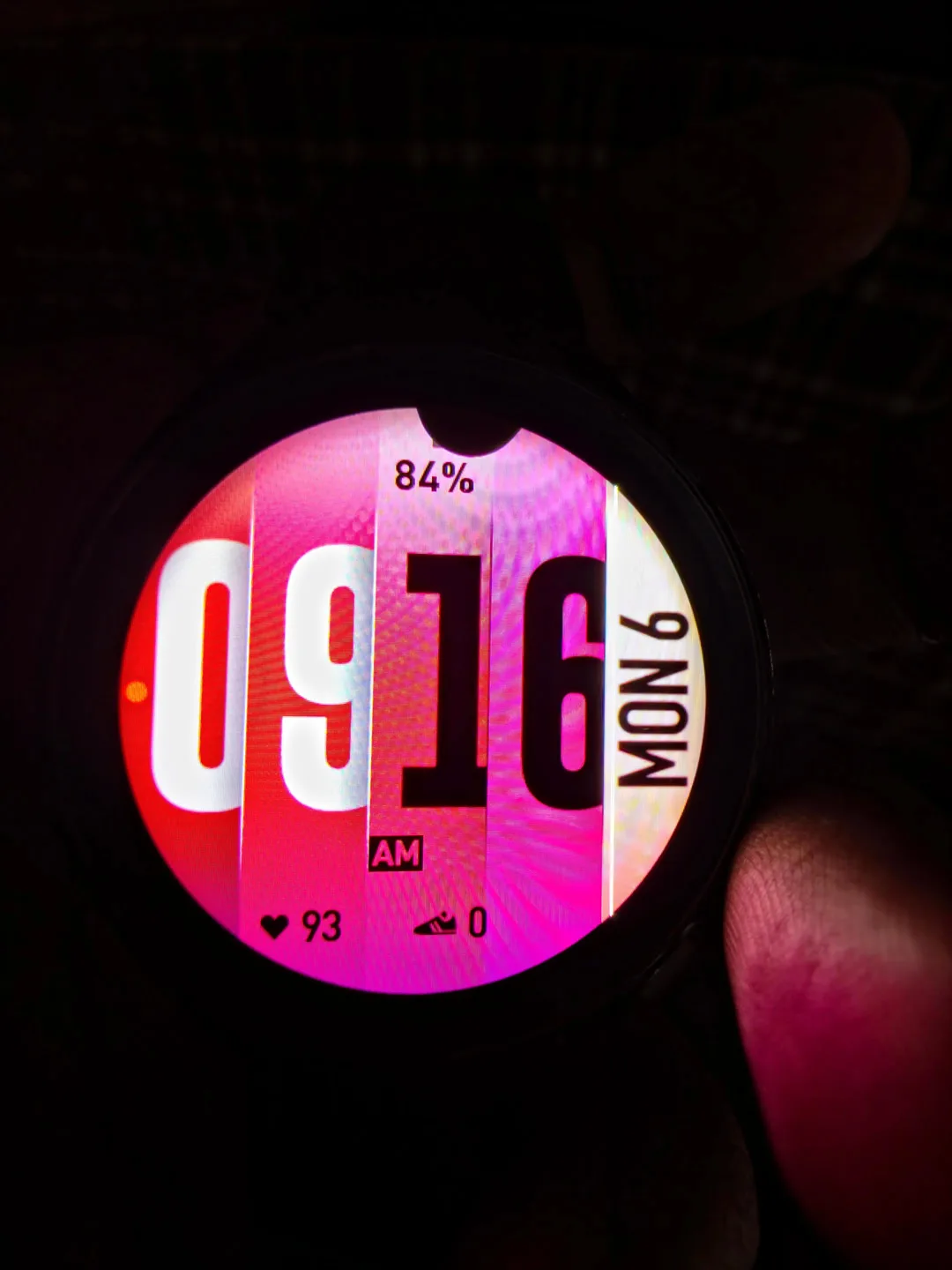
It was only a matter of time. The Galaxy Watch 4 display line issue — a vertical white streak cutting across the watch face — has now joined the long, frustrating list of hardware failures that Samsung’s aging 2021 wearable has accumulated. And while the number of reported cases is still small, the underlying cause is deeply familiar to anyone who’s followed AMOLED panel failures over the past few years.
- The Galaxy Watch 4 display line issue mirrors the AMOLED defects that have long plagued Samsung smartphones.
- A Galaxy Watch 4 display line appeared after a recent One UI 8 Watch update, according to a Reddit user.
- Every Galaxy Watch 4 in active use is now past its warranty period, making repairs costly and upgrades more sensible.
- Thermal and electrical stress on aging AMOLED panels appears to cause the same failure mode across phones and wearables alike.
Table of Contents
What’s Actually Happening
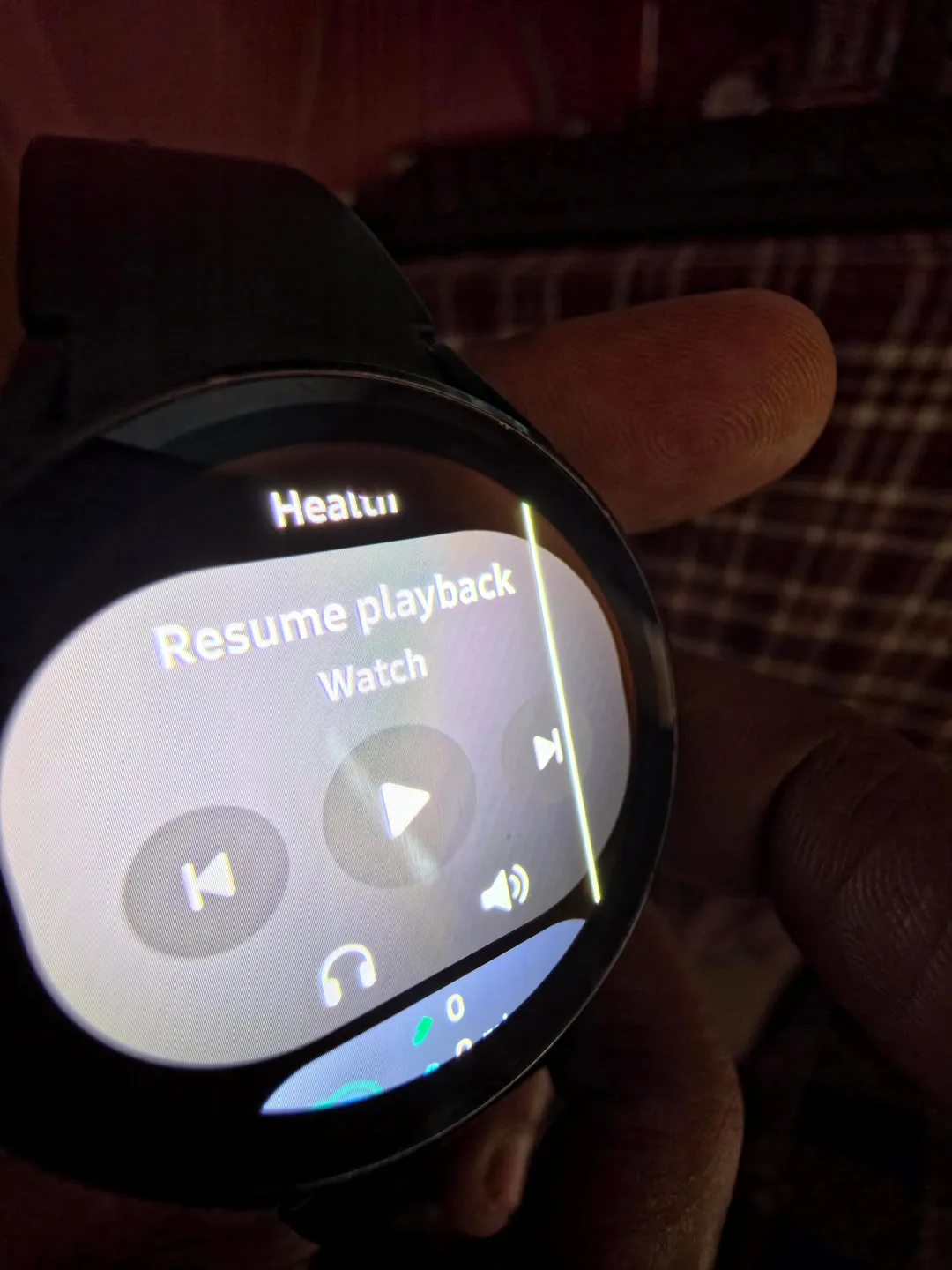
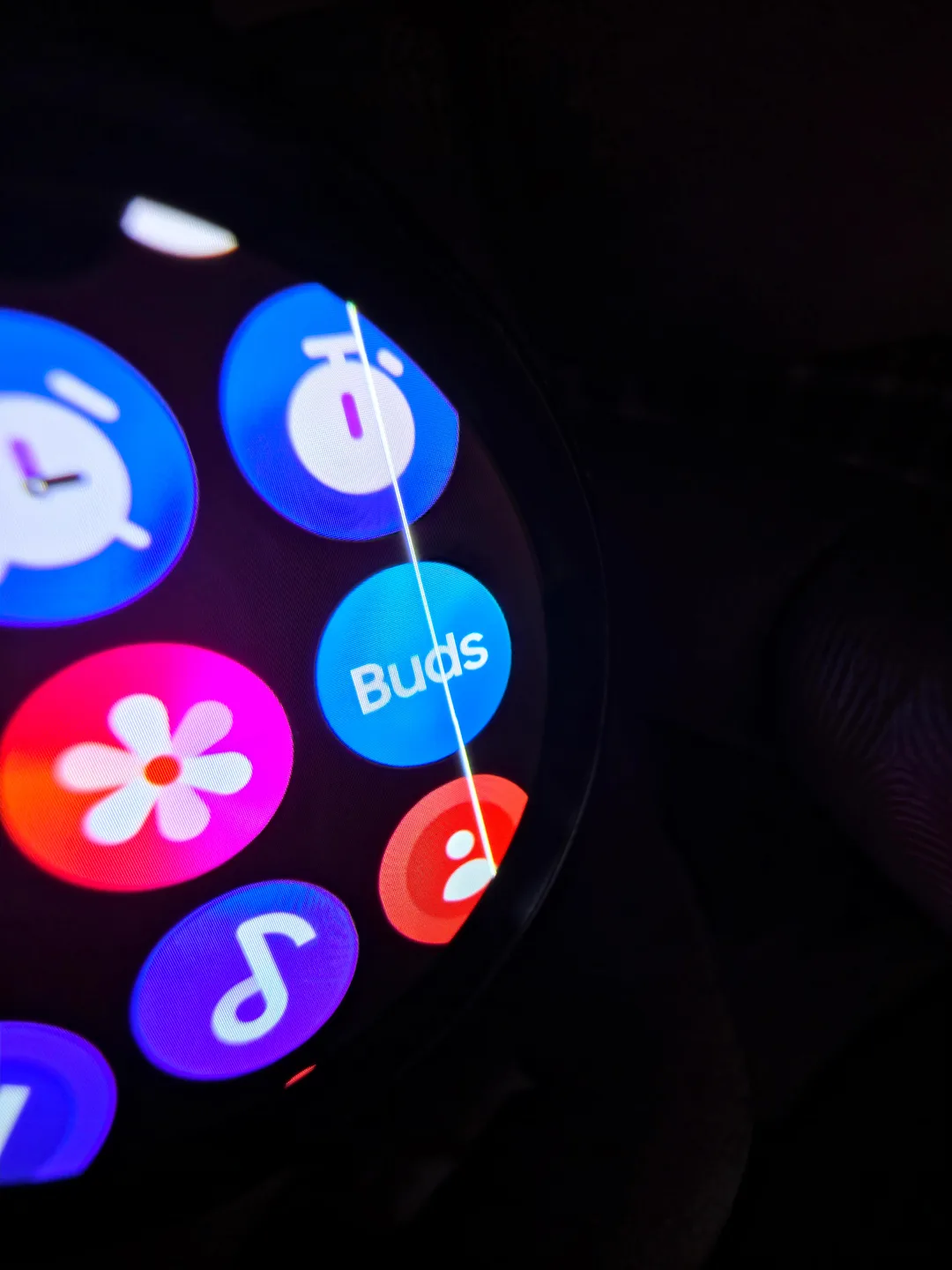
Reddit user HKNworld recently posted about a Galaxy Watch 4 display line — specifically a vertical white line appearing on their watch following what appears to be a recent One UI 8 Watch software update. For context, Samsung pushed One UI 8 Watch to the Galaxy Watch 4 back in December 2025, with a May 2026 security patch following shortly after — the latter being the more likely candidate given the timing of the report.
The white line itself isn’t new territory for AMOLED displays. Samsung smartphone owners have been dealing with a version of this problem for years — the notorious green line defect that can appear seemingly out of nowhere, often after a software update, and just as often with no warning at all. Seeing the same class of failure show up on a smartwatch is frustrating, but it’s not exactly a plot twist.
Why the Galaxy Watch 4 Display Line Issue Makes Sense
To understand why this is happening, you need to understand how AMOLED panels degrade. These displays — used across Samsung’s phones, tablets, and wearables — are made up of organic compounds that emit light when current passes through them. Over time, those compounds wear down unevenly, and the transistors that drive individual pixels become more susceptible to electrical or thermal stress. The result can be a column of pixels that either stay permanently on (producing a white or green line) or permanently off (a black line).
Smartwatches like the Galaxy Watch 4 face a particularly harsh operating environment. They’re worn on the wrist through temperature swings, exercise, sweat exposure, and constant on-wrist charging cycles. Every one of those variables adds cumulative stress to the panel. A watch that’s been in daily use since 2021 — nearly five years — has absorbed a lot of that punishment. The fact that a Galaxy Watch 4 display line is only now showing up in a small number of units actually suggests most panels have held up reasonably well, but it also signals that we’re entering the window where failures will start becoming more common.
This isn’t isolated to Samsung either. iFixit has documented how OLED screen failures — including persistent line defects — are a structural reality of the technology rather than a manufacturing defect unique to any one brand. The physics don’t care whose logo is on the device.
The Ghost of the Red Screen of Death
This isn’t the Galaxy Watch 4’s first brush with display failure. The watch has a well-documented history with what owners call the ‘Red Screen of Death’ — a condition where the display gets stuck on a solid red screen, rendering the watch unusable. That issue drew enough attention to generate multiple threads on Reddit and Samsung’s own community forums, though the company never officially acknowledged it as a widespread defect.
The Galaxy Watch 4 display line failure follows a similar pattern: a handful of reports, no official response from Samsung, and users left to figure out their options independently. It’s a frustrating cycle, and one that raises a broader question about how long manufacturers should reasonably be expected to support aging hardware — especially wearables, which are typically replaced on shorter cycles than phones.
Galaxy Watch 4 Display Line: What Are Your Options?
If you’re a Galaxy Watch 4 owner staring at a vertical stripe on your display, the outlook is bleak but straightforward. Since the watch launched in 2021, virtually every unit currently in use is well outside Samsung’s standard warranty window. That means any screen replacement comes entirely out of pocket.
Screen repairs on smartwatches aren’t cheap, and the Galaxy Watch 4 is no exception. Beyond the cost, there’s the availability problem: sourcing replacement AMOLED panels for a five-year-old wearable is getting harder by the month. Third-party repair shops may have stock, but quality control on aftermarket panels is inconsistent, and a bad replacement can introduce new problems faster than the original panel degraded.
The math here isn’t complicated. If a Galaxy Watch 4 display line repair costs anywhere near the price of a new entry-level smartwatch — and it often does — the smarter financial move is to put the Galaxy Watch 4 to rest and upgrade. Samsung’s current Galaxy Watch 7 starts at a competitive price point and ships with far better health sensors, a faster chip, and a display that isn’t on the edge of its operational lifespan.
A Broader Warning for Wearable Owners
The Galaxy Watch 4 display line issue is a useful reminder that wearables age differently than phones. We tend to hold onto smartwatches longer than we think we will, partly because the upgrade cycles feel less urgent and partly because the secondary market for used wearables is thinner than for phones. But AMOLED degradation doesn’t care about upgrade cycles — it runs on its own schedule.
For anyone still running a Galaxy Watch 4, now is a good time to back up your fitness data and take stock of the watch’s overall condition. A Galaxy Watch 4 display line may be the most visible sign of trouble, but battery health, display quality, and software support are all worth evaluating together. Samsung has continued pushing security patches to the device, which is commendable, but software longevity can’t compensate for a panel that’s physically wearing out.
The larger industry trend here is one the smartphone world is already grappling with: as AMOLED becomes the default display technology across every device category — phones, tablets, laptops, watches — the failure modes that come with it follow along. White lines, green lines, burn-in, and dead pixels aren’t going away. They’re just showing up on new form factors. Wearable manufacturers and consumers alike would do well to factor that reality into their long-term expectations.