

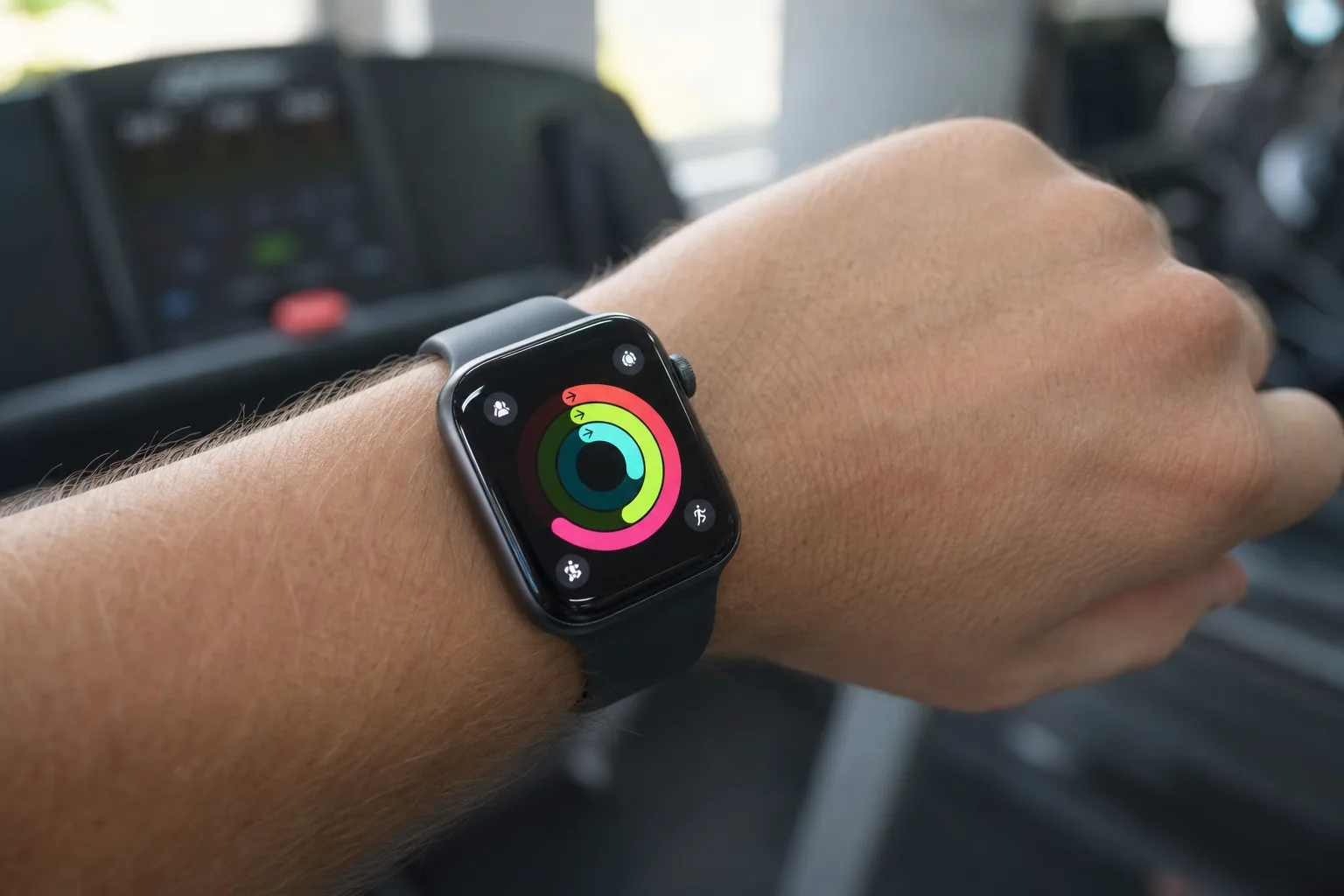
Apple’s wearable software has quietly become one of the most ambitious health platforms in consumer tech, and the watchOS 27 health features Apple has confirmed for this year’s release continue that trajectory in three distinct directions. From cycle tracking that can flag early signs of perimenopause, to an AI workout coach that no longer needs your iPhone in your pocket, these updates reflect where Apple sees the biggest unmet needs on its wrist.
- watchOS 27 health features include perimenopause support through Cycle Tracking, aimed at users aged 40 and above.
- The three watchOS 27 health features also expand Workout Buddy with new insights, offline use, and Spanish-language support.
- Apple has improved indoor walk and run distance accuracy, and finally synced step counts between the Health and Fitness apps.
- More health features are expected to debut alongside the Apple Watch Ultra 4 and Series 12 this autumn.
Table of Contents
watchOS 27 Health Features at a Glance
Before getting into the specifics, it’s worth stepping back to appreciate how much ground Apple has covered since it first positioned the Apple Watch as a health device. The original pitch was largely about heart rate and activity rings. Now the platform is fielding hormonal health notifications, AI coaching in multiple languages, and algorithmic improvements to treadmill tracking. The watchOS 27 health features confirmed so far aren’t flashy, but they’re the kind of improvements that make a device genuinely more useful to a broader range of people.

Perimenopause Support Comes to Cycle Tracking
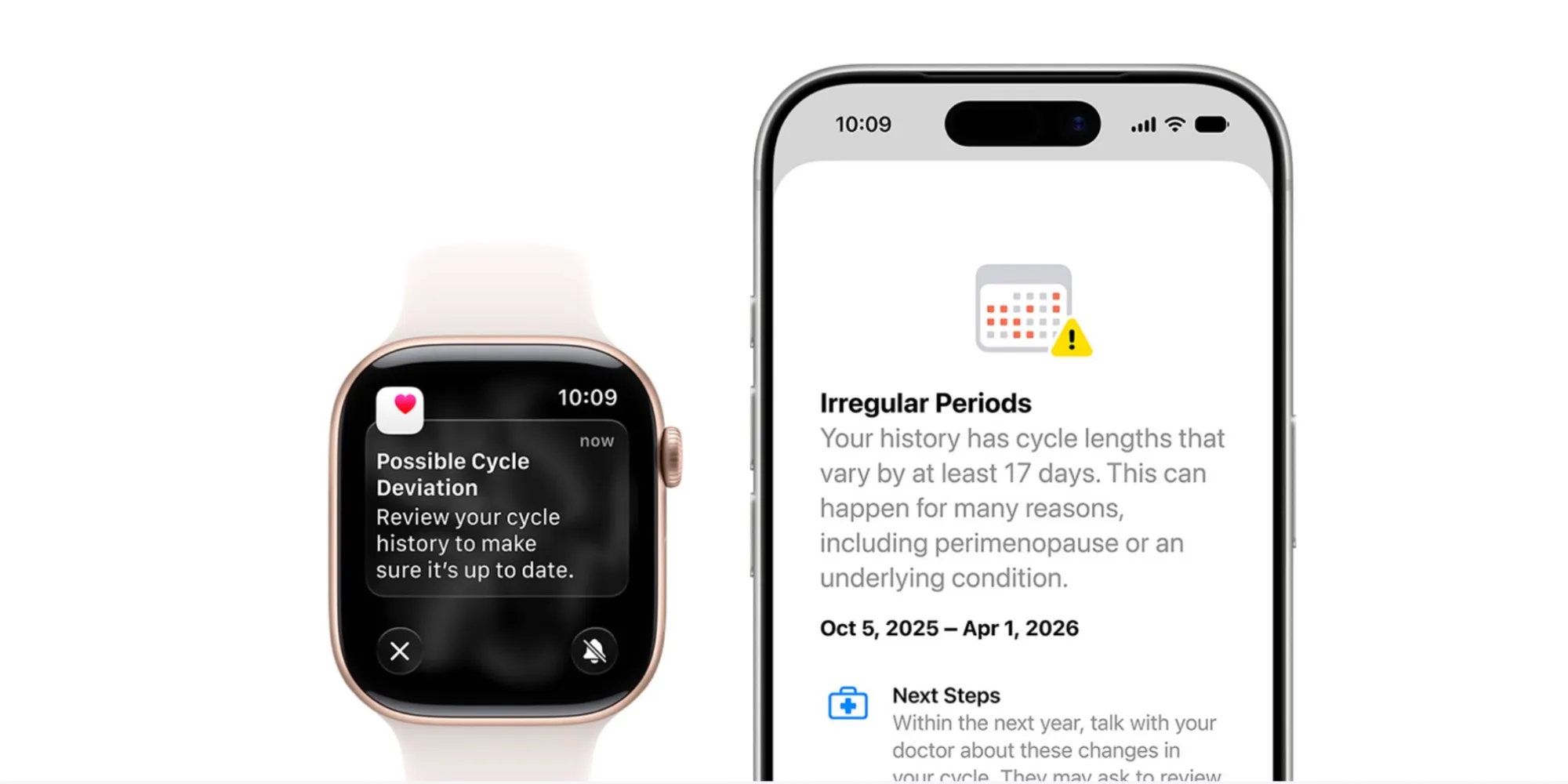
The most significant of the watchOS 27 health features — at least in terms of the number of people it’s likely to affect — is expanded support for perimenopause and menopause within the Cycle Tracking feature. Apple’s Cycle Tracking has been available for a number of years, but it’s historically focused on cycle prediction and ovulation windows. This update pushes it into new medical territory.
According to Apple’s watchOS preview page, when your logged cycle patterns are suggestive of perimenopause, the Health app will now surface a notification. Users can also track related symptoms — things like sleep disruption, mood changes, and hot flushes — and access educational resources directly from the app.
Apple is careful about how it frames this. The fine print specifies that ‘cycle deviation notifications inclusive of perimenopause are for ages 40 and above’ and are ‘not intended to replace traditional methods of diagnosis, monitoring, or treatment of perimenopause or menopause.’ That’s a necessary disclaimer, and an honest one. What Apple is offering here isn’t diagnosis — it’s pattern recognition and awareness. For millions of people who experience perimenopause without recognising what’s happening, that early signal could prompt a useful conversation with a doctor well before symptoms become disruptive.
It’s also a smart move in the ongoing battle between Apple, Google, and Samsung for the health-conscious wearable buyer. Samsung has invested heavily in women’s health features on Galaxy Watch, and Google acquired Fitbit partly for its health tracking infrastructure. Apple’s integration of perimenopause support directly into a first-party app, backed by sensor data from the watch, keeps it competitive in that space.
Workout Buddy Gets Smarter, More Independent
Workout Buddy launched with watchOS 26 last year as Apple’s answer to the question of whether an AI could serve as a personal trainer on your wrist. The concept is straightforward: an AI coach that tracks your fitness history and delivers personalised motivation during workouts. The first iteration was promising but had obvious limitations. The watchOS 27 health features update addresses three of them directly.
First, Workout Buddy is getting richer data insights. Rather than generic encouragement, it will now draw on your historical performance to give you context — how your current pace compares to your average, whether you’re on track for your usual distance, and how your session stacks up against your recent workout durations. That shift from cheerleader to analyst is significant. It’s the difference between ‘keep going!’ and ‘you’re running 15 seconds per kilometre slower than your average for this distance.’ One is motivating; the other is actually useful.
Second, and arguably the change most people will notice day-to-day, Workout Buddy will now operate without an iPhone nearby. Until now, the feature apparently required your phone to be within Bluetooth or Wi-Fi range. For anyone who runs without their phone — a growing cohort, especially among Apple Watch Ultra owners who’ve leaned into the device’s standalone capabilities — this was a meaningful gap. That gap is now closed.
Third, Workout Buddy is arriving in Spanish. Language support might seem like a minor addition, but personalised AI coaching loses much of its impact if it’s in a language that doesn’t feel natural to the user. Spanish is the second most-spoken language in the United States and has hundreds of millions of native speakers globally. It’s a sensible first expansion, and presumably not the last.
Indoor Fitness Accuracy and the Step Count Fix
The third category of watchOS 27 health features is the least glamorous but possibly the most practically significant for regular gym-goers. Apple says it has improved the motion tracking algorithms used for indoor walks and runs, resulting in ‘even more accurate’ distance measurements during treadmill workouts.
Treadmill accuracy has been a persistent complaint in the Apple Watch community for years. The watch uses its accelerometer to estimate distance when GPS isn’t available indoors, and while Apple has iterated on this over time, the estimates have never been as reliable as outdoor GPS tracking. Any algorithmic improvement here will be welcome, though as always, the proof will be in real-world testing once watchOS 27 is publicly released.
The other fix in this category is one that will make a lot of users say ‘wait, that wasn’t already the case?’ — step counts from the Health app and the Fitness app are being unified. Until watchOS 27, the two apps could show different step totals, which is both confusing and genuinely undermining of trust in the platform’s health data. It’s the kind of inconsistency that gets quietly filed under ‘Apple should have sorted that ages ago,’ and the fact that it’s being addressed is a good sign that the team is working through these quality-of-life issues methodically.
What’s Still to Come This Year
These three areas don’t represent the full picture of what Apple is preparing for watchOS 27. Apple typically holds back hardware-specific features until the new Apple Watch models are unveiled, and this year that means the Apple Watch Ultra 4 and Apple Watch Series 12, both expected at Apple’s autumn event. It’s entirely plausible that additional health sensors or capabilities — there’s been consistent speculation about blood glucose monitoring for years — will be announced alongside that hardware.
What the confirmed watchOS 27 health features do tell us is that Apple’s health roadmap is maturing. The focus isn’t on single blockbuster sensors anymore. It’s on making existing data more actionable, extending features to underserved demographics, and removing the friction that stopped people from using the tools they already had. That’s a different kind of ambition than shipping a new sensor — and in many ways, it’s a harder problem to solve. Taken together, the watchOS 27 health features represent a clear signal of where Apple believes wearable health is heading next.
Frequently Asked Questions
What are the main watchOS 27 health features coming to Apple Watch?
watchOS 27 health features cover three areas: perimenopause and menopause support in Cycle Tracking, expanded Workout Buddy capabilities including offline use and Spanish language support, and improved accuracy for indoor walks and runs alongside unified step count tracking across the Health and Fitness apps.
Who can use the perimenopause notifications in watchOS 27?
Apple’s perimenopause cycle deviation notifications are designed for users aged 40 and above. Apple is explicit that these alerts are not a substitute for professional medical diagnosis, monitoring, or treatment of perimenopause or menopause.
Does Workout Buddy in watchOS 27 work without an iPhone?
Yes. One of the new Workout Buddy improvements in watchOS 27 allows the AI coaching feature to function without an iPhone nearby, so you can leave your phone behind and still receive personalised motivation and fitness insights during a workout.
When will watchOS 27 be released publicly?
Apple hasn’t announced an official release date. Additional watchOS 27 health features are also expected to be revealed when Apple unveils the Apple Watch Ultra 4 and Series 12 later this year.

