
- ChatGPT Health is expanding to US adults, connecting medical records and Apple Health data directly to OpenAI’s chatbot experience.
- The ChatGPT Health rollout arrives as two lawsuits allege chatbot health guidance contributed to dangerous delays and fatal drug use.
- OpenAI says more than 300 million people ask ChatGPT health questions each week, despite persistent warnings that AI can make mistakes.
- Putting sensitive patient context into ordinary chats could make ChatGPT more useful, but also raises the consequences of a bad answer.
Table of Contents
ChatGPT Health moves from pilot to a national product
OpenAI is putting ChatGPT Health in front of every eligible adult user in the United States, and it is hard to think of a consumer AI launch with more potential upside — or more immediate risk. The feature can connect a user’s medical records and Apple Health information to ChatGPT, turning the familiar prompt box into a place to discuss lab results, diets, workouts, injuries, and other intensely personal questions.
The company had tested the product with a smaller group earlier this year. Now, users 18 and older can opt in, and the health context is being folded into the normal ChatGPT experience rather than kept in a separate clinical-looking section. That design choice is convenient. It is also the part that should make people pause.
OpenAI’s example is sensible enough: a dietary restriction could inform restaurant suggestions, while a recent injury might steer ChatGPT toward lower-impact family activities. Those are the kinds of small, practical accommodations that could make ChatGPT Health feel genuinely useful in daily life. Nobody wants to re-explain a knee injury every time they plan a weekend.
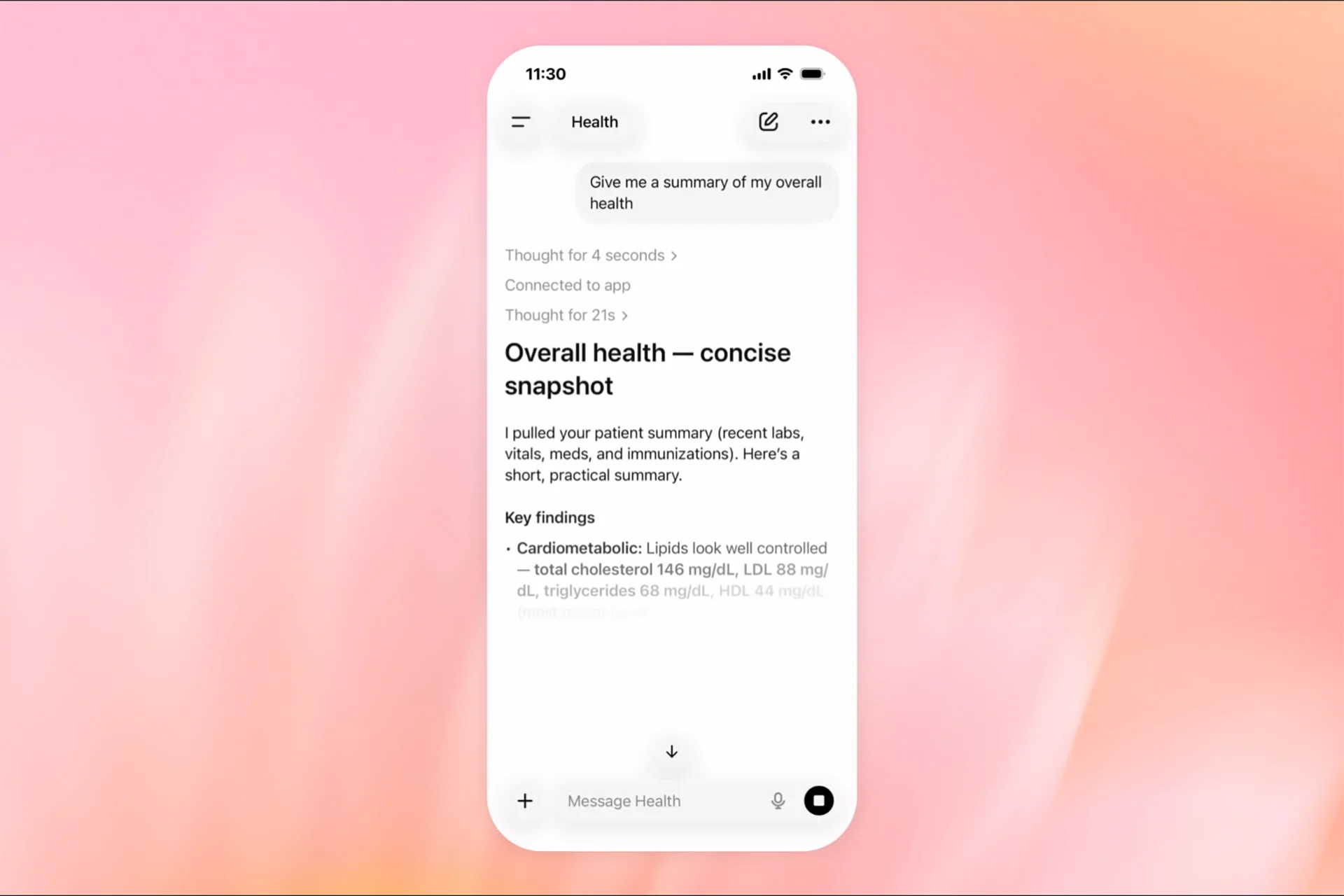
But moving health information into the broader conversational product changes the stakes. A chatbot that knows a user’s conditions, medications, sleep patterns, or activity history may give more tailored answers. It may also sound more authoritative than it deserves to. Medicine is full of edge cases, incomplete histories, and symptoms that only look obvious in retrospect. A fluent chatbot is very good at hiding that uncertainty.
Why ChatGPT Health arrives at an awkward moment
The ChatGPT Health expansion lands while OpenAI faces two prominent legal challenges over alleged harmful health advice. In one case filed in May, the family of 19-year-old Sam Nelson alleges ChatGPT advised him to use Xanax to “smooth out” a kratom high. The complaint says the combination contributed to his fatal overdose and seeks damages as well as a halt to the health feature.
A separate lawsuit from a Florida pastor alleges that ChatGPT’s responses contributed to a delay in seeking urgent care for what turned out to be a life-threatening pulmonary embolism. According to the suit, the chatbot told him to trust that “God did not design your body to endlessly fail” rather than directing him toward immediate medical evaluation for warning signs. The pastor is also seeking damages, stronger safeguards, and a pause to the product.
These are allegations, not court findings, and Sam Nelson was reportedly using an earlier model, ChatGPT-4o. That distinction matters legally and technically. It does not erase the broader product question: why is OpenAI widening a health-oriented service before the public has much clarity on what its guardrails do under pressure?
Frankly, the timing makes OpenAI look as though it is trying to outrun the policy debate. The company can reasonably argue that people are already asking ChatGPT medical questions at enormous scale. It says more than 300 million users do so each week. But making those conversations more personalized through connected health data is not a neutral software update. It is an escalation.
The line between health information and medical advice is thin
OpenAI says ChatGPT Health is powered for paid users by GPT-5.6 Sol, which it calls its strongest health model so far. It has also published guidance saying the system can still make mistakes and that people should verify important information with a healthcare professional. That is a necessary disclaimer. It is not, by itself, a safety system.
Anyone who has used a modern chatbot knows the problem. Ask it to explain a blood-test abbreviation and it can be helpful, organized, and reassuring. Ask it whether a symptom means you can wait until Monday, and the answer begins to carry a different kind of weight. The user is no longer browsing information; they are deciding what to do with their body.
Healthcare companies have spent years building portals, nurse lines, telehealth services, and symptom tools around that reality. Those systems are imperfect and occasionally maddening — every patient has met a portal that feels designed by a committee trapped in 2009 — but they tend to establish clearer boundaries around clinical responsibility. ChatGPT does not have that institutional structure. It has an interface built to keep a conversation going.
OpenAI says users can correct incomplete or outdated health details and add follow-up context. That is useful, but it puts a surprising amount of burden on the patient. A person who is anxious, in pain, or simply unfamiliar with medical terminology may not know which omitted detail changes the answer. A trained clinician is paid to notice what a patient did not think to mention. A chatbot cannot reliably do that.
Data privacy will matter as much as answer quality
Trust is the other unresolved issue. Connecting records and Apple Health data means ChatGPT Health could hold an unusually rich portrait of a person’s life: diagnoses, prescriptions, movement, sleep, perhaps the evidence of a bad week before the user has even said so aloud. OpenAI says users must consent to the connections, but consent screens are not the same thing as informed understanding.
Readers should look closely at what data they are sharing, how long it is retained, whether it is used to improve models, and what controls exist for deleting it. OpenAI’s health product information is a sensible starting point, though users should not assume every medical record connection carries identical privacy terms or provider arrangements.
My read is that ChatGPT Health could become valuable for the lower-risk work around care: translating jargon, preparing questions for an appointment, spotting patterns in a personal log, or remembering an instruction that was buried in a visit summary. Those are real wins. Yet OpenAI needs to prove that its product knows when to stop talking and tell someone to get help now. In health care, the safest answer is sometimes the least satisfying one — and that may be the hardest lesson for a chatbot business built on always having something to say.