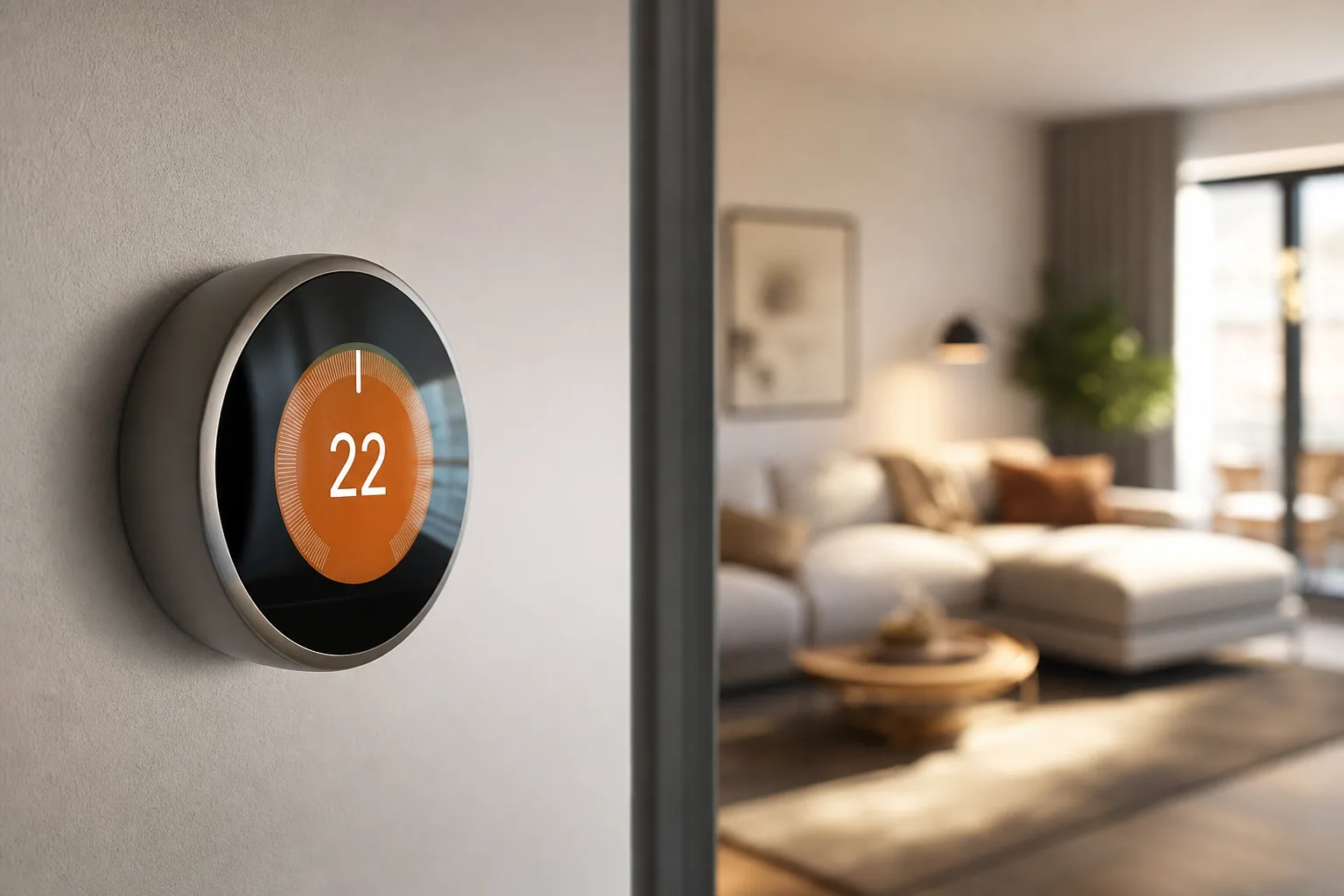
- Some Google Home households are seeing Nest thermostat voice control fail, with an error appearing even though their thermostats remain connected in the app.
- The Nest thermostat voice control problem appears confined to Google Assistant, a reminder of how much a supposedly hands-free home depends on the cloud.
- Reports point to an intermittent failure: at least one affected owner said Google Home connectivity later returned.
- Google has not publicly explained the reported disruption or said how many Nest Thermostat owners may be affected.
Table of Contents
Nest thermostat voice control has hit a very familiar smart-home wall
There’s a particular kind of irritation reserved for a smart device that works perfectly until you ask it to do the one thing that made it worth buying. That’s where some Google Home owners appear to be with Nest thermostat voice control: the thermostat can still be adjusted in Google’s app, but a spoken request gets nowhere.
Users reporting the problem say Google Home speakers respond with: “Sorry, I can’t reach the Nest Thermostat right now.” The wording matters. This doesn’t sound like a dead thermostat, drained batteries, or a home Wi-Fi outage. It sounds more like a break somewhere between Google Assistant’s voice service and Nest’s device-control systems.
Reports surfaced in a Reddit discussion, where one owner described Google Home speakers suddenly refusing thermostat commands. Other commenters said they were seeing the same behavior across their own setups. At least one person later reported that communication had resumed, which points to an intermittent service-side problem rather than a universal hardware failure.
That distinction won’t make a chilly living room any warmer, of course. For people who use routines, accessibility features, or voice controls while cooking, carrying a child, or simply avoiding a trip across the house, Nest thermostat voice control is not a novelty. It’s the interface.
Why the app can work while Google Assistant cannot
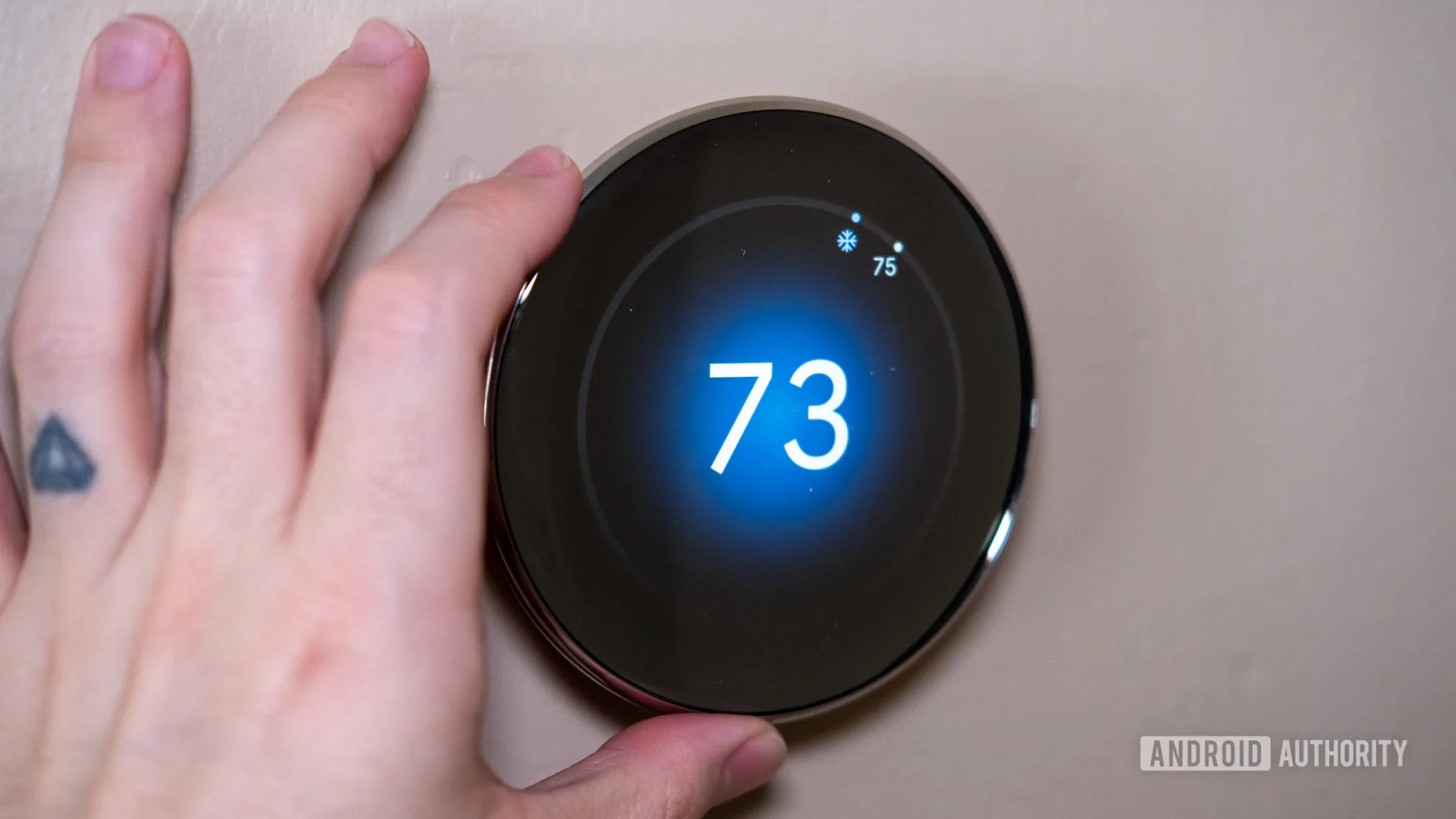
The oddest part of this episode is that affected users can apparently still control their temperature through the Google Home app. In plain English: the thermostat remains online, the account connection likely remains intact, and the obvious fallback works. The failure seems to sit specifically in the voice-command path.
That path has more moving pieces than most people realize. A request such as ‘set the heat to 70 degrees’ has to be heard by a speaker or phone, interpreted by Google Assistant, matched to the right home and room, authorized against the user’s account, and then sent as a command to the thermostat. Any one of those links can misbehave without the others visibly failing.
It’s the smart-home equivalent of a restaurant whose kitchen is open but whose waiter has stopped taking orders. You can still walk to the counter and get food; the service that made the place convenient is what’s broken.
Google has spent years pitching Google Home as the unifying layer for devices across a household. Nest products should be the easy case because Google owns the brand, the app, the speakers, and the assistant experience. When Nest thermostat voice control stumbles while manual app controls continue working, it highlights a problem the entire category has struggled to solve: ownership of the hardware does not automatically mean reliability across every cloud service involved.
The Nest support documentation is available for users seeking help. Voice controls are useful precisely because they remove friction. Once voice control becomes uncertain, people fall back to the phone app — and the magic trick is gone.
A small outage, but a larger credibility problem
There’s no indication that every Nest owner is affected. So far, the evidence is a cluster of user reports, not a confirmed worldwide Google outage. Google had reportedly been contacted for comment, but no public explanation was available at the time these reports emerged. It’s possible the company quietly corrected a backend issue before it became a broad incident.
Still, Nest thermostat voice control sits in a more sensitive category than music playback or smart lighting. A thermostat affects comfort, energy consumption, and in extreme weather, safety. Nobody is likely to face a crisis because they have to open an app once, but the expectation around climate control is different. These devices are sold as dependable household infrastructure, not experimental gadgets.
Google also carries some historical baggage here. The company has repeatedly changed smart-home platforms, migrated accounts, retired older integrations, and pushed customers toward new app experiences. Its current Google Home redesign has been an attempt to make that sprawling ecosystem feel coherent again. But every glitch like this reminds customers that a connected home can still feel like several separately managed products wearing the same badge.
Matter, the industry standard backed by Google, Apple, Amazon, Samsung, and others, is meant to reduce some of that fragmentation by enabling more local and interoperable device control. Yet Matter does not magically erase the role of cloud services or natural-language processing. Saying ‘turn the heat down’ remains fundamentally different from tapping a local control in an app. Nest thermostat voice control relies on Google understanding intent and successfully routing it, not merely on a thermostat being reachable over a network.
What affected Nest owners can do now
If Google Home can’t reach a thermostat but the app can, the sensible first move is restraint. Don’t immediately factory-reset the thermostat, delete your home, or start rebuilding routines. Those steps are disruptive and are unlikely to fix a temporary Google-side issue. Check whether the thermostat responds in the Google Home app, confirm the speaker has internet access, and try the same command from another Assistant-enabled device if one is available.
It may also help to use a more direct phrasing, such as ‘set the living room thermostat to 68 degrees,’ particularly in homes with multiple climate devices. But if every attempt receives the same reachability error, that’s not a vocabulary problem. It’s a service problem.
For now, the app remains the practical workaround for households affected by the Nest thermostat voice control failure. The more revealing question is whether Google treats incidents like this as a basic reliability issue rather than an inevitable quirk of cloud-connected homes. A thermostat should be boring. Frankly, that’s the highest compliment it can earn.