

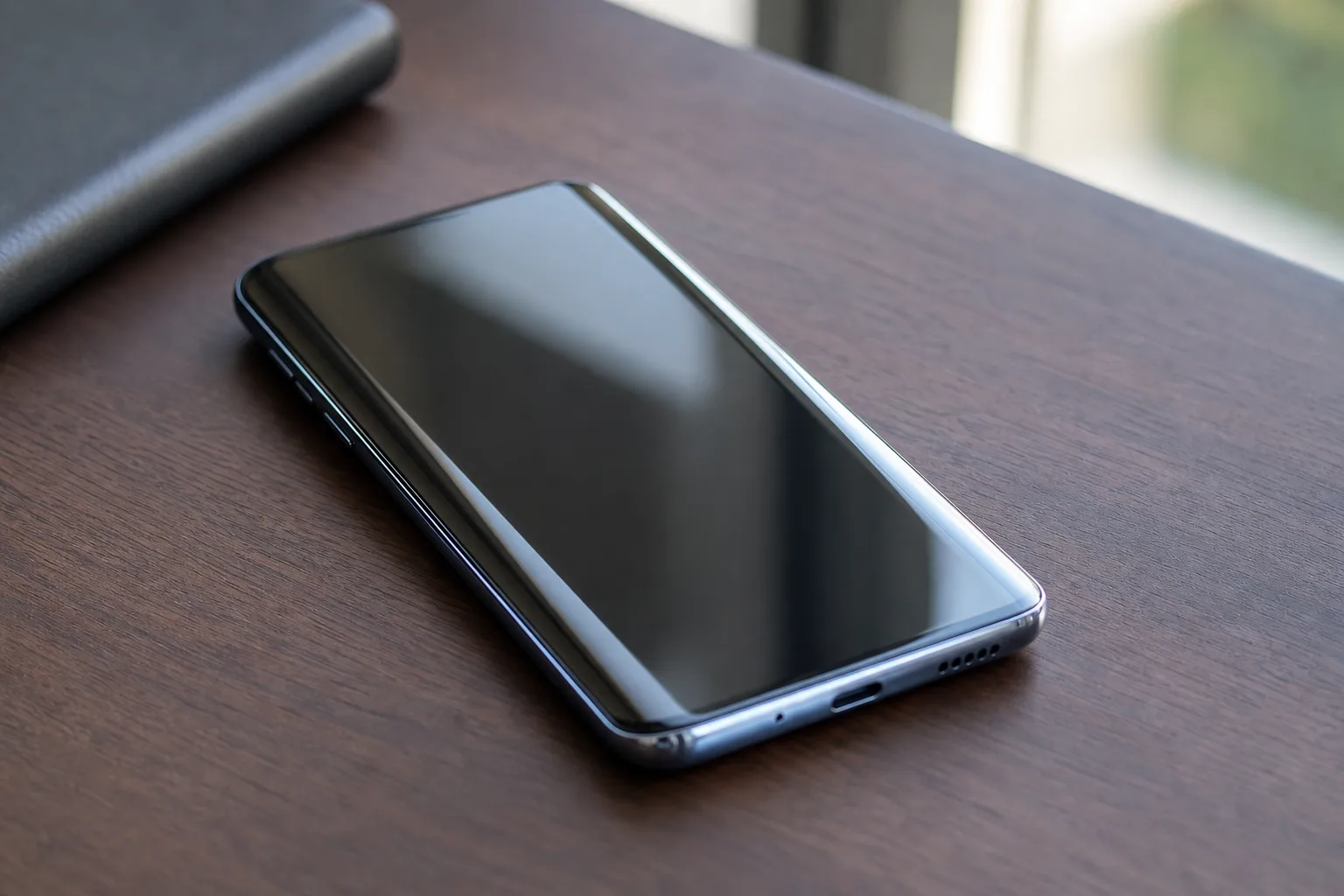
- The 20th anniversary iPhone could arrive in autumn 2027 with a curved, nearly borderless glass design and two Pro-sized models.
- Apple reportedly sees the 20th anniversary iPhone as a platform for under-display sensors, solid-state controls, custom camera hardware and its own modem.
- A thinner OLED panel, high-bandwidth memory and a silicon-heavy battery could improve performance, display quality and endurance if manufacturing plans work.
- The biggest question is whether Apple can turn ambitious component roadmaps into a durable phone people will actually want to repair and use.
Table of Contents
The 20th anniversary iPhone has a very high bar to clear
Apple has spent years sanding the iPhone into a familiar pebble: flatter sides, better cameras, brighter screens, faster chips. The 20th anniversary iPhone, expected in 2027, is rumored to be the moment the company breaks that rhythm. Not with another titanium finish or a relocated button, but with a genuinely different physical object: a handset whose glass and display appear to flow around its edges.
That matters because Apple’s last true iPhone reset was the iPhone X. Launched in 2017, it traded the Home button for Face ID, introduced the notch, and gave Apple a design language it has been iterating on ever since. The rumored anniversary model could play a similar role, defining what premium iPhones look like well into the 2030s.
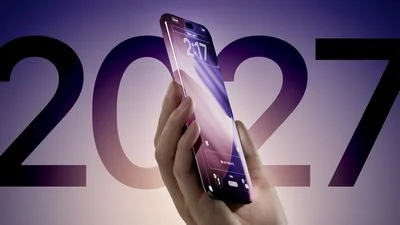
There is a small calendar oddity here. The first iPhone was announced in January 2007 and reached stores on June 29 that year. Yet Apple’s product calendar, not nostalgia, usually wins. The iPhone X arrived in the fall of 2017, and the current expectation is that the 20th anniversary iPhone will land in the normal fall 2027 cycle. Reports have variously called it the iPhone 20 and iPhone XX. Apple could pick either name, or do what Apple does best: keep everyone guessing until the invite lands.
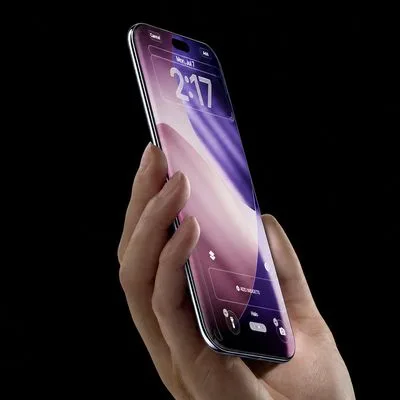
For now, every claimed specification needs a large asterisk. A phone due more than a year out is not a product announcement; it is a collection of supply-chain ambitions, prototypes and decisions that could still be killed in a Tuesday meeting in Cupertino. Remember AirPower? Exactly.
20th anniversary iPhone design: glass, curves and almost no frame
The clearest thread across the reports is an all-glass design with a display that curves gently over all four sides. This supposedly would not copy the dramatic waterfall screens that became a staple of Android flagships, where content can appear to slide off the side of the phone. Apple is said to be pursuing shallow, consistent micro-curves instead. Think less like a folded sheet of paper and more like the softly rounded edge of a polished stone.
If Apple gets it right, the 20th anniversary iPhone could make today’s bezels look dated without making accidental touches a daily annoyance. That’s the trick. Samsung and others have already proved that curved displays can be visually striking; they have also proved they can create glare, distort text at the edges and complicate screen-protector shopping. Apple has historically avoided adopting a technology simply because its rivals got there first. Its version would need to feel better, not merely look cleaner in marketing shots.
One reported target puts the bezel at roughly 1.1mm, down from around 1.44mm on the iPhone 17 Pro. That sounds microscopic because it is. But on a device held close to your face dozens of times a day, removing that thin black border can change the impression of the whole product. On the 20th anniversary iPhone, the rumored lineup would include models around 6.3 and 6.9 inches, broadly matching the established Pro and Pro Max split. The larger handset may even be marketed as a 7-inch phone if its usable screen area crosses that psychological threshold.
There’s an obvious downside: more exposed glass is more glass to crack. Apple has become very good at materials marketing, but physics remains stubbornly unimpressed. An edge-wrapping screen could make cases less elegant and repairs more expensive, two trade-offs Apple needs to reckon with rather than wave away.
A display upgrade that could matter more than the curve
The shape will grab attention, but the screen technology underneath could prove more important. Reports say Apple is evaluating Samsung-made OLED panels based on Color Filter on Encapsulation, or COE. In plain English, this removes a polarizer layer and places color filtering closer to the OLED encapsulation. The result can be a thinner display stack that allows more light through.
That should mean higher brightness at lower power use, a rare bit of engineering progress users can actually feel. Outdoor visibility is still one of the most practical measures of a phone screen, especially when you are trying to read a boarding pass in direct sunlight. A crater-shaped diffusion layer is also reportedly intended to keep brightness even around those curved edges, where panel uniformity gets difficult.
The 20th anniversary iPhone may pair that panel with newer 16nm display driver chips. For a 20th anniversary iPhone built around thinner glass and tighter curves, display efficiency could be especially important. None of this makes for a splashy keynote line, admittedly. But display power draw is one of the quiet variables that determines whether a thinner, brighter phone can still make it to bedtime. Apple’s official iPhone lineup already emphasizes battery life and outdoor brightness heavily; the next major design has to improve both, not sacrifice them for aesthetics.
Apple’s silicon agenda is spreading beyond the processor
The most interesting part of the 2027 reports is that Apple’s in-house chip strategy may finally reach the parts users never see. The expected A21 processor in the 20th anniversary iPhone would reportedly be a second-generation 2nm design. That alone is unsurprising: Apple has made annual A-series advances its most reliable advantage for more than a decade.
More revealing is the talk of mobile high-bandwidth memory, a stacked DRAM approach usually associated with compute-heavy systems. Connecting higher-bandwidth memory closely to the GPU could help with demanding on-device AI tasks, which Apple has been eager to push under the Apple Intelligence banner. My read is that Apple wants AI features to feel local, responsive and private rather than like a progress spinner waiting on a cloud server. Whether consumers will care about the memory architecture is another matter. They will care if photo editing, translation or Siri requests stop feeling sluggish.
The 20th anniversary iPhone is also rumored to use an Apple-built camera sensor rather than Sony hardware. The proposed stacked sensor uses LOFIC, short for lateral overflow integration capacitor, allowing pixels to handle different levels of incoming light. Claims of up to 20 stops of dynamic range should be treated cautiously until somebody tests a shipping device, but the goal is sensible: preserve shadow detail and bright highlights in the same image without turning every sunset into an HDR cartoon.
Apple’s modem plans fit the same pattern. Following the C1 and C1X efforts, the company reportedly wants its own modem in high-end US iPhones by 2027, with improved efficiency and performance against Qualcomm. Modems are notoriously difficult, and Qualcomm has spent decades mastering them. Still, bringing this component in-house could give Apple tighter control over battery life, radio behavior and the pace of future iPhone designs.
Buttons and batteries are where the rumors get adventurous
One of the stranger-sounding claims is also one of the most plausible: Apple may resurrect its solid-state button project. Rather than moving mechanical side, volume, Action and Camera Control buttons, the frame would use haptic controls that simulate a press. Apple has already demonstrated the principle with the MacBook trackpad and the iPhone’s former Home button. When done well, it feels surprisingly real.
The difference is that buttons are not trackpads. You use them with gloves, wet hands, cheap cases and no attention whatsoever while walking down the street. A 20th anniversary iPhone with haptic controls would need to work under precisely those conditions. Reports say the system has been tested that way and could retain basic operation even after the battery runs out through an ultra-low-power controller. If true, that is smart engineering. If it fails in ordinary use, it will be remembered as a solution in search of a problem.
Battery ambitions sound equally aggressive. Pure silicon battery technology could pack more energy into the same volume than conventional lithium-ion cells, potentially offsetting the energy demands of a brighter curved display. A rumored 6,000mAh capacity would be enormous by iPhone standards, though there is no solid basis yet to treat that number as settled. Apple’s usual approach has been to prioritize efficiency over headline battery capacity, and that may remain the wiser path.
The real test is whether Apple makes the future practical
Taken together, these reports describe a convergence device: an edge-to-edge OLED, hidden sensors, custom camera silicon, custom modem hardware, new memory, new battery chemistry and potentially no moving buttons. That is a lot to put into one expensive phone, even for Apple.
Frankly, the danger is that Apple chases the cleanest possible silhouette at the expense of the things people live with: durability, heat, repair costs and case compatibility. The iPhone X succeeded because its trade-offs delivered a clear benefit every time you unlocked it. The 2027 model needs that same clarity. A prettier slab of glass is not enough.
If these reports hold, Apple is preparing a phone that could make the current Pro design feel like the final, polished version of an old idea. But the company will be judged less on how completely it hides the seams than on whether the 20th anniversary iPhone makes everyday use meaningfully better. Twenty years after the original iPhone, that remains the only anniversary gift worth unwrapping.
Frequently Asked Questions
When will the 20th anniversary iPhone be released?
Reports point to a fall 2027 launch, likely within Apple’s usual September iPhone release window. The original iPhone went on sale in June 2007, but Apple also marked its tenth anniversary with the iPhone X in the autumn rather than in June.
Will the 20th anniversary iPhone be called iPhone 20?
Rumors have used both iPhone 20 and iPhone XX, and Apple has skipped expected numbering before when it introduced the iPhone X instead of an iPhone 9 in 2017.
Will the anniversary iPhone have under-display Face ID?
That remains uncertain. Apple is reportedly working on hiding Face ID hardware beneath the screen, but display analyst Ross Young has suggested the technology may not be ready by 2027, potentially leaving a smaller Dynamic Island instead.

