

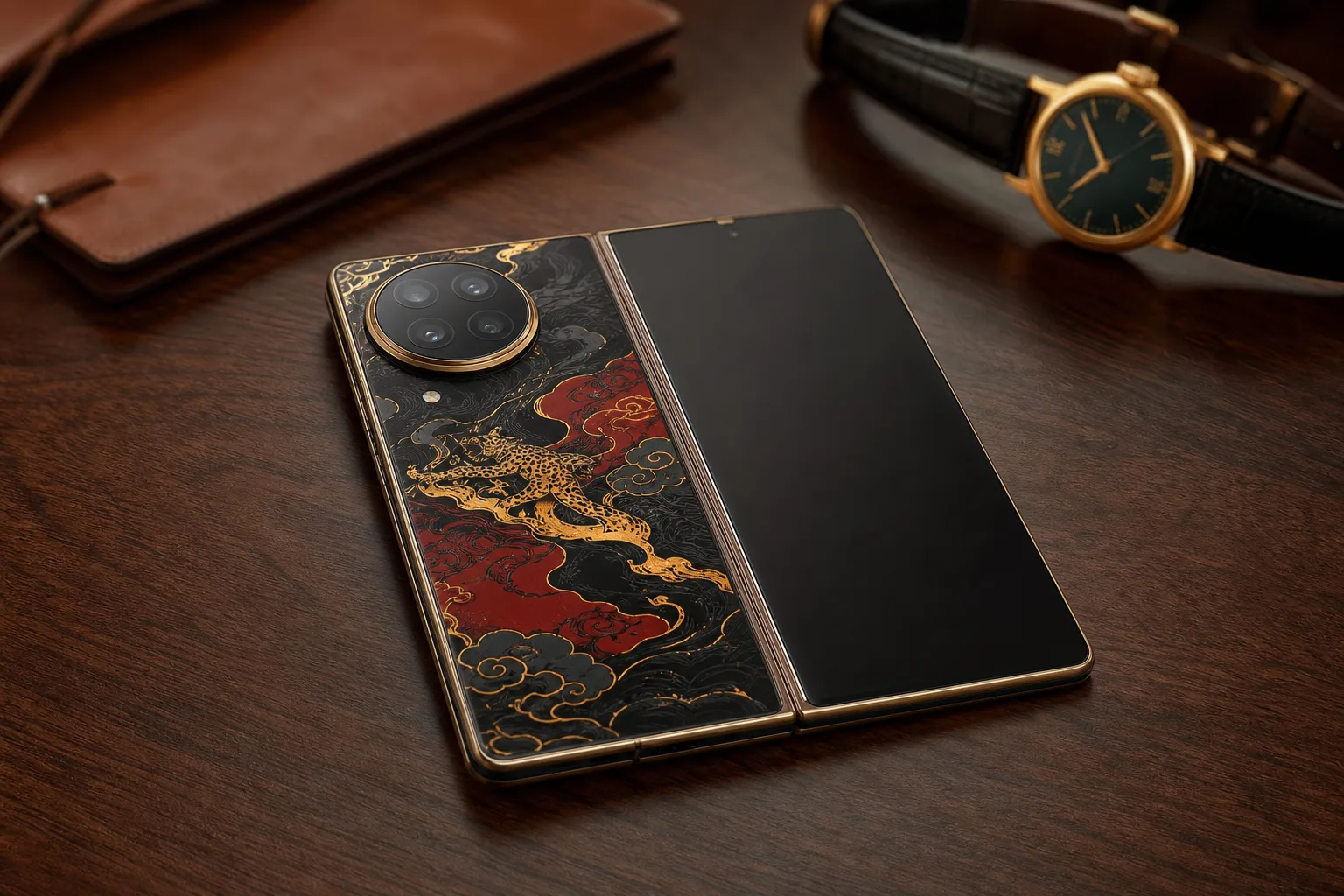
- Caviar’s Galaxy Z Fold 8 Movie Edition collection starts at $12,560 and limits each film-inspired design to 19 phones worldwide.
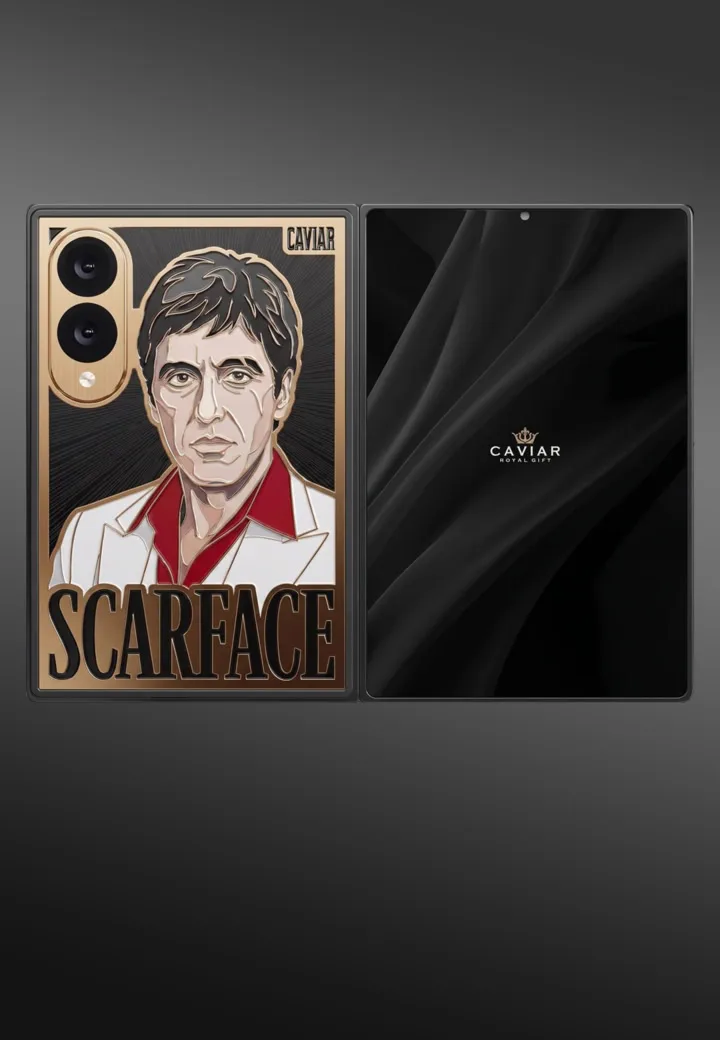
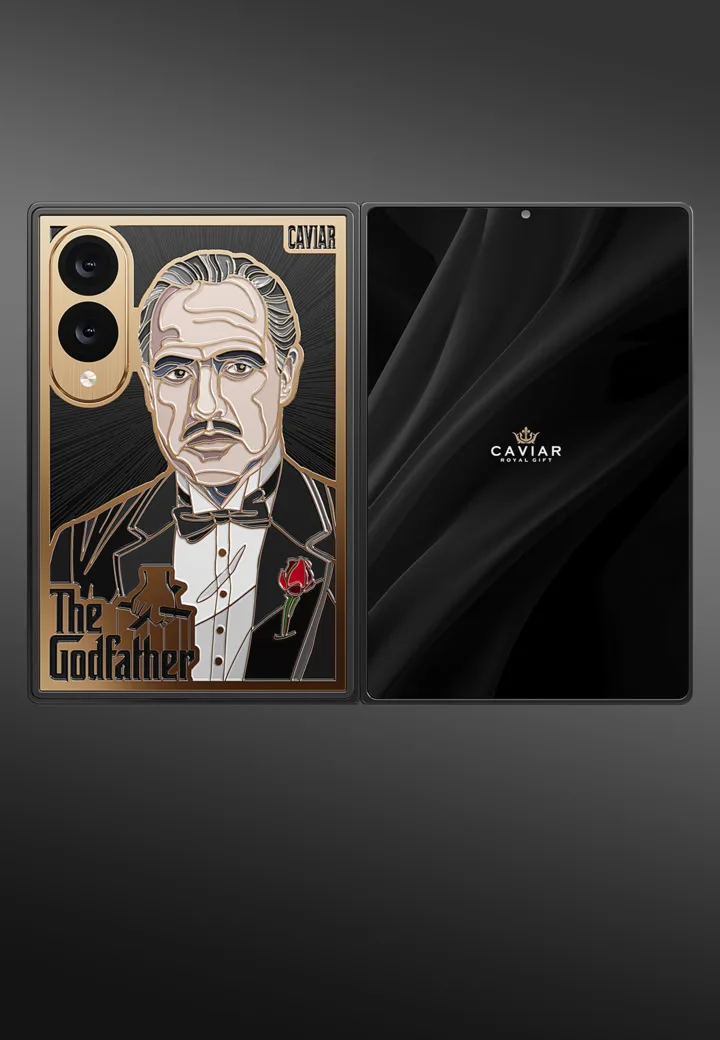
- The Galaxy Z Fold 8 Scarface and Godfather models use cloisonné enamel and 24-karat gold-plated details rather than printed skins.
- A Joker design is reserved for the more expensive Galaxy Z Fold 8 Ultra, extending Caviar’s collector-focused Legends lineup.
- These phones sell scarcity and handwork first, while Samsung’s foldable technology remains the functional foundation underneath.
Table of Contents
Galaxy Z Fold 8 movie editions are selling a very specific kind of status
There are luxury phones, and then there are devices that look designed to be displayed under a glass coffee table. Caviar’s latest Galaxy Z Fold 8 collection belongs firmly in the second category: foldables dressed in imagery from Scarface, The Godfather, and the Joker, with prices beginning at $12,560.
That number buys more than a Samsung handset with an elaborate back plate. Caviar says it is making just 19 examples of each movie-themed version worldwide, using cloisonné enamel and 24-karat gold-plated accents. In person, the effect would be closer to a miniature collectible plaque that happens to unfold into a large-screen computer than to a customized phone.
My read is that Caviar knows exactly what it is doing. It is not trying to convince anyone that a regular buyer needs a five-figure Galaxy Z Fold 8. The company is offering a hyper-limited object for people who already own watches, cars, art, and perhaps a standard flagship phone in every room of the house. Practicality left the building several thousand dollars ago.
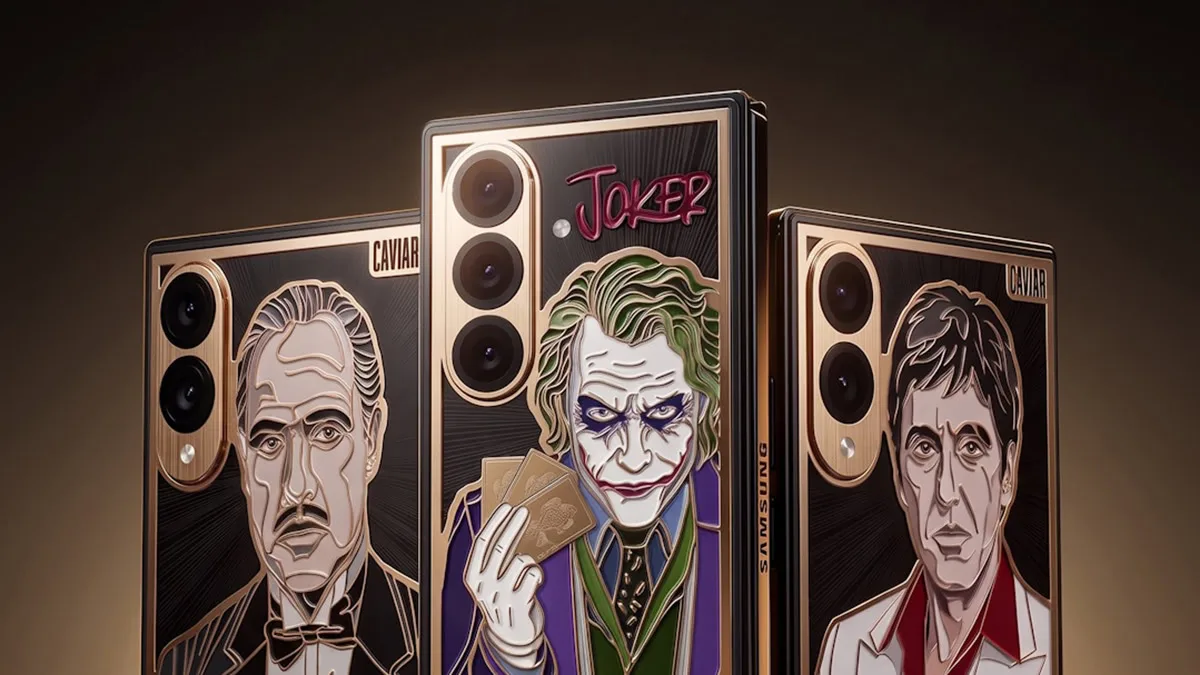
The movie choices do plenty of the selling. Tony Montana, Don Corleone, and the Joker have long occupied that strange corner of pop culture where iconic cinema collides with aspirational poster art. You have probably seen some version of all three on a dorm wall, in a bachelor apartment, or behind the counter at a barbershop. Caviar has translated that visual language into enamel and precious-metal trim, then put it on a phone that costs more than a decent used car.
Handmade enamel gives the Galaxy Z Fold 8 a different pitch
Caviar says the designs use cloisonné, a traditional decorative technique in which thin metal boundaries create small cells that are filled with enamel and fired. It is painstaking work, and it makes more sense here than simply slapping a high-resolution image onto a glass panel. A printed case would make these devices expensive accessories. Cloisonné gives Caviar a plausible argument that its Galaxy Z Fold 8 editions are objects of craft.
The Scarface and Godfather models are based on the standard foldable, while the Joker version is attached to the Galaxy Z Fold 8 Ultra. That split tells you how Caviar has arranged the range. The company is using Samsung’s product ladder as its own luxury ladder: buy the regular model if you want the cinematic artifact, or start with the Ultra if you want the one positioned as the collection’s peak.
Foldables are moving parts, and that creates a real problem here. They have hinges, flexible screens, batteries that age, cameras that will eventually look dated, and software support windows that do not care how much gold surrounds the chassis. A mechanical watch can be serviced for generations; a 2026 foldable is still a 2026 foldable. That makes a $12,560 Galaxy Z Fold 8 a much harder proposition as an heirloom, even if the exterior survives beautifully.
Samsung, for its part, has spent years trying to make foldables feel less experimental and more like normal premium phones. Its official Galaxy Z Fold lineup is sold on larger displays, multitasking, productivity, and increasingly polished hardware. Caviar takes that sensible foundation and drives it in the opposite direction, toward theater. Neither approach is wrong, but they are aimed at radically different people.
The actual product is scarcity, not the Galaxy Z Fold 8
Only 19 units per design is the detail that matters most. In conventional consumer electronics, limited supply often reflects manufacturing constraints. Here, it is the feature. Caviar’s editions are built around the psychology of rarity: a buyer is not merely getting a customized Galaxy Z Fold 8; they are joining a list of at most 18 other owners around the world.
This is a familiar playbook in luxury. Brands routinely turn ordinary utility into an identity marker through rare materials, serialized production, and a story that gives buyers permission to pay wildly above the underlying product’s value. A leather bag carries things just like a canvas tote. A Caviar foldable runs apps, takes calls, and folds shut like the Samsung phone underneath it. The premium is about the conversation it starts when it lands on a table.
That strategy may sound frivolous, but it has a cold commercial logic. Smartphones have become visually homogeneous. From a few feet away, even expensive flagships often look like black slabs with camera bumps. Foldables offer a more distinctive silhouette, and Caviar adds a backstory loud enough to cut through a room. For its target buyer, quiet luxury is apparently not on the menu.
The company recently released a Lionel Messi-themed foldable in its Legends range at roughly the same price tier. The film editions extend that formula with characters whose cultural shelf life is arguably even more durable than a single sports season. Whether the selected characters age gracefully is another matter. The Joker is endlessly recyclable; Don Corleone is prestige shorthand; Tony Montana is, frankly, a very particular statement to make with your work phone.
Luxury tech has a built-in expiration date
The oddest part of the Caviar proposition is that the craftsmanship may outlast the technology by a wide margin. In five years, the Galaxy Z Fold 8 inside one of these creations could be unsupported, slow, or simply eclipsed by cheaper phones. Collectors may value it anyway, much as they value obsolete luxury gadgets and limited-run electronics now, but that outcome is never guaranteed.
Caviar is not really competing with Samsung’s standard retail pricing, nor with a premium case from a mainstream accessory brand. It is competing with collectible sneakers, art objects, bespoke jewelry, and the kind of purchase where explaining the price is part of the appeal. If these editions sell, it will not prove that consumers want gold-plated foldables. It will prove that a tiny group of buyers remains willing to treat consumer electronics as wearable pop-culture memorabilia—and that may be the more durable business than the phone itself.

