- The Best Buy anniversary sale has meaningful Apple discounts, including $60 off AirPods Pro 3 and up to $500 off select MacBook Pros.
- TVs are the headline act in the Best Buy anniversary sale, led by a 98-inch Hisense QLED set discounted by $1,400.
- Most listed offers do not require a paid My Best Buy membership, removing an increasingly common retail checkout barrier.
- Big percentage discounts deserve skepticism, especially on televisions, so compare model numbers and panel specifications before buying.
Table of Contents
Best Buy anniversary sale puts the biggest numbers on TVs
A retailer turning 60 is mostly a marketing excuse, but the Best Buy anniversary sale has landed with a few prices that deserve more than a passing glance. The event runs through the rest of the week and covers Apple hardware, headphones, televisions and monitors. The useful bit for shoppers: Best Buy says most of the advertised offers are available without a My Best Buy Plus or Total subscription. That matters more than it might seem. Retailers have become very fond of putting their best prices behind paid membership tiers, which can turn a supposedly cheap purchase into a small annual commitment.
Within the Best Buy anniversary sale, the eye-catching deal is a 98-inch Hisense QLED 4K Google TV for $999.99, a stated $1,400 reduction. A sub-$1,000 98-inch television would have seemed faintly absurd not long ago; now it is a familiar feature of the race among Hisense, TCL and other value-focused brands to own the oversized-TV aisle. Still, size is the easy part. Anyone considering it should check the exact model’s brightness, local dimming performance, refresh-rate support and available wall space before treating the red sale label as a verdict on quality. A 98-inch screen is less like buying a TV and more like moving a sofa.

Best Buy also has the 65-inch Samsung The Frame from 2025 at $999.99, down $600, and a 65-inch LG OLED at $1,499.99, down $1,200. The latter is potentially the more compelling purchase for people who care about movies and gaming, provided the model matches the specifications they want. OLED’s per-pixel contrast still gives it an obvious advantage in a dark room. The Frame, by contrast, sells an aesthetic: it is for someone who wants a television to disappear into a gallery wall when nobody is watching it. Those are different jobs, and no amount of discounting makes them interchangeable.
More modest sets are discounted too: a 55-inch Toshiba Fire TV is listed at $249.99, a 55-inch Insignia QLED at $249.99, and a 65-inch LG UA7050 at $329.99. Elsewhere in the Best Buy anniversary sale, those prices are practical, but shoppers should resist comparing markdown percentages across brands as if they were benchmark scores. Television list prices are famously slippery. The useful question is whether the current price is competitive for that precise model, today.
Apple discounts are real, but not every offer is equally useful
The Apple portion of the Best Buy anniversary sale is less dramatic than the TV page, though there are legitimate savings for buyers who already know what they need. AirPods Pro 3 are $189.99, or $60 off, while AirPods 4 are $99.99 after a $30 cut. AirPods Max 2 fall to $429, a $120 reduction. Apple rarely permits retailers to turn its newest hardware into a clearance-bin spectacle, so $60 off a current Pro model is the kind of deal that makes sense if a pair was already on your shopping list.
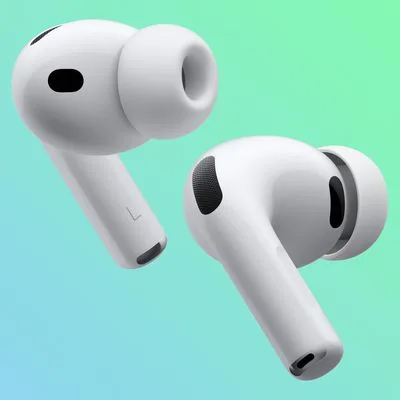
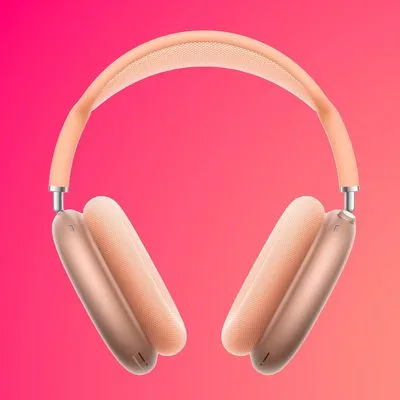
My read: AirPods Pro 3 are the cleanest Apple offer here for most people. At $189.99, they are approaching the sort of price at which waiting for an even better holiday promotion may not be worth the hassle. The over-ear AirPods Max 2 discount is larger in dollar terms, but $429 remains a serious purchase when Bose, Sony and Sennheiser regularly compete hard in premium noise-cancelling headphones. Comfort, weight and multipoint support matter more than brand loyalty at that price.
The Best Buy anniversary sale also includes up to $160 off unlocked iPhone Air models and $100 off M4 iPad Air configurations. Buyers should pay close attention to storage capacity and whether a carrier activation condition is attached to an iPhone price. An unlocked phone deal is usually simpler, particularly for people on prepaid plans or anyone who changes carriers often. Apple’s own iPhone buying information remains a useful place to confirm compatibility and current configuration details before making a retailer comparison.
The high-end MacBook Pro offers are substantial in absolute terms: a 16-inch M5 Max machine with 36GB of memory and 2TB of storage is listed at $3,999, down $400, while a 48GB/2TB configuration is $4,499 after a $500 cut. These are not casual laptops. They are workstation purchases for video editors, software developers, 3D artists and others whose time can genuinely be constrained by rendering or compilation. For that audience, a few hundred dollars off is meaningful; for everyone else, it is a reminder that an M-series MacBook Air or a standard Pro may be the sane choice.
The small print matters more than the Starbucks card
One offer in the Best Buy anniversary sale is a little too cute: the MacBook Neo is not discounted, but buyers receive a $25 Starbucks gift card. There is nothing wrong with free coffee. But a gift card is not a price reduction, and it should not be used to rationalize buying a computer before independent reviews, configuration comparisons and return policies have been checked. It is the retail version of throwing in a cookie with a mortgage application.
That distinction matters because Apple deal hunting has become oddly complicated. A retailer may match Apple’s standard price while offering store credit, a carrier may advertise a large phone discount tied to a multi-year service commitment, and refurbished hardware can quietly offer better value than either. The Best Buy anniversary sale is strongest when it simply lowers the cash price on a product a customer was ready to purchase anyway. It is weaker when the incentive is a side benefit that nudges someone toward a device they had not seriously evaluated.
Beats deals show where competition is doing the work
Best Buy’s audio pricing illustrates a healthier kind of discount pressure. The Beats Pill is $99.99, down $50; Beats Solo 4 are $129.99, down $70; and Beats Studio Pro are $169.99, a sizeable $180 below the stated regular price. Bose QuietComfort Ultra headphones are also $329.99, down $45. The Studio Pro price is especially notable because it puts Apple’s Beats brand in direct contention with midrange alternatives rather than asking shoppers to pay a premium just for the logo.
For buyers, this is where a little self-awareness pays off. Want light headphones for commuting and casual listening? Solo 4 may be enough. Need stronger isolation for flights or a noisy shared office? Studio Pro or Bose’s QuietComfort line are more sensible places to start. A speaker such as the Beats Pill is a simpler proposition, but battery expectations and USB-C charging habits still matter. The Best Buy anniversary sale has enough audio discounts to reward comparison shopping rather than an automatic grab for whatever carries the biggest percentage-off badge.
What to buy, and what to leave in the cart
There is no single winner across a sale this broad. The 98-inch Hisense deal is a striking price for buyers who have both the room and appropriately modest expectations for a budget giant. AirPods Pro 3 at $189.99 are an easy recommendation for iPhone owners who were already waiting. And professional users buying a maxed-out MacBook Pro can treat the $400 or $500 reduction as real money, not retail theater.
Everything else in the Best Buy anniversary sale calls for a pause. Check historical pricing, verify the model number, and decide whether the product solves a problem you actually have. Best Buy has been around for six decades because it understands the emotional pull of a big red discount label. The better question is whether this anniversary event signals more aggressive pricing ahead of the holiday shopping season. If competing retailers answer these TV and audio prices, waiting a few weeks could prove smarter than celebrating early.