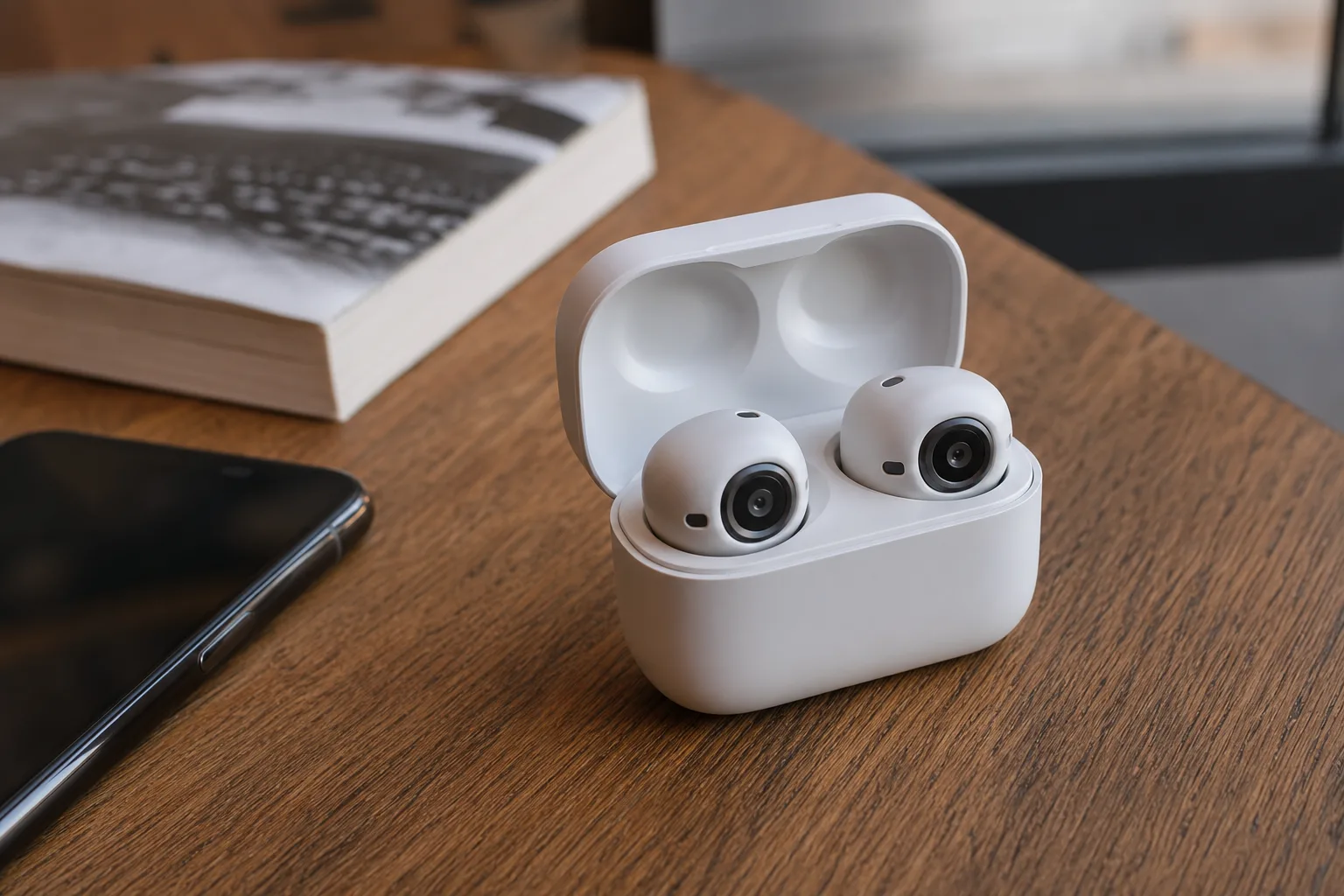
- Camera-equipped AirPods reportedly appear in macOS Tahoe 26.7 release-candidate assets, including a Visual Intelligence demonstration video.
- The camera-equipped AirPods may let Siri identify objects, answer environmental questions, and save information the wearer sees.
- Apple’s apparent warning about hair blocking the sensors suggests the device relies on outward-facing cameras rather than ambient audio alone.
- A September unveiling alongside new iPhones is plausible, but Apple has not publicly announced the B790 AirPods product.
Table of Contents
Camera-equipped AirPods are showing up in Apple’s software
Apple may be closer than expected to turning camera-equipped AirPods from a persistent rumor into a real product. A video reportedly tucked inside the macOS Tahoe 26.7 release candidate shows a wearer using earbuds to look at a book, then asking Apple’s Visual Intelligence system to save what they are seeing for later. That is a small demo, but it sketches a much bigger ambition: make Siri useful because it can finally see the same world you do.
The reported clip, first surfaced by MacRumors, is unusually direct for an unreleased Apple device. The narration says, “With Visual Intelligence, your world becomes savable. See something you like? Just ask me to save it for later.” Apple has already pushed Visual Intelligence through recent iPhones, where it can identify text, translate signs, and pull context from objects in a camera frame. Putting that capability in your ears changes the posture entirely. You would not need to fish a phone out of a pocket and point it at something.

The appeal is obvious. But it is also why this product could be far more consequential than another annual AirPods refresh. Earbuds are intimate, always-on-adjacent devices. Apple knows that better than anyone: AirPods became a cultural fixture largely because they disappeared into daily routines. Adding cameras means asking users to accept a new kind of sensor in the most socially sensitive place possible: on their face.
What Apple’s Visual Intelligence pitch actually means
The proposed use case sounds mundane, and that is probably intentional. A person holds up a book. The system recognizes it. Siri logs it for later. No theatrical sci-fi overlay, no gesture choreography. Just a quick memory aid. For camera-equipped AirPods, that may be the right opening move, because the product only works if it feels less like a surveillance gadget and more like a helpful pair of glasses you happen not to wear.
There is a legitimate gap here. Phones are excellent cameras but poor companions when both hands are busy. Imagine cooking from a recipe card, spotting a product at a market, or wanting to remember a label while carrying groceries. A voice-first visual assistant could capture that context without turning every tiny task into a screen session. Apple’s long-running promise around Siri has been ambient help. So far, frankly, the assistant has mostly delivered timers, weather forecasts, and occasional frustration. Seeing could give it a more defensible role.
The software assets reportedly include setup language telling users to ensure their AirPods are not covered for the most accurate environmental information. That detail matters. Hair, hats, or even how someone wears the buds could impair the view. It also strongly suggests Apple is dealing with outward-facing cameras positioned for a broad perspective, not merely proximity sensors dressed up as artificial intelligence.
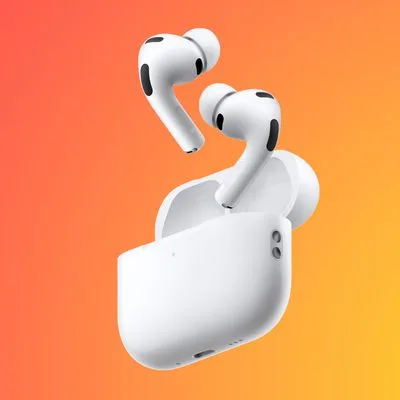
Apple has not confirmed the product, its feature list, battery life, price, or which models it will support. Software references are compelling evidence of internal preparation, not a launch guarantee. Anyone who remembers products quietly removed from beta builds knows the distinction. Still, the reported B790 codename appears more than once in the macOS release candidate, and Bloomberg’s Mark Gurman has previously identified B790 as Apple’s camera-bearing AirPods project.
The privacy problem won’t be a footnote
Camera-equipped AirPods would arrive in a world already wary of wearable cameras. Meta’s Ray-Ban smart glasses have gained traction because they package cameras inside a familiar object, and because Meta added a visible capture light. Snap’s Spectacles, Google Glass, and a procession of startup hardware all ran into some version of the same obstacle: other people hate discovering they may be on camera.
Apple has a better privacy reputation than Meta, but reputation will not do all the work. The company will need exceptionally clear hardware signaling when the cameras are active, sensible controls for disabling them, and a crisp explanation of when visual data stays on-device versus when it travels to a server. Its Apple Intelligence messaging already emphasizes on-device processing and Private Cloud Compute. Those claims will face a much tougher real-world test when the device sits in someone’s ears while they walk through a store, office, or school.
My read is that Apple will avoid framing these as recording headphones. The demo’s language centers on recognition and saving, not filming. That is not an accident. The company likely wants the camera to feel like a sensor that answers a question, rather than a lens constantly documenting life. But the distinction may be technically subtle and socially irrelevant to the person sitting across from the wearer.
“To get the most accurate information about things in your environment, make sure AirPods are not covered,” the reported setup text says.
Then come the unglamorous constraints: audio products live or die on comfort and battery endurance. Every millimeter and every milliwatt counts. Apple can make the concept look effortless in a 20-second video, but camera-equipped AirPods must remain comfortable through a commute and last long enough to earn a place in a pocket. If they become chunky, short-lived, or fussy about head position, users will simply reach for an iPhone.
A possible September debut, with plenty left unanswered
Gurman has suggested the earbuds could appear as soon as September, potentially alongside Apple’s next iPhone event and the expected iPhone 18 Pro family. That timing makes strategic sense. Apple’s Visual Intelligence tools need a steady stream of new hardware surfaces, while camera-equipped AirPods would give the company a headline-grabbing answer to the smart-glasses race before it is ready to sell a full pair of Apple glasses.
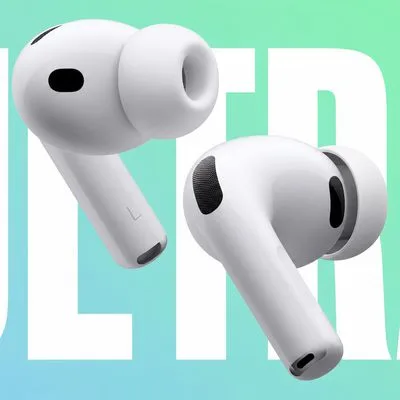
That does not mean these are Apple’s glasses substitute. They cannot show information in front of your eyes, which remains the central promise of augmented reality. Instead, they could be a bridge product: less conspicuous than a headset, less visually invasive than glasses, and potentially useful in the moments when a phone is inconvenient. Think of them as a voice-controlled visual notebook.
The real question is whether Apple can make that notebook feel polite. Camera-equipped AirPods could be the most natural form factor yet for an AI assistant that understands the physical world. Or they could remind everyone why Google Glass became a punchline. The difference will come down to one stubbornly human detail: whether people around you feel comfortable when you put them in.