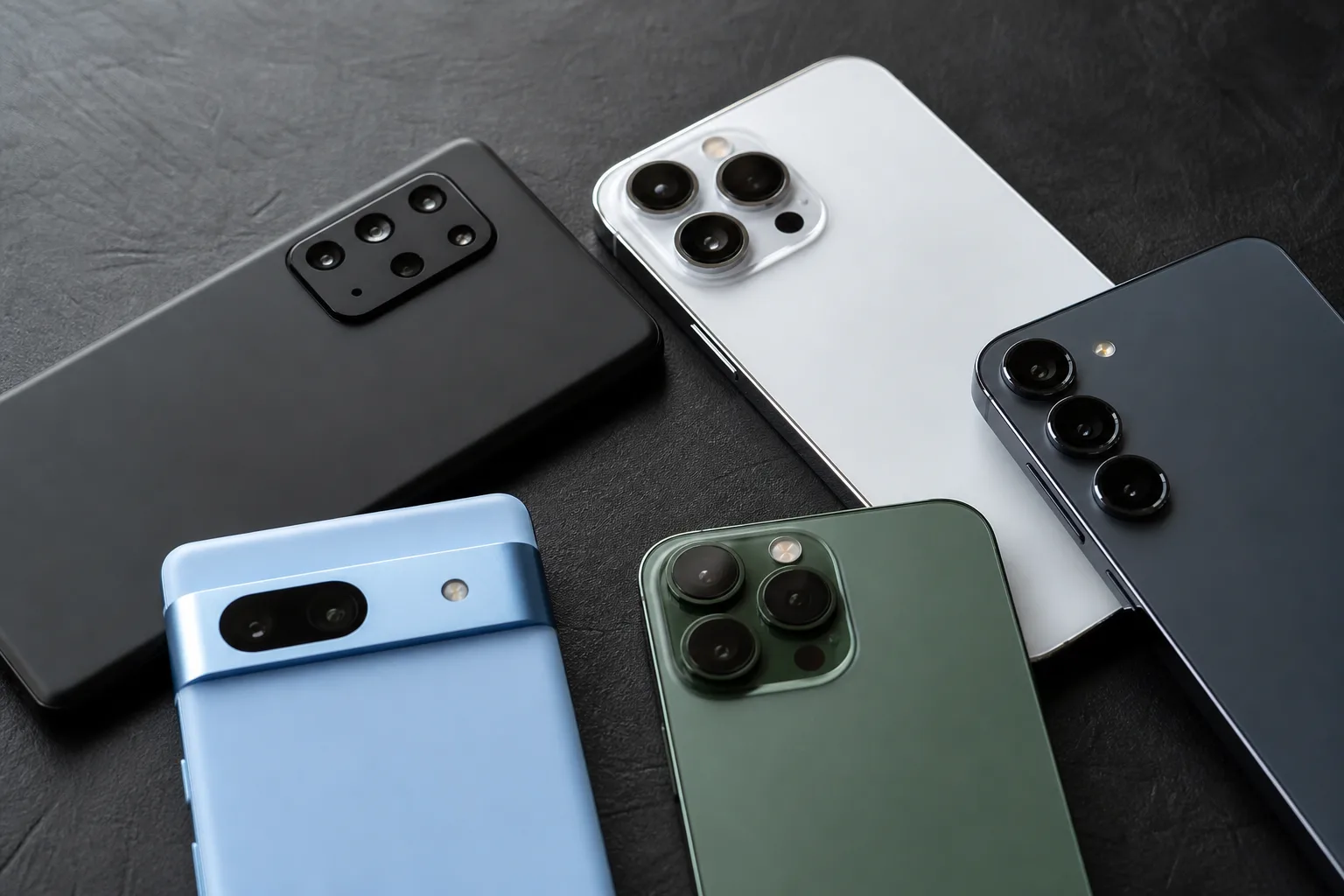
Buying a premium phone used to mean accepting a fairly blunt choice: get an iPhone for polished software and resale value, or get Android if you wanted to tinker. That line has blurred beyond recognition. The most compelling iPhone 18 Pro alternatives aren’t bargain-bin substitutes waiting for Apple’s leftovers; they’re phones with distinct strengths Apple may not prioritize at all.
The awkward part is that early feature leaks remain just that: early. Treat them accordingly. But for shoppers comparing iPhone 18 Pro alternatives, the question is whether an Android buyer has excellent flagship options right now, and the answer is emphatically yes.
My read is that shoppers should stop treating the most expensive iPhone as the automatic default. Apple still makes an exceptionally coherent device, particularly for people deep in iMessage, AirPods, Macs, and Apple Watch. Yet Android’s flagship tier now offers longer update policies, better zoom hardware, genuinely useful charging speeds, and a broader range of sizes and styles. That matters when you’re spending a premium price on something you’ll use every day.
- The best iPhone 18 Pro alternatives depend less on brand loyalty than camera preferences, charging habits, software expectations, and regional availability.
- Several iPhone 18 Pro alternatives already offer capabilities Apple rivals may struggle to match, including rapid charging and long-range camera hardware.
- Samsung and Google provide the safest Android purchases for buyers who value broad availability, lengthy update promises, and dependable carrier support.
- OnePlus, Xiaomi, and Oppo make a stronger case for enthusiasts willing to trade some ecosystem convenience for hardware ambition.
Table of Contents
Why iPhone 18 Pro alternatives deserve a serious look
The iPhone’s appeal is real. iOS is consistent, Apple’s accessory ecosystem is absurdly well-integrated, and the company’s chips have set a high bar for sustained performance. If your family uses FaceTime and your laptop is a MacBook, leaving can be inconvenient in the same way changing banks is inconvenient: possible, but not always pleasant.
Still, the practical trade-offs have shifted. Android phones commonly provide all-day battery life with far faster wired charging, while several manufacturers have treated camera hardware as a competitive sport. Apple has historically preferred a more restrained formula, betting on image processing and video quality rather than throwing every possible sensor at the problem. That’s a defensible strategy. It’s also why a traveler who wants clean long-range shots without carrying a separate camera may find the best Android phones more appealing.
Software support is no longer an easy Apple win, either. See More information for the details. That doesn’t guarantee either company will match Apple’s consistency in every area, but it removes a major reason to dismiss iPhone 18 Pro alternatives as short-term purchases.
Here’s the shortlist of iPhone 18 Pro alternatives I’d consider, with a few caveats where they belong.
A premium Android option
The Galaxy S25 Ultra is the obvious answer for someone who wants a no-drama Android flagship. It is widely sold, works cleanly with major US carriers, has an enormous accessory market, and comes with the kind of lengthy software support that makes a premium purchase feel less reckless.
Samsung’s Ultra line also makes the strongest case for choosing a phone as a tool rather than a fashion object. The large display is excellent for reading, video, spreadsheets, and split-screen multitasking. The integrated S Pen remains niche, but it is a useful niche: signing PDFs, circling a detail in a photo, or jotting a note is simply less irritating than doing the same thing with a fingertip.
The camera system is the bigger reason to consider it. Samsung has spent years building flexible focal lengths into its flagship phones, and that versatility helps in the situations where phones usually fail: distant stages, wildlife, kids at the far end of a sports field. Apple’s video remains a serious benchmark, but Samsung gives photographers more room to work.
There are drawbacks. One UI is packed with features, occasionally to the point of feeling like a kitchen drawer full of mystery cables. The phone is large, square-edged, and expensive. But among iPhone 18 Pro alternatives, it is the closest match for a buyer who wants top-tier specs, mainstream support, and no import headaches.
A camera-focused Android option
Google’s Pixel 9 Pro is not the raw-spec champion. That is almost beside the point. Pixels have earned their following because Google usually understands the moment after you press the shutter better than most competitors do. Skin tones, motion, night scenes, and quick point-and-shoot shots often come out looking ready to share without a detour through Lightroom.
The Pixel is also the cleanest answer for someone who wants Android without Samsung’s layers of duplication. Google’s software is simpler, its call screening and transcription tools can be legitimately handy, and Pixel owners receive Android updates directly from the company that develops the platform. There’s a reassuring logic to that.
Google’s AI features deserve a measured reaction. Tools such as photo editing, transcription, and call assistance can be useful. Other features still feel like demos in search of a habit. Frankly, every phone maker is now stuffing AI into launch slides because the industry needs a new sticker for the box. Don’t buy a phone for a chatbot. Buy it because the camera, battery, screen, and support policy work for you.
The Pixel 9 Pro is one of the better iPhone 18 Pro alternatives for a person who cares about photography but does not want photography to become a project. It is less ideal for the buyer chasing the absolute fastest charging or the most aggressive gaming performance.
A fast-charging Android option
OnePlus has built its reputation on speed, and the OnePlus 13 keeps that personality intact. The experience feels brisk, the displays are typically among the best in the business, and the company continues to make fast charging a normal part of owning a high-end phone rather than an optional extra hidden behind a proprietary accessory.
That last point should not be shrugged off. A phone that can recover a meaningful amount of charge while you shower and make coffee changes behavior. You stop planning your day around a battery percentage. Apple’s slower, more conservative approach has benefits for heat management and battery longevity, but it can feel dated once you have lived with genuinely rapid charging.
The OnePlus 13 is also a strong fit for Android users who want premium hardware without quite reaching Ultra-model pricing. Among iPhone 18 Pro alternatives, it is especially persuasive for buyers who value charging speed as much as camera flexibility. Its cameras have improved substantially, though buyers who consider photography their primary reason for upgrading may still prefer Google’s processing or Samsung’s zoom flexibility.
Software is the trade-off. OxygenOS is fast and generally pleasant, but it does not feel as assured as Google’s Pixel software or as feature-complete as Samsung’s. That does not make it a bad purchase; it makes it a more deliberate one.
Camera-first choices with a catch
If mobile photography is your obsession, Xiaomi’s 15 Ultra deserves attention. Xiaomi has made a habit of putting unusually ambitious camera hardware into its top-end phones, often including large sensors and serious telephoto capability. It is the sort of device that appeals to the person who notices focal lengths, sensor sizes, and whether a portrait mode has wrecked the edge of someone’s hair.
The Oppo Find X8 Pro takes a related but slightly different route: refined hardware, strong camera tuning, and a design sensibility that often feels more considered than the spec-sheet arms race suggests. Oppo and OnePlus share corporate roots, but their phones do not always land in the same markets or carry the same software experience.
And there’s the catch. Availability matters. Depending on where you live, Xiaomi or Oppo may not offer official sales, warranty coverage, carrier certification, or easy repair. Importing a phone can look clever until you need a replacement screen, a banking app rejects the device, or a crucial network band is missing. For US buyers especially, these are enthusiast choices, not universally sensible recommendations.
But for shoppers in regions where they are officially supported, both are among the most interesting iPhone 18 Pro alternatives. They show what happens when a phone maker treats the camera module as the product’s center of gravity rather than an annual checkbox.
Choose the phone that fixes your actual annoyance
The sensible way to choose among iPhone 18 Pro alternatives is to start with what annoys you about your current phone. Is it a weak zoom camera? Get the Galaxy. Is it unreliable quick photos of friends and family? Start with the Pixel. Do you hate waiting near an outlet? OnePlus has a persuasive answer. Do you want the most camera-forward hardware available in your market? Look hard at Xiaomi or Oppo.
Apple will almost certainly make the eventual iPhone 18 Pro a capable, polished flagship. It may improve cameras, performance, display technology, or its AI pitch. But it will enter a market where Android manufacturers have spent the past few years closing old gaps and opening new ones. For anyone weighing iPhone 18 Pro alternatives, the interesting question is no longer whether Android can compete with the iPhone. It is whether Apple’s particular set of compromises still matches the way you actually use a phone.
Frequently Asked Questions
What are the best iPhone 18 Pro alternatives to buy today?
The source suggests considering options other than Apple.
Should I wait for the iPhone 18 Pro or buy an Android flagship now?
The source suggests leaving Apple in the cart and considering another option.
Do Android flagships receive software updates as long as iPhones?
The source does not provide information about software update policies.