

- The iPhone 18 Pro delivers major benchmark gains and noticeably better sustained performance through a much larger vapor chamber.
- For most iPhone 18 Pro buyers, improved battery endurance and manual camera controls matter more than the modest exterior changes.
- Apple’s variable-aperture camera offers useful creative control, though the sharpest results reportedly arrive at ƒ/2.8 rather than fully open.
- Recent iPhone 16 Pro and 17 Pro owners have little practical reason to upgrade unless heat, charging speed or camera controls frustrate them.
Table of Contents
iPhone 18 Pro performance is the real story
The iPhone 18 Pro looks almost stubbornly familiar. Apple spent last year giving the iPhone 17 Pro line its visible redesign; this time, the company has concentrated on the parts users feel over months rather than admire in an unboxing video. The new A20 Pro processor, battery gains, camera controls and improved cooling are all practical upgrades. They’re also the sort of upgrades that make a terrific phone feel only mildly tempting if you bought a flagship iPhone in the past two years.
That’s less a criticism than a fact of life for mature smartphones. We’re long past the annual era of radically better screens or suddenly usable cameras. The iPhone 18 Pro appears to be Apple’s effort to remove the small annoyances that crop up when a phone is pushed hard: heat while recording video, battery anxiety late in the day, and a camera app that has historically treated advanced users like they were asking to enter a locked room.
The A20 Pro is Apple’s first smartphone chip built on a 2nm process, and early benchmark figures suggest that the architecture is doing meaningful work. Gizmodo’s Raymond Wong recorded Geekbench 7 scores of 4,027 single-core and 11,540 multi-core, against 3,258 and 9,167 for the previous A19 Pro. That’s roughly a 24% jump in single-core work and 26% in multi-core performance. Apple claims up to 20% faster CPU output and up to 40% faster graphics, depending on the task.
Benchmarks don’t tell the whole story. A phone doesn’t become pleasant because one number is bigger than another. These gains should matter in the places where iPhones already work hard: editing high-resolution video, processing computational photos, loading demanding games and keeping Apple’s expanding on-device intelligence features responsive. The harder question is whether iOS 27 gives that silicon enough room to stretch. Hardware can only sprint as fast as the software lets it.
Cooling and battery life finally get equal billing
The most encouraging detail in the iPhone 18 Pro reviews may be less glamorous than a 2nm chip: Apple reportedly made the vapor chamber three times larger than the one in the iPhone 17 Pro. Wong said his unit did not become hot during usual demanding work, including 4K video recording at 60 frames per second during Cupertino’s launch-week heat. Anyone who has watched a phone dim its display or slow down while filming outdoors will understand why this matters.
Apple has often been excellent at short bursts of speed. Sustained performance has been a more complicated story, particularly as mobile games, video workflows and generative AI have raised the thermal stakes. A larger cooling system is the difference between a sports car that wins a drag race and one that can finish the lap. Frankly, it’s the kind of engineering Apple should keep prioritizing over thinner dimensions nobody requested.
Battery results are solid rather than spectacular. In Tom’s Guide’s typical battery life test, the iPhone 18 Pro Max lasted 18 hours and 27 minutes, about 33 minutes ahead of the 17 Pro Max. The smaller model reached 16 hours and 17 minutes, nearly an hour beyond its predecessor. Apple also says the Pro Max can provide up to 15% more offline video playback. The more immediately useful improvement may be charging: reaching 50% now takes 15 minutes rather than 20.
That still leaves Apple behind OnePlus in the cited endurance test, where the OnePlus 15 managed more than 25 hours. But battery comparisons are messy because screens, networks and test methods vary. In practical terms, the new phones look less likely to punish people who spend long days on 5G, navigation, video calls and cameras.
The iPhone 18 Pro camera gets serious controls
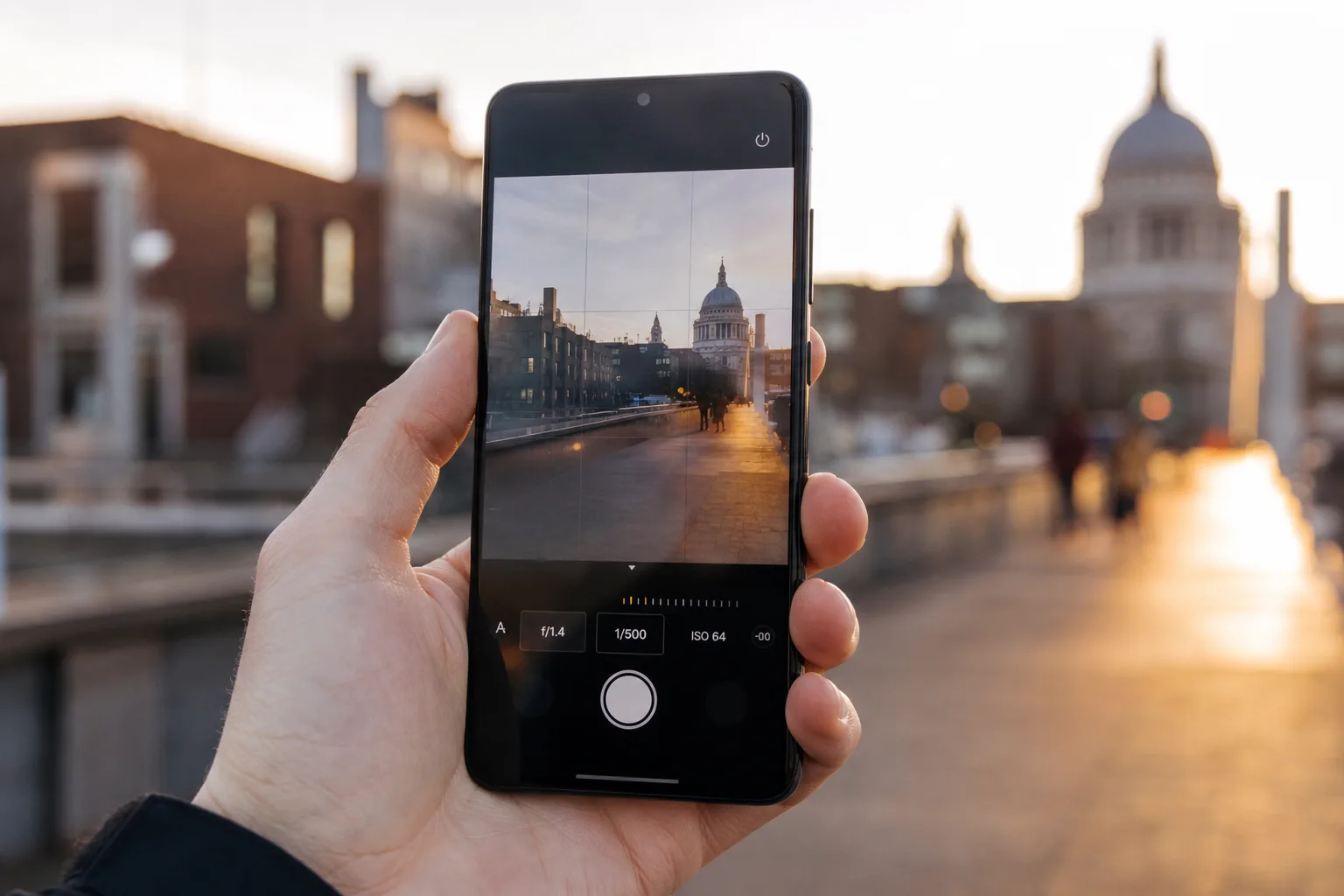
Apple is finally putting manual camera settings where Pro users can reach them. The iPhone 18 Pro adds adjustable shutter speed, white balance and aperture, plus a histogram for judging exposure. These are normal tools on dedicated cameras and have been common on Android flagships for years, so Apple isn’t inventing a category here. It is, however, recognizing that creators want more than the company’s preferred computational interpretation of every scene.
The headline hardware change is a variable aperture with options from ƒ/1.48 through ƒ/4.0. PetaPixel’s Jaron Schneider found that the widest ƒ/1.48 setting came with softer edges, while ƒ/2.8 produced the best overall sharpness. That tracks with basic optics: opening a lens wide gathers more light and can increase background blur, but it also exposes imperfections that are easier to hide at narrower settings.
Apple deserves credit for not locking users to a shallow-depth-of-field look simply because it photographs well in marketing. A variable aperture gives photographers a real choice between low-light capture, edge sharpness and depth. Still, CNET’s Patrick Holland raised a fair complaint: the controls sit low in the camera drawer, making them awkward to access one-handed. Worse, Apple apparently does not let users map them to the side-mounted Camera Control button. A sliding focus pull while shooting video seems so obvious that its absence feels distinctly Apple: polished hardware, oddly timid software decision.
A smaller Dynamic Island and an awkward modem split
The smaller Dynamic Island is not likely to drive many purchases, but it’s a sensible refinement. The iPhone 18 Pro can display up to three Live Activities at once, and the reduced cutout lets a second activity show more useful detail. Flight-tracking app Flighty is an especially good example because departure progress, timing and connection information benefit from every extra pixel. This is exactly the sort of feature that sounds trivial until you’re rushing through an airport.
Then there’s connectivity. Apple’s second-generation C2 modem is fitted globally in the smaller Pro model and in the Pro Max outside the United States. The U.S. Pro Max reportedly retains a Qualcomm modem, likely due to carrier support or contractual realities. Apple says the C2 offers faster uploads than its C1X predecessor while using 15% less power, and it is the company’s first in-house modem to support U.S. mmWave 5G.
That modem split is unusual for a product Apple normally presents as a uniform global flagship. Until independent labs publish controlled network testing, I’d treat the company’s claims as promising but unproven. Apple’s iPhone product information makes clear how central connectivity has become to its pitch, yet modem quality is brutally dependent on carrier conditions and location. One reviewer seeing a decent signal tells us very little.
The upgrade math remains brutally simple
The iPhone 18 Pro is shaping up as a very good phone, perhaps the most technically assured Pro iPhone Apple has made. Its chip is faster, its thermal design sounds substantially better, its battery lasts longer, and its camera software finally gives serious shooters more agency. Black is also back, alongside Silver, Burgundy and Glacier, for anyone whose buying decision really does begin with a color swatch.
But the case for upgrading from an iPhone 17 Pro is weak. Even iPhone 16 Pro owners should ask whether their current device actually struggles with battery, heat or camera limitations before spending flagship money. The iPhone 18 Pro is Apple refining a machine that was already highly refined. If Apple can pair this hardware discipline with less restrictive software next year, particularly around the camera button and its modem strategy, that could be the release that changes the conversation.

