

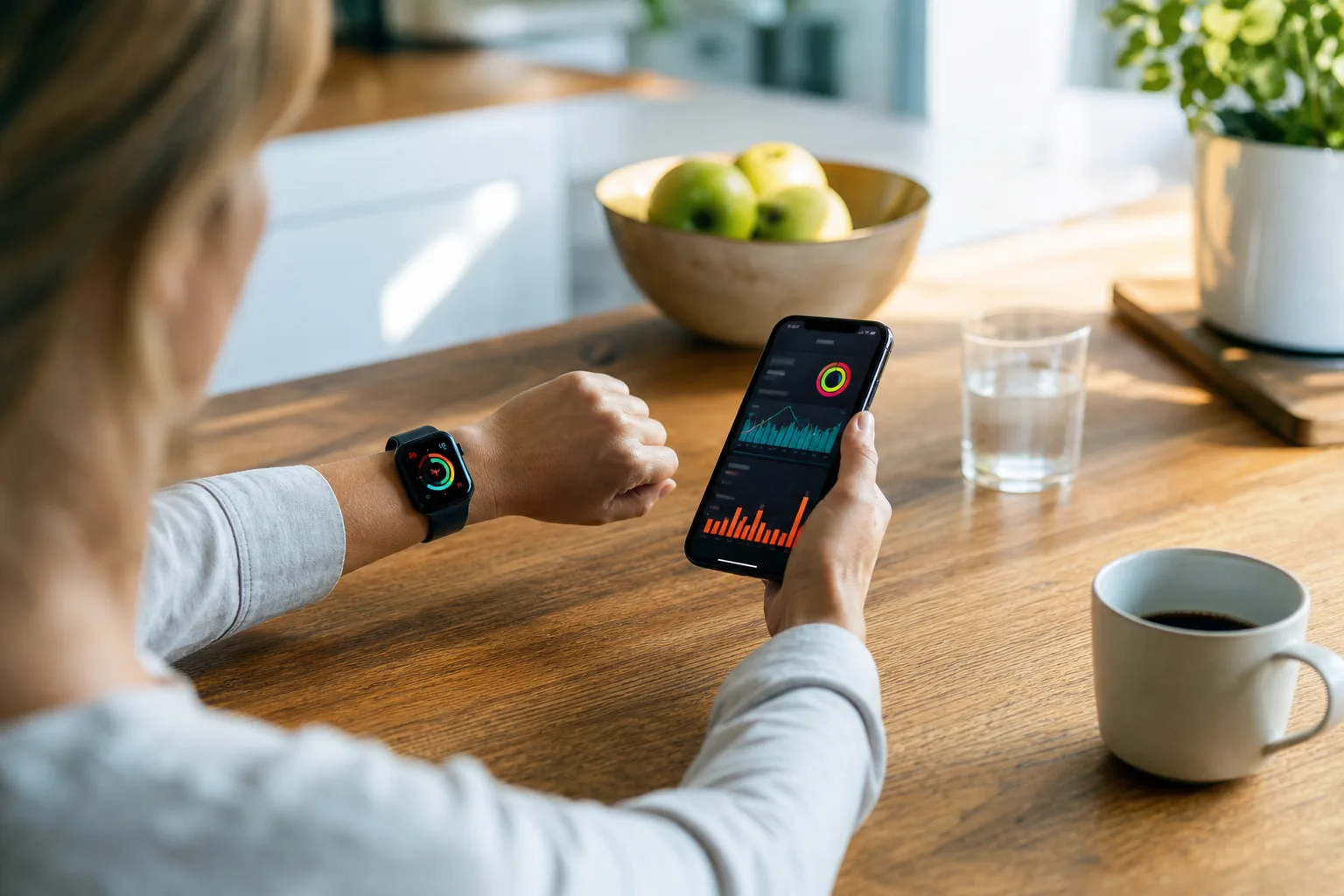
- The Apple Health app redesign in the iOS 27.2 beta turns years of wearable metrics into daily summaries and trend analysis.
- Apple Health app users can test Health Age and movement assessments, though certain readiness features require Apple’s newest watches.
- Apple is moving toward the personalized coaching territory occupied by Oura, Whoop, and Google’s Fitbit ecosystem.
- Several announced tools, including Quest lab ordering and tailored recommendations, have not yet appeared in the developer beta.
Table of Contents
The Apple Health app finally tries to interpret the numbers
For years, the Apple Health app has had the digital equivalent of a kitchen drawer problem. The Apple Health app collected nearly everything: heart-rate samples, sleep stages, step counts, medications, workouts, cycle tracking, and data from third-party gear. Finding it was easy. Knowing what any of it meant on a Tuesday morning was another matter entirely.
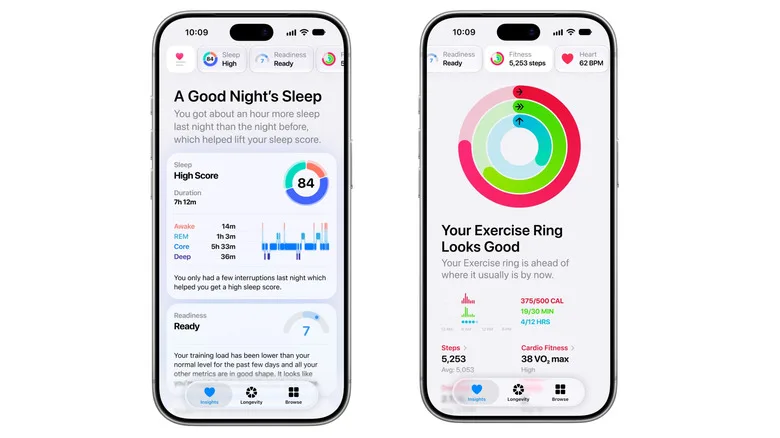
That starts to change in the iOS 27.2 developer beta. Apple’s redesigned health hub introduces an Insights tab, a Longevity section, and a more conspicuous attempt to translate Apple Watch data into practical context. The company has said the broader redesign will arrive later in 2026, but developers can now get an early look at what Apple thinks a modern consumer-health dashboard should do.
The shift is overdue. Wearables do not suffer from a shortage of sensors; they suffer from a shortage of useful interpretation. You can own a device that detects tiny changes in overnight temperature and still have no clue whether you should train hard, rest, or simply stop staring at a graph before coffee.
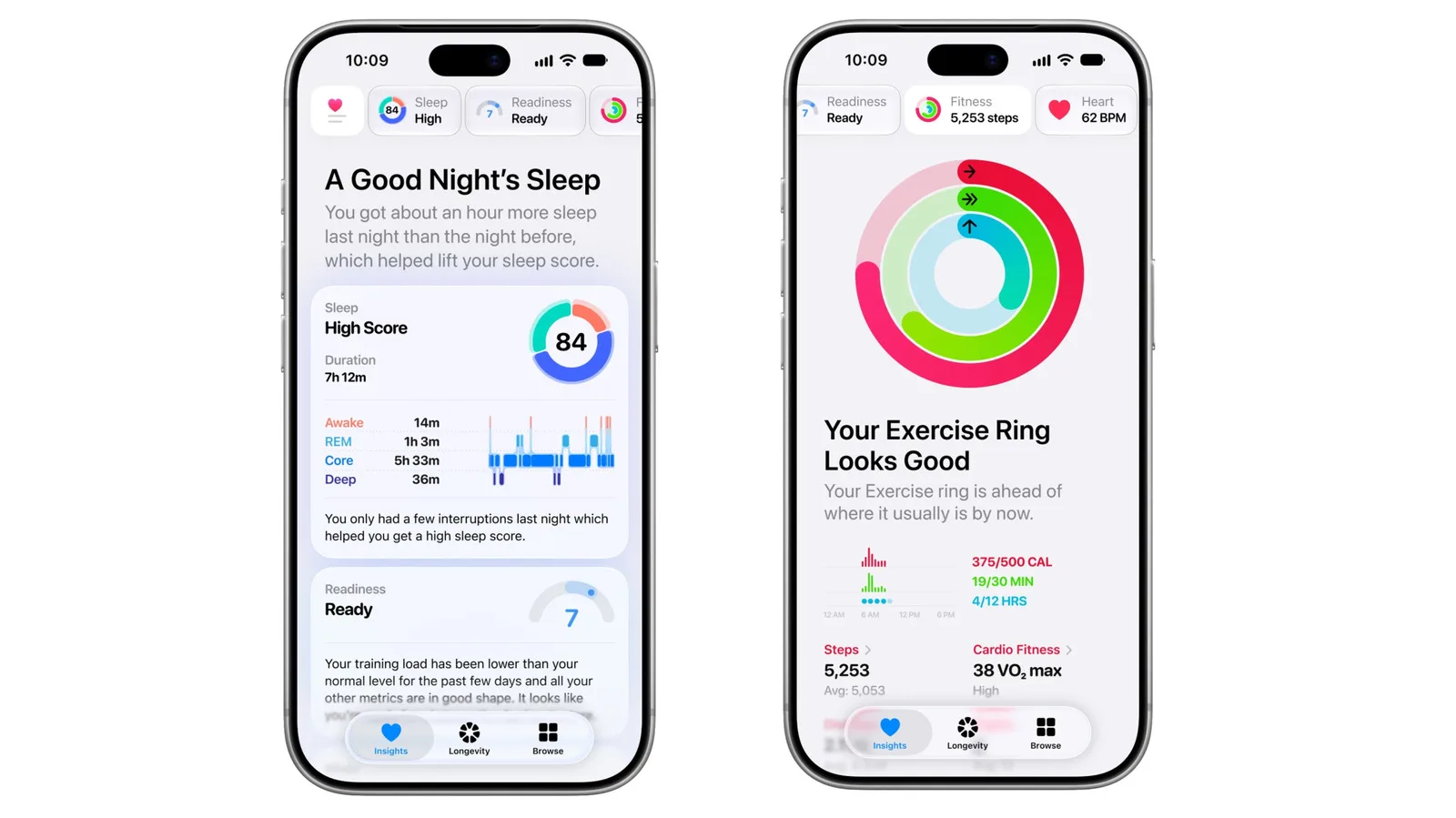
The new Insights screen is meant to tackle that. It gathers daily information and longer-term patterns around sleep, fitness, and readiness rather than requiring people to burrow through separate menus. Apple’s interface has traditionally been excellent at displaying discrete measurements, but competitors have spent years selling the story around those measurements. Apple is now, at last, telling one.
Apple Health app adds Health Age and movement tests
The flashiest addition is Health Age, an estimate of how a person’s body function compares with their chronological age. The Apple Health app calculates that view using Apple Watch data, placing Apple squarely in territory that has helped make Oura and Whoop culturally relevant well beyond the hard-core fitness crowd.
Those scores deserve a little skepticism. A single number has a powerful hold on people because it feels definitive, much like a credit score or a car’s dashboard warning light. But bodies are messier than that. Sleep, illness, stress, medication, pregnancy, travel, training load, and imperfect sensor readings can all make a neat-looking wellness score less neat in reality. Health Age may prove motivating, but it should not be mistaken for a medical diagnosis.
Apple is also adding movement assessments focused on flexibility, strength, and balance. That could be genuinely useful, especially for people who are less interested in closing activity rings than in staying capable as they get older. Fitness technology has spent a decade worshipping the marathoner’s metrics. Balance and functional strength are less glamorous, frankly, but they often matter more when someone wants to keep carrying groceries, climbing stairs, or avoiding a nasty fall.
Apple says health experts’ written and video commentary will surface dynamically in response to a person’s data. This feature will live or die by its execution. A well-timed explanation of a sleep trend could help users understand their habits. Generic lifestyle clips shoved into the app every morning would feel like wellness spam with a Cupertino accent.
Apple is taking aim at Oura and Whoop
The competitive subtext is not subtle. Oura, Whoop, and Fitbit have all built their health pitches around interpretation: readiness scores, recovery guidance, sleep assessments, and prompts that tell users what to do next. Apple had the hardware, the operating system, a vast installed base, and the data pipeline. What it did not have was a similarly persuasive layer of coaching.
The Apple Health app update narrows that gap, though Apple is approaching it in its own familiar way. The company is folding these features into an existing iPhone and Apple Watch ecosystem instead of asking people to buy a dedicated ring or commit to a fitness subscription. That is potentially a major advantage. A person who already wears an Apple Watch may get a more useful health experience without adding another device to charge, another app to open, and another monthly fee to resent.
There is a catch. Readiness, one of the categories appearing in Insights, is limited to the Apple Watch Series 12 and Apple Watch Ultra 4. Apple has often reserved its newest sensor-driven features for recent hardware, and the strategy makes business sense. Still, health tracking is exactly where long-term continuity matters. Telling users their multiyear data history is valuable while restricting a new interpretation layer to the latest watch can feel a bit like handing someone a map with only the newest roads marked.
Apple’s health page discusses encryption and user-controlled sharing, and that distinction could matter as the Apple Health app becomes more proactive. Apple’s health data infrastructure has generally relied on encryption and user-controlled sharing, while many rivals pair device sales with ongoing membership businesses. As Apple begins generating more conclusions from intimate data, it will need to explain not only what those conclusions mean, but how the underlying information is handled.
The important features are still on the way
The beta does not yet include every tool Apple previewed. Personalized Insights summaries, individualized recommendations, and the ability to order laboratory tests through Quest are apparently slated for later beta builds. The Quest integration is particularly interesting because it pushes the Apple Health app closer to the awkward boundary between consumer wellness software and actual healthcare services.
That boundary matters. Ordering a lab test is more consequential than receiving a reminder to wind down before bed. Apple has been careful in the past to position its devices as health tools rather than replacements for clinicians, and it would be wise to maintain that discipline. The best version of this product helps people ask smarter questions in a doctor’s office; the worst version persuades them that a colored score can answer those questions alone.
My read is that Apple has finally recognized that passive health-data storage was becoming a dead end. The winner in wearable health will not be the company that records the most signals. It will be the one that explains the signals clearly, respects uncertainty, and avoids turning every imperfect night of sleep into a reason to panic. iOS 27.2 suggests Apple understands the first part. The rest will come down to whether its advice feels genuinely useful once ordinary people, not developers, start living with it.

