

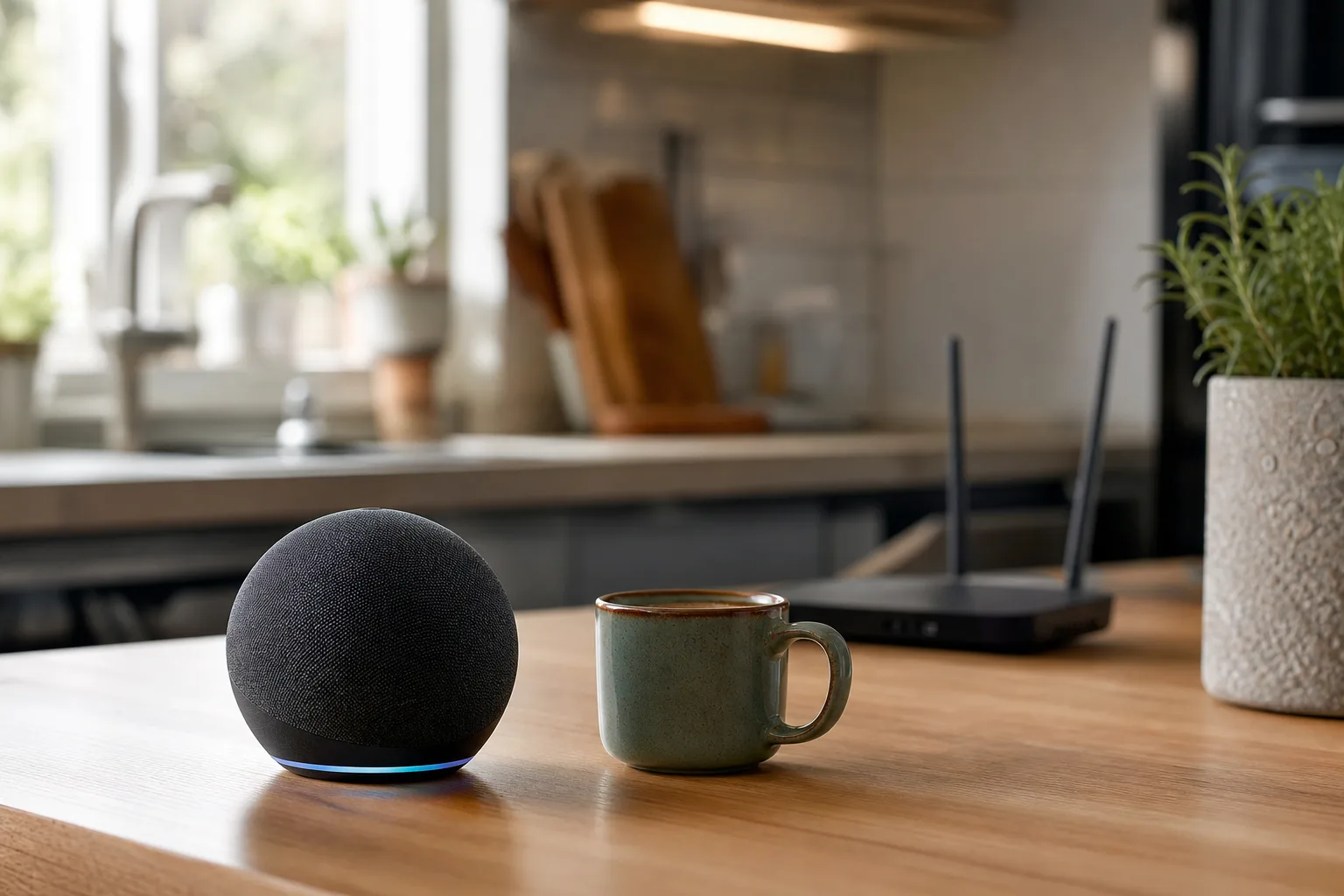
- The Google Home speaker update is testing five broad improvements across audio, Wi-Fi, setup, Assistant, and smart-home controls.
- Google Home speaker update testing covers the original Google Home, Home Mini, Nest Mini, and Nest Audio.
- The aging Google Home Max is absent, raising fresh questions about how long Google will maintain its premium 2017 speaker.
- Preview Program members can opt in through the Google Home app, while a wider release may take several weeks.
Table of Contents
Google Home speaker update targets the stuff that actually breaks
Old smart speakers rarely get better with age. They get slower, lose Wi-Fi at the worst possible moment, and occasionally decide that a simple request to dim the lights deserves a long pause. That is why this Google Home speaker update matters more than its unglamorous version number suggests.
Google has put firmware version 3.79.550760 into its Preview Program for the original Google Home, 2017’s Home Mini, the Nest Mini, and Nest Audio. The company’s changelog is brief but pointed: better audio and media streaming, improved volume handling, stronger setup and Wi-Fi behavior, a better Google Assistant entry experience, smarter home controls, plus general stability work.
That reads like a maintenance release. In practice, it could be the difference between a speaker that feels like a useful household appliance and one that feels like a temperamental smoke alarm with opinions.
Google’s smart speaker catalog has always had an unusually long tail. The original Google Home arrived in 2016, when voice assistants were being sold as the next interface for everything from music to thermostats. Many of those cylinders are still sitting on kitchen counters. Google deserves some credit for continuing to touch the software, even if the company’s record on keeping consumer products alive has made users understandably wary. Remember Stadia? People do.
The Google Home speaker update is currently limited to preview testers, so nobody should assume every listed improvement will land exactly as written. But Google normally uses this channel to catch bugs before firmware reaches the general population, and the company says updates install automatically overnight once they are available.
Wi-Fi and streaming fixes are the real headline
Frankly, the most interesting parts are not the vague references to performance. They are the specific focus on connectivity and media. Smart speakers live or die by the quality of their network connection. A phone can fall back to cellular data; a speaker that loses Wi-Fi becomes an expensive paperweight that still glows politely.
The Google Home speaker update promises improvements to setup and connectivity when Wi-Fi problems occur. Google has not detailed whether that means more reliable reconnection after router changes, easier onboarding to modern mesh networks, or fewer failures when bands are combined under one network name. Those are the usual failure points, particularly in homes that have upgraded to newer routers while keeping older speakers.
Audio streaming and volume behavior also deserve more attention than they usually get. Anyone who uses speaker groups knows the failure mode: one room joins late, drops out, or plays at a wildly different level. Google hasn’t claimed to solve multi-room synchronization outright, so don’t read too much into a short bullet point. Still, this is exactly the sort of plumbing users notice when it fails. Sonos built much of its reputation on making whole-home audio feel boringly dependable; Google’s speakers have too often felt one router reboot away from a family argument.
The Google Home speaker update also arrives as Google pushes its Home ecosystem toward local control and Matter support. The company has been expanding local Matter device control in the Google Home app, including work involving Philips Hue lights. Local control can reduce the cloud round trip that makes a spoken command feel sluggish, though a firmware update for speakers is not a guarantee that every command suddenly runs locally.
Still, the direction is right. Smart-home gear should behave less like a collection of websites and more like an electrical switch: immediate, predictable, and available when the internet is having a bad day.
Google Assistant wording hints at a Gemini transition
One line in the release notes stands out: “Google assistant entry experience improvements.” Google capitalizes neither word in the public note, which may be accidental, but the phrasing feels deliberate at a time when Gemini is reshaping the company’s assistant strategy.
Google has been signaling a move from the classic Assistant toward Gemini-powered experiences across its products. The awkward problem is that legacy speakers were designed around the old Assistant model, while Google’s newer ambitions involve more conversational AI. The Google Home speaker update may simply smooth the process of invoking an assistant. Or it may be a small piece of the plumbing needed for a broader Gemini rollout. Google has not confirmed the latter, and speculation should stay speculation.
For owners, the practical question is simpler: does asking for a timer, a playlist, or the temperature become quicker and more reliable? Voice interfaces don’t get points for architecture diagrams. They get judged in the half-second between a request and the response.
Google’s own Preview Program support page explains that enrolled devices receive experimental firmware before the public channel. That can be useful for people trying to fix an irritating bug, but it comes with the standard warning attached to any pre-release software: testing builds can introduce problems too.
The omissions may say as much as the supported speakers
The conspicuous omission from this round is Google Home Max. Google’s discontinued premium speaker has been running an older firmware branch for some time, and its absence will not reassure the people who bought it for its still-respectable sound. The recently released Google Home Speaker also is not included, though that device may already carry the underlying improvements.
This is where Google’s fragmented hardware history catches up with it. The company has released Google Home, Nest-branded audio gear, smart displays, Wi-Fi routers, cameras, and doorbells under changing strategies and names. Keeping all of that coherent is hard. It is also the job. Consumers don’t buy “firmware branches”; they buy a speaker and reasonably expect it to keep doing speaker things.
If you want the update early, open the Google Home app, select a compatible device, tap the settings icon, open Device information, and choose the Preview Program. A production rollout should follow after testing, likely over the next few weeks. The Google Home speaker update will then install overnight without a manual download.
My read is that this release is less about flashy new features than Google quietly repairing the foundation before it asks people to trust Gemini with more of their homes. That is the sensible order of operations. Before a speaker can become more conversational, it needs to stay connected long enough to hear the question.