

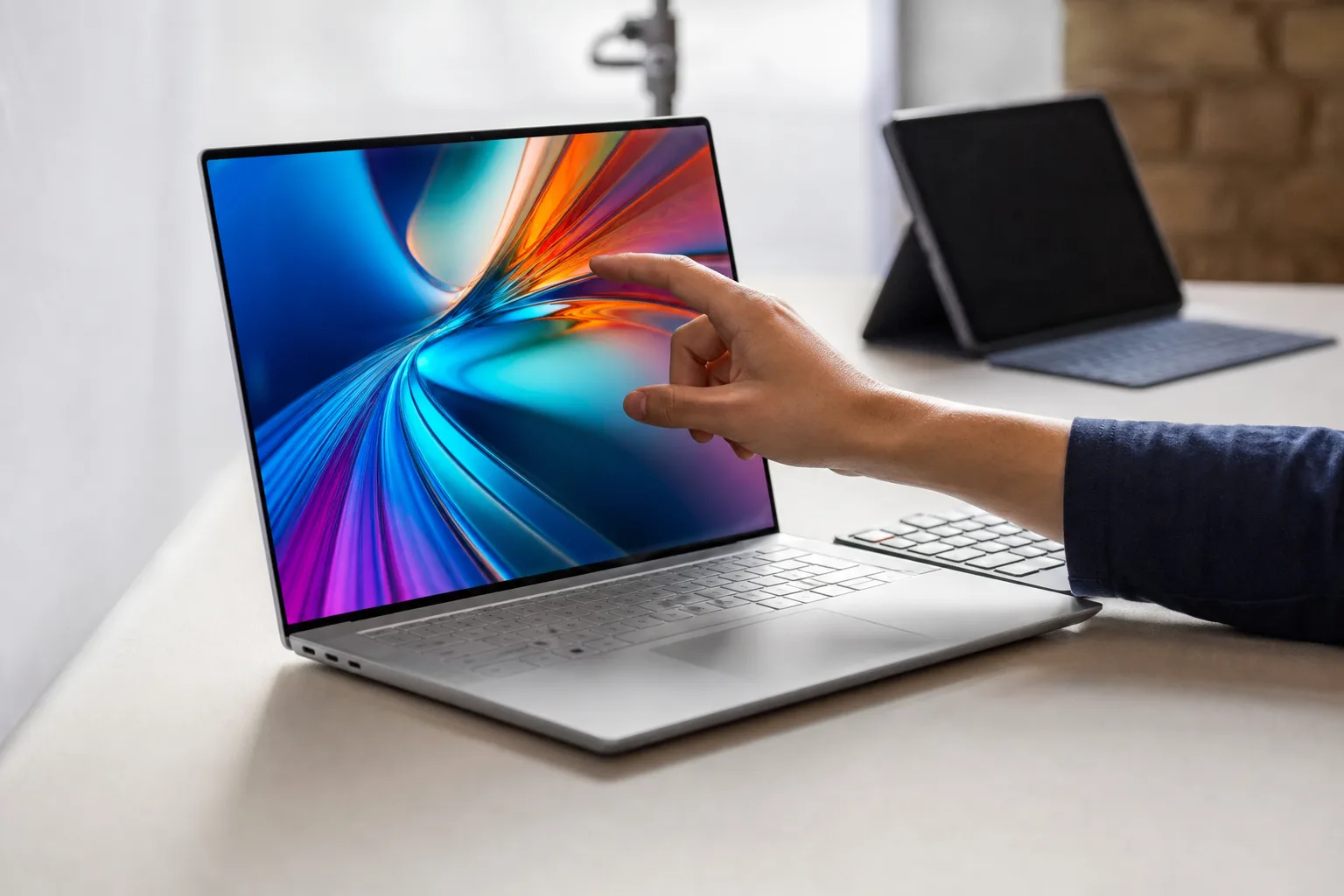
- Apple’s touchscreen MacBook Pro reportedly pairs an OLED panel with a long-awaited rethink of how users interact with macOS laptops.
- The touchscreen MacBook Pro matters because Apple has spent years arguing that touch belongs on iPad, not on a Mac.
- An M6 iMac and new iPad mini complete a packed Apple hardware release aimed at very different buyers.
- Apple now needs to prove that touch controls improve professional Mac workflows instead of simply adding another costly screen feature.
Table of Contents
Touchscreen MacBook Pro changes an old Apple argument
For years, Apple treated the idea of a touchscreen MacBook Pro as something between a design mistake and a category error. Want to touch the display? Buy an iPad. Want a traditional laptop? Buy a Mac. That bright line was central to Apple’s pitch, and it made the company’s latest reported hardware direction all the more striking.
Apple’s recent ‘Pro and tell’ event put a new OLED MacBook Pro with touch input at the center of a broader product refresh that also included an M6 iMac and an updated iPad mini. The product mix is familiar Apple: a flagship machine for the professionals who spend freely, a desktop for households and offices, and a compact tablet that has developed an unusually loyal following.
But the touchscreen MacBook Pro is the product with the potential to redraw the map. Apple has already tested the waters with the now-retired Touch Bar, a narrow strip that tried to make laptop controls contextual without asking users to reach for the actual display. It was clever in theory and frustratingly inconsistent in practice. A full touch panel is a much bigger bet.
What remains unclear is how deeply Apple has adapted macOS around touch. That question matters more than the panel technology. Windows laptops have offered touch displays for years, but anyone who has used one knows the mixed reality: touch can be handy for scrolling, marking up a document, or moving objects around a canvas, then awkward when tiny desktop interface targets turn your finger into a blunt instrument.
Apple has a better starting point than many PC makers because it controls the hardware, operating system, trackpad, and app ecosystem. Still, it can’t simply bolt touch onto a premium notebook and call the job finished. The real test for a touchscreen MacBook Pro will be whether apps such as Final Cut Pro, Logic Pro, Photoshop, and Apple’s own productivity suite gain interactions that feel intentional rather than decorative.
OLED is more than a spec-sheet trophy
The other headline feature is OLED. Apple has been steadily moving its best displays toward the technology, most visibly with the iPhone and iPad Pro. On a MacBook Pro, OLED should mean deeper blacks, sharply defined contrast, and potentially stronger HDR work for editors and photographers. Those are not cosmetic gains when you are color-grading footage or reviewing an image before it goes to print.
There are trade-offs. OLED can raise concerns around burn-in, brightness behavior, and price, particularly on devices meant to sit open for eight hours a day with static menus and timelines on-screen. Apple will need to convince buyers that its display management is suited to the less forgiving rhythms of desktop computing.
It also creates an awkwardly simple comparison. Apple’s current MacBook Pro lineup has made mini-LED a key selling point, especially for people who value sustained brightness. If the OLED model costs significantly more, the company will have to explain why working professionals should replace a machine that may already be only a few years old.
My read is that the touchscreen MacBook Pro is as much about defending the upper end of the laptop market as it is about chasing a new interaction model. Apple’s silicon advantage has been formidable, but hardware categories don’t stand still. A display upgrade and a new input method give the company a cleaner reason to restart the upgrade conversation.
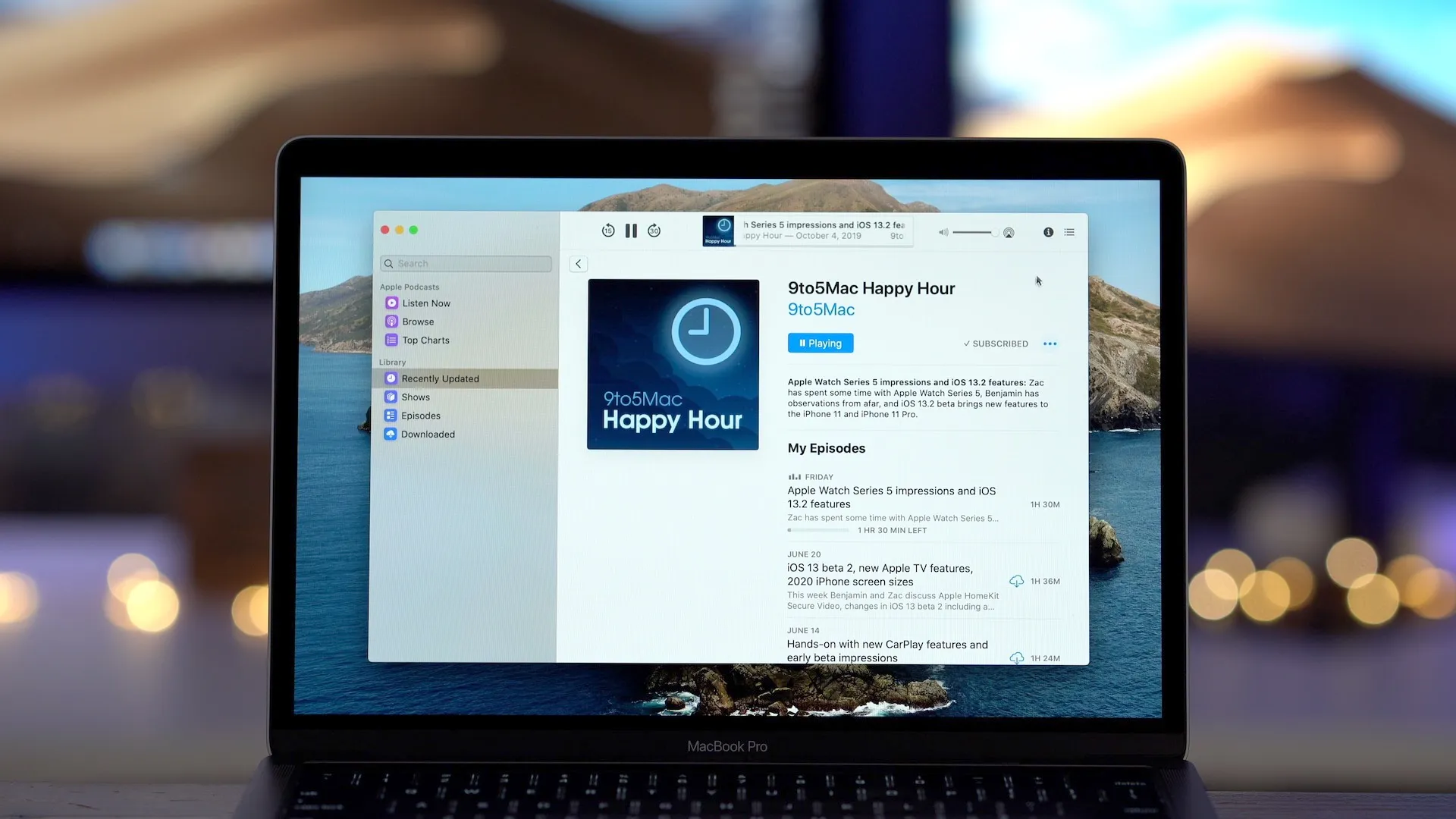
An M6 iMac and new iPad mini fill in the gaps
The M6 iMac is less philosophically loaded, but that does not make it unimportant. The iMac remains Apple’s all-in-one answer for people who want a capable desktop without assembling a tower, display, webcam, speakers, and cables like they are building a small home lab. A new chip should bring the expected gains in responsiveness and media performance, though Apple has not made the iMac the place where it shows off every high-end processor option.
That positioning has always been a little odd. The iMac looks like a creative professional’s machine, yet its mainstream configuration makes it a better fit for families, students, small offices, and people graduating from an aging Intel desktop. The M6 iMac appears to preserve that role: approachable first, aspirational second.
The refreshed iPad mini, meanwhile, addresses a different sort of buyer entirely. Its appeal has never been about winning a specs race. The small tablet is the device you toss into a bag, use for reading, carry around a warehouse, or hand to a child without surrendering your entire phone. A new iPad mini is welcome partly because Apple lets this model go long stretches between updates.
There is a strategic connection between these releases, even if Apple would probably prefer us to see them as separate shopping decisions. The company is tightening its hardware ladder. The iPad mini serves portable, touch-first use. The iMac remains the uncomplicated desktop. The touchscreen MacBook Pro occupies the increasingly interesting middle ground where conventional computing meets direct manipulation.
Apple’s fall schedule is becoming a stress test
Apple has packed a great deal into its fall release calendar, and the pace brings an obvious risk: buyers can struggle to understand what is actually new, what has merely received a chip update, and which product is worth waiting for. A customer considering an iPad Pro, for example, may reasonably wonder whether a touch-enabled Mac now handles some of the work they imagined doing on a tablet.
That overlap is not necessarily bad. People use devices in messier ways than product categories suggest. A designer might sketch on an iPad, organize assets on a Mac, and use an iPhone for review notes. But the clearer Apple’s hardware boundaries become on a keynote slide, the blurrier they can feel after a week of real work.
The touchscreen MacBook Pro therefore carries an unusually heavy burden. It needs to avoid turning macOS into a compromised tablet interface while proving that Apple’s old no-touch doctrine was not really a doctrine after all. If Apple gets that balance right, this could be the rare Mac change that affects how people use the machine, not merely how fast it exports video. If it does not, we may be looking at Touch Bar 2.0 with a much larger bill attached.