

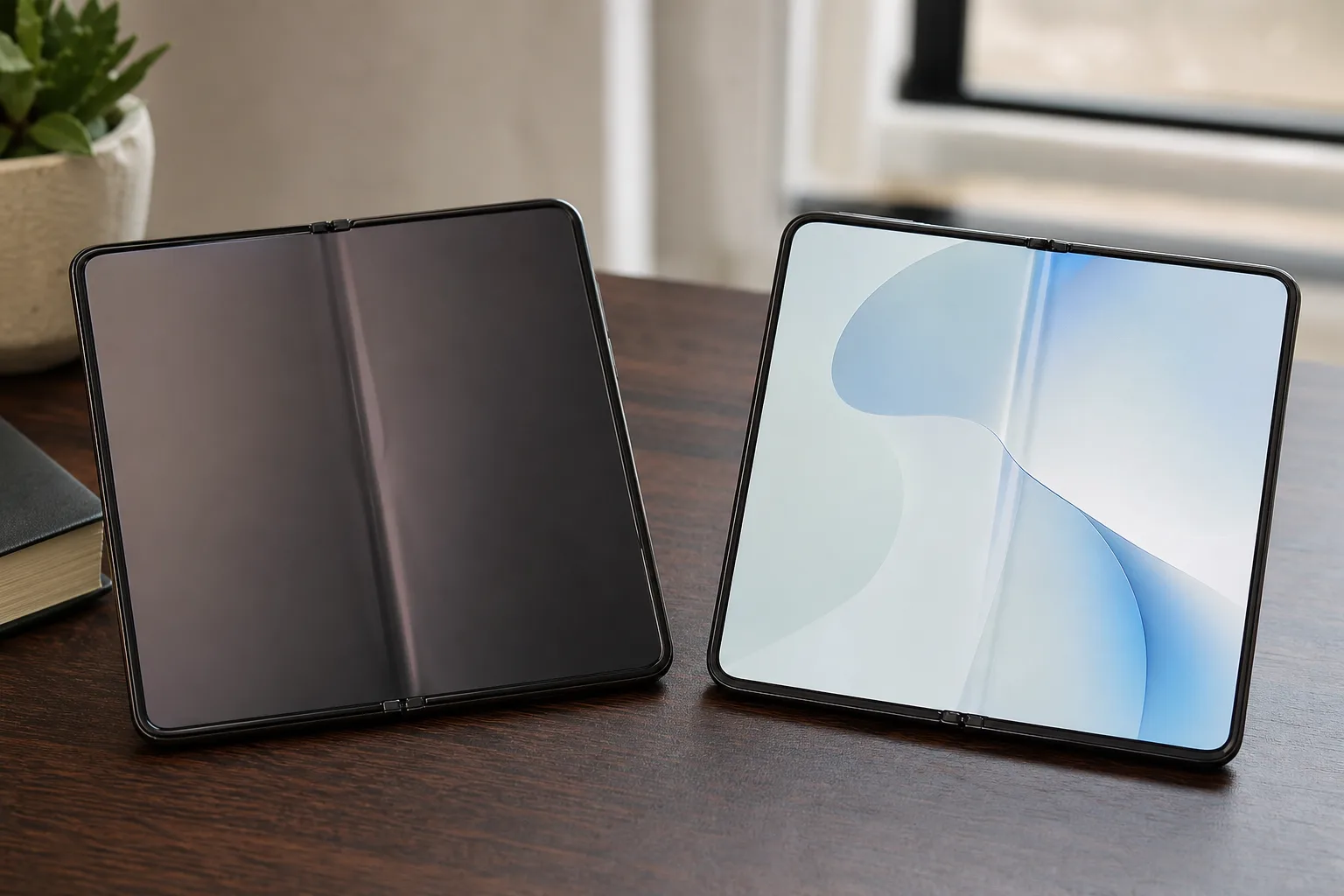
- Samsung’s Galaxy Z Fold 8 ads exploit reports of iPhone Duo displays failing along the central folding line.
- The Galaxy Z Fold 8 campaign argues that Samsung’s eight generations of foldables give it a meaningful durability advantage.
- Apple is reportedly replacing affected iPhone Duo units, but the visible failures risk defining its first foldable launch.
- The ads are blunt, but foldable durability is exactly where buyers need proof rather than polished product marketing.
Table of Contents
Galaxy Z Fold 8 ads hit Apple where it hurts
Samsung has spent years trying to persuade ordinary phone buyers that folding screens are ready for daily life. Now the Galaxy Z Fold 8 has handed it a far simpler pitch: at least it opens without apparently splitting down the middle.
That’s the premise behind a string of regional Samsung social posts taking aim at the iPhone Duo, Apple’s first foldable, after early owners reported a distinctly ugly problem. In affected units, the inner display appears to crack or fail at the center crease, leaving a dead strip through the panel. Apple is reportedly replacing those phones, but replacement programs rarely erase the first impression created by photos of a broken flagship all over social media.
Samsung Canada’s version goes straight for the jugular. The company says that ‘folding is nothing new to us’ and adds that it knows ‘a thing or eight,’ before telling viewers to switch to the Galaxy Z Fold 8. It’s about as subtle as a billboard parked outside an Apple Store.
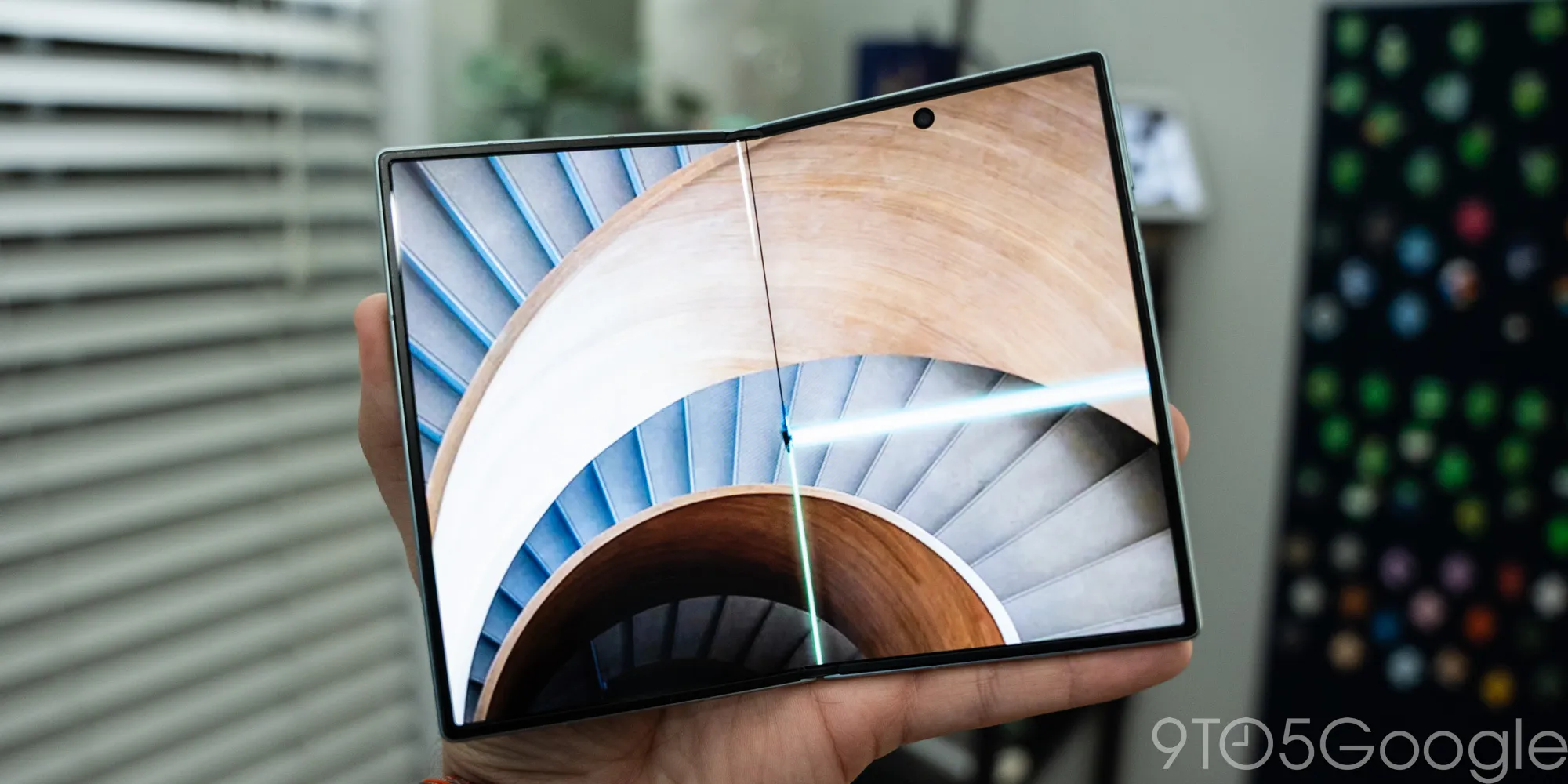
Other local Samsung accounts have taken the same basic joke in different directions. Samsung Malaysia posted about the fear of missing out on all the durability discussion, then quipped that it had been busy folding its phones and carrying on with the day. Samsung Australia imagined the sound of opening a phone whose screen does not break. Saudi Arabia went with a fake-out: what looks like an iPhone-style central crack on a Fold 8 turns out to be wallpaper.
Frankly, the campaign works because Samsung is pointing to a real fear, not inventing one. Foldables have always asked customers to accept some degree of mechanical anxiety. A conventional slab phone has no hinge, no ultra-thin flexible glass, and no moving seam at the center of its most expensive component. When a first-generation product appears to fail at exactly that point, the joke writes itself.
Why the Galaxy Z Fold 8 has the experience argument
The Galaxy Z Fold 8 is not proof that foldables are indestructible. No phone is, and Samsung itself has endured years of scrutiny over crease visibility, hinge longevity, dust resistance, and inner-screen repair costs.
But eight generations matter. Samsung has had time to revise hinge assemblies, reinforce display layers, change materials, improve water resistance, and, crucially, collect mountains of real-world failure data. That doesn’t make every Fold 8 owner immune from an expensive accident. It does mean Samsung can reasonably claim it has lived through the awkward adolescence of the category while Apple is only now entering it.
The Galaxy Z Fold product page is available here, and its positioning tells you what Samsung wants buyers to see: the Galaxy Z Fold 8 as a mature premium-phone line, not a speculative experiment. The Galaxy Z Fold 8 is being positioned less as a gadget for early adopters and more as the boringly dependable choice. For a foldable, that’s a surprisingly powerful place to be.

There’s also a practical distinction buyers should keep in mind. A cracked outer glass panel on a standard phone is frustrating, but the device may remain usable. A failure through the center of a foldable’s inner display can undermine the whole reason you bought it: the larger screen. If the panel is dead, flickering, or visibly damaged at the crease, you are carrying a very expensive, unusually thick phone with compromised functionality.
Apple’s first-foldable problem is bigger than repairs
Apple can replace defective iPhone Duo units. It has the retail footprint, logistics operation, and customer-support muscle to do that faster than almost any company on Earth. The harder problem is the story those failures create.
Apple has long sold itself as the company that waits. It watched Android makers experiment with larger phones, smartwatches, wireless earbuds, and folding handsets before offering its own heavily polished interpretation. Sometimes that patience pays off. The iPad did not invent tablets, and the Apple Watch did not invent smartwatches, but both arrived with a clearer sense of how people might actually use them.
That history raises the bar for the iPhone Duo. Buyers won’t judge it as merely another first-generation foldable. They will judge it against years of Samsung, Google, Huawei, Motorola, and Oppo hardware. And they will reasonably ask why Apple’s late arrival appears to be having the one problem every prospective foldable buyer already fears.
We should be careful with the word ‘defect.’ A cluster of similar reports does not, on its own, establish the scale or root cause of a manufacturing issue. Public posts tend to amplify the worst outcomes, while the many people whose phones work normally don’t upload a video every morning. Apple hasn’t publicly detailed the cause in the material at hand, so there is still plenty we don’t know.
Still, repeated reports of a failure in the same location are damaging because they look intuitive. Consumers don’t need an engineering diagram to understand why a break at a folding point feels ominous. Samsung’s Galaxy Z Fold 8 ads rely on that instinct, and Apple’s silence will leave room for the competitor to fill it.
Durability is the real foldable feature now
For years, foldable marketing has focused on possibility: read a book, run two apps side by side, watch a video on a larger canvas, turn a pocket device into a small tablet. Those are legitimate benefits. But for the mainstream buyer, durability is still the gatekeeper. Nobody wants a clever kitchen gadget if it might stop working every time the hinge moves.
That’s why Samsung’s mockery is more strategic than a routine brand spat. The Galaxy Z Fold 8 messaging turns the category’s oldest objection into a direct comparison with Apple. If these reports persist, Apple may have to respond with more than quiet replacements: clearer warranty language, transparent repair policies, and evidence that the hinge and panel can survive years rather than weeks.
My read is that Samsung has earned the right to make the experience argument, even if its social team is laying it on rather thick. Apple can still recover quickly if the issue proves limited and the company explains it plainly. But in foldables, confidence is fragile. One visible crack can travel farther than a thousand immaculate product shots.