

Table of Contents
Google AR Glasses to Rival Meta’s 2025 Release
The Article Tells The Story of:
- Meta’s 2025 Ray-Ban glasses may include displays for the first time.
- Google plans to launch AR glasses with Android XR in 2025.
- Displays are becoming a critical feature in the competitive AR glasses market.
The next phase of smart glasses may come down to a deceptively simple question: can the wearer see useful information without reaching for a phone? Meta’s third-generation Ray-Ban Meta AR glasses, expected in 2025, might introduce displays for the first time. At the same time, Google plans to launch its own AR glasses in 2025 alongside Android XR, its operating system tailored for extended reality devices.
That puts two very different strategies on a collision course. Meta has spent years making smart eyewear feel closer to ordinary eyewear, with a product that emphasizes voice interaction and first-person capture. Google is positioning Android XR as a platform for extended reality devices, and its still-unnamed glasses are expected to feature displays. The distinction matters because a display changes what glasses can be for: not only a camera and an audio accessory, but a glanceable interface.
There is still a large gap between the promise of AR glasses and the products most people would be willing to wear all day. A display alone does not solve that problem. It has to be useful without becoming distracting, present without making the glasses unwieldy, and simple enough that people do not feel as though they are wearing a computer on their face. That is why even a limited display could be consequential. The first successful use cases may be mundane ones rather than cinematic augmented-reality scenes.
Why a Display Is the Important Next Step
Currently, Ray-Ban Meta glasses allow users to access a digital assistant through voice commands and capture photos or videos from a first-person perspective. What they do not offer is a display for visual data. In practical terms, that means the glasses can listen and capture, but they cannot easily show the wearer a response, a prompt, or a piece of information that is better read than heard.
Adding a display could change that balance. Notifications, navigation directions and simple text-based information are obvious examples because they are brief, timely and suited to a quick glance. A person does not necessarily need a large virtual screen to see a direction or confirm a message. For many everyday tasks, a small amount of visual feedback may be more valuable than an attempt to reproduce a phone display in miniature.
The article’s expectation that these displays are unlikely to support video or high-quality images is also a useful reality check. Smart glasses do not automatically become immersive AR headsets just because they can show text or directions. There is a meaningful difference between a display that supplies a few words at the right moment and one intended to deliver rich media all day. The former could make voice features easier to trust and use; the latter would bring much larger expectations around visual quality, comfort and battery life.
That is the central appeal of a restrained approach. Voice assistants are convenient when a user wants to keep their hands free, but voice alone can be awkward when a response is private, detailed or difficult to hear. Visual feedback gives the assistant a second channel. It can confirm what it understood, show a result, or offer a cue without forcing the wearer to pull out a phone. The value is not spectacle. It is reducing small bits of friction that occur repeatedly throughout a day.
For Meta, a display would also answer a basic question about where Ray-Ban Meta glasses go next. The current formula has a clear identity: familiar-looking glasses with a digital assistant and a first-person camera. The next generation needs to add capability without losing the simplicity that helped make that formula understandable. A display may be the feature that expands the product’s usefulness while preserving the idea that these are glasses first.
Check out a similar article: Why the Facebook Parent Is Interested in Ray-Ban Sunglasses? July 18, 2024 – SquaredTech
Google’s Android XR Bet Is About More Than Hardware
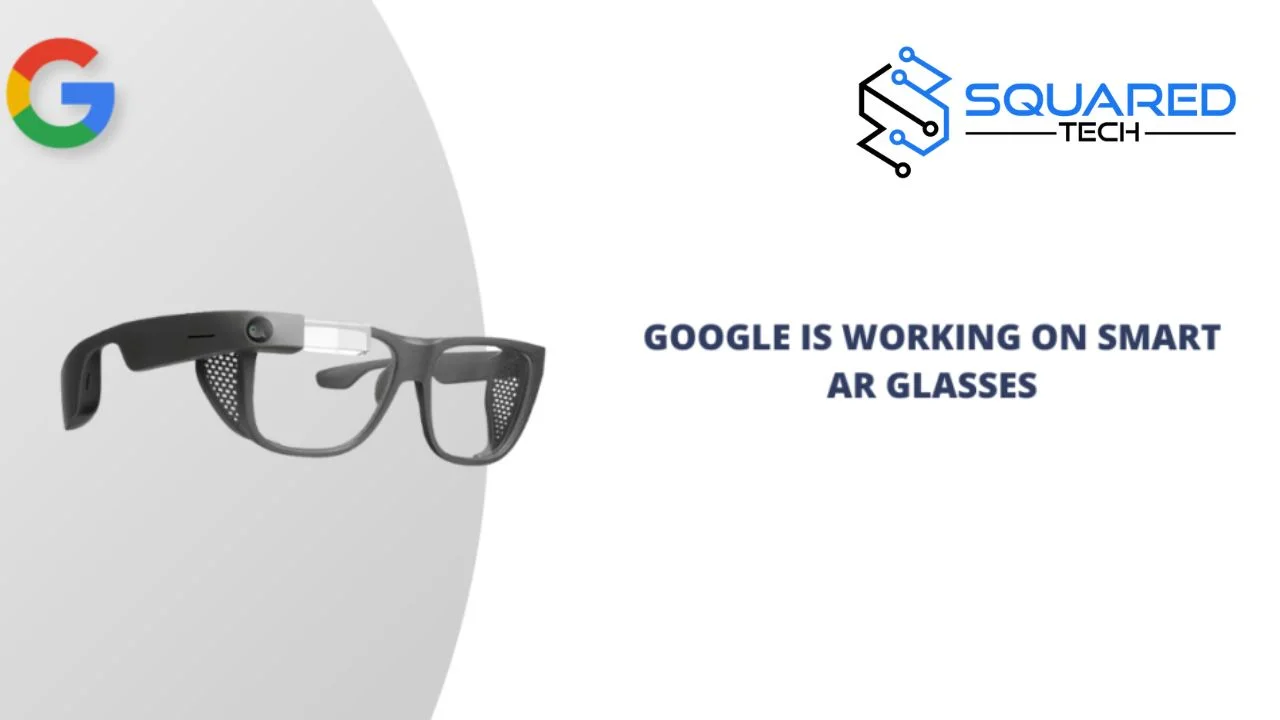
Google has announced Android XR, an operating system tailored for extended reality devices. With it, Google plans to launch its own AR glasses in 2025. The glasses remain unnamed, but the stated direction is clear: they will feature displays and directly compete with Meta’s offerings.
Android XR gives Google a different starting point from Meta’s Ray-Ban approach. A platform can provide a common foundation for how an extended reality device handles interfaces, digital assistance and applications. That does not guarantee that a pair of glasses will be compelling, but it does frame the product as part of a broader software effort rather than as a single isolated accessory.
The competitive pressure on Meta is straightforward. If Google’s glasses offer useful visual information through Android XR while Meta does not add similar capabilities, Google could gain an edge with buyers who want more than audio assistance and video recording. That edge would not necessarily rest on having the flashiest display. It could come from making information feel available at the exact moment it is needed, with less dependence on a phone screen.
Google’s AR glasses could attract users seeking more immersive and functional AR experiences, especially if Meta’s Ray-Ban glasses do not evolve beyond audio and video recording. Still, “immersive” should not be treated as an automatic advantage. For glasses intended for daily use, the better product may be the one that knows when to stay out of the way. The challenge for Google is to make Android XR’s specialized features feel practical rather than like a demonstration of what the technology can theoretically do.
That is also why the display race should not be reduced to a specification contest. The winning interface may be the one that asks the least from the wearer. A useful pair of glasses should not require constant attention, long menus or a new set of habits for tasks people already accomplish easily on a phone. It should make selected moments faster: getting a direction, receiving a short notification, or using a digital assistant without needing to look down.
Check out a similar article: The Future is Now: How Orion AR Glasses Will Transform Your World September 27, 2024 – SquaredTech
Meta’s Lead Is Real, but It Is Not Permanent
Meta enters this contest with a meaningful advantage. Its Ray-Ban Meta glasses have established themselves as a popular choice for smart eyewear enthusiasts, and several generations have already been released. That gives Meta a head start in consumer awareness and trust. It also means the company has had time to establish what its glasses are meant to do: provide access to a digital assistant and enable first-person photo and video capture in a form factor people recognize.
Familiarity is especially important in wearable technology. People judge glasses more personally than they judge many other gadgets. They have to like how they look, feel comfortable wearing them and understand what they are for. Meta’s association with Ray-Ban gives the product a recognizable consumer identity. Google may have an opportunity with Android XR and displays, but a more capable feature set does not automatically overcome the importance of design, comfort and everyday social acceptance.
Still, displays could determine the leader in this growing industry. A functional display in Meta’s 2025 model could help the company maintain its dominance by filling the most obvious gap in its current offering. If Google’s AR glasses with Android XR outperform Meta’s offering, however, the market dynamics could shift quickly. Consumers may begin to see glasses not simply as a camera with voice controls, but as a new kind of personal display.
The 2025 competition between Google and Meta marks a turning point because it tests whether smart glasses can move beyond novelty without turning into a device category that demands too much compromise. Consumers can expect significant advancements in usability and functionality as both companies aim to redefine wearable tech. The real measure of progress will be whether those advances make the glasses easier to live with, not merely more impressive in a product pitch.
Smart glasses may yet become a staple for tech-savvy users worldwide, but that outcome depends on clear value. A display that delivers useful information with minimal interruption could be a stronger reason to wear glasses every day than a long list of ambitious AR promises. In 2025, Meta’s experience in consumer smart eyewear and Google’s Android XR plans will make that question much harder to ignore.

