

Table of Contents
TikTok’s U.S. shutdown threat is really a test of who carries the legal risk
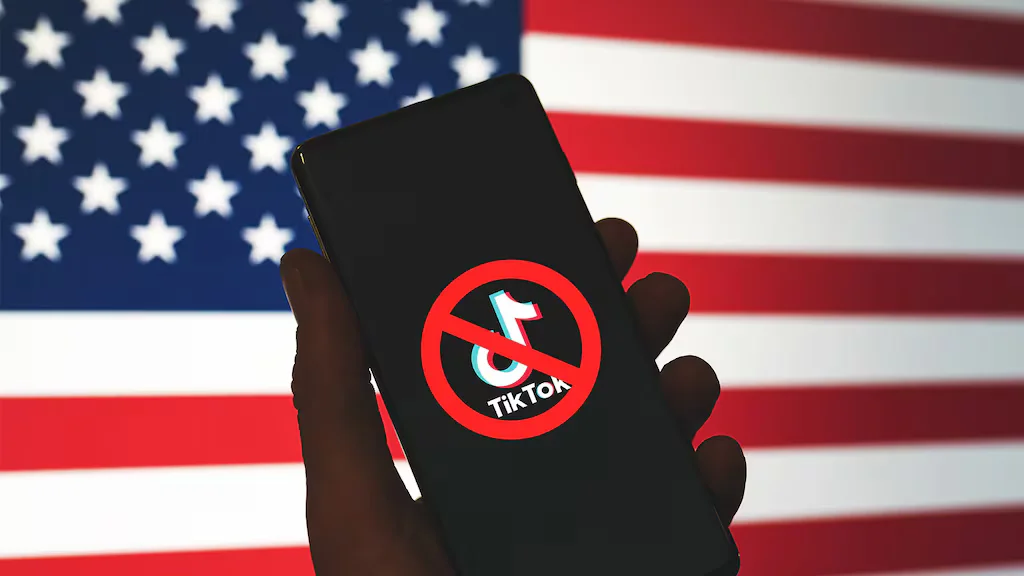
TikTok has said it plans to go offline in the United States on Sunday, January 19, unless the Biden administration resolves the legal uncertainty surrounding the app. That warning is not simply about whether users can open TikTok the next day. It is about whether the companies that make the service reachable — including Apple, Google, Amazon, and Oracle — believe they can continue supporting it without exposing themselves to enforcement action.
That distinction matters. A platform as large as TikTok does not operate in isolation. Even if ByteDance wanted to keep the service running, an app’s continued availability depends on distribution, technical infrastructure, and the willingness of major partners to remain involved. Once those partners believe the legal downside outweighs the business case, a shutdown can become less a single corporate decision than a chain reaction.
TikTok’s position is that it needs clear assurances that its service providers will not face legal repercussions for enabling the app’s availability. Without those assurances, the company argues, its partners cannot reasonably be expected to take the risk. The demand puts the Biden administration in an uncomfortable position: TikTok is asking for practical clarity while the law itself, as upheld by the Supreme Court, requires ByteDance to divest its ownership or face a U.S. ban.
What the Supreme Court ruling changes
The Supreme Court’s decision upholding the law narrows the room for a political solution that simply leaves the existing arrangement untouched. ByteDance, TikTok’s Chinese parent company, must divest its ownership under the law. If it does not comply, TikTok risks being banned in the United States, potentially taking the platform dark for its 170 million American users.
The legal dispute has often been framed as a fight over one social media app. In practice, it is also a dispute over ownership, control, data, and the obligations of companies that sit between a digital service and the public. TikTok’s scale makes those questions unusually visible. For users, the immediate concern is access to a familiar entertainment and communications platform. For government officials, the case is tied to national security concerns about a service owned by ByteDance. For the companies supporting TikTok, the concern is simpler: whether continuing to help the platform operate could bring legal penalties.
The Department of Justice has confirmed its intent to enforce the ban. The article’s most consequential detail may be the stated penalty: hefty fines of $5,000 per user for non-compliant companies. Whether or not a provider has sympathy for TikTok’s position, that kind of exposure changes the calculation. App stores, cloud providers, and other service partners are not being asked merely to make a political statement. They are being asked to decide whether they can safely remain part of TikTok’s U.S. operation.
This is why TikTok’s deadline warning carries more weight than a conventional corporate plea. The company is not saying only that it opposes the law. It is saying that, absent immediate action, the legal environment may make continued service impractical.
For related coverage, read Can Biden or Trump Save TikTok? The Clock Is Ticking!, published on January 18, 2025 by SquaredTech.
National security arguments meet an operational reality
The Justice Department’s case rests on data privacy and national security concerns linked to ByteDance. Attorney General Merrick Garland put the government’s view plainly:
“Authoritarian regimes should not have access to millions of Americans’ sensitive data.”
That argument explains why the government has treated divestment as the central condition rather than as a minor compliance issue. The stated concern is not limited to what TikTok shows users on their feeds. It is about the possibility that a platform with access to sensitive information could be subject to influence or access beyond U.S. control. Supporters of the ban see ownership as inseparable from that risk.
TikTok, meanwhile, is confronting the practical consequence of that policy position: a legal requirement that may be impossible to navigate through ambiguity alone. The company has criticized the lack of clear guidance from both the White House and the Department of Justice. Its complaint is not hard to understand. A company can prepare for a deadline, but it cannot force Apple, Google, Amazon, Oracle, or other providers to absorb uncertain legal liability on its behalf.
The administration’s challenge is that clarity can look very close to relief, and relief can look very close to sidestepping a law the Supreme Court has upheld. That leaves little space for vague language. If the government wants TikTok to remain available under certain conditions, its guidance has to be meaningful enough for service providers to act on. If it cannot provide that assurance, TikTok’s warning of a shutdown becomes much more credible.
A political handoff with no easy answer
The Biden administration has reiterated that it supports keeping TikTok available to Americans, but only under conditions that address the security concerns. The White House has also acknowledged the timing challenge and left responsibility for enforcing the law to the incoming administration.
That timing turns a legal fight into a transition-of-power problem. TikTok is asking President Biden for immediate intervention, yet the White House has pointed to the incoming administration’s role in enforcement. The result is a gap between the deadline facing the company and the political authority expected to deal with its aftermath.
Lawmakers are divided over what should happen next. Some have argued that ByteDance should receive more time to divest its stake. Senator Chuck Schumer has warned that a ban could harm President Biden’s political legacy. That warning reflects the broader political cost of allowing a service used by 170 million Americans to disappear, even when national security concerns remain at the center of the case.
President-elect Donald Trump has pledged to save TikTok, though he has not explained how that commitment would align with the law’s requirements. He recently discussed the issue with Chinese President Xi Jinping alongside other trade-related matters. The absence of a stated path is significant. A pledge to preserve TikTok does not by itself resolve the divestment requirement, the Justice Department’s enforcement position, or the fears of the service providers TikTok depends on.
TikTok’s final warning is aimed beyond Washington
TikTok CEO Shou Chew has issued a plea to Biden for immediate intervention to prevent the shutdown. The company’s official statement criticized the lack of clear guidance from the White House and the Department of Justice, warning that the app would cease operations in the United States without swift action.
That message is directed at Washington, but it is also meant for TikTok’s commercial partners and its users. By publicly identifying the legal uncertainty, TikTok is making clear where it believes the immediate obstacle lies. It is not presenting Sunday, January 19, as an arbitrary date. It is presenting it as the point at which the companies supporting the app may no longer be willing to operate without assurances.
For users, creators, advertisers, and businesses that rely on TikTok’s audience, the immediate question is whether the platform remains available. The larger question is what this episode means for the relationship between governments and globally owned consumer platforms. The TikTok dispute shows how quickly a policy argument about national security can become an operational problem involving app distribution, infrastructure, corporate liability, and political timing.
Also read Why TikTok Users Are Struggling on RedNote App: What Went Wrong?, published on January 15, 2025 by SquaredTech.
Stay Updated: Tech News

