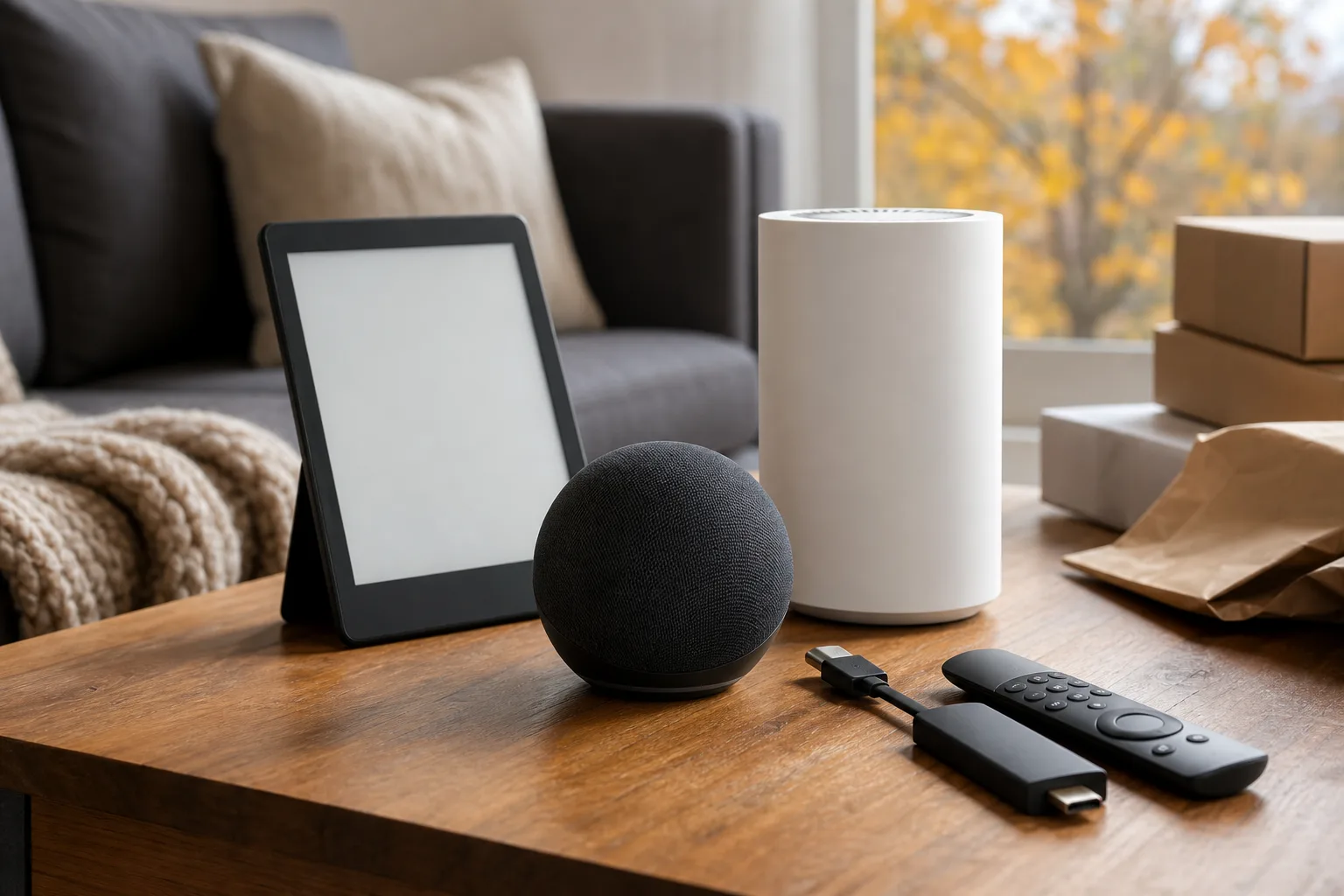
- Amazon device prices rose by $5 to $100 on selected Kindle, Echo, Eero, and Fire TV products before holiday sales.
- Higher Amazon device prices mean many promoted discounts now merely return hardware to pricing shoppers saw only weeks earlier.
- Amazon attributes some increases to memory and storage costs, though uneven changes across its product line invite scrutiny.
- Buyers should compare sale prices with recent historical pricing instead of trusting Amazon’s percentage-off labels.
Table of Contents
Amazon device prices are resetting the sale-price baseline
The telling part of the latest Amazon device prices increase isn’t the new sticker price on a Kindle or Echo. It’s how quickly Amazon has started turning the old price into a sales prop. Raise the shelf label, apply a modest discount, and an ordinary purchase suddenly gets the warm glow of a limited-time bargain.
Amazon device prices have risen across several of its most recognizable hardware families, including Kindle e-readers, Echo smart speakers and displays, Eero mesh routers, and Fire TV streaming sticks. The jumps range from a relatively modest $5 on the Fire TV Stick HD to $100 on the Eero Pro 7 and Echo Show 21. Amazon told CNET that rising memory and storage-component costs were behind the changes, but the pattern is patchy enough that shoppers should treat that explanation as only part of the story.
Component inflation is real. Memory markets are volatile, and the industry has been here before: when supply tightens, every manufacturer from laptop vendors to phone makers suddenly discovers the virtues of passing costs along. But Amazon’s hardware business has always operated differently. The company often used devices as on-ramps to Prime, Alexa, Kindle books, video subscriptions, ads, and shopping. A cheap Echo Dot was never simply a cheap speaker.
Now, Amazon device prices suggest the company may be asking customers to carry a little more of that ecosystem cost themselves.
Kindles took some of the sharpest increases
Amazon’s basic 2024 Kindle now lists for $150, up $40. The Kindle Paperwhite is $200, also up $40, while the Paperwhite Signature Edition rose $50 to $250. Colorsoft models climbed by $40, putting the standard version at $290 and the Signature Edition at $320. The Kindle Kids rose $50 to $180; the Colorsoft Kids moved to $300.
Those Amazon device prices are meaningful increases for products that are intentionally simple. E-ink screens are lovely for reading, and the Paperwhite remains an easy recommendation when it lands near its old sale price. But at $200, it faces a tougher question from a buyer who mostly wants a library book machine: why not keep using a phone, tablet, or a perfectly serviceable older Kindle for another year?
Curiously, the Kindle Scribe line appears to have avoided the price increase. That complicates the storage-cost story. Scribes have larger displays, more elaborate pen input, and generally more expensive hardware than the plain e-readers taking the hit. My read is that Amazon is managing demand product by product, not simply applying a spreadsheet formula to bill-of-materials costs.

The Scribe may also occupy a different market. Digital notebook buyers compare it with premium tablets and e-ink writing devices, where a high price is expected. A basic Kindle buyer is more price-sensitive, which makes a $40 increase especially awkward even if it’s economically rational.
Echo deals now require a closer look
The Echo lineup makes the sale-price problem plain. Amazon raised the fifth-generation Echo Dot from $50 to $80, the Echo Spot from $80 to $110, and the Echo Dot Max from $100 to $120. Screen-equipped Echo Shows went up as well: the Echo Show 8 is now $200, the Show 15 costs $350, and the Show 21 is $500 after a $100 increase.
Yet some are already discounted. The Echo Dot has been listed around $55, which sounds appealing against an $80 list price but sits above its recent $50 price. That doesn’t make $55 outrageous. It does mean a big percentage badge can conceal a very ordinary transaction.
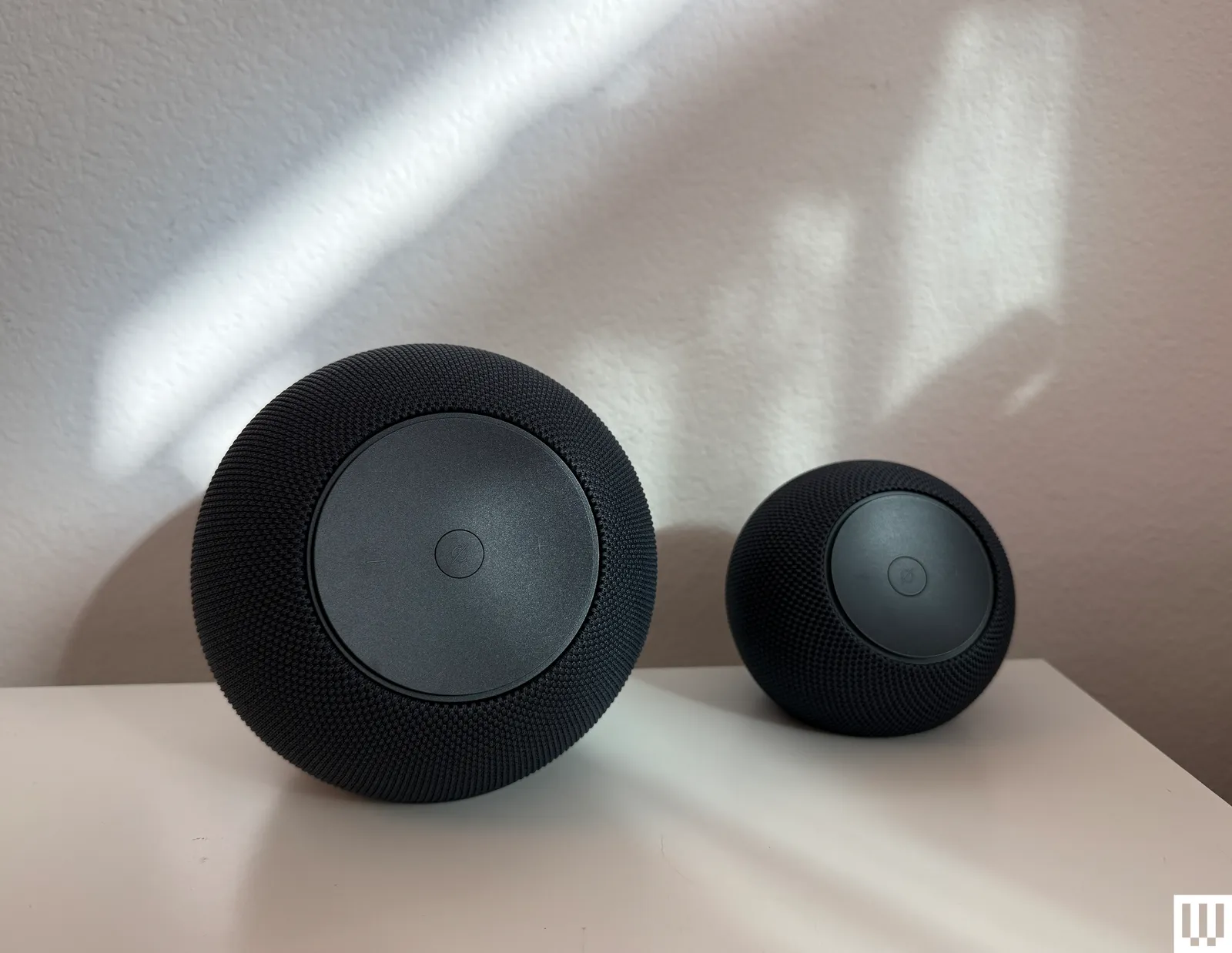
There are exceptions. The newer Echo Studio remains at $220, while an older Echo Show 8 is still listed at $150. The Echo Show 11, meanwhile, has appeared on sale around $190, which is actually below its former $220 list price. So don’t treat all current Amazon device prices the same. Amazon’s catalogue is a messy mix of generations, stock levels, promotional budgets, and product priorities.
Still, I’d be cautious about buying an Echo display at full price. Amazon’s Alexa strategy has been in transition for years, with the company working to make its assistant more useful in an era dominated by generative AI. Until the company makes a clearer case for what these screens do beyond timers, video calls, and occasional recipe videos, a $500 Echo Show 21 feels like a luxury appliance with an unresolved identity crisis.
Eero and Fire TV buyers have alternatives
The Eero 7 now costs $400, up $50, while the Eero Pro 7 is $800 after a $100 increase. Those are not casual price changes. At these Amazon device prices, buyers should compare competing mesh systems from TP-Link, Asus, and Netgear rather than reflexively buying the router Amazon recommends at checkout.
Amazon’s own Eero technology overview makes a reasonable case for its simplified setup and network management. For households that want a router to disappear into the background, Eero can still be compelling. But subscriptions, privacy preferences, and long-term feature support matter more when a system approaches $800. The old advice applies: Wi-Fi is plumbing, and expensive plumbing should have a clear reason for costing more.
Fire TV hardware remains cheaper in absolute terms. The Fire TV Stick 4K Max rose $25 to $85 and the Fire TV Stick HD went up $5 to $40. Both have already been discounted, with the HD model dropping as low as $18. At that figure, the price rise barely matters.
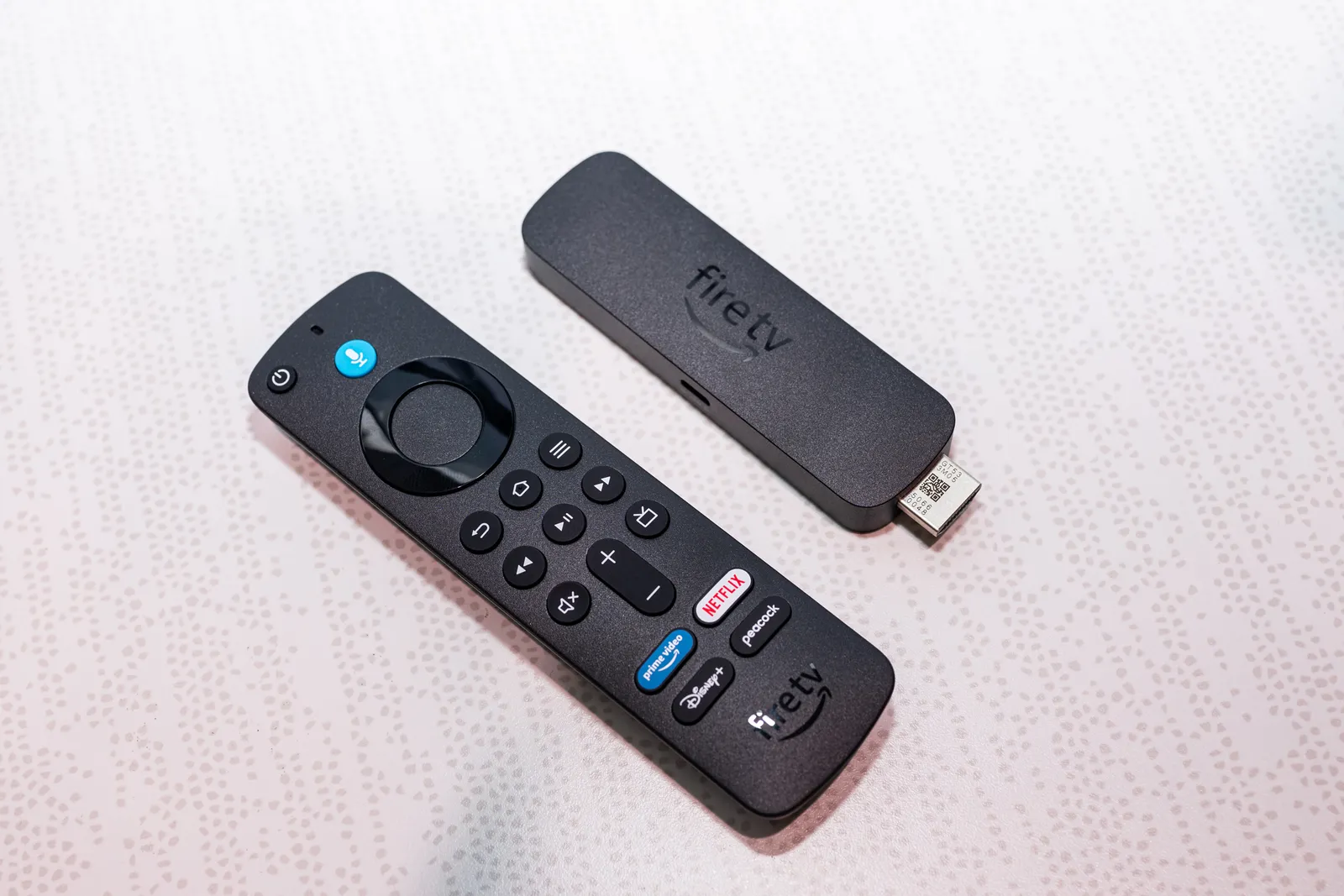
But the Fire TV interface remains crowded with Amazon promotions and content suggestions. If you value a cleaner living-room experience, Roku, Apple TV, or Google TV alternatives may be worth a look, depending on budget and services. The 4K Max is capable hardware; it’s just no longer such an obvious value when its normal Amazon device prices have moved upward.
How to shop Amazon’s holiday promotions
Don’t assume a Black Friday label means a historically good price. Check an item’s price history, compare the actual dollar figure with what you remember seeing in late summer, and pay attention to which model generation is on offer. Retailers are very good at making a discount feel like an event. Your bank account is not required to play along.
If you need a device now, a discounted Kindle Paperwhite, Echo Dot, Fire TV Stick HD, or Echo Show 11 can still make sense if the selling price is at or below its pre-increase level. Everyone else can wait. Amazon has trained shoppers to expect recurring Prime Day, October deal events, and Black Friday promotions; it would be odd if those sale windows suddenly vanished.
The larger concern is what this does to price trust. Amazon device prices used to be unusually easy to understand: list prices were low, and sale prices were lower. If Amazon normalizes higher MSRPs only to advertise the old price as a dramatic discount, customers will eventually notice. And once a sale label stops meaning anything, Amazon loses one of the most effective habits it ever built into online shopping.