

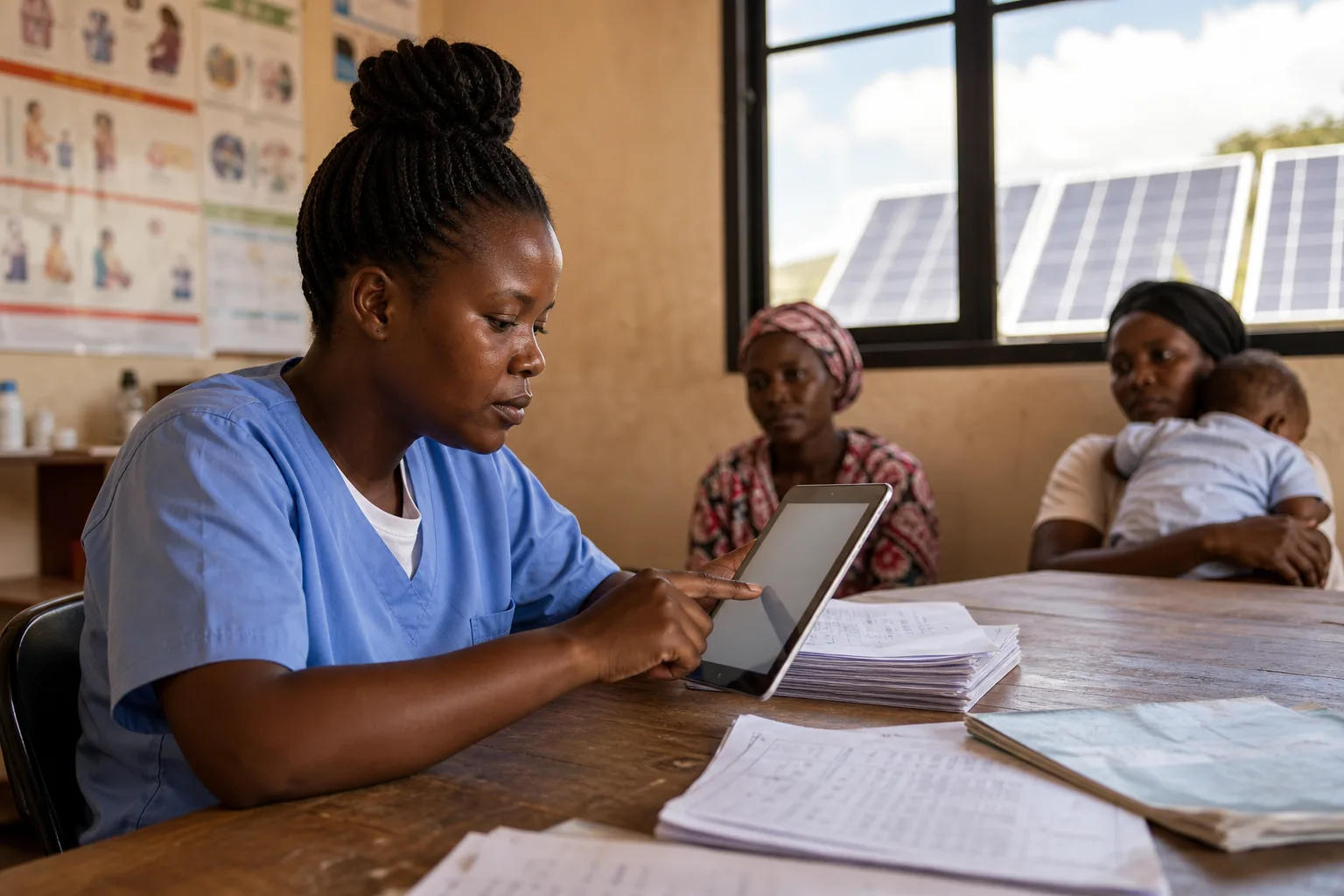
- The Gates Foundation’s $1 billion pledge seeks to expand access amid warnings about AI access inequality.
- AI access inequality could deepen when wealthy countries control compute, data, talent, and the products built from them.
- Foundation funding may help local institutions deploy useful tools, but public infrastructure and local governance remain decisive.
- The central question is whether AI investment gives communities durable control or creates another dependency on foreign technology providers.
Table of Contents
AI access inequality is becoming the defining question
The uncomfortable part of the AI boom is no longer hard to spot: the people most likely to benefit from the technology often have the least ability to buy, run, scrutinize, or shape it. The Gates Foundation is putting $1 billion behind efforts meant to narrow AI access inequality, while warning that the same technology could widen the gulf between richer and poorer countries if its rollout follows the familiar Silicon Valley script.
That warning deserves more attention than the headline-grabbing dollar figure. One billion dollars is real money, even in an industry where OpenAI, Anthropic, Google, Microsoft, and Meta collectively spend sums that can make philanthropic budgets look modest. But the foundation is putting its finger on a problem the AI sector would rather treat as a footnote: access is not the same thing as inclusion.
A chatbot translated into more languages is useful. A diagnostic model trained on data from wealthy hospitals may be useful, too. Yet neither automatically gives a rural health worker, a public school, or a local government the reliable electricity, internet access, cloud capacity, technical staff, legal protections, and authority needed to use those systems safely. Handing someone a sophisticated tool without the workshop around it is a bit like dropping a professional kitchen into a house with no water line.
The foundation’s pledge, reported by ABC News, comes with a blunt premise: AI could compound existing disparities rather than repair them. Frankly, that is the sensible default assumption. Technology has a long record of arriving first where money, infrastructure, and institutional capacity are already concentrated.
Why AI access inequality is more than a connectivity problem
For years, the digital divide was usually framed as a question of devices and broadband. Those things still matter enormously. But AI access inequality has additional layers, and they are tougher to solve.
Computing power comes first. Training leading AI models requires enormous clusters of expensive chips, electricity, cooling, and specialized engineering. Even using advanced models at national scale can create serious cloud bills and dependency on a short list of US and Chinese firms. A country may be able to open a free AI app on a phone, but that does not mean its researchers, hospitals, or public agencies control the underlying systems.
Data is the next choke point. Systems built for health, agriculture, education, or financial services need relevant local information. Data gathered in Boston or London may perform poorly in Kampala, Dhaka, or a remote farming region. Language gaps are equally stubborn. Many widely spoken languages remain poorly represented in the datasets that feed commercial models, while dialects and local cultural context are often absent altogether.
The hardest issue may be power. Who gets to decide what the AI is for? If a global vendor supplies a tool to a public health ministry, who can audit its recommendations? Who owns the data produced by patients and clinicians? What happens if the vendor changes pricing, restricts access, or simply kills the product? Anyone who watched Google shut down Stadia knows that platform dependence is not a theoretical concern. It is a business model risk.
The AI access inequality debate does not end with cheaper subscriptions or free trials. It is about whether communities can participate in developing, evaluating, governing, and maintaining systems that affect their lives.
What a $1 billion pledge can actually change
The Gates Foundation has long focused on global health, poverty reduction, and education, areas where AI is already being pitched as a force multiplier. There are plausible uses: helping health workers handle administrative tasks, improving disease surveillance, offering agricultural advice tailored to local conditions, and supporting teachers who face overcrowded classrooms and too few materials.
Its new commitment could matter most if it pays for the unglamorous parts. Local researchers need grants. Civil-society groups need resources to test systems for bias and harm. Governments need procurement expertise so they do not sign opaque contracts they cannot enforce. Universities need computing access and training pathways that do not require their best graduates to leave for California, London, or Beijing.
That is where a philanthropy can play a different role from a hyperscaler. Microsoft and Google have incentives to expand their cloud ecosystems. Chipmakers want more AI workloads. Startups want customers. None of that is inherently sinister; markets do what markets do. But the Gates Foundation can back work with slower payoffs, such as local-language datasets, open evaluation tools, public-interest research, and implementation inside underfunded public systems.
The foundation should also be clear-eyed about what it cannot purchase. A grant cannot substitute for stable governance. It cannot fix an unreliable power grid, weak privacy law, or a ministry with insufficient staff. Nor can it magically erase the asymmetry between an aid recipient and the company hosting its data. If the money is spent mainly on subscriptions to Western AI products, the project could unintentionally reinforce the very dependency it aims to reduce.
That is the trap. Addressing AI access inequality means funding local capacity, not merely distributing AI outputs. Reducing AI access inequality also requires institutions to retain meaningful control over the tools they adopt.
The industry has a credibility gap to close
The timing of the foundation’s warning is useful because AI executives are increasingly fond of describing their products as universally available. In a narrow sense, they are right: a person with an internet connection can often try a model in seconds. But real-world availability has always been a poor proxy for equitable benefit.
Consider healthcare. A model that helps summarize patient notes might save clinicians time in a well-funded hospital with electronic health records, secure networks, and compliance teams. Put the same model in a clinic that relies on paper files, sporadic connectivity, and a language the model barely understands, and its value can evaporate fast. Worse, a flawed recommendation can carry more weight precisely because there are fewer specialists available to challenge it.
There is a related danger in treating people in lower-income countries as a source of training data or cheap evaluation labor rather than as builders with agency. The AI supply chain has already exposed plenty of ugly realities, from poorly paid content moderation to data practices that are difficult for ordinary users to understand. The promise of development cannot become an excuse for weaker safeguards.
This can sound abstract to people who use AI tools every day. It is not. The same questions apply everywhere: Can you move your data? Can you understand why a system made a recommendation? Is there a human decision-maker accountable when it gets something wrong? AI access inequality is global, but it is also a warning about how quickly convenience can become dependence. The World Health Organization’s guidance on AI ethics and governance makes clear why accountability and safeguards cannot be treated as optional.
The measure of success is control, not downloads
The Gates Foundation’s $1 billion commitment is a meaningful intervention, and its public warning is more candid than much of the industry’s AI-for-good marketing. Still, the project will be judged less by how many people touch an AI tool than by whether institutions in the communities it serves gain lasting capability.
That means local experts setting priorities. It means systems that work in local languages and conditions. It means transparent contracts, privacy protections, independent testing, and alternatives when a vendor fails. The foundation should publish clear outcomes and allow critics to inspect where its money goes. Good intentions are not an audit trail.
My read is that the next phase of AI policy will turn on this question: will countries and communities outside the industry’s dominant hubs become co-authors of the technology, or merely its end users? The answer will determine whether AI access inequality becomes another familiar digital divide or the moment the sector finally learns that access without control is a thin promise.

