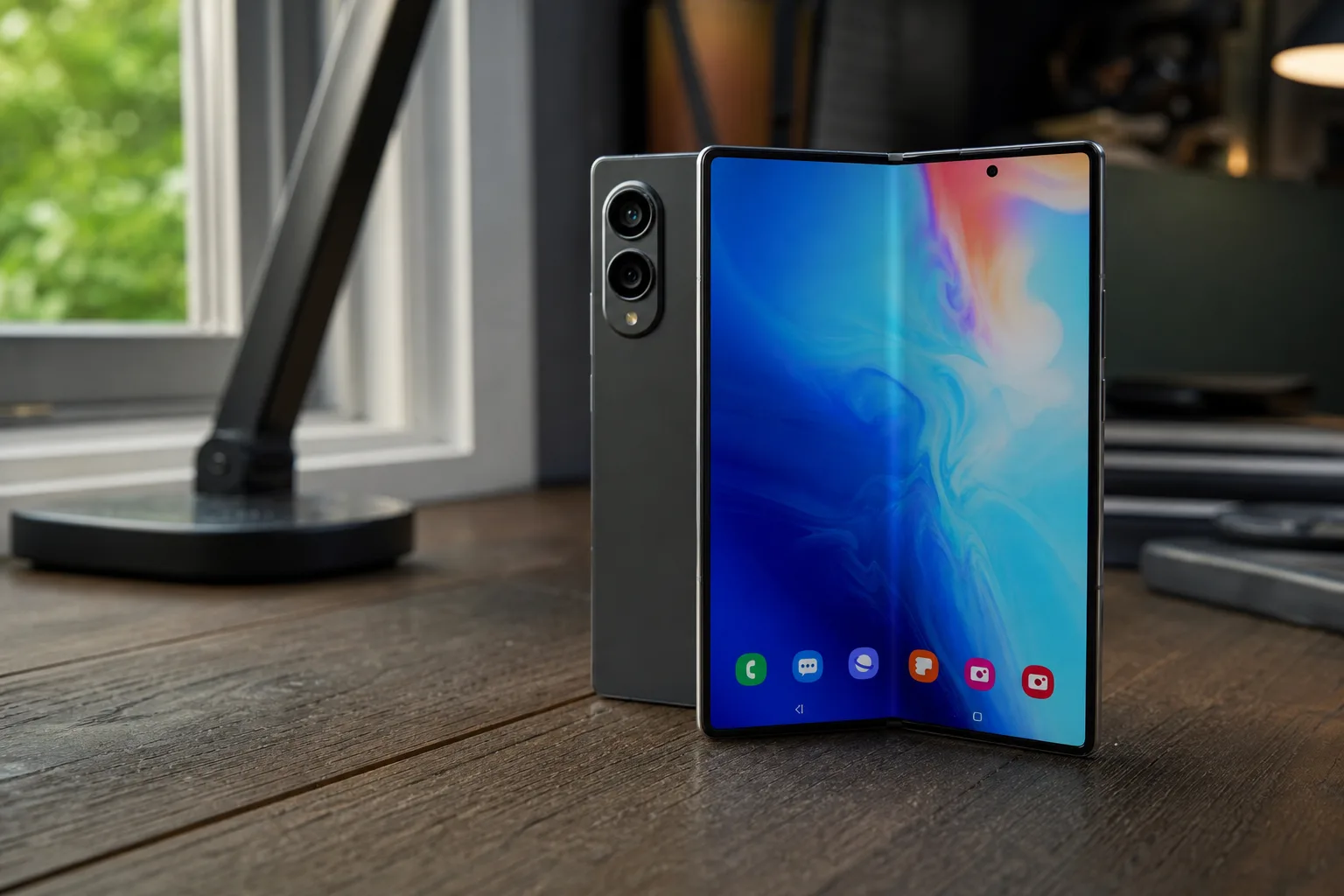
- iPhone Duo Face ID is reportedly Apple’s priority for a third-generation version of its new foldable handset.
- Adding iPhone Duo Face ID would require Apple to shrink depth sensors without compromising the security users expect.
- A telephoto camera could address a major capability gap created by the first model’s compact dual-camera system.
- Apple’s October 23 launch will reveal whether buyers accept Touch ID and camera compromises in a premium new form factor.
Table of Contents
iPhone Duo Face ID is the upgrade Apple can’t keep delaying
The first iPhone Duo is still weeks away from its October 23 launch, but the conversation has already moved to what Apple needs to fix next. iPhone Duo Face ID is reportedly high on that list, along with a proper telephoto camera. And frankly, that makes perfect sense: if Apple wants its foldable to be treated as an iPhone flagship rather than a fascinating side project, it can’t leave two of the iPhone’s most familiar premium features on the cutting-room floor forever.
Bloomberg’s Mark Gurman suggests Apple could prioritize those additions for the third-generation iPhone Duo. His theory is that hardware miniaturization and AI-powered processing will eventually let Apple fit smaller, less elaborate depth-sensing and camera components into the device, then compensate through software. In Gurman’s words, Apple could use “smaller, less sophisticated depth-sensing and camera hardware” while making up part of the difference computationally.
That’s a prediction, not an Apple commitment. Apple has not publicly mapped out a multiyear iPhone Duo roadmap, and the company is famously stingy with future-product confirmation. Still, the logic is hard to argue with. The first model’s Touch ID system and dual rear cameras look like clear concessions to the physical realities of a thin, folding phone.
Foldables make familiar iPhone hardware unusually difficult
Face ID has always required more than a selfie camera. Apple’s facial-recognition setup depends on dedicated depth-sensing hardware that projects and reads an infrared dot pattern, creating a secure face map rather than simply matching a flat image. Apple describes the system’s security approach in its Face ID security documentation, which explains why this is not a component the company can casually shrink or replace with ordinary camera tricks.
That creates a particular headache for a foldable. Every millimeter inside the chassis is contested territory: batteries need room, hinges need reinforcement, screens need support layers, and thermal systems need somewhere to move heat. Add a camera bump, a folded display, and the durability standards Apple is likely chasing, and you can see why iPhone Duo Face ID may have lost an early internal battle to Touch ID.
Touch ID itself is hardly a disaster. Plenty of people still prefer a fingerprint sensor when wearing sunglasses, a face covering, or simply when their phone is lying flat on a desk. But an iPhone Duo priced and marketed as Apple’s next big hardware category will inevitably be judged against the company’s Pro phones. For that audience, the absence of Face ID can feel less like a thoughtful alternative and more like a missing part. That expectation is precisely why iPhone Duo Face ID remains such an important upgrade.
There is precedent for Apple waiting. The company has spent years reducing the size of the iPhone’s front sensor array, and it has routinely delayed features until it can implement them at the standard it wants. Sometimes that restraint is admirable. Sometimes it means competitors get years to define a category before Apple arrives. Samsung has had plenty of time to learn hard lessons from the Galaxy Z Fold line; Apple’s margin for obvious first-generation compromises is narrower than fans may want to admit.
The camera question may matter even more
The telephoto addition could be the more noticeable omission in daily use. The first iPhone Duo is set to use dual rear cameras, a setup that likely covers standard and ultrawide shooting. That’s adequate for everyday snapshots, but it leaves out optical reach — the thing you notice when photographing a kid on a stage, a pet sprinting across a park, or a skyline from farther down the street.
A future iPhone Duo Face ID upgrade paired with a telephoto lens would make the device feel substantially less compromised, even if its camera hardware remains smaller than what Apple puts in an iPhone Pro Max. Apple has already demonstrated, through features such as Photonic Engine and computational portrait processing, that it’s comfortable asking software to close some of the gap between sensor sizes. The company’s challenge is knowing where computation helps and where physics simply wins.
A small telephoto sensor can deliver useful results in bright conditions, but low-light zoom is unforgiving. Computational photography can clean up noise, stabilize frames, and combine exposures, yet it can’t magically recreate detail that never reached the sensor. Anyone who has zoomed in too far on a dimly lit concert photo knows the difference. My read is that Apple will need better component packaging as much as clever AI if it wants the third-generation camera to satisfy demanding buyers.

What Apple’s three-generation plan would say about the iPhone Duo
If Gurman is right and iPhone Duo Face ID waits until generation three, Apple may be treating this product line much like the original Apple Watch: launch an ambitious first version, identify the compromises people will tolerate, then steadily remove the ones they won’t. That is a sane product strategy, though it asks early adopters to pay premium prices for a device that may be visibly incomplete.
The October 23 debut will be the first real test. Buyers may decide the larger folding display and Apple’s software polish are enough to outweigh Touch ID and a missing zoom camera. Or they may conclude that the first iPhone Duo is a beautiful preview of the model they actually want to buy later. Remember when Google killed Stadia? Consumers have become understandably wary of paying to beta-test a company’s grand hardware ambitions.
The report suggests a more interesting future than a simple spec-sheet catch-up. If Apple can deliver iPhone Duo Face ID with a thinner sensor system and pair it with genuinely capable computational zoom, the company could establish techniques that spread across the entire iPhone range. The appeal of iPhone Duo Face ID is that it would make the foldable feel more like a complete flagship. The real question is whether customers will give the first two generations enough patience to get there.