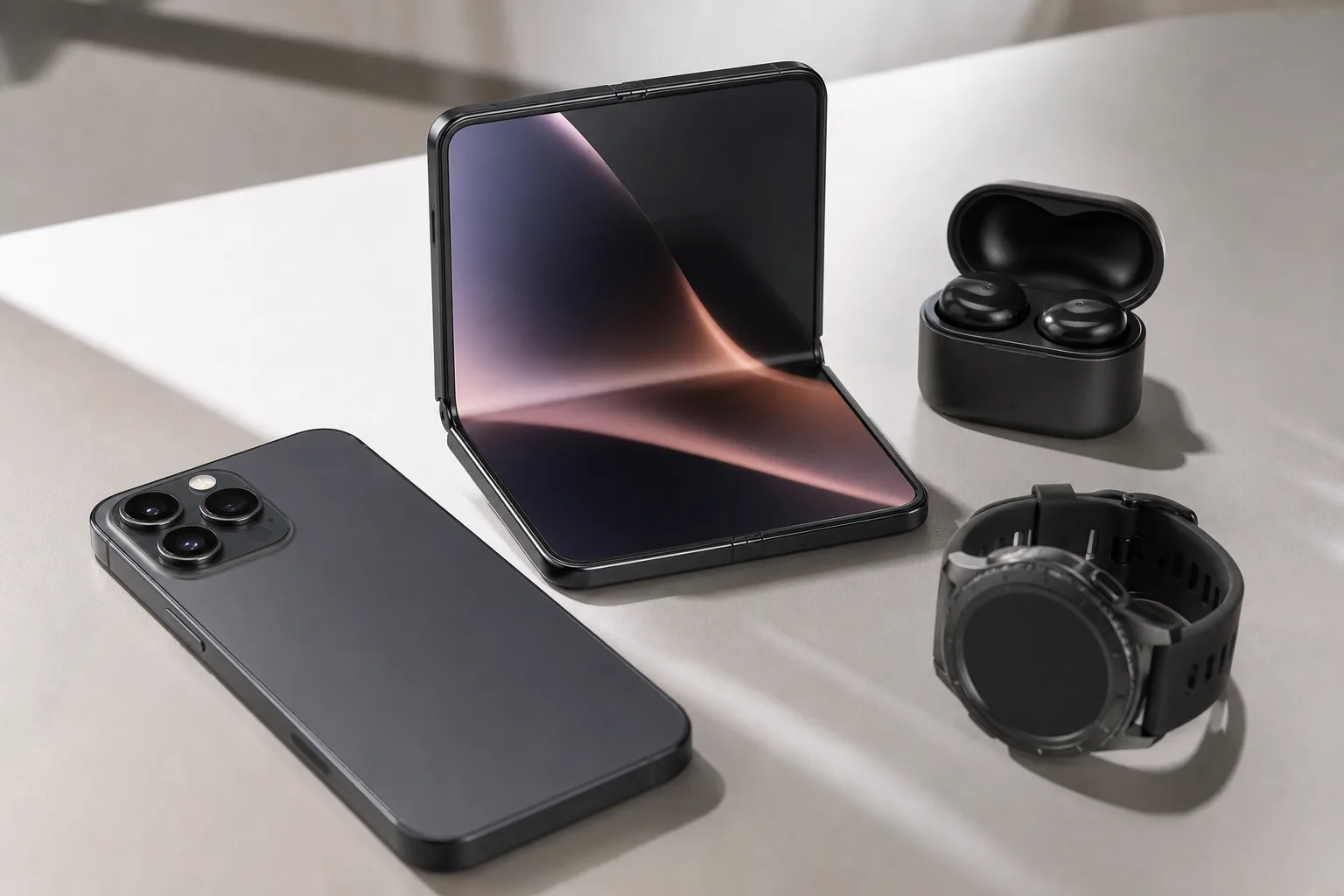
- The iPhone Duo brings Apple into foldables with an outer phone display and an inner screen approaching iPad mini territory.
- Apple is betting that software will sell the iPhone Duo, but durability, price, and app support will determine whether buyers agree.
- The iPhone 18 Pro adds an A20 Pro chip, variable aperture camera hardware, and a cooling system aimed at sustained performance.
- Apple’s September releases also include Apple Watch Series 12, Ultra 4, AirPods 5, and major operating system updates.
Table of Contents
iPhone Duo is Apple’s long-delayed answer to foldables
The iPhone Duo was the product Apple had to make eventually. Samsung has spent years iterating on the Galaxy Z Fold line, Google has put the Pixel Fold family in the market, and Chinese manufacturers have pushed folding hardware into genuinely thin, polished territory. Apple could only watch from the sidelines for so long before its absence started looking less like patience and more like a gap in the lineup.
Now it has made its move. The iPhone Duo pairs a conventional outer display with an internal screen that opens to nearly iPad mini dimensions. That basic idea will be familiar to anyone who has handled a Galaxy Z Fold, but Apple’s pitch is predictably centered on how the hardware changes the software experience: apps that reorganize around the larger canvas, multitasking tuned for a phone that becomes a small tablet, and interface behavior designed around the hinge rather than awkwardly bolted onto it.
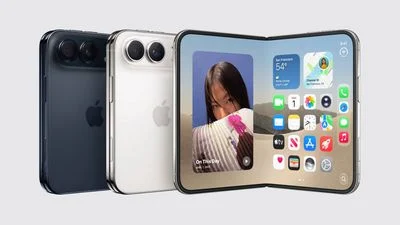
That software work matters. For the iPhone Duo, it has to. Foldables have never lacked visual drama; opening a phone into a larger screen still gets attention on a train or at a coffee shop. Their problem has been the friction after the first week. Is the bigger screen useful enough to justify the added thickness, the crease, and what will almost certainly be a premium price? Apple has historically been good at sanding down those rough edges, though it has also been known to charge handsomely for the sanding.
Preorders for the iPhone Duo begin October 16, with retail availability set for October 23. That staggered schedule gives the device its own moment after the standard iPhone cycle, which feels deliberate. Apple isn’t treating this as another storage-tier refresh. It’s planting a flag in a category that has been commercially real, if still stubbornly niche.
My read is that the iPhone Duo will live or die less on its first-day wow factor than on practical questions Apple hasn’t yet fully answered: how visible is the display crease in harsh light, how well does the hinge age, what compromises were made to battery life, and what does repair cost when something goes wrong? Buyers considering the iPhone Duo will want answers before committing. Foldables are rather like convertibles: fun when everything works, but buyers remember the roof mechanism.
Apple’s Newsroom will be the place to watch for the detailed specifications, repairability data, and regional pricing that turn a keynote promise into a buying decision. Until then, the company has the attention. The harder part is earning confidence.
The iPhone 18 Pro is chasing sustained speed, not just benchmark glory
While the foldable grabbed the headline, the iPhone 18 Pro and iPhone 18 Pro Max are arguably the more consequential products for Apple’s volume business. They retain the familiar Pro design, but receive the A20 Pro chip with a six-core CPU, seven-core GPU, and 32-core Neural Engine. Apple says a larger vapor chamber helps deliver up to 40% faster sustained performance than the A19 Pro.
That phrase, sustained performance, is doing a lot of work. Modern phones can all sprint. The challenge is keeping speed high while recording long videos, playing console-class games, running on-device AI features, or editing a stack of photos without becoming uncomfortably warm and quietly throttling. A larger cooling system is an unglamorous upgrade, but it may be one of the smartest changes Apple has made to the Pro line in years.
The camera update is similarly practical. Apple is adding a variable aperture to the main camera, giving photographers more control over depth of field and exposure behavior. Smartphone makers have often simulated blur with increasingly clever computational tricks; variable aperture hardware suggests Apple thinks some problems are still best solved with actual optics. Frankly, that’s refreshing.
There is also a smaller Dynamic Island that can display as many as three Live Activities. It sounds minor, and perhaps it is, but this is exactly the sort of change users notice dozens of times a day. A ride-share arrival, a timer, a sports score, and a delivery update can all compete for attention. Better management of that tiny strip of screen may prove more useful than another abstract chip comparison.
The iPhone 18 Pro models are available for preorder now and arrive September 18. For buyers who don’t want the risks and expense of a first-generation folding device, these are likely the safer bet. The iPhone Duo may be the future-facing experiment; the Pro phones remain Apple’s well-oiled revenue machine.
Apple Watch gets serious about endurance and materials
Apple’s wearable refresh has two distinct themes: more health sensing and fewer obvious compromises. Apple Watch Series 12 receives the S11 chip and redesigned health sensors, plus a wider set of case materials than Apple usually offers. Aluminum versions come in Space Gray, Black, Light Gold, and Dark Bronze, while titanium and ceramic options move the watch further into jewelry territory.
The aluminum models also get Ceramic Shield protection, which Apple says makes their displays 60% tougher. That claim deserves the usual real-world caveat: tougher glass can still scratch, shatter, or meet the one granite countertop in your home at exactly the wrong angle. Still, anyone who has seen a spiderwebbed Apple Watch screen will understand why durability is a far better upgrade than a new watch face color.
The Apple Watch Ultra 4, meanwhile, gets a larger battery and Apple’s promise of two-day battery life. It can reportedly manage up to 18 hours of workout tracking with GPS and heart-rate monitoring enabled, or 45 hours in an extended workout mode. Those figures target the outdoor athletes Apple has been courting since the original Ultra, but they also address a much broader annoyance: nobody wants to pack another charger for a weekend away.
At $799, the Ultra 4 is still an expensive companion device. Yet its battery ambition is strategically important. If Apple can make the watch feel less like a gadget that demands nightly maintenance, it makes health tracking more useful and less nagging. The best health device is the one still on your wrist when something happens.
AirPods 5 and Apple’s quieter push toward everyday upgrades
AirPods 5 may be the least flashy launch here, but they could reach the largest audience. Apple is bringing active noise cancellation to its entry-level earbuds at $129, with a $149 model adding a wireless charging case, swipe volume controls, and longer battery life. Apple says the new earbuds remove up to 50% more outside noise than AirPods 4 with noise cancellation.
That puts meaningful noise control closer to impulse-buy territory. For commuters, students, and anyone working in a noisy apartment, this may matter more than the iPhone Duo does. Better Transparency mode is also welcome; the goal is not to shut out the world all day, but to switch between isolation and awareness without audio that sounds like it’s coming through a tin can.
Apple will release AirPods 5, the new Watches, and the iPhone 18 Pro line on September 18. Its software updates, including iOS 27 and macOS Golden Gate, arrive Monday. The sequencing is familiar: fresh software creates the reason to pay attention, then fresh hardware turns that attention into sales.
But this launch cycle feels different because Apple has finally introduced a new iPhone shape, not merely a better version of the old one. The iPhone Duo won’t make foldables mainstream by itself. What it can do is make the category feel legitimate to the millions of iPhone owners who have been waiting for Apple’s permission to care. Whether that permission is enough to overcome foldables’ old reliability and value problems is the question that will matter long after keynote day.