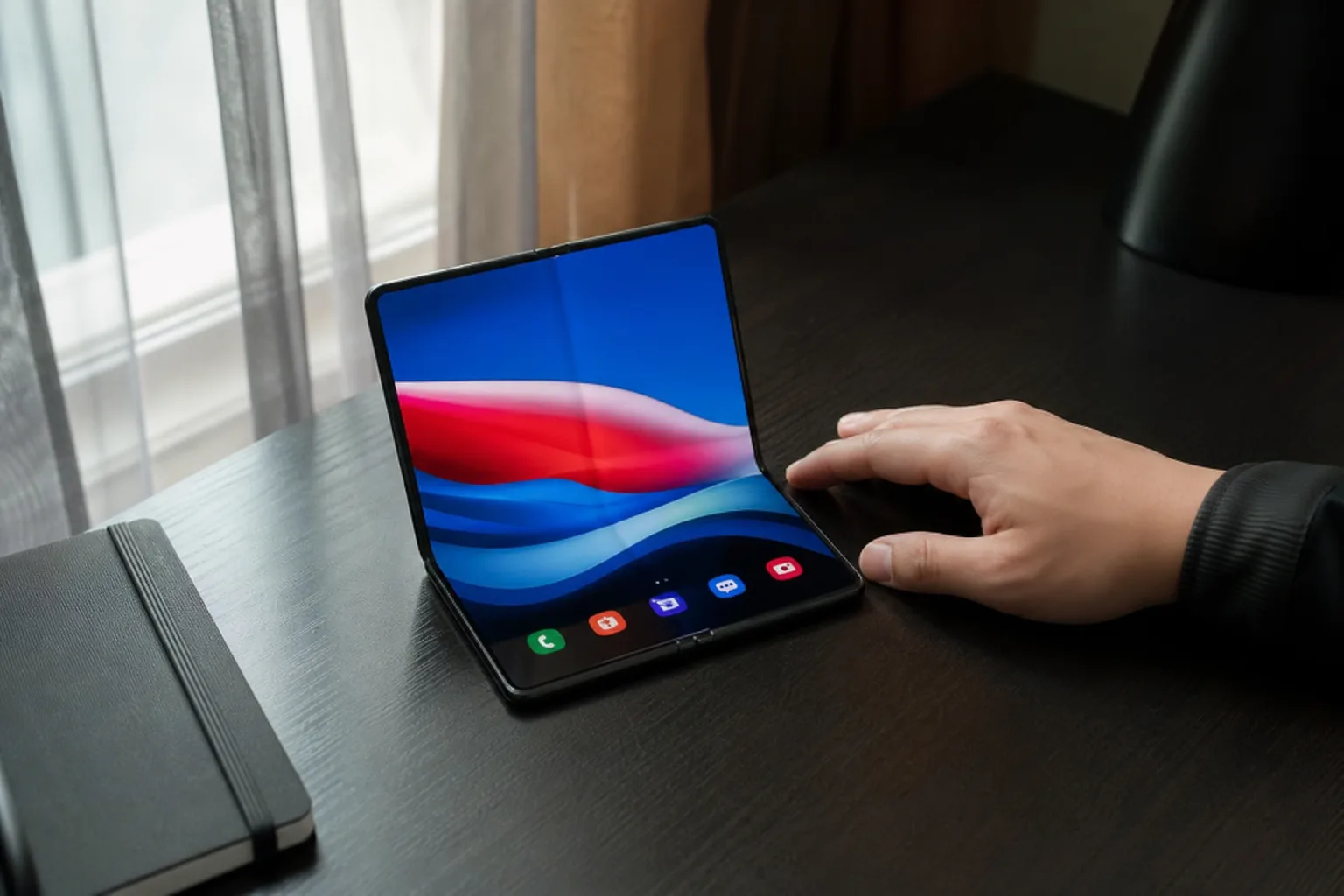
- The iPhone Duo arrives with a nearly invisible crease and strong durability, but Android rivals have already solved much of that hardware puzzle.
- Apple’s iPhone Duo software redesign could make switching between its outer and inner displays feel more coherent than current foldable interfaces.
- At 254 grams and $1,999, Apple’s first foldable faces difficult questions around weight, cameras, battery technology, and real multitasking.
- The central test is whether Apple can turn foldable software polish into a reason for mainstream buyers to accept the usual physical compromises.
Table of Contents
The iPhone Duo enters a market that has already done the hard part
The iPhone Duo may be Apple’s long-awaited answer to foldable phones, but it is not arriving as a hardware miracle from another planet. It is landing in a category that Samsung, Huawei, Oppo, Xiaomi, Google, Honor, and Motorola have spent years bruising themselves to build. That matters, because Apple’s usual trick is not necessarily inventing the category. It is making the category feel less like an enthusiast project.
On paper, Apple’s first book-style foldable looks competitive. The company is said to have largely hidden the central display crease through a complicated hinge with roughly 100 components, custom adhesives that let display layers move against one another, and a matte surface intended to soften reflections. That is good engineering. It is also no longer rare engineering.
Samsung has steadily reduced the crease on its Galaxy Z Fold line, while Oppo’s Find N series has been one of the quiet heroes of foldable design for years. Honor, meanwhile, has pushed durability ratings and unusually large batteries. Foldables used to be judged on whether they could survive a few careful months in a jacket pocket. Now they are judged on the boring but essential stuff: screen visibility outdoors, camera compromises, battery anxiety, and whether the software wastes a tablet-sized canvas.
Apple appears to have built a very polished answer to that first problem. Reports from early hands-on time suggest the crease is hard to spot, though still detectable by touch if you go hunting for it. Frankly, that is where the industry is now. A crease that only becomes obvious when someone is trying to prove it exists is probably good enough for most people.
The more awkward comparison is physical heft. At 254 grams, the iPhone Duo is reportedly far heavier than Samsung’s latest wide Galaxy Z Fold model, by more than 50 grams. That sounds abstract until you hold one-handed devices all day. It is roughly the difference between carrying a compact notebook and carrying that notebook with a small charger strapped to the back. A 5.2mm unfolded body is impressively thin, but a phone does not live unfolded in your hand or pocket.
iPhone Duo hardware has familiar compromises
The iPhone Duo also seems to take a conservative route in a few places where Chinese phone makers have been more adventurous. The rear setup reportedly uses two 48-megapixel cameras, without a dedicated telephoto lens. That may be perfectly adequate for everyday shooting, and Apple’s computational photography has earned its reputation. Still, a $1,999 foldable with no zoom camera will look oddly restrained next to premium foldables from Google, Xiaomi, and Motorola.
Battery technology is another potential gap. Several Android manufacturers have moved to silicon-carbon cells, which pack more capacity into the small spaces available in a folding chassis. Apple has not signaled that it is using that chemistry here. Its stated target is a full day, around 24 hours of regular use, which is sensible language but hardly a flex when Honor is pitching two-day endurance on its Magic V6.
None of this makes the iPhone Duo a poor device. Foldables are a stack of trade-offs: thinness versus capacity, weight versus rigidity, cameras versus internal space, and price versus everything. Apple seems to have made many of the same choices Samsung has made to reach a $1,999 starting point. My read is that Apple does not need to win every component comparison. It needs to avoid any one weakness becoming the reason an iPhone owner refuses to upgrade.
It also has a fairly solid durability story. The phone is expected to carry IP68 protection, matching some of the better-protected Android foldables. For context, Apple’s current iPhone lineup has helped train buyers to expect water resistance as table stakes, not an expensive bonus. A foldable that asks users to baby it would be a nonstarter for Apple’s core audience.

The iPhone Duo software may be the real point
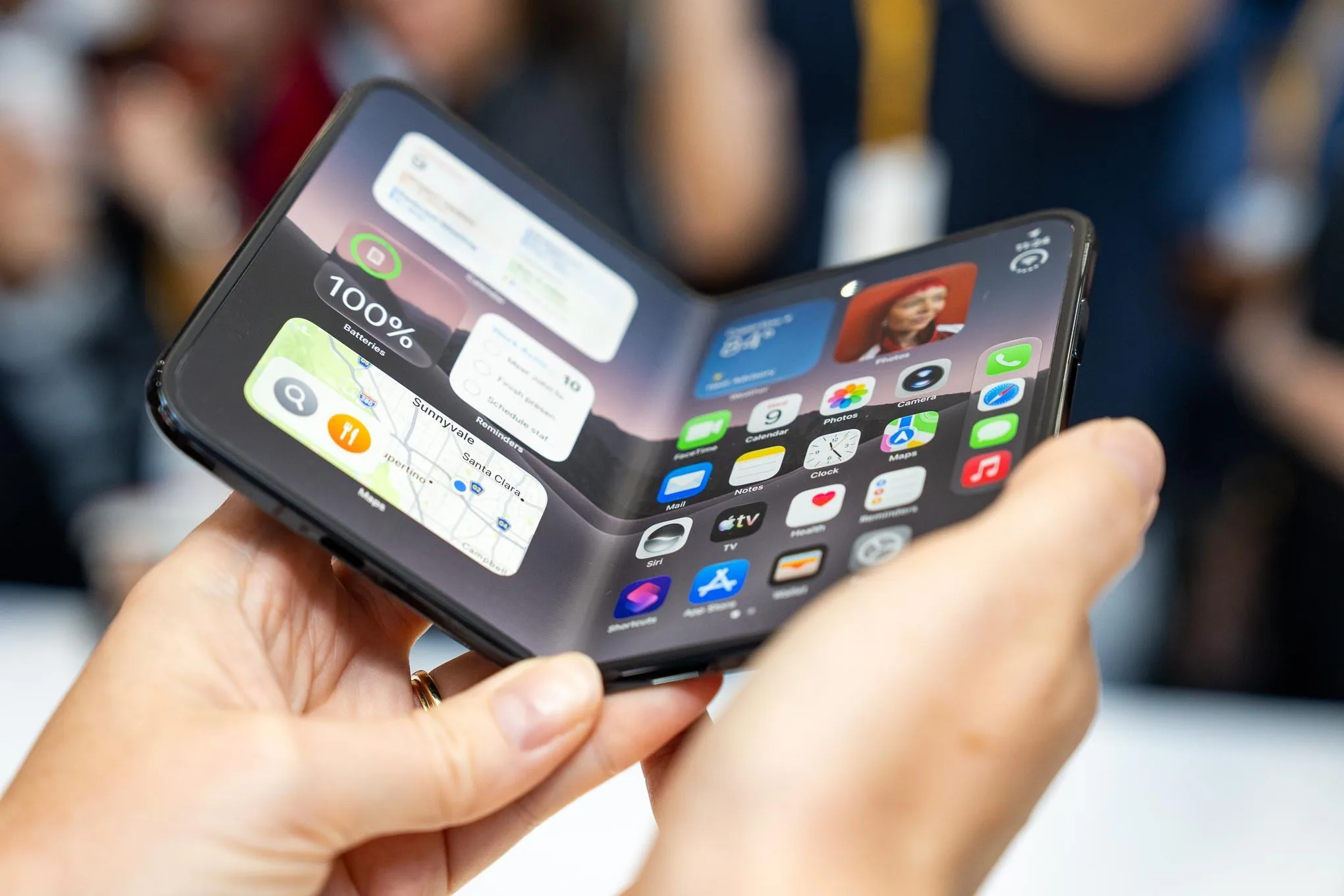
Where the iPhone Duo gets interesting is iOS 27. Apple reportedly has not simply stretched ordinary iPhone software across the inside display, nor has it copied the iPad layout wholesale. Instead, it has rebuilt key navigation around a fixed rail on the right edge: a vertical dock, a reoriented Dynamic Island, and a compact status indicator in the upper corner.
That sounds like a minor visual tweak until you consider the strange little friction points on existing foldables. On Android, apps can move, resize, relaunch, and reflow in ways that are technically capable but occasionally feel like a desktop operating system trying to remember where it left its keys. Google has improved large-screen Android dramatically, and Samsung’s One UI has years of foldable-specific features. But the experience is not always unified.
Apple’s approach appears to be about continuity. Open the iPhone Duo from its outer screen while sitting on the home screen and the basic structure stays put; the display simply gains room around it. That could make the transition feel less like changing devices and more like opening a book. Small animation details, including a blur effect that changes with the hinge angle, might sound frivolous. They are not. Interface motion is how software tells your brain what just happened.
This is an old Apple strength. The company often takes a behavior users already understand and removes just enough awkwardness that it feels obvious in retrospect. The original iPhone did not invent the touchscreen phone. The Apple Watch did not invent wrist notifications. Apple did, however, make choices about interaction that gave those ideas a more approachable shape.
There is one conspicuous concern: the fixed right-side interface could be irritating for left-handed people. A foldable is already an asymmetrical object, with a spine, different screen sizes, and several plausible ways to hold it. If Apple does not offer a mirrored layout, it would be an unusually stubborn omission from a company that normally obsesses over the tiny details.
Multitasking remains Apple’s biggest unanswered question
For all the visual ambition, the iPhone Duo may initially support only two apps side by side, including two windows from the same app, with saved app pairs for quick reopening. That is useful. A browser and messages, mail and calendar, a document and reference material: these are real workflows. But Samsung has been selling three-app layouts, floating windows, taskbars, and increasingly desktop-like flexibility for years.
Apple has often been wary of turning mobile software into a shrunken PC, and I understand the instinct. Most people do not want to manage windows on a seven-inch screen while standing in line for coffee. Yet a foldable buyer is paying a $2,000 premium specifically for more screen and more possibility. If the iPhone Duo cannot make that space meaningfully useful for work, it risks becoming a very elegant, very expensive reading machine.
Its updated StandBy mode points toward a more grounded use case. Prop the phone half open on a desk and it can act as a clock, photo frame, or widget display. Yes, calling it a $2,000 alarm clock is an easy joke. But people already use foldables this way because the hinge makes the hardware physically adaptable in a way a slab phone cannot match. Apple’s advantage is that it may make those moments feel intentional rather than accidental.
Apple’s foldable test is bigger than the first model
The iPhone Duo does not need to embarrass Samsung on a spec sheet to matter. It needs to answer a more practical question: can a foldable feel normal enough that millions of iPhone users stop viewing it as a fragile luxury toy? Apple’s ecosystem, carrier reach, accessory business, and developer influence give it enormous room to push that answer.
But the company is entering late, and late entrants do not get unlimited patience. Buyers will notice the weight. They will notice a missing telephoto camera. Power users will notice if multitasking feels fenced in. Apple can make a crease disappear from view; it cannot animate away a compromise users encounter every day.
If its software genuinely makes the two-screen experience feel coherent, though, the iPhone Duo could force Android makers to rethink an uncomfortable truth: years of superior foldable hardware do not automatically add up to the most satisfying foldable phone. Next month’s launch should tell us whether Apple has found the missing interaction model, or merely the cleanest coat of paint yet applied to one.
Frequently Asked Questions
How much will the iPhone Duo cost?
Apple says the iPhone Duo will cost $1,999.
Does the iPhone Duo have a crease in its folding screen?
The screen crease appears to be extremely difficult to see, helped by Apple’s new hinge design, adhesives, and matte display finish. Hands-on impressions indicate that it can still be felt if a user deliberately runs a finger across the center of the display.
Why is iPhone Duo software different from regular iOS?
The foldable version of iOS 27 reportedly rearranges major interface elements around the larger inner display, including a vertical dock and status controls on the right edge. The goal is to keep the interface visually stable as users open and close the phone.