

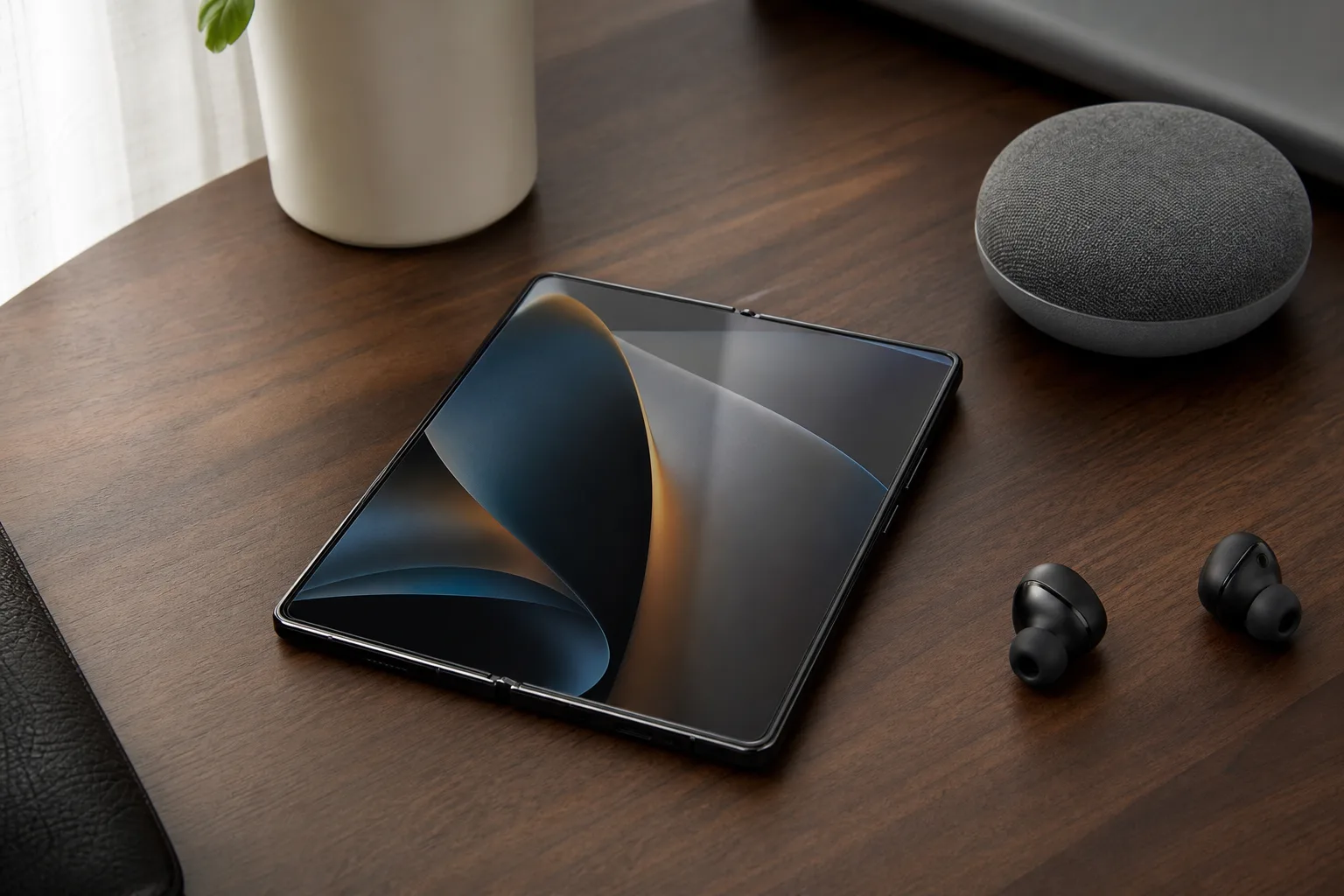
- The Apple foldable iPhone looks like a premium new category, not a routine annual iPhone refresh.
- Tim Cook’s reported involvement suggests Apple sees the Apple foldable iPhone as a serious strategic bet for its hardware business.
- New HomePod audio features could give Apple’s speakers a better shot at shared listening and home entertainment.
- Potential App Store changes show Apple is still looking for revenue growth beyond hardware.
Table of Contents
Apple’s next big device may have to earn its place
The Apple foldable iPhone is getting closer to sounding like a product plan rather than an industry rumor mill staple. That matters because Apple has spent years watching Samsung, Google, Motorola, and a parade of Chinese phone makers test whether folding screens can become normal consumer technology. So far, the answer has been mixed: people admire them, some buy them, but the category hasn’t yet escaped its expensive enthusiast phase.
Reporting discussed on the latest 9to5Mac Daily episode points to a foldable iPhone project shaped in part by Tim Cook, alongside a broader collection of Apple moves involving HomePod audio, acquisitions, and the App Store’s business model. The headline treatment around a possible foldable iPhone may invite the usual launch-day fever, but the more revealing story is Apple’s attempt to find fresh growth without making its product lineup feel like a pile of overlapping rectangles.
Apple knows this problem well. The iPad never killed the laptop. The Apple Watch became a very good companion device, not the universal computer some early marketing implied. And the Vision Pro, impressive as its engineering may be, remains a reminder that a premium category can be technically ready long before it is socially or financially ready for the mass market.
My read is that an Apple foldable iPhone has to solve a much plainer problem than “look, it bends.” It needs to make daily life easier. That could mean a phone that opens into a useful reading, messaging, video, or light-work screen without becoming a bulky brick in a pocket. If Apple can deliver that balance, it may have a shot. If it cannot, the device risks becoming the kind of luxurious gadget people play with in stores and politely decline at checkout.
Why the Apple foldable iPhone is a Cook-era test
Cook is not Steve Jobs, and that’s neither an insult nor a revelation. His Apple has been defined by operational execution, supply-chain discipline, services expansion, and the patient refinement of products people already understand. The company’s greatest commercial victories under Cook, especially the Apple Watch and AirPods, didn’t arrive as wild blue-sky experiments. They arrived as tightly integrated answers to existing habits.
That makes the reported executive attention around the Apple foldable iPhone especially interesting. Foldables ask Apple to do something it generally dislikes: accept an obvious compromise. Hinges add mechanical complexity. Flexible displays introduce durability questions. A larger unfolded panel can improve multitasking, but it also raises weight, thickness, and cost. There is no free lunch here, only a more expensive lunch with a hinge in it.
Samsung has already worked through several generations of that tradeoff with its Galaxy Z Fold line, while Google’s Pixel Fold efforts have pushed Android’s large-screen software story. Apple can learn from all of it. But arriving late creates its own pressure. Consumers won’t reward Apple merely for showing up; they’ll expect it to explain why its version is more practical, more durable, and more thoughtfully designed than the products already on sale.
The price question may be the hardest one. A premium Apple foldable iPhone would almost certainly sit above the Pro Max tier, which already tests what many buyers will tolerate. Apple’s installment plans and trade-in machine can soften sticker shock, but they can’t erase it. A very expensive phone may make business sense for Apple while still making ordinary consumers pause. Frankly, they should pause.
Apple has long argued that its products work best as an ecosystem, and there is truth to that. A foldable could be more appealing if it hands off work cleanly to a Mac, serves as a richer viewfinder for cameras, or reduces the need to carry an iPad on short trips. But that value needs to be felt, not explained in a keynote slide full of floating app windows.
HomePod needs a reason to be in the room
The same 9to5Mac Daily discussion highlighted Apple work on surround-sound and “Party Mode” features for HomePod. Those ideas sound modest beside the Apple foldable iPhone, but they may address a more immediate weakness. HomePod hardware sounds good. Apple’s smart-speaker proposition, on the other hand, has often felt oddly unfinished.
Apple has ceded too much of the casual home-audio conversation to Amazon and Google, even as both rivals have struggled with their own voice-assistant ambitions. A better multi-speaker experience could give HomePod a clearer purpose: not just Siri in a cylinder, but an approachable way to fill an apartment or house with music. Anyone who has tried to coordinate music across several rooms during a dinner party knows how quickly this can turn into a tiny domestic IT incident.
Party Mode could also be Apple’s effort to make shared listening more social and less fiddly. HomePod speakers support multiroom audio and home-theater functions. Building features that make those capabilities easier to discover would be smarter than simply adding another spec-sheet bullet.
Services pressure is still shaping Apple’s decisions
One report raised the prospect of App Store changes intended to lift revenue and margins. That should surprise nobody. Apple’s services business has become central to the company’s financial story, while regulators and courts around the world keep challenging the rules governing app distribution and payment systems.
The tension is obvious. Apple wants to protect the security and simplicity of its platform while defending a highly lucrative commerce model. Developers want lower fees, clearer rules, and access to customers without feeling permanently taxed by the operating system. Regulators see a gatekeeper with enormous power. All three positions contain some truth, which is why this fight has lasted so long.
An Apple foldable iPhone won’t change that conflict, but it highlights why Apple is pursuing several tracks at once. New hardware creates excitement. Better HomePod features deepen household attachment. App Store adjustments preserve cash flow. Acquisitions, including the futuristic-sounding technology deal mentioned in the podcast roundup, can seed capabilities Apple may not be ready to discuss publicly.
Apple’s next hardware cycle is really a bet on accumulation, not one miracle product. It’s building a stack of reasons to remain inside its ecosystem, from the phone in your hand to the speaker in your kitchen to the subscriptions quietly renewing on your card. Whether the Apple foldable iPhone becomes the star of that strategy or its most expensive experiment is the question Apple now has to answer.

