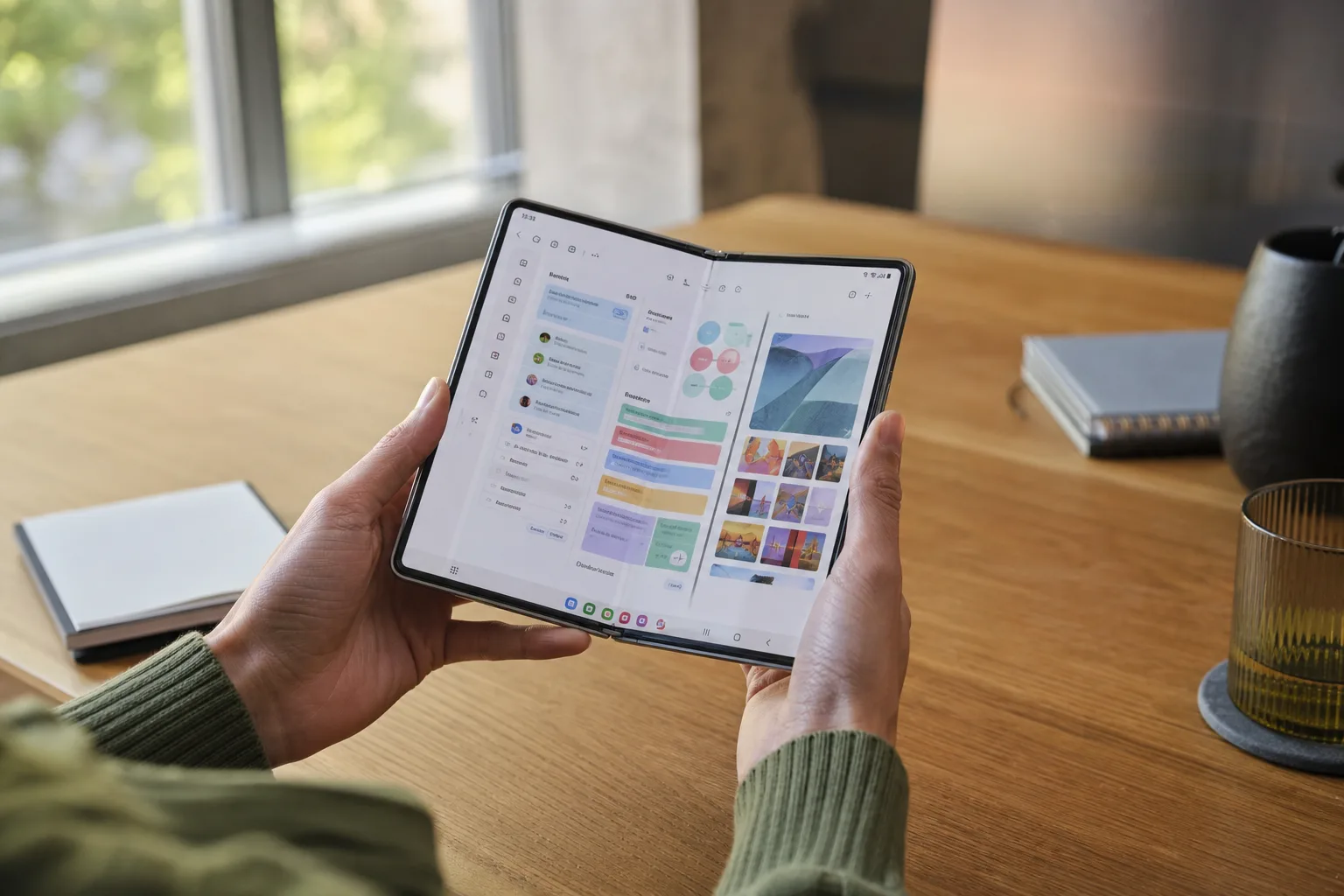
Apple has opened App Store submissions for iPhone Duo apps, giving developers a head start before the company’s foldable handset is scheduled to arrive on October 23. That may sound like a routine developer bulletin. It isn’t. For a new device category, the first few weeks of app quality can make the product feel polished or half-baked.
The basic deal is straightforward: existing iPhone apps should run on the iPhone Duo without developers doing anything. But apps compiled with Apple’s iOS 27.1 software development kit, or SDK, can adapt their layouts dynamically to fill the phone’s unfolded inner screen. Apps that have not been updated may run inside black borders instead. Nobody buying an expensive foldable wants their banking app to look like it was framed for a much smaller phone.
- Apple is accepting iPhone Duo apps ahead of the foldable phone’s reported October 23 retail launch.
- Only iPhone Duo apps built with the iOS 27.1 SDK can resize properly across the device’s larger inner display.
- Existing iPhone software will run on the new hardware, but unsupported layouts may appear with black borders.
- The early submission window gives developers a rare chance to avoid a thin app ecosystem at launch.
Table of Contents
iPhone Duo apps face a familiar foldable problem
Apple is entering a market Samsung has been working for years, and the company has inherited the central challenge of foldable software: hardware can unfold in an instant; app design usually cannot. A screen that changes shape asks more of an interface than simply stretching buttons and text until they fit.
Done well, a larger display can show a mail inbox beside an open message, expand an editing timeline, make spreadsheets less ridiculous, or turn a messaging app into something closer to a compact tablet workspace. Done badly, it produces oversized empty margins, broken navigation, and controls stranded in odd places. This is why iPhone Duo apps matter more than a compatibility checkbox.
Apple says developers can prepare updates through Xcode 27.1, its current app-development environment, and has published guidance on adapting layouts for the new form factor through its official developer resources. The company’s emphasis on dynamic resizing suggests it wants developers to treat the inner display as a living workspace rather than a fixed secondary canvas.
The catch is that a big screen alone does not create better software. Android foldables have shown that some apps intelligently reflow when a handset opens, while others merely become larger rectangles. Apple’s platform consistency may give it a real advantage here, provided developers actually show up.
The black-border warning is Apple’s gentle nudge
Apple is not blocking older apps from the iPhone Duo. That is the sensible call. Day one needs a functioning App Store, and compatibility is far better than asking customers to wait while developers rebuild everything. But the black-border fallback is also a clear signal: apps that do not adopt the new SDK will work, yet they will not look their best.
Frankly, that is a more effective incentive than a mandate. Developers with products people use every day will not want screenshots circulating online that show their software boxed into a portion of an expensive new screen. The visual gap between a properly adaptive app and an unoptimized one could become a quiet but powerful upgrade prompt.
There is a practical wrinkle, though. Small development teams tend to prioritize the platforms that pay the bills. Apple needs the iPhone Duo installed base to become meaningful quickly enough that updating an app feels worthwhile. The company can make the tools elegant, publish every layout guide in Cupertino, and still struggle if developers conclude the audience is too small.
That is the familiar chicken-and-egg problem of new hardware. Buyers want great software before spending money. Developers want buyers before spending engineering time. Apple has navigated versions of this before with the iPad, Apple Watch, and Vision Pro, with very different outcomes. The iPad became a serious software platform; Vision Pro’s app story has been considerably more uneven.
What developers should actually change
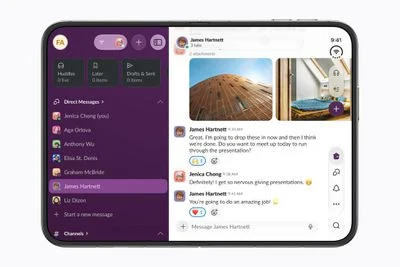
For developers, the immediate task is not necessarily to invent a special foldable-only version of every app. The better approach is to inspect where an interface breaks when its available width suddenly expands, then make the most useful changes first. A document app might add a sidebar. A photo editor might expose more controls. A shopping app may simply need its product grid and checkout flow to stop wasting space.
iPhone Duo apps built using the iOS 27.1 SDK can respond as the display changes size, rather than presenting a single rigid layout. That should let software move between the outer phone-like screen and the inner display with less friction. Apple has not detailed every behavior developers will encounter, so we will have to see how well third-party apps handle transitions in the real world.
The winners are likely to be apps that already have thoughtful iPad interfaces. Companies such as Microsoft, Adobe, Google, Slack, and major productivity developers have experience designing for more than one screen size. Their challenge will be deciding whether the iPhone Duo’s dimensions call for a scaled-down tablet view, a widened phone view, or something in between. Those are not identical problems, and iPhone Duo apps will need to make those choices carefully.
Launch day will reveal Apple’s real foldable ambition
Opening submissions now is a small announcement with outsized implications. It gives Apple time to get polished iPhone Duo apps through App Review and visible in the store. That runway is short, but it is enough for established teams to ship targeted updates if they have had early access to the hardware and tools.
For consumers, the useful test is simple: do not judge the iPhone Duo solely by whether its display folds. Watch the apps. Look at whether the software you use most fills that inner panel intelligently, whether it keeps its state when the device changes posture, and whether developers add features that make the larger canvas worth carrying. The quality of iPhone Duo apps will be the clearest sign that the larger screen is earning its place.
My read is that Apple understands this. The company is framing compatibility as the floor and adaptive design as the standard. If the App Store fills quickly with capable iPhone Duo apps, Apple may make foldables feel less like an enthusiast experiment and more like a normal iPhone choice. If black borders dominate the first wave, though, the hardware will have a much harder time escaping the shadow of every previous foldable compromise.