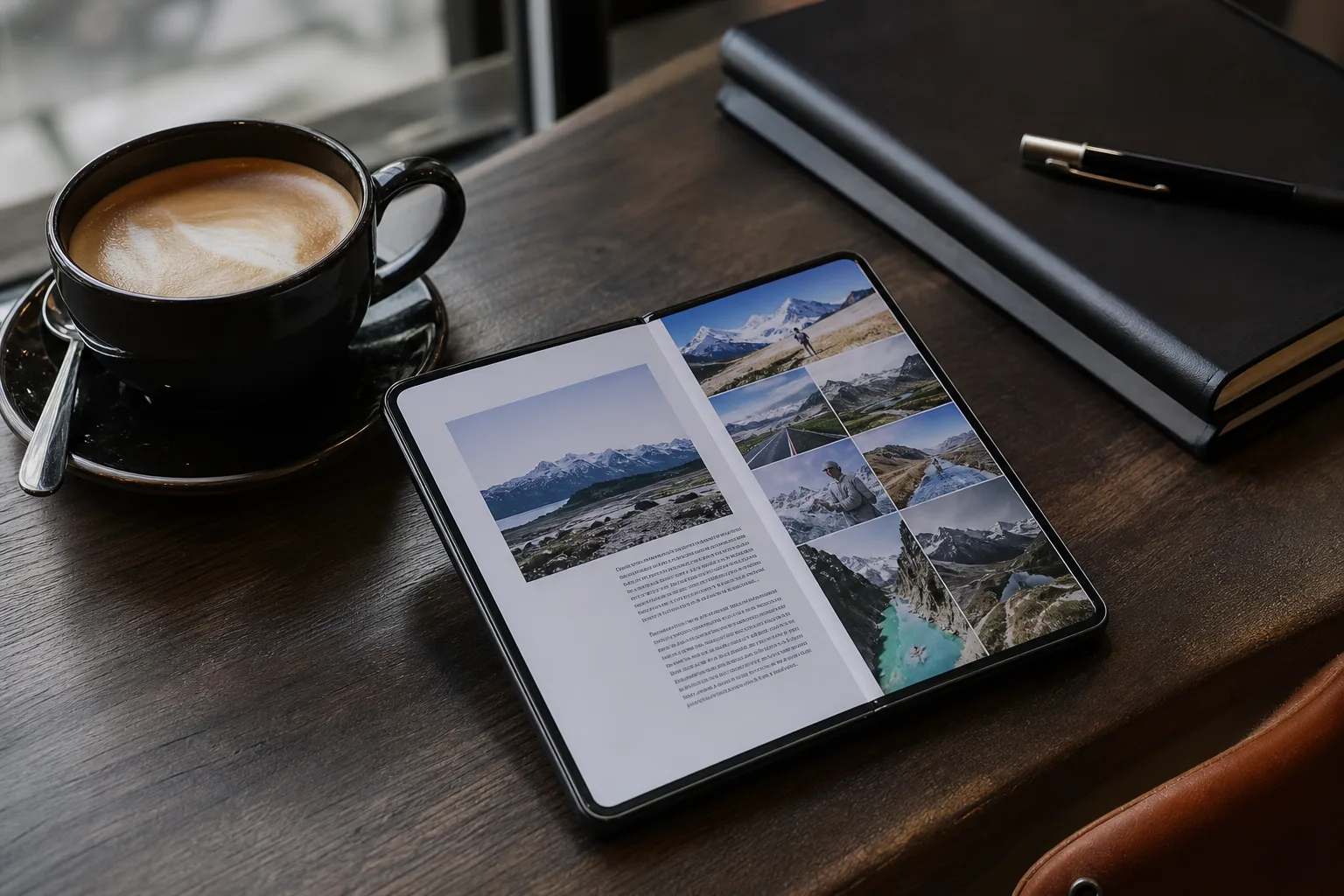
- The iPhone Duo could validate book-style foldables and force Android brands to compete on more than thin hardware.
- If the iPhone Duo succeeds, Android foldables may finally get better app layouts, longer support windows, and more dependable cameras.
- Samsung, Google, Oppo, and Honor already make capable foldables, but software remains the format’s stubborn weak spot.
- Apple entering late would not make foldables new, but it could make them feel ordinary to mainstream phone buyers.
Table of Contents
The iPhone Duo matters because foldables still feel unfinished
The iPhone Duo doesn’t exist yet, at least not in any form Apple has acknowledged publicly. But the persistent reports around a folding iPhone point to something Android’s foldable-phone makers should take seriously: Apple may be preparing to enter a category they’ve spent years trying to make ordinary.
That sounds backwards. Samsung, Huawei, Oppo, Honor, Google, Motorola, and Xiaomi have all built their own variations. Android companies have dealt with hinge failures, awkward app scaling, tall cover screens, chunky bodies, and the perennial question of whether anyone actually needs a phone that turns into a small tablet.
They did the hard yards. Apple, as usual, may show up after the messy part.
Frankly, that can be infuriating. The tech industry has a bad habit of treating Apple’s participation as the moment a category becomes real, even when competitors did the expensive and occasionally embarrassing experimentation. Remember when folding screens were a niche curiosity? Samsung took the reputational hit when early Galaxy Fold review units suffered broken displays. That history shouldn’t be erased because Cupertino eventually arrives with a polished version.
Still, my read is that an iPhone Duo could be good news for Android foldables precisely because it would force their makers to stop treating the category as a premium-specification contest.
iPhone Duo pressure could fix Android’s weakest link
The biggest issue with Android foldables is not the hinge anymore. Modern devices such as Samsung’s Galaxy Z Fold line, Google’s Pixel Fold family, and Honor’s Magic V phones have made real progress on weight, crease visibility, water resistance, and screen brightness. Some are genuinely excellent pieces of hardware.
The problem is what happens after you unfold them.
Too many Android apps still behave as though the larger display is an accidental inconvenience. You get oversized phone interfaces, oddly stretched social feeds, black bars around video, and multitasking that works beautifully in one app before falling apart in the next. The official developer resources for adaptive layouts are not the same thing as broad developer compliance.
Apple has one major advantage here: developers already build for a tightly controlled family of iPhone and iPad screen sizes. If Apple releases a book-style foldable, it can set firm expectations for how apps should move between a narrow outer display and a larger internal canvas. Developers that want access to affluent iPhone customers will pay attention. They always do.
That work would not stay confined to iOS. Major services build product teams around platforms and form factors, not acts of charity. If Slack, Microsoft, Adobe, Netflix, Meta, and the banking-app crowd invest more heavily in foldable layouts because of Apple, their Android versions will benefit too. The iPhone Duo could tell the industry that larger phone screens are no longer an enthusiast niche.
Samsung has tried to solve this itself through Flex Mode, DeX, and close partnerships with Google. Those are useful ideas, but they have not created a consistent experience across Android. A foldable should not feel like a beautifully renovated house where half the doors lead to unfinished rooms.
Apple would be copying the category, not inventing it
Let’s be clear about the likely narrative when Apple eventually announces something: it will probably be framed as Apple “solving” foldables. That would be generous at best. Android brands already proved that foldable OLED panels can survive daily use and that a phone can credibly double as a pocket tablet.
What Apple may solve is hesitation. There’s a difference.
Many buyers still view foldables as fragile, costly, and faintly theatrical. They see a Galaxy Z Fold opened on a train and think, “That looks cool, but would I trust it for four years?” Apple’s reputation for long software support and its tendency to wait until components meet its tolerances could ease that anxiety, if the company gets the execution right.
Reports have repeatedly suggested that Apple is especially focused on reducing the display crease and building a durable hinge. Those are plausible priorities, but they are still reports, not product facts.
Even so, Apple’s caution could expose a blind spot among Android manufacturers. The race to produce the thinnest foldable has become a little too familiar. Thin phones are nice. Nobody is campaigning for heavier pockets. But an unfolded chassis is less important than a crease you forget about, a camera you trust at night, a battery that survives a long day, and software updates that do not vanish after a couple of years.
Samsung has the most to gain — and the most to lose
Samsung is in the clearest position to capitalize. It has brand recognition, global retail reach, years of folding-display manufacturing experience, and an ecosystem that already spans tablets, watches, laptops, TVs, and appliances. It also knows Apple is coming; the Korean company has watched this movie many times.
But Samsung cannot assume its head start is a permanent moat. The Galaxy Z Fold line has occasionally felt caught between two identities: a productivity device for power users and a luxury phone for people who want the most expensive thing in the store. Other foldables have added pressure by pursuing a wider, more conventional outer-screen shape. Chinese manufacturers, where available, have often beaten Samsung on thinness and battery capacity.
An iPhone Duo would sharpen every one of those comparisons. If Apple’s device has a better camera, Android makers will need to quit accepting camera compromises as the price of folding. If it gets an unusually long update commitment, they will need to match it. If its apps make better use of the internal screen, Samsung and Google will have to make Android’s large-screen story feel less like a developer homework assignment.
That is competition working as it should. Nobody needs Android brands to copy Apple’s design language, remove useful features, or turn every phone into a glass-and-titanium status prop. We have enough of that. They should copy the discipline: decide what the fold is for, then make every layer of the product support that answer.
The real prize is a better reason to unfold your phone
The strongest argument for a foldable has never been that it looks futuristic. It is that it changes the moments when a regular phone feels cramped. Reading a long document, reviewing a spreadsheet, editing photos, watching a video while messaging someone, mapping a trip, or simply browsing without squinting: those are mundane tasks, and that is exactly why they matter.
For that promise to stick, users need to open a foldable and find software that rewards the action. The iPhone Duo could help create that pressure across the market, even if Apple’s first attempt is expensive and limited in volume. Its arrival would tell developers, accessory makers, carriers, and cautious buyers that folding screens are worth planning for.
Android companies deserve credit for getting there first. But being first only counts if you keep moving. If Apple turns a rumored iPhone Duo into the catalyst that finally makes Android foldables more coherent, more durable, and more useful, that would be a slightly annoying outcome for Samsung and company.
It would also be exactly what their customers need.
Frequently Asked Questions
What is the iPhone Duo?
iPhone Duo is an informal name used for Apple’s widely rumored foldable iPhone. Apple has not announced a foldable handset, its final name, specifications, pricing, or release date, so any details remain subject to change.
Why could the iPhone Duo affect Android foldables?
Apple’s arrival could bring more developer attention and consumer interest to large folding phone screens. Android manufacturers have years of hardware experience, but they would face stronger pressure to improve apps, cameras, durability, and software support.
Do Android foldables already have better hardware than Apple?
In a literal sense, yes: Samsung, Google, Oppo, Honor, Huawei, and others already sell foldable phones while Apple does not. But Apple’s strength has often been turning an existing category into a more polished mainstream product.