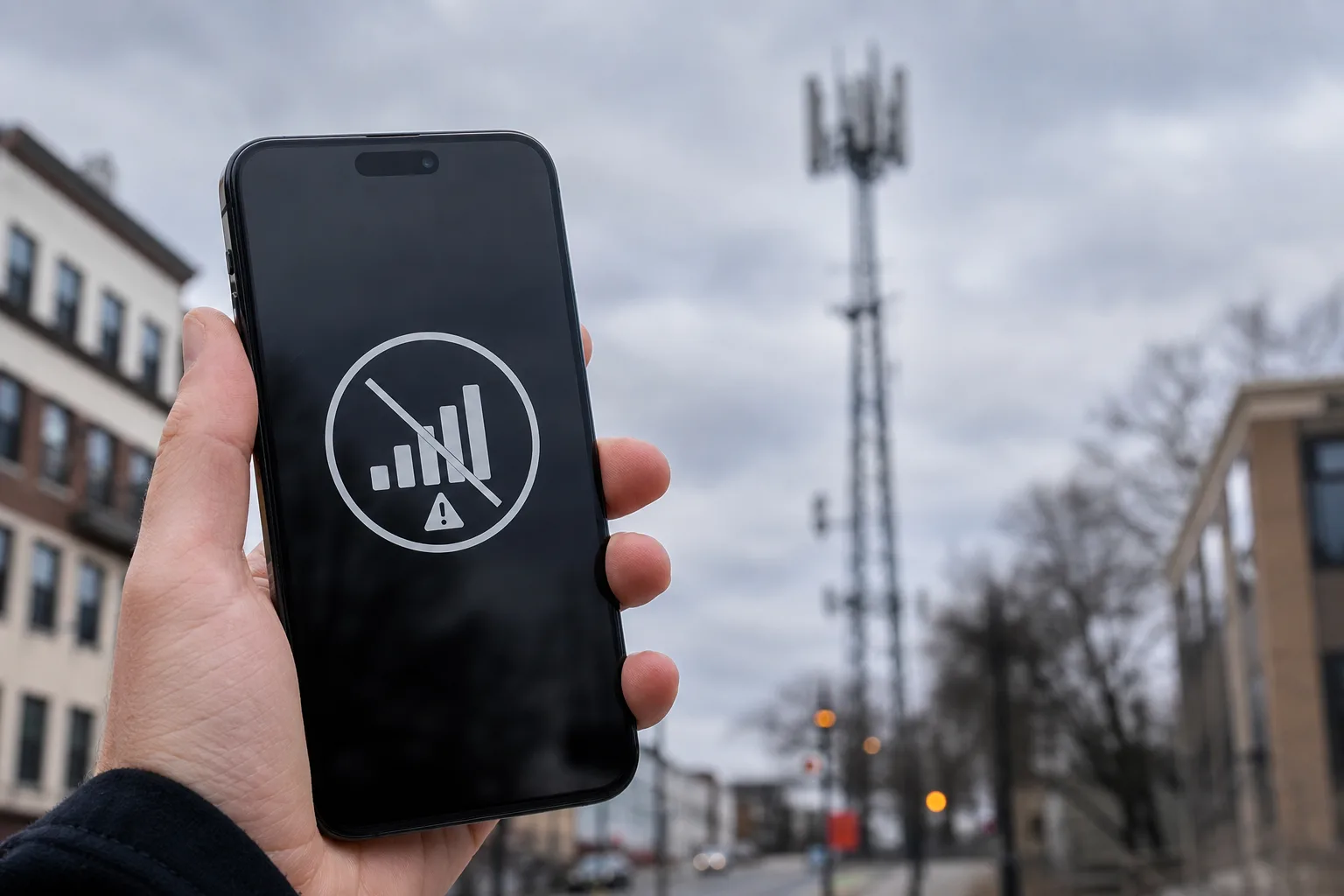
- Apple has issued an AT&T carrier settings update as iPhone 18 Pro Max owners report failures with calls, texts, and cellular data.
- The iPhone 18 Pro Max setup process now requires iOS 27.0.1, though affected customers say the software has not fixed existing service failures.
- AT&T says it is working with Apple, but neither company has publicly identified the underlying technical cause.
- The episode is a reminder that carrier configuration software remains a fragile but essential layer beneath a modern smartphone’s polished interface.
Table of Contents
The iPhone 18 Pro Max problem is bigger than a bad signal
The iPhone 18 Pro Max is supposed to be Apple’s most capable phone, but thousands of AT&T customers have instead found themselves carrying a very expensive slab that cannot reliably make calls, send texts, or use cellular data. That is not the usual complaint about patchy coverage in a stadium or a rural dead zone. Reports point to a device-and-network compatibility issue affecting ordinary service, which puts Apple and AT&T in the awkward position of trying to repair a core phone function after the handset is already in people’s hands.
Apple has now released an AT&T carrier settings update, version 72.1, replacing version 72.0.2. Carrier settings are small configuration packages that tell an iPhone how to work with a specific operator’s network: which features to enable, which network parameters to use, and how services such as voice, messaging, and data should behave. They are usually invisible plumbing. When they go wrong, however, that plumbing can flood the house.
AT&T offered the briefest possible public confirmation, saying it is “working with Apple” on the situation. Apple had not publicly commented at the time of reporting. Neither company has identified whether the fault lies in modem behavior, network authentication, provisioning systems, a carrier configuration, or some unpleasant combination of all four.
What Apple and AT&T have changed so far
The first intervention is that carrier settings update. Most people will see an installation prompt automatically, but anyone with an affected iPhone 18 Pro Max can check manually in Settings, then General, then About. If an update is available, iOS should offer it there. The current carrier version is also listed beside the carrier name in that same screen.
That may sound like an oddly modest response to a major connectivity failure. In practice, carrier settings updates can be meaningful. They can adjust how a phone registers on a network, enable or disable a feature that is causing trouble, or revise parameters used for voice and data sessions. They are also quicker to deploy than a full iOS release, which has to be built, tested, and approved across many models and regions.
Version 72.1 looks more like a first containment measure than a victory lap. AT&T and Apple have not said the update resolves every case, and users should not assume that installing it will immediately restore service. The fact that this issue has reportedly affected calls, texts, and data suggests the failure may sit fairly deep in the connection chain. A settings file can fix that, but only if the problematic behavior is something the settings file can actually control.
Apple has also made iOS 27.0.1 mandatory during setup for new iPhone 18 Pro Max devices. According to a leaked AT&T email cited in reports, the update is intended to help “mitigate future impacts.” That wording is revealing. It does not promise a cure for phones already failing on AT&T; it suggests Apple is attempting to stop more customers from falling into the same hole.
Why iOS 27.0.1 may not be the whole fix
Owners already caught in the iPhone 18 Pro Max outage have said iOS 27.0.1 has not consistently restored their connections. That does not mean the update is useless. A software change can prevent a trigger condition without repairing devices that have already been incorrectly provisioned or placed into a bad network state. Think of it like fixing the instructions for assembling furniture after half the shipment has already been put together wrong.
But it does mean Apple and AT&T should be much clearer, much faster. Customers need to know whether they should install the carrier update, restart their phone, reset network settings, contact AT&T, exchange the device, or simply wait. Right now, the public guidance appears thin relative to the severity of the complaint.
This is where modern phones can feel deceptively simple. We talk about iOS and Android as if the operating system is the entire experience, but cellular service depends on a stack of moving parts: Apple’s hardware, modem firmware, iOS, the carrier bundle, SIM or eSIM provisioning, and AT&T’s own network systems. Any one layer can be correct while the customer still has no connection. The shift to eSIM has made activation more convenient for many people, but it has also removed one of the old-school troubleshooting moves: pop out the card, swap it, and see what happens.
A familiar industry weakness, now on a flagship phone
Apple has been here before in spirit, if not in precisely this form. Antennagate turned a hardware design dispute into a public-relations mess. The company’s early transition away from Intel modems brought years of scrutiny around Qualcomm dependence and modem performance. And carriers have long pushed configuration updates quietly because network behavior is never as plug-and-play as marketing would have us believe.
The difference this time is expectation. Buyers choosing an iPhone 18 Pro Max are paying for the top-tier model, and basic connectivity is table stakes. A premium camera or a brighter display can be debated. The ability to call someone during an emergency cannot. Frankly, this is the sort of failure that erodes trust disproportionately because it attacks the one task every phone must do without drama.
My read is that Apple and AT&T will probably need more than one patch if the reports are as broad as they appear. The carrier update may stabilize some phones, while a follow-up release such as iOS 27.0.2 could be needed for modem or operating-system behavior that a carrier bundle cannot reach. Neither company has confirmed that path, so that remains informed speculation rather than a promise.
What affected customers should watch next
Affected users should install both the AT&T carrier settings update and iOS 27.0.1 if offered, then keep an eye on official notices from Apple and AT&T. Documenting failures, including the time, location, network status, and whether calls or data work, can also help if customer support needs to investigate an account or replacement claim.
The important test is not whether an update appears, but whether an iPhone 18 Pro Max stays connected through a normal day: a call from the car, an SMS verification code, maps on the commute, data at lunch. Apple and AT&T have started moving. Now they need to prove the fix holds when nobody is watching the About screen.