

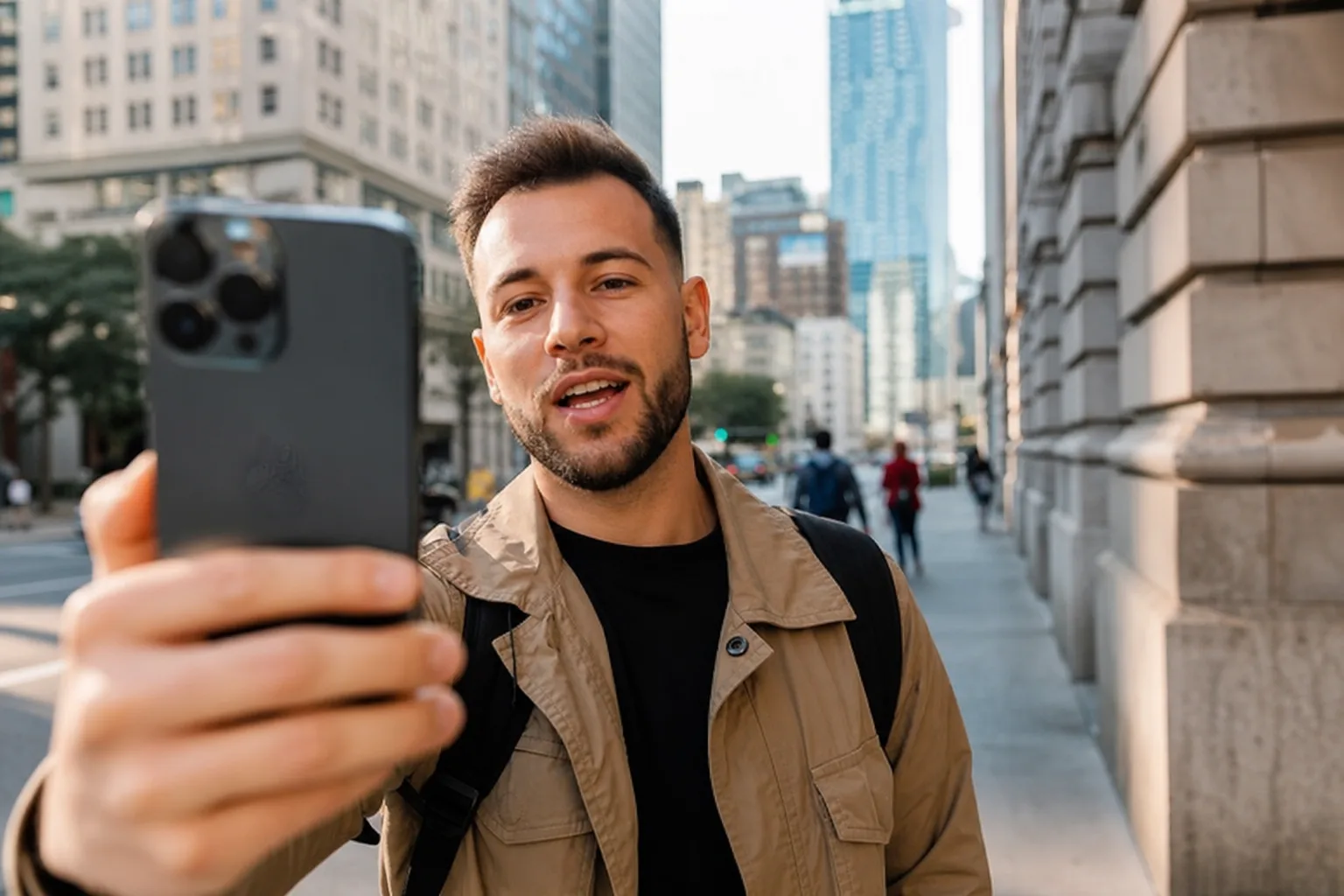
Most people don’t notice a crooked horizon while recording a selfie video. They notice it later, when a clip that felt perfectly fine turns into a vaguely seasick piece of footage. Samsung’s reported plan to bring Horizontal Leveling to its front-facing camera is a small change on paper, but it targets exactly that irritating everyday problem.
Android Authority reports that Horizontal Leveling could be Samsung’s attempt to make selfie videos more stable. Since the feature was found in software before release, there is no guarantee it will ship. Samsung changes features, names, and device eligibility all the time.
Still, the direction makes sense. Phone makers have spent years making video less shaky, yet keeping footage visually level remains an oddly neglected part of the experience — particularly when the person holding the phone is also the subject of the video.
- Samsung reportedly could use Horizontal Leveling to make selfie videos more stable.
- Horizontal Leveling could help front-camera footage maintain a straighter horizon when users walk, pan, or hold a phone imperfectly.
- The feature appears aimed at social video creators who want better results without learning manual framing or using a gimbal.
- Samsung still needs to prove that software stabilization will not soften faces, crop footage heavily, or create distracting visual artifacts.
Table of Contents
Horizontal Leveling targets the awkward selfie-video problem
The basic job of Horizontal Leveling is straightforward: detect the horizon and compensate when the phone is tilted. Think of someone filming themselves on a sidewalk, in a concert crowd, or while giving a quick update from an airport. Their arm shifts, the phone rotates a few degrees, and suddenly buildings lean in the background. It’s not dramatic camera shake; it’s just bad framing.
Conventional electronic image stabilization is mainly designed to reduce jitter caused by hand movement. Optical image stabilization, where available, physically moves camera components to offset motion. Horizon correction is a related but distinct task. The phone needs to understand its orientation, predict motion, and often crop into the image slightly so it has room to rotate the frame digitally.
That last part matters. There is no free lunch in computational video. A system can make an image look steadier and straighter, but it may need to crop the image, reduce detail, or produce odd warping around moving subjects. Anyone who has pushed action-camera stabilization too far has seen the effect: the world can start bending at the edges like it’s viewed through a rubber window.
Samsung’s apparent decision to use a lighter version of Horizontal Leveling for selfie cameras suggests the company understands those limits. Front cameras tend to have less hardware headroom than primary rear sensors. They are usually smaller, offer fewer lens options, and are commonly used indoors or in mixed lighting, where aggressive processing can turn faces into soft, smeary approximations of faces.
A restrained version may be the sensible version.
Why Samsung is chasing steadier front-camera footage
Selfie video has become a much larger part of smartphone camera use than old-school spec sheets would suggest. It powers TikTok clips, Instagram Stories, video calls, livestreams, product explainers, school projects, and the endless parade of people talking to a phone while walking somewhere. The creator economy has made the front camera a production tool, not merely the lens used for occasional group photos.
Apple and Google have both understood this for years, though they approach it differently. Apple has built a reputation around predictable video processing and stabilization, while Google leans hard on computational photography and software-assisted camera features. Samsung, meanwhile, often ships a dizzying amount of camera functionality, but the challenge is making it feel automatic enough that normal people will actually use it.
That’s where Horizontal Leveling has a real opening. Most users do not want to choose among multiple stabilization modes, decode a menu of cinematic settings, or buy a gimbal for a 20-second clip. They want to hit record and avoid looking like they filmed the scene on a gently rolling boat.
Frankly, that is a better use of mobile AI and sensor data than another novelty filter. The improvement may be subtle, but subtle is often what separates footage that feels polished from footage that gets abandoned in the camera roll.
The Galaxy S26 angle is more interesting than it first appears
The feature could take different forms across Samsung’s camera lineup. That hierarchy is unsurprising: rear cameras get the best sensors, the most engineering attention, and the largest marketing budgets. But it also raises an important question about availability.
Will Horizontal Leveling be an S26-exclusive feature, or will Samsung bring it to earlier Galaxy flagships through One UI updates? The company has gotten better at extending software features across recent devices, particularly when they do not depend on brand-new hardware. Yet camera features are also where manufacturers love to draw artificial lines between generations. A two-year-old flagship can be perfectly capable, but that doesn’t always mean it gets the shiny new button.
Samsung has not publicly announced the feature, its final branding, supported resolutions, frame rates, or a device list. Until it does, treating early software references as launch promises would be premature. The official Samsung Newsroom remains the place to watch for confirmed software plans, rather than treating early code discoveries as final product documentation.
There is also a practical design question: should Horizontal Leveling always run automatically, or should Samsung expose a control? Automatic correction will suit most people, but creators sometimes want a deliberate tilt for energy or composition. A phone that keeps correcting intentional camera movement can be as annoying as autocorrect changing the word you actually meant to type.
Small camera software features can decide the real winner
Smartphone camera competition has hit a stage where hardware specifications alone tell an incomplete story. Bigger sensors and brighter lenses still matter, obviously. But the experience increasingly comes down to whether the phone quietly saves a shot or clip that would otherwise be unusable.
That’s why Horizontal Leveling deserves more attention than its modest name suggests. It addresses a mundane flaw that crops up in the kind of spontaneous video people make constantly. If Samsung can keep faces sharp, avoid excessive cropping, and make the correction unobtrusive, it could become one of those features users forget exists until they switch phones and suddenly miss it.
My read is that Samsung should resist turning this into another buried camera toggle. Put it where people can find it, explain what it does in plain language, and let the result speak for itself. The best stabilization feature is the one you never have to think about — until you see your old tilted videos and wonder how you tolerated them.