

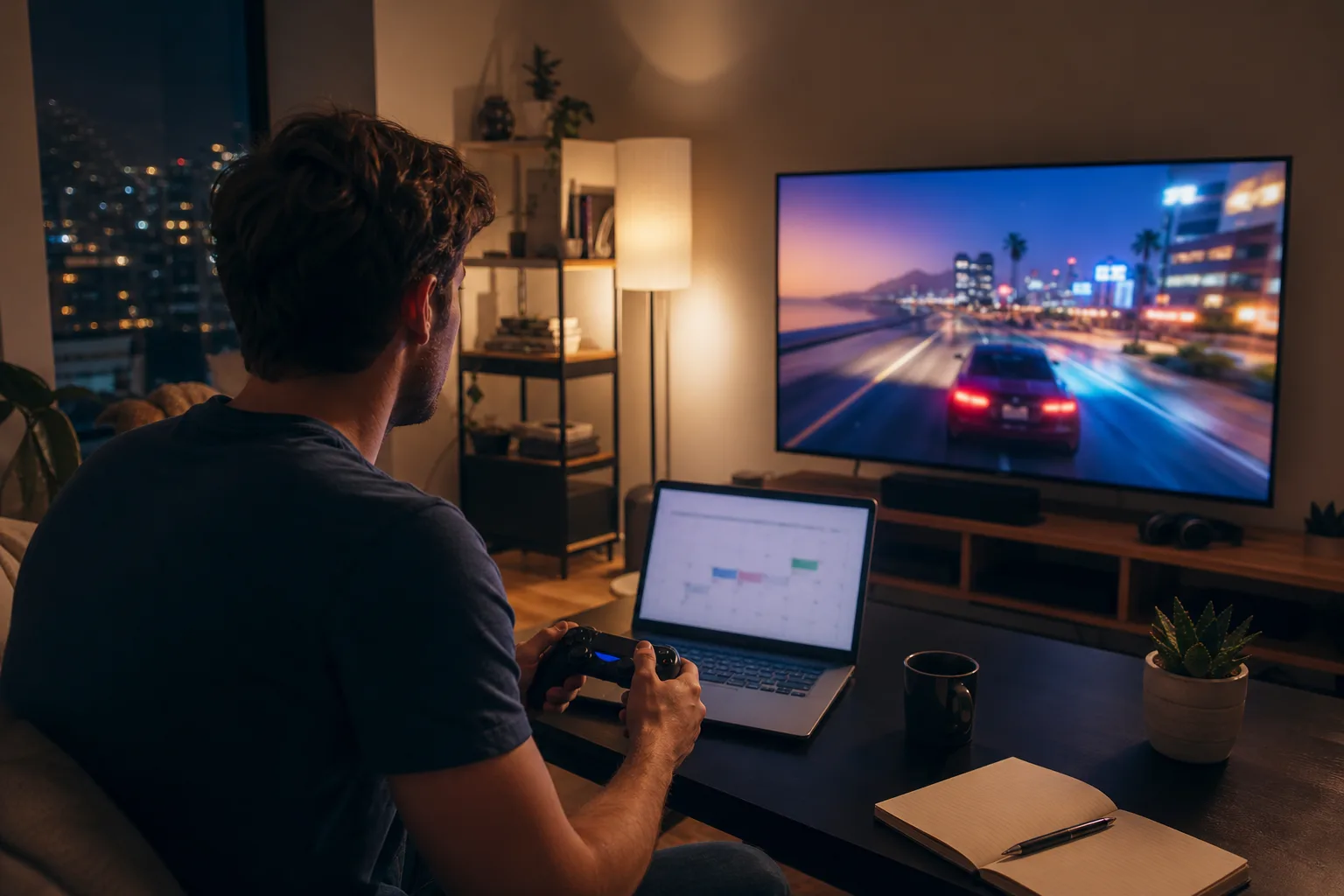
- The GTA VI work blackout could push thousands of players to book PTO, call in sick, or work unusually distracted.
- Companies from Riot Games to Logitech are treating the GTA VI work blackout as a cultural moment rather than a disciplinary problem.
- BambooHR found PTO requests for November 19 running nearly 13 percent above comparable dates in prior years.
- With reported preorders nearing 16 million, Rockstar’s next Grand Theft Auto may become gaming’s largest entertainment launch.
Table of Contents
The GTA VI work blackout is already being scheduled
The GTA VI work blackout has moved beyond the usual jokes about calling in sick for a game launch. After 13 years of waiting since Grand Theft Auto V, plenty of adults are reportedly booking vacation days, negotiating household screen-time treaties, and preparing to vanish into Vice City for a long weekend. Rockstar Games says Grand Theft Auto VI is set to arrive at midnight local time on Thursday, November 19, for PlayStation 5 and Xbox Series X|S. That Thursday release date is doing employers no favors.
We have seen versions of this before. People took time off for The Legend of Zelda: Tears of the Kingdom, Cyberpunk 2077, and World of Warcraft expansions. But GTA operates on a different scale. It pulls in lapsed players, casual console owners, streamers, and people who might only buy one game every several years. The franchise has become so culturally unavoidable that the internet’s standard measure of a long wait is now some variation of “we got this before GTA VI.”
That meme was funny because it was true. The looming release is funny because it may also be expensive.
Why the GTA VI work blackout has employers paying attention
HR platform BambooHR found PTO requests for November 19 running nearly 13 percent higher than comparable dates in previous years, based on its workforce data and survey work. That does not prove every request belongs to a would-be virtual criminal, obviously. November is already a crowded month for leave. Still, the timing is hard to ignore, and Xbox has leaned into the bit with promotional doctor’s notes claiming players have a “Vitamin G” deficiency.
The more revealing response is coming from companies that know their employees will play anyway. Logitech has offered its 7,000 employees a paid gaming day that can be used within the following year. Riot Games, home of League of Legends and Valorant, says leaders have encouraged staff to enjoy launch day, while its campus plans a GTA-themed lunch and snacks. Riot also gives employees a monthly $25 Play Fund for games, an unusually direct acknowledgement that playing games can inform the people who make them.
Joe Hixson, Riot’s vice president of communications, said gaming across genres can make developers better by improving their understanding of “what makes a great player experience.” That is a reasonable argument, though it has limits. An employee does not become a better producer merely by spending 14 hours hunting collectibles. But for a game studio, pretending a release this big will not dominate office conversation would be like a sports bar pretending the Super Bowl is just another Sunday.
One anonymous studio executive told WIRED that normal in-office absences at his company sit around 5 to 7 percent, but he expects roughly 10 to 12 percent on GTA launch day. Friday could be stranger still: technically online employees with suspiciously slow Slack replies and large calendar blocks labeled “deep individual work.” Anyone who has worked remotely knows the type of calendar alchemy involved.
The GTA VI work blackout is less a sudden labor crisis than an unusually honest collision between work culture and popular culture. Companies already tolerate the productivity drag around major sports events, holiday weeks, and blockbuster television finales. Video games simply received less formal recognition for years, despite becoming a central pastime for the same adults now managing teams, mortgages, and school pickup.
That makes the GTA VI work blackout easier to understand as a scheduling problem than a workplace rebellion. Most employees are not trying to dodge responsibility; they are simply making room for an event they expect everyone to be discussing by the weekend.
A launch that breaks out of gaming’s usual audience
GTA’s reach is the thing that sets this launch apart. The series is controversial by design, but Rockstar’s open-world formula has also become a rare shared reference point. Grand Theft Auto V has remained a commercial force for more than a decade through GTA Online. Most franchises would be lucky to remain relevant for two years. Rockstar has turned one game into a long-running entertainment platform.
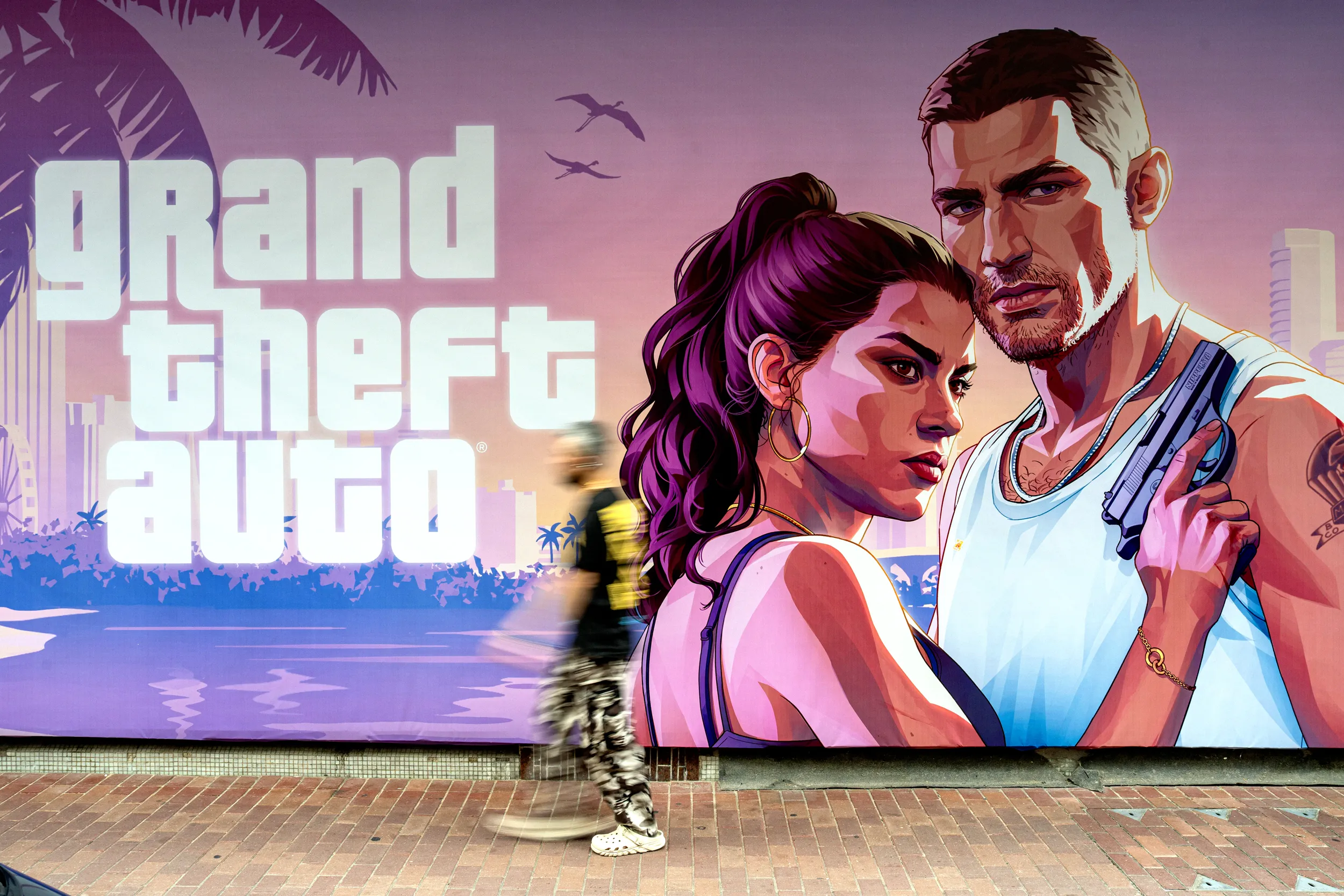
Those years of staying power help explain the almost absurd estimates surrounding the new release. Reports cited by WIRED put preorders near 16 million, representing about $1.5 billion in revenue, with forecasts of 45 million copies sold in the launch quarter. Forecasts are forecasts, not receipts, and Rockstar has taught audiences to expect schedule changes. Still, if even a meaningful portion of those figures materialize, the GTA VI launch will make recent blockbuster releases look comparatively small.
The GTA VI work blackout also illustrates a broader change in how entertainment commands attention. Streaming once made every prestige drama feel urgent; social media then compressed that urgency into weekend-long discourse. Games add another wrinkle: they demand time. Watching a two-hour movie is a commitment. Exploring a giant open world, following the story, testing the physics, and seeing what streamers uncover can swallow dozens of hours before Monday morning.
For many players, the GTA VI work blackout is also a reminder that gaming launches now compete with the calendar the way major sports and streaming premieres do. The difference is that the audience is not just watching the event; it is participating in it for hours at a time.
Brands are treating a sick day like a fan event
Some businesses have decided there is little use fighting that reality. Luxury real estate firm Serhant promised staff a GTA day off if a social post hit 400,000 likes. The clip passed 1.4 million likes within 24 hours, and CEO Ryan Serhant followed through with a floating holiday that employees can use through the end of 2026. “13 years of anticipation deserves a day off,” he said.
Arizona Beverages went in another direction, offering a social-media sweepstakes with $500 for workers who said they could not afford to miss a shift. It is savvy marketing, though there is a slightly uncomfortable truth beneath the joke: not everyone can turn a game launch into paid leisure. Retail staff, hospitality workers, health care employees, and many contractors are not going to get a floating holiday because Vice City opens its doors.
That distinction is why breathless claims of a billion dollars in lost US productivity should be taken with a grain of salt. Economists can estimate absent hours, but productivity is not a bucket of water that spills out whenever someone takes a Friday off. People use leave, work late beforehand, catch up afterward, and sometimes return less burned out. The same goes for the GTA VI work blackout: it will create plenty of memes and a few delayed emails, not a national economic emergency.
The real test is whether Rockstar meets the moment
For Rockstar, the bigger risk is not a temporary dip in Slack responsiveness. A 13-year wait creates impossible expectations. Players will scrutinize every system, technical glitch, narrative choice, and online feature because they have spent more than a decade imagining what the next GTA ought to be. Remember the launch mess around Cyberpunk 2077? The industry has not forgotten what happens when hype outruns a game’s condition on day one.
My read is that the GTA VI work blackout is a sign of confidence as much as anticipation. People are willing to schedule their lives around this release because Rockstar has earned an unusual degree of trust through its past work, even after years of silence and leaks. Whether that trust survives the first weekend will matter far more than how many out-of-office messages appear on November 19.