

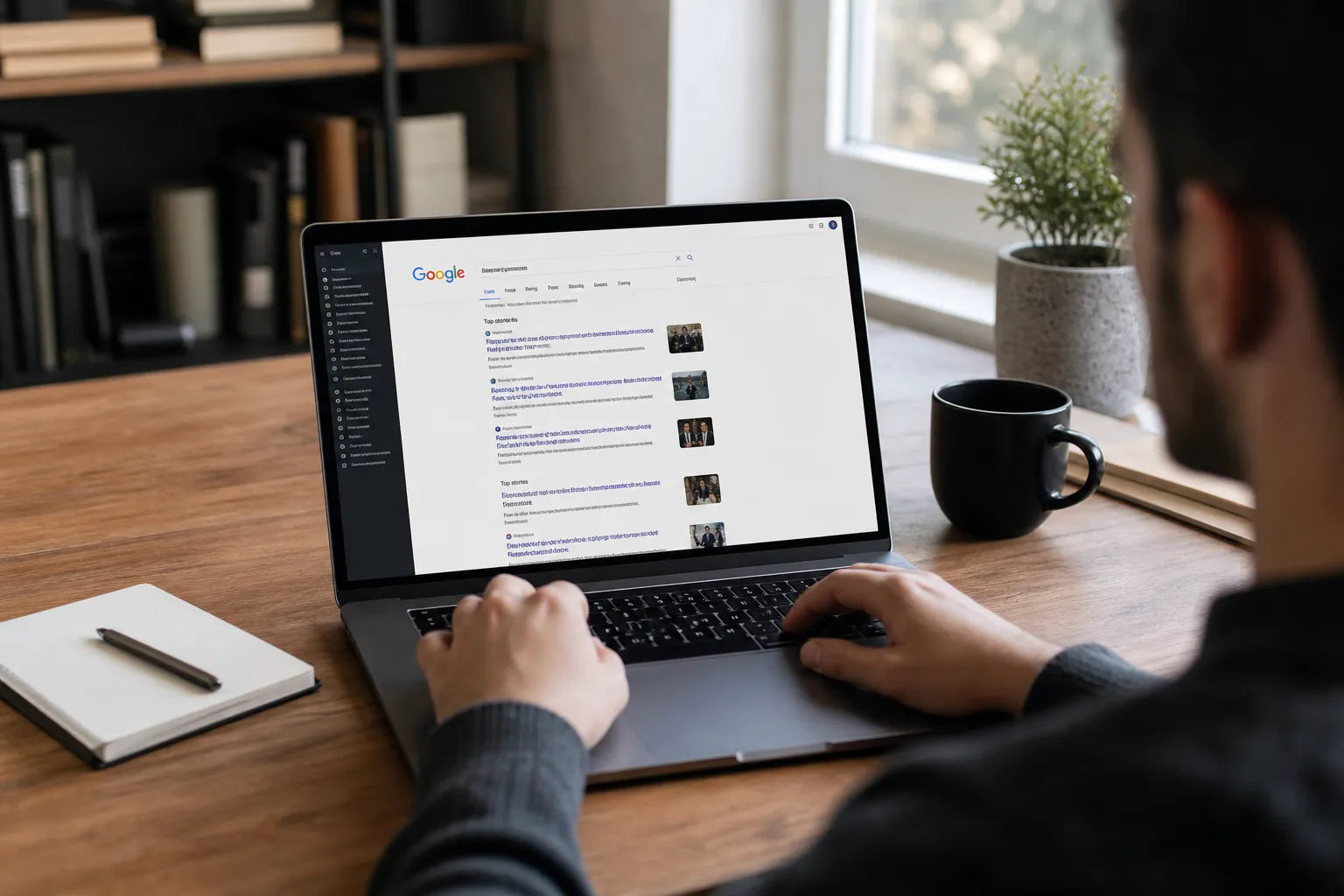
Google’s famously spare homepage has survived plenty of product experiments, but Google AI Mode is steadily turning that blank canvas into something more like a workspace. Now, a collapsible sidebar on desktop surfaces recent searches and lets people jump back into an earlier AI conversation. It’s a modest interface tweak on paper. In practice, it says a lot about where Google thinks search is headed.
- Google AI Mode is gaining a collapsible desktop sidebar that lets users reopen recent AI and conventional search queries.
- The Google AI Mode update makes follow-up research easier and puts Gemini’s presence more visibly into Google Search.
- Google says testing showed the search-history sidebar helped people continue exploring complex questions across multiple queries.
- The feature arrives as Google pursues AI search despite concerns over publisher traffic, user trust, and weaker search monetization.
Table of Contents
Google AI Mode turns search history into a workspace
The new sidebar appears only inside Google AI Mode, the company’s dedicated conversational search experience. Click on the left side of the AI search screen and a panel opens with recent searches, including both standard Google queries and AI-driven ones. Selecting an item brings the user back to an AI Mode result for that topic; an icon in the panel lets them close it again.
That may sound almost comically ordinary. Browsers have had histories forever, and anyone who has used ChatGPT or Claude understands the value of a visible conversation list. But ordinary is the point. Google is trying to make Google AI Mode feel less like a one-off answer generator and more like a place where research can continue over time.
Robby Stein, Google’s vice president of Search, framed the change around longer-running tasks rather than quick lookups. “People are coming to Search with more questions that aren’t just one and done,” Stein wrote while announcing the rollout. He added that internal testing found the sidebar made “a big difference” for people trying to make progress and keep exploring.
I think Stein is right about the underlying behavior. Planning a trip, comparing a few laptops, sorting out a tax question, or attempting to understand a medical bill all tend to spill across a string of queries. The old Google model was built around finding one useful page, then sending you on your way. AI search is trying to hold onto the thread.
A useful feature with an awkward boundary
The odd part is that Google AI Mode reserves this convenience for the AI experience. A clean, searchable list of recent standard searches would be useful too, particularly for people who treat Google as a daily reference tool. Anyone who has reopened a dozen tabs because they vaguely remember searching for a product spec last Tuesday knows the problem.
By fencing the sidebar inside Google AI Mode, Google is creating a small but meaningful incentive to stay there. That’s a familiar platform move: put the better organizational tools behind the behavior you want to grow. It may work, though it also risks irritating people who prefer conventional links, quick results, and a search page that does not keep inviting them into a chatbot.
The company has already been placing Gemini and AI-generated answers in more prominent positions across Search. For Google, the challenge is that visibility does not automatically equal affection. Search users built habits over decades, and many are wary of answers that can be wrong, overly confident, or too eager to summarize material they would rather inspect themselves.
Why Google wants longer sessions
Google AI Mode is competing in a market where the user expectation has changed quickly. ChatGPT made conversational querying mainstream; Anthropic’s Claude has become a favorite for longer documents and writing-heavy work; Perplexity has pitched itself as a research-oriented alternative with visible sourcing. Google has the distribution advantage, of course. Billions of people already begin online tasks on its homepage.
But distribution can cut both ways. Google Search has historically been useful because it acts like a map: it points toward the wider web. The more Google AI Mode becomes a destination where the answer, follow-up questions, history, and next steps all live within Google’s own interface, the more it resembles a mall designed to keep shoppers from walking back outside.
That matters especially for publishers. AI-generated summaries can reduce the reason to click through to the sites that produced the reporting, tutorials, reviews, and primary material underneath them. The harder question is whether those links receive the same attention as the familiar blue-link results they increasingly sit beside or beneath.
For readers, there is a real upside if the system works: less repetitive searching and a better way to return to an unfinished line of inquiry. For the open web, the trade-off is less comfortable. Convenience has a habit of winning, even when the long-term cost is harder to see from the search box.
Google’s long-range AI bet is not slowing down
The sidebar rollout also lands amid broader skepticism about the economics of AI search. AI answers cost more to generate than traditional ranked links, while conventional search advertising remains Google’s financial engine. Reports of market anxiety around AI-related monetization underscore the basic tension: Google has to defend its existing search business while rebuilding search for an era that could weaken some of its most lucrative mechanics.
CEO Sundar Pichai has characterized the company’s AI commitment as a “long-range planning process, not a short-term allocation exercise.” That’s not merely executive boilerplate. Google cannot afford to sit out the shift, particularly when OpenAI, Microsoft, Anthropic, and Perplexity are all competing to become the default place people ask questions.
Google lays out the change in its Search blog. The sidebar is a much less flashy addition than those promises, but it may prove more consequential in day-to-day use. Fancy demos attract attention; small workflow improvements build habits.
My read is that Google AI Mode will live or die less on whether it can produce a clever paragraph and more on whether people trust it with sustained research. A history sidebar can make the product feel stickier. It cannot solve hallucinations, citation quality, or the increasingly tense relationship between AI answers and the publishers whose work feeds the web. Google is betting users will appreciate the convenience before they worry about what gets lost in the process. That bet is still very much open.