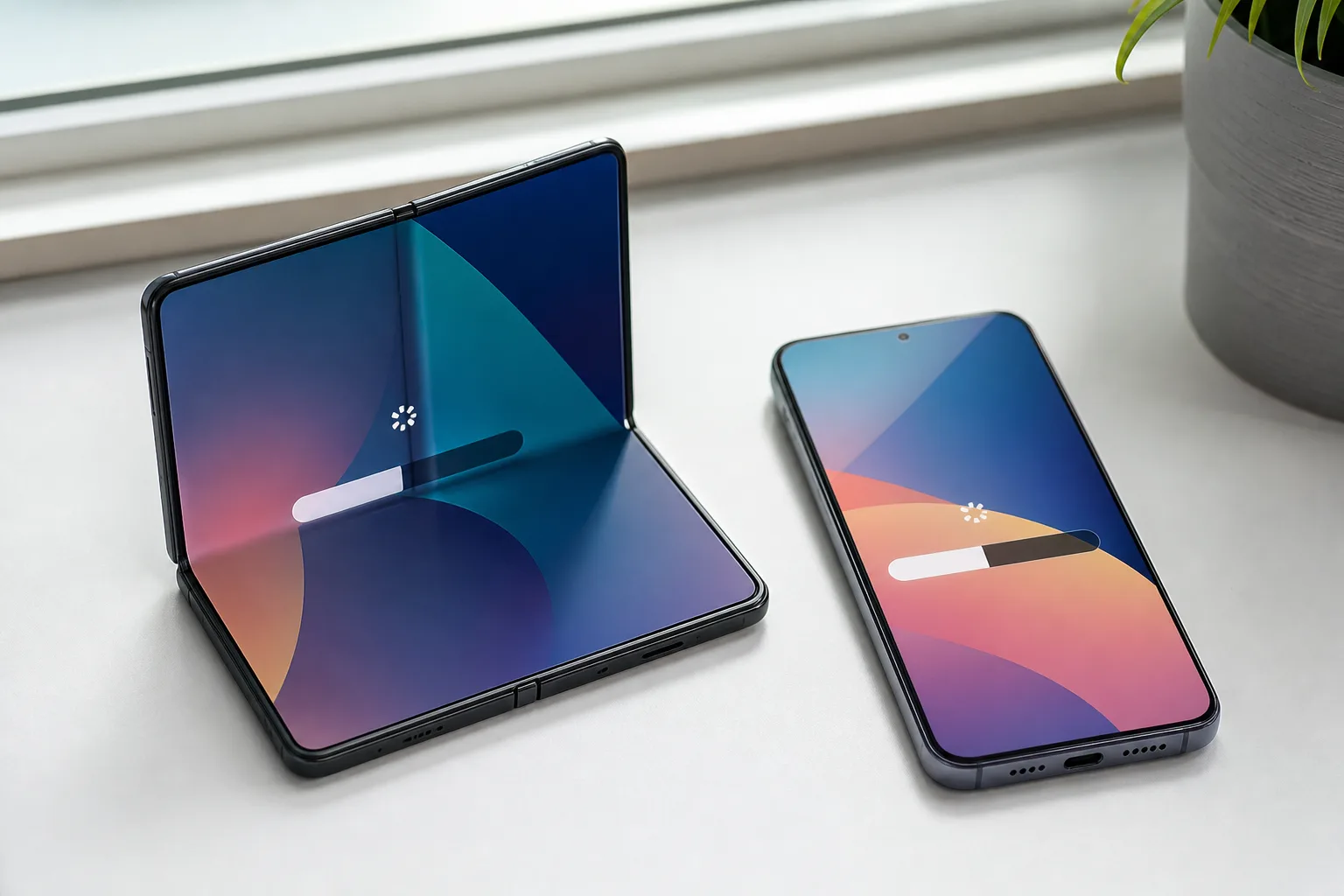
- Samsung One UI 9 may be next as stable Android 17 reaches more of Samsung’s 2025 flagship phones in South Korea after an initially limited stable release.
- Samsung is expanding the stable Android 17 rollout to more of its 2025 flagship phones in South Korea.
- Samsung’s home-market release suggests a wider international Android 17 rollout may follow, though timing will vary by region and carrier.
- Software timing now matters almost as much as hardware launches for buyers deciding between Samsung, Google, and Apple phones.
Table of Contents
Samsung One UI 9 expands beyond its first wave
Samsung’s stable Android 17 release is now landing on more of Samsung’s newest premium phones in South Korea. For owners outside Korea watching Samsung One UI 9, this is the familiar first sign of a wider release rather than a guarantee that the update will appear on their phone tomorrow morning.
The update brings Samsung’s Android 17-based software to hardware that, frankly, should be near the front of the queue. Samsung’s newest flagships are the expensive devices the company uses to argue that folding phones have become normal consumer electronics rather than elaborate trade-show props. Getting Samsung One UI 9 onto more of Samsung’s visible 2025 phones matters because it keeps them on the same software footing.
South Korea is often where Samsung tests the practical mechanics of a stable release at scale. It has a large local user base, direct control over much of the distribution process, and fewer carrier-specific variables than the company faces across North America and Europe. That does not mean every overseas model will receive Samsung One UI 9 immediately. Carrier approvals, regional firmware builds, and phased server-side distribution can turn a single announced rollout into a wait measured in days or, occasionally, weeks.
Still, this is the point where the update stops looking like a beta experiment and starts looking like product maintenance. That distinction counts.
Why Samsung One UI 9 matters on the newest phones
Major Android releases are no longer the visual reinventions they were a decade ago. Google and Samsung have both moved many headline features through Play Store and app updates, while the underlying operating system has become more about privacy controls, security work, device continuity, and the small usability decisions people notice after a few days. Nobody should expect their Galaxy S25 to suddenly feel like a different phone. That is probably for the best.
Built on Android 17, Samsung One UI 9 should give Samsung a refreshed platform for its own interface work: notifications, multitasking, battery behavior, security protections, and the long list of first-party apps that make a Galaxy feel like a Galaxy rather than a stock Android handset with extra icons. Samsung has built One UI into a substantial layer over Android, for better and sometimes for worse. Its feature density remains useful on a Fold’s large internal display, even if the settings menu can still feel like a warehouse where someone forgot to label the aisles.
For foldable owners, software polish is especially consequential. The hardware can bend. The harder question is whether apps, windowing behavior, task switching, and external-display handoffs behave consistently enough that users stop thinking about them. A Fold 7 owner who uses a phone as a pocketable work machine will care far more about a reliable split-screen workflow than another animated lock-screen effect.
Samsung has not described this broader availability as a hardware-specific feature drop, so users should keep expectations realistic. The exact change list can differ by device and region, and features tied to language, local regulations, or Samsung’s cloud services may not travel everywhere. The safest approach is to read the on-device update notes before tapping install, then check Samsung’s official software update support page if the package has not appeared.
The rollout schedule remains Samsung’s weak spot
Samsung deserves credit for getting better at long-term support. Its recent flagships receive years of operating-system upgrades and security patches, a policy that has helped close what used to be an embarrassing gap with Apple. But a long support promise and a brisk major-version rollout are different achievements.
Google’s Pixel phones still set the straightforward Android benchmark: Google controls the hardware and the base software, so new versions can arrive with comparatively little ceremony. Apple has the same advantage with iOS, although even Apple now separates some features by hardware generation and geography. Samsung, by contrast, must adapt Android to a sprawling portfolio, its Knox security layer, DeX, Fold-specific interfaces, carrier configurations, and numerous regional variants.
That complexity is real. It is also only partly an excuse. Buyers paying Fold 7 money are not unreasonable if they expect Samsung One UI 9 quickly, predictably, and with a clear public schedule. Samsung’s release communications tend to be better once an update is already shipping than before it begins. The company could make this much less irritating by publishing a country-by-country timetable and updating it when dates slip. People can handle a delay; what they hate is refreshing the Software update screen like it is a departure board in a snowstorm.
The Korean deployment gives Samsung room to catch problems before opening the gates more widely. That is sensible engineering. A bad foldable update can be more disruptive than a bad slab-phone update because there are simply more display states and interaction patterns to break. But staged rollouts need to be paired with candor about who is next.
What Galaxy owners should do now
If you have one of the eligible 2025 models in South Korea, the update should appear through Settings, then Software update, then Download and install. As always, connect to Wi-Fi, make sure there is adequate free storage, and back up anything you would be genuinely upset to lose. Major updates are routine, not risk-free. That is not paranoia; it is basic digital housekeeping.
Outside South Korea, do not sideload a firmware package intended for another market just to get Samsung One UI 9 early. Regional builds can differ in modem software, carrier features, payment services, and regulatory settings. Saving a few days is not worth turning a very expensive phone into a troubleshooting project.
My read is that Samsung’s immediate task is not to make One UI louder or more packed with AI badges. It is to make the Samsung One UI 9 release cadence boring. Fast, stable, transparent updates are a luxury feature now, especially when a Galaxy S25, Fold 7, or Flip 7 costs as much as a good laptop. If this Korean rollout turns into a prompt global release, Samsung will have done the unglamorous part right. If it drags, buyers will remember that too when the next round of flagships arrives.