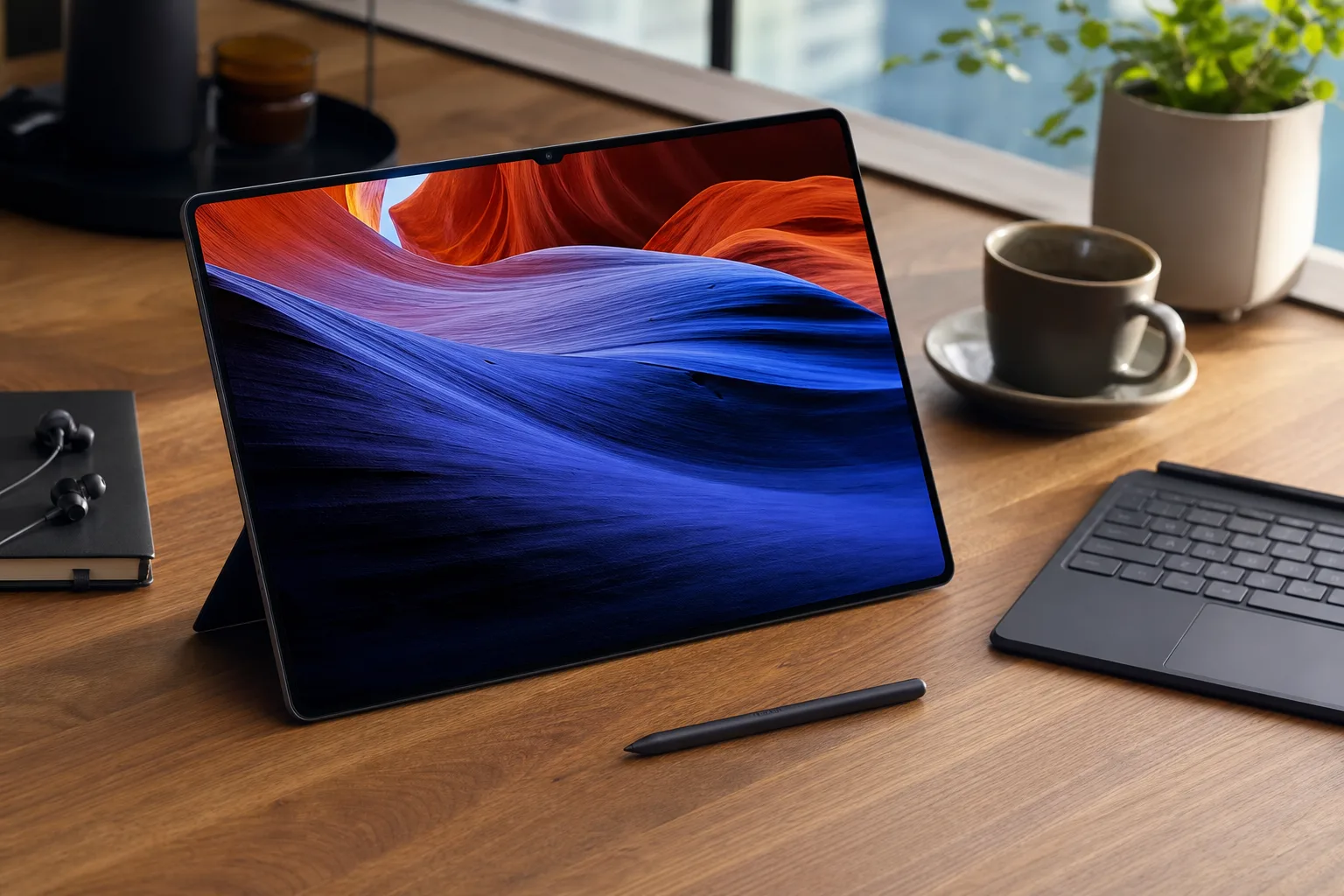
- The Galaxy Tab S12 Ultra appears nearly identical to its predecessor, including its large 14-inch display and ultra-thin metal body.
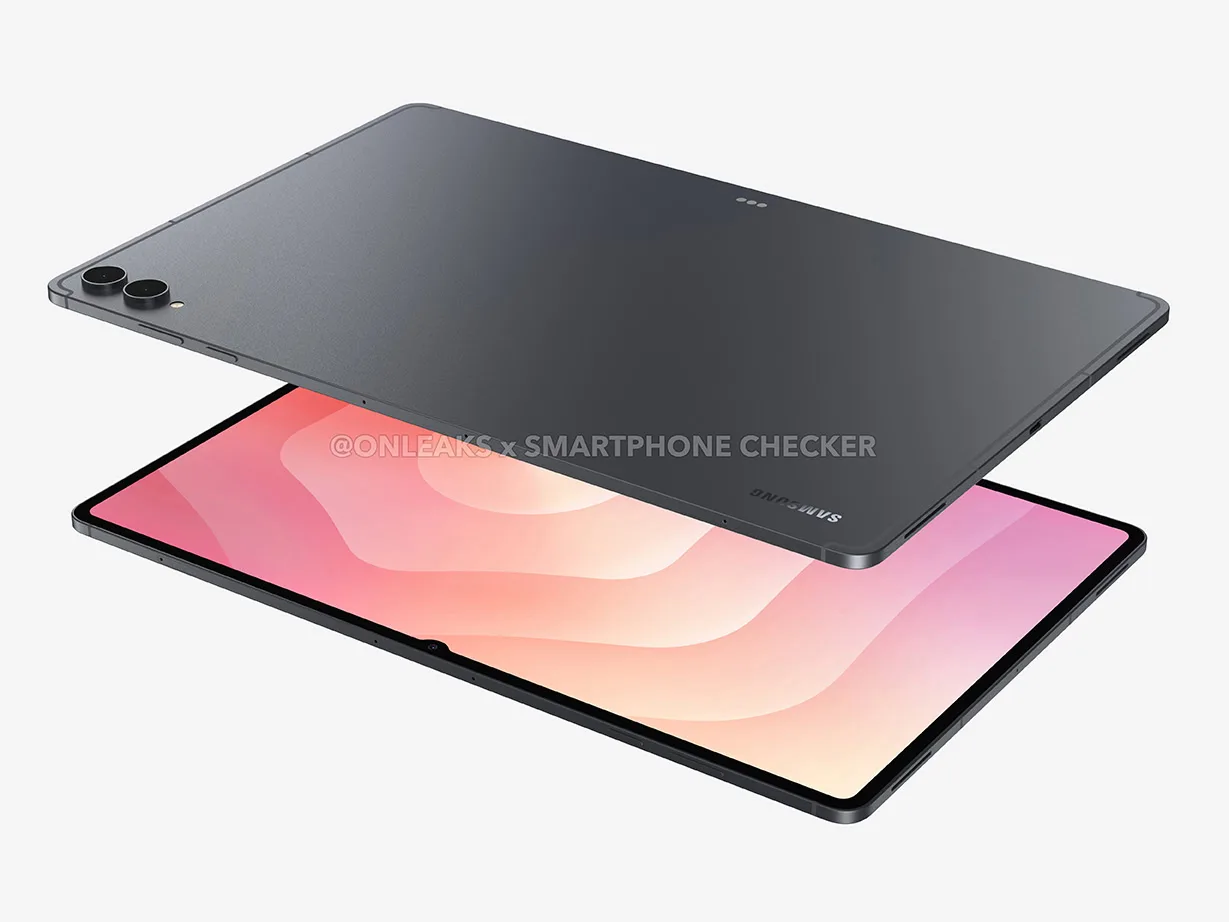
- A Galaxy Tab S12 design leak suggests Samsung has kept the controversial front-camera notch despite earlier software hints of a change.
- Expected Dimensity 9500 silicon may improve performance, but leaked information points to a restrained hardware update rather than a redesign.
- Samsung’s premium tablet strategy increasingly depends on software and accessories, where Android still faces a credible iPad Pro challenge.
Table of Contents
Galaxy Tab S12 looks stuck in place
Samsung has spent years making its biggest tablet look like an expensive piece of industrial design: very thin, very wide, and unmistakably a Samsung. The trouble with the Galaxy Tab S12 leak is that it suggests the company may have confused consistency with progress. If the leaked renders and Korean certification images are accurate, the next Galaxy Tab S12 Ultra is effectively carrying forward last year’s physical template with almost no visible ambition.
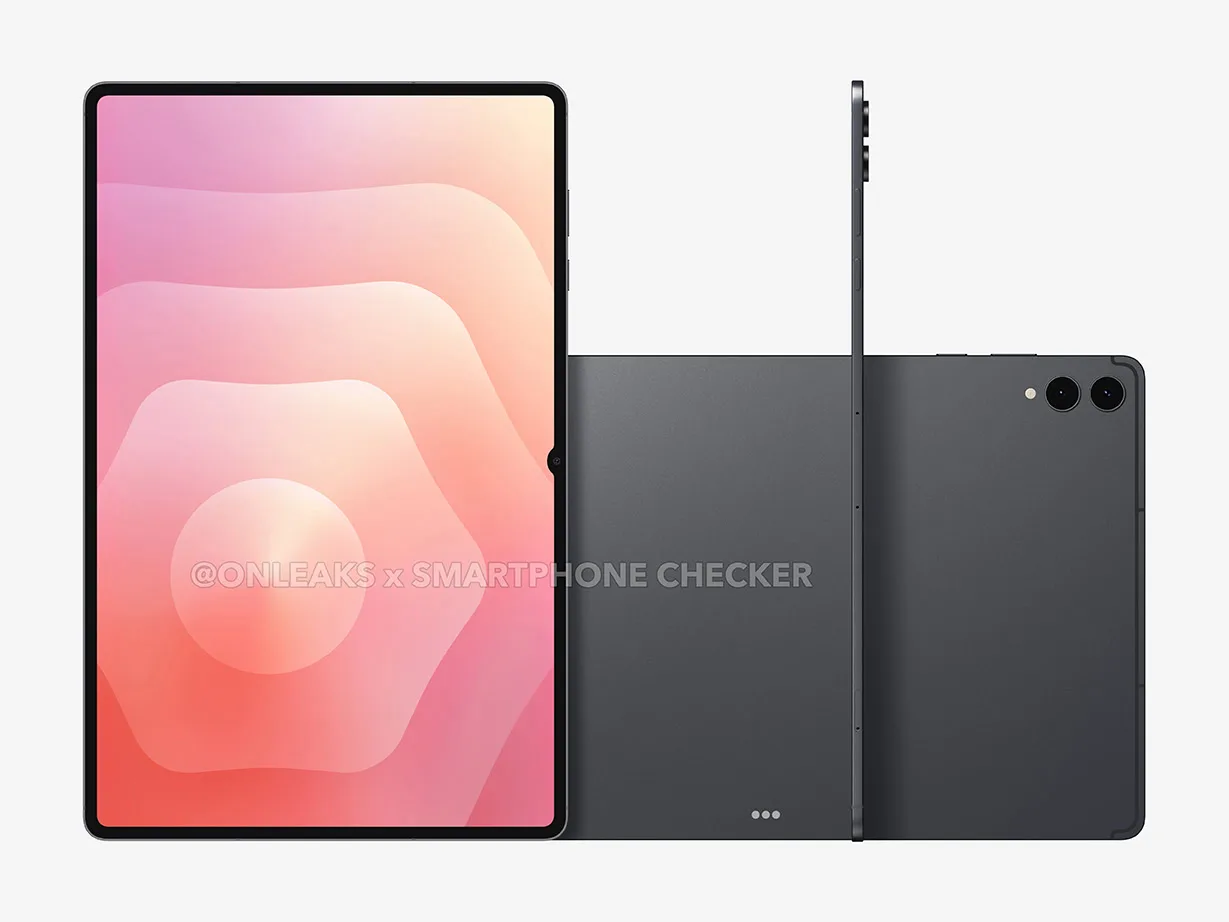
The checklist includes a roughly 14-inch AMOLED display, a slim aluminum enclosure, dual rear cameras with a flash below them, a magnetic S Pen strip, and pogo pins for Samsung’s keyboard cover. The reported dimensions are 326.34 by 208.46 by 5.12mm, matching the dimensions attributed to the prior Ultra model. At that size, even tiny changes are conspicuous. Yet the outline here looks so familiar that it could easily be mistaken for an older device in a case.
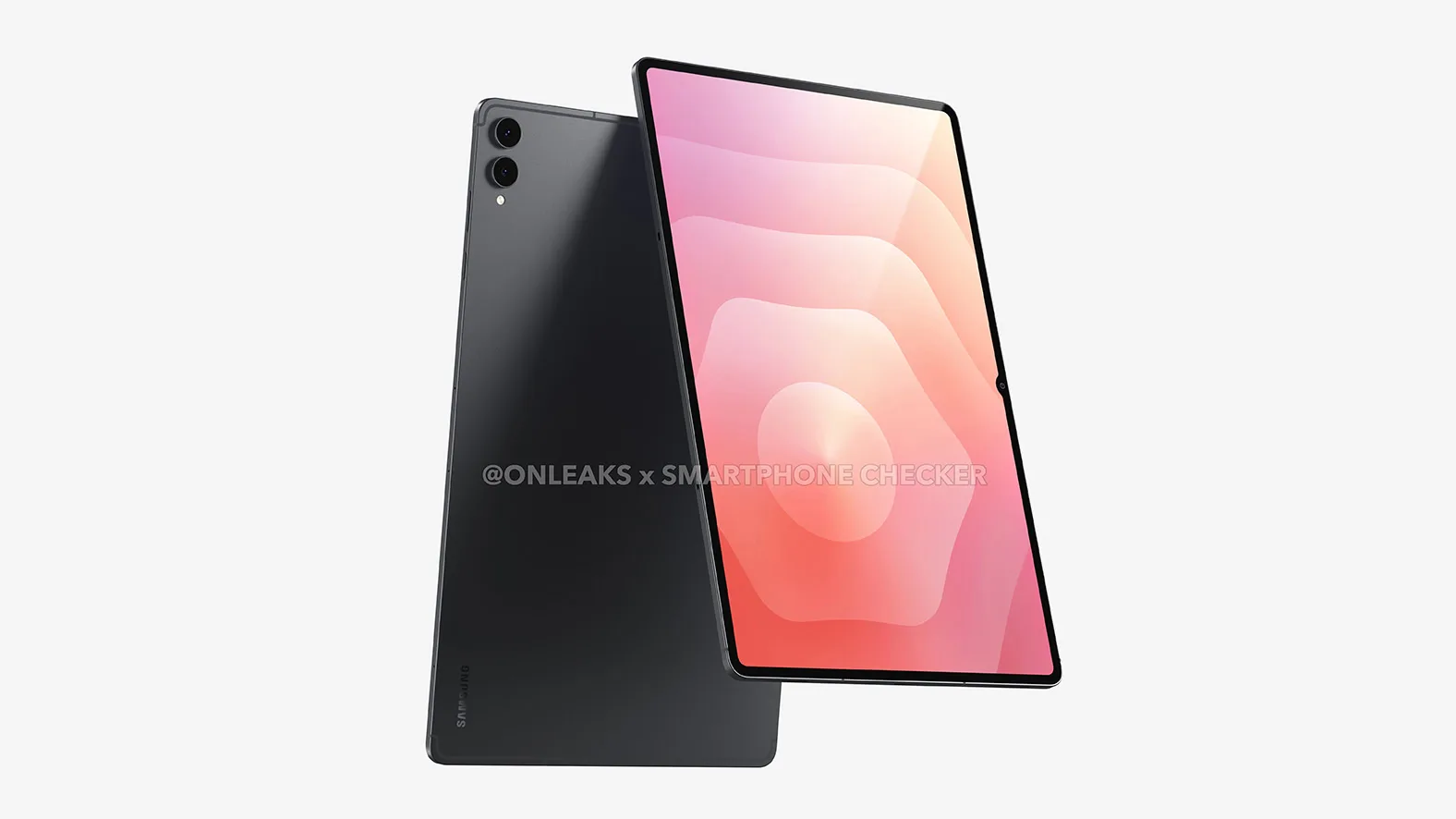
There’s a reasonable business argument for holding the line. Large tablets are expensive to engineer, their buyers don’t replace them every year, and a proven chassis can free up money for screens, chips, and software. Apple follows a version of that playbook with the iPad Pro. But Samsung also needs a reason for existing owners to care. Based on what has surfaced so far, the Galaxy Tab S12 may offer only the sort of upgrade that looks persuasive in a spec sheet, not across a coffee-shop table.
The notch is the part Samsung should have fixed
The most frustrating detail in the Galaxy Tab S12 imagery is the semicircular notch cut into the long edge of the display. Samsung has retained it, presumably because video calls work better when the tablet is held horizontally. That logic is sound. The execution, frankly, is not.
On a phone, a notch is annoying because it interrupts a small screen. On a 14-inch tablet, it feels like a design compromise that has been enlarged for everyone to notice. It bites into the otherwise clean display edge and makes Samsung’s premium slate look oddly dated beside Apple’s landscape-camera iPads and many Windows detachables. Earlier One UI 9 animations had fueled speculation that Samsung might move to a less intrusive hole-punch arrangement. These leaks indicate that is not happening.
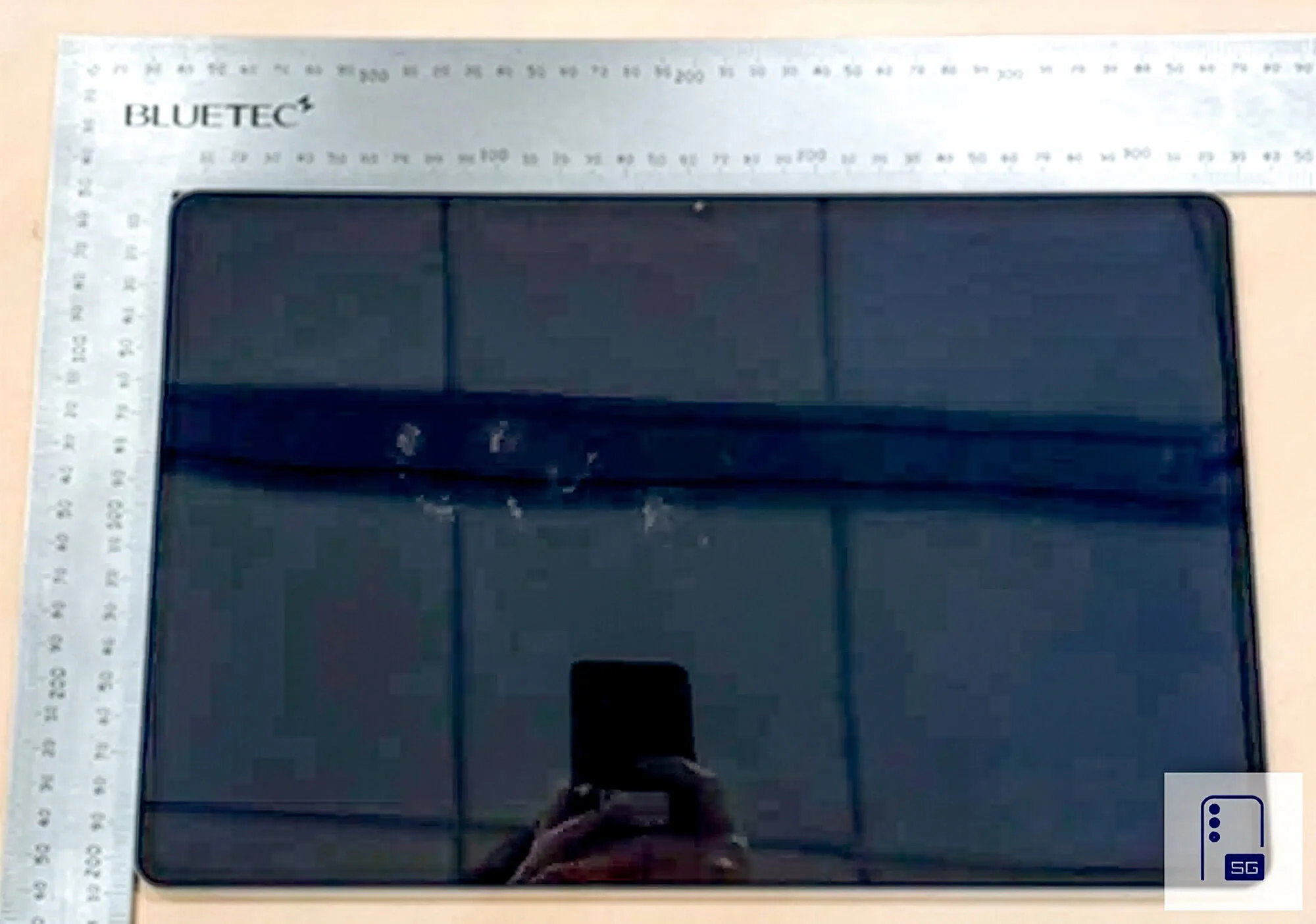
The certification image complicates the picture. It is poor enough that it cannot settle every detail on its own; shadows and image processing obscure the front of the device. Still, the CAD-style renders associated with leaker OnLeaks point in the same direction. Multiple imperfect signals are not proof, but they are more meaningful than one fuzzy database photo.
And Samsung can’t pretend the notch is invisible. Its own software increasingly treats the tablet as a serious work machine, with DeX multitasking, keyboard cases and stylus support aimed at people who might otherwise carry a laptop. Those customers tend to notice the physical friction points. A notch may not ruin a spreadsheet, but it’s an inelegant interruption on a device expected to cost well into premium-laptop territory.
Performance could be the real Galaxy Tab S12 upgrade
The more consequential change may sit inside the chassis. The Galaxy Tab S12 Ultra is rumored to use MediaTek’s Dimensity 9500 chipset. Samsung has used both Qualcomm and MediaTek silicon across its recent tablet range, and a current high-end MediaTek platform should bring meaningful gains in CPU performance, graphics, imaging and on-device AI workloads over older hardware.
But the practical value depends on thermal behavior and software. A massive tablet has more room to disperse heat than a phone, which could make it an excellent home for a flagship mobile chip. Then again, Android’s high-end tablet problem has never been merely horsepower. It is app design. Too many Android apps still behave as blown-up phone interfaces when confronted with a 14-inch canvas.
Samsung has done more than most Android vendors to mitigate that weakness. DeX remains useful for windowed work, and Samsung’s own apps generally make decent use of the extra space. The company also continues to push its tablet ecosystem through keyboard accessories and the S Pen. Readers can see the company’s current tablet approach on Samsung’s official tablet pages, where the pitch is plainly about productivity as much as entertainment.
The real test is the Galaxy Tab S12’s actual rival: not another Android slate, but the iPad Pro. Apple has a more dependable catalog of tablet-first creative and productivity apps, while Samsung offers a more open operating system, better multitasking flexibility in some scenarios, and typically more generous accessory bundling. Neither advantage is trivial. But Samsung needs its software story to keep improving if it expects buyers to accept a familiar exterior year after year.
A lineup reshuffle may matter more than the Ultra
Leaks also point to a Galaxy Tab S12 Plus returning after Samsung reportedly skipped that middle tier in the previous generation. Meanwhile, the standard model may not make the cut. That would be a telling adjustment: less effort spent trying to cover every price point, more focus on the large-screen buyers who want a tablet for media, notes and occasional laptop-adjacent work.
The unanswered questions are familiar. Storage and RAM configurations have not emerged, while battery capacity and charging details remain unclear. The source material suggests the battery may remain unchanged. If that proves right, Samsung will need the Dimensity platform’s efficiency gains to deliver any real-world endurance improvement. A tablet this large should comfortably handle long flights, long meetings and a weekend of streaming without becoming another device readers must manage like a needy phone.
Samsung is expected to unveil new foldables at its London Unpacked event first, while the tablet could arrive around September if the company follows last year’s timing. Until Samsung confirms it, this remains leak territory. Yet my read is simple: the Galaxy Tab S12 Ultra may be a very good tablet, but Samsung appears to be taking the easy path. Keeping a familiar design is fine. Keeping the one visibly awkward part of that design is a choice, and not a particularly convincing one.