

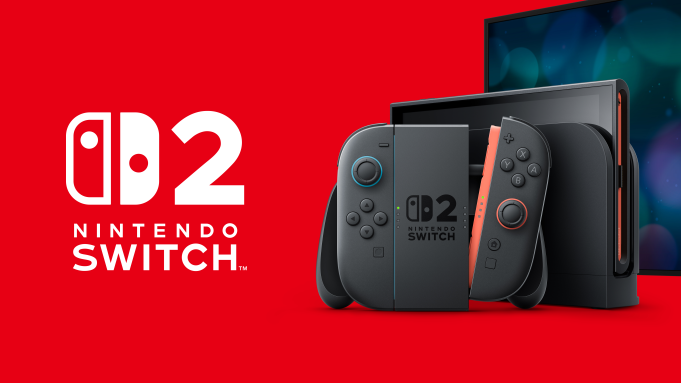
Nintendo has officially announced the Switch 2, the long-anticipated successor to the original Switch console. The first reveal came in a short YouTube video rather than a full technical presentation, which was enough to establish the broad shape of Nintendo’s next hardware move while leaving the questions that matter most—price, release date, performance, and launch games—for later.
The headline feature is backward compatibility with existing Switch games. That is more important than it may sound. The original Switch became a platform with years of purchased games, physical cartridges, downloadable titles, accessories, save data, and habits built around a simple proposition: play at home, then take the same game with you. A successor that keeps players connected to that library avoids forcing an abrupt reset and gives early Switch 2 buyers a reason to use the new system immediately, even before its dedicated catalogue has had time to grow.
Nintendo has not yet explained the full scope of that compatibility, so there are still practical questions around how every existing game will work and whether there will be any exceptions. Still, the commitment itself signals continuity. Nintendo is not presenting Switch 2 as a clean break from the Switch concept; it is framing it as the next version of a format that has already proved its appeal.
More information is scheduled for a Nintendo Direct presentation on April 2, 2025. Until then, the company’s announcement is deliberately selective. Nintendo has confirmed the console and shown its basic design, but it has not provided pricing details, detailed specifications, or a release date.
Table of Contents
Nintendo Switch 2 design: familiar idea, visible refinements
The Switch 2 features a larger screen compared with its predecessor. Nintendo’s original hybrid design made the display central to the experience: it is not merely a menu screen or an optional handheld mode, but the surface through which a huge share of Switch play happens. A larger screen is a straightforward upgrade, yet it carries real weight for games with dense interfaces, local multiplayer, and portable sessions where players are sitting closer to the display than they would be to a television.
The new Joy-Con controllers also appear to have a redesigned attachment mechanism. Rather than the familiar sliding rails, the controllers utilize magnets and a small side port. That is a notable change because the way the controllers join the system is one of the Switch’s defining physical ideas. It has to work reliably in handheld use while remaining quick to remove for tabletop play or multiplayer.
Magnets could make that transition feel more direct, though Nintendo has not yet laid out the practical details behind the mechanism. The reveal should therefore be read as an indication of design direction, not a complete explanation of how the controllers will behave day to day. What is clear is that Nintendo is revisiting a piece of hardware that was clever but also unusually exposed to wear, handling, and repeated attachment.
These updates point toward a more modern, user-friendly approach without abandoning the identity of the original Switch. That restraint matters. Nintendo has spent years refining the Switch through iterations such as the Switch Lite and Switch OLED, but those were minor upgrades rather than a new generation. Switch 2 appears intended to carry the core hybrid model forward while addressing the sense that the existing hardware has reached its limits.
Backward compatibility gives Nintendo a stronger starting point
The original Switch has lagged behind rival consoles in power and performance. That is not a new complaint, and Nintendo has rarely tried to answer it by chasing the same specifications race as its competitors. Its history is built around a different calculation: distinctive ways to play can matter more than matching rival hardware feature for feature.
That philosophy has produced memorable hardware ideas, but it can also create pressure as games become more technically demanding. A new console offers Nintendo the chance to improve the experience without needing to define success purely through raw power. Faster or more capable hardware is useful not just as a number on a comparison chart; it can affect the scale of game worlds, the consistency of performance, loading, visual clarity, and the viability of games that struggle on older systems. Nintendo has not made specific promises on those fronts, so expectations should remain measured until the Nintendo Direct provides details.
Backward compatibility helps soften that wait. It gives Switch 2 an immediate relationship with the games players already own, while allowing Nintendo to introduce new experiences at its own pace. For developers, a transition that does not instantly divide the audience can also be easier to navigate than a sudden move to an entirely separate platform.
Readers looking back at the pre-announcement discussion can also revisit SquaredTech’s Nintendo Switch 2: Leaks, Specs, and Surprising Features Revealed, published on January 16, 2025. The official reveal has now replaced rumor with a few firm details, but much of the case for waiting remains the same: Nintendo has shown the hardware, not yet the full proposition.
A Mario Kart glimpse carries outsized significance
The announcement trailer briefly showcased a Mario Kart game running on Nintendo Switch 2. That has fueled speculation about Mario Kart 9 launching alongside the new console. Nintendo has not confirmed that title or a launch lineup, so it should not be treated as settled. But the reaction makes sense.
Mario Kart is one of Nintendo’s clearest examples of a game that explains the appeal of its hardware in seconds. It works in short sessions, supports social play, and reaches beyond the audience that follows console specifications closely. If a new Mario Kart is part of Switch 2’s early software story, it would give Nintendo a familiar, accessible way to demonstrate why players should care about the new system rather than simply continue using the one they have.
It also fits the company’s broader approach. Nintendo’s strongest hardware moments often depend on software that makes the format feel necessary. A larger screen and newly attached controllers may improve the device, but games are what determine whether those changes become meaningful to players.
First-look events begin in April 2025
Nintendo plans to host first-look events in cities worldwide, beginning in New York City and Paris from April 4 to April 6, 2025. Additional events will follow across North America, Europe, Oceania, and Asia, giving players an opportunity to experience Switch 2 firsthand.
That choice is sensible after such a restrained reveal. Photos and a short trailer can show dimensions and controller changes, but they cannot answer the basic questions people will have about a handheld console: how it feels in the hands, how the larger screen changes portable play, how secure the Joy-Con attachment feels, and whether the system’s physical design is a genuine improvement over the original.
The events also place the April 2, 2025 Nintendo Direct in context. The presentation is likely to provide the explanation that the first video intentionally withheld, while the hands-on sessions can turn that explanation into something players can judge for themselves. Nintendo is building anticipation in stages rather than trying to disclose every detail at once.
What remains unknown
The announcement concludes months of speculation surrounding Switch 2’s debut. Nintendo president Shuntaro Furukawa had previously confirmed that the successor would launch by March 2025, after years in which the Switch family expanded through the Switch Lite and Switch OLED rather than a full replacement. Yet Nintendo has still not revealed a release date, price, or detailed specifications in this announcement.
Those missing details will shape the real verdict. Price determines how easily existing Switch owners can make the jump. Specifications will establish how much room Nintendo has created for new games. The release date will tell buyers how long they need to wait, and the software lineup will show whether Nintendo has a compelling reason to buy early.
For now, Switch 2 looks less like a radical reinvention than a calculated evolution: a larger-screen successor with magnetically attached Joy-Cons, support for existing Switch games, and a trailer that may be teasing Mario Kart 9. That is a strong foundation, but it is still only a foundation. The Nintendo Direct on April 2, 2025, should be where Nintendo turns a carefully managed reveal into a clearer case for its next console.

