

Table of Contents
Why the valuations matter
Elon Musk’s private-company portfolio is attracting investor attention on two very different fronts: the mature, capital-intensive space business represented by SpaceX, and the fast-moving artificial intelligence bet represented by xAI. SpaceX is preparing a share sale that could value it at more than $250 billion, while xAI has raised $5 billion at a $45 billion valuation. The figures are striking on their own, but they also show how much confidence investors are placing in Musk’s ability to turn difficult, expensive technical projects into businesses with enormous strategic reach.
These are not conventional growth stories. SpaceX operates in an industry where launch systems, satellite networks and long-horizon exploration require sustained investment before returns can fully materialize. xAI is competing in an AI market defined by enormous computing costs and relentless pressure to build larger, more capable systems. In both cases, investors are backing infrastructure as much as they are backing products.
That distinction matters. A high valuation can reflect excitement, but it also raises expectations. SpaceX and xAI now have to show that their expanding technical ambitions can keep producing commercial leverage rather than simply consuming capital.
SpaceX’s proposed share sale puts a new price on private space
SpaceX, described as the largest private company in the U.S., is set to launch a tender offer in December. The transaction would allow existing shareholders to sell shares at approximately $135 each. If it proceeds, the company’s valuation would rise to more than $250 billion, from $210 billion earlier this year.
A tender offer is significant because it creates liquidity for existing holders without requiring a conventional public listing. For employees, early investors and other shareholders, that can be an important opportunity to realize some value while remaining tied to a private company. For SpaceX, it is also a market test: the proposed share price offers a direct indication of what investors are willing to pay for exposure to its future.
The move reflects the breadth of SpaceX’s ambitions. Its Starlink satellite network already consists of 6,000 satellites and provides global broadband services. Starlink is central to the company’s commercial case because it extends SpaceX beyond launch activity into a service business with a direct relationship to users. At the same time, the network is presented as part of Musk’s longer-term goal of reaching Mars.
That combination helps explain why SpaceX attracts such unusually large private-market valuations. Investors are not looking at a single project with a fixed endpoint. They are weighing a launch business, a growing satellite network and a long-term exploration vision that has become inseparable from the company’s identity. The appeal is obvious; so is the execution burden. Maintaining and expanding a global broadband network while pursuing Mars missions demands sustained operational focus.
The proposed valuation above $250 billion also sharpens the question of what private markets are rewarding. SpaceX has become a vehicle for investors seeking exposure to space infrastructure without relying on a public-market listing. Its valuation is therefore not merely a judgment on current operations. It is a wager on the company’s ability to keep translating technical scale into durable commercial value.
Readers can find the earlier SquaredTech coverage, SpaceX Secures $733M, for related context.
xAI’s funding round is a bet on computing power
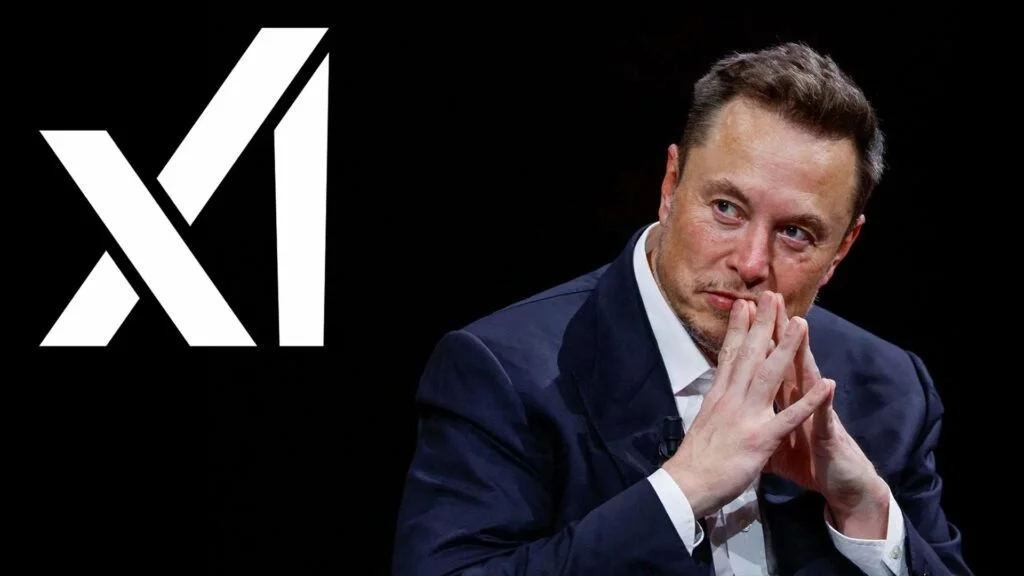
xAI’s latest financing is equally large, though its challenges are different. Musk’s AI start-up recently raised $5 billion, doubling its valuation to $45 billion in just a few months. The funding round was oversubscribed, and shares were allocated exclusively to previous investors.
That detail suggests unusually strong demand among people already familiar with the company’s direction. It also means the round was not simply a broad attempt to bring in new backers. Existing investors were willing to commit more capital as xAI accelerates its push into an increasingly expensive AI market.
xAI operates Grok, a competitor to OpenAI’s ChatGPT, and is positioning itself as a major player in artificial intelligence. The competitive challenge is not only about launching a chatbot or attracting attention. AI companies are increasingly judged by the computing infrastructure behind their models, because access to that infrastructure determines how quickly they can train, improve and deploy systems.
xAI’s answer is Colossus, a supercomputer being built in Memphis and powered by 100,000 graphics processing units, or GPUs. The company says this infrastructure could become one of the most powerful AI systems globally. That is a substantial ambition, and it illustrates where much of the new funding is likely to matter most: not just in software development, but in the costly foundation required to support advanced AI work.
The potential connection to Musk’s other ventures gives xAI a different profile from a standalone AI start-up. Colossus could aid Tesla, Neuralink and X, formerly Twitter, as well as xAI itself. The opportunity is clear: knowledge, computing resources and AI capabilities could potentially circulate across a group of companies that already operate in distinct fields. The risk is equally clear. The more central xAI becomes to that ecosystem, the greater the pressure to prove that its infrastructure can serve those ambitions effectively.
Related SquaredTech coverage is available through xAI Secures $6 Billion.
Political proximity adds another variable
Business prospects are not being shaped by technology and capital alone. After the recent U.S. elections, Musk’s support for President-elect Donald Trump became part of the wider discussion around his companies. Musk was appointed to co-lead a new government efficiency department alongside biotech entrepreneur Vivek Ramaswamy.
The appointment strengthens Musk’s proximity to Washington at a time when his businesses are navigating regulatory challenges. That could potentially benefit his ventures, particularly because SpaceX, Starlink, AI systems and Musk’s other interests intersect with areas where government policy can matter greatly.
Still, political access should not be mistaken for a substitute for execution. SpaceX must continue advancing its satellite network and Mars ambitions. xAI must demonstrate that its $5 billion round and Colossus project translate into a credible position against AI leaders such as OpenAI. Policy may shape the environment in which these companies operate, but technical delivery and commercial discipline will determine whether their valuations hold up.
What comes next
Speculation is already growing that xAI’s next fundraising round could push its valuation to $75 billion in early 2025. That possibility captures the mood surrounding the company: investors appear willing to assign major value to its AI ambitions before the competitive picture is settled.
SpaceX, meanwhile, is entering a new phase of private-market scale. A valuation above $250 billion would place even more attention on Starlink’s growth, the continuing expansion of its 6,000-satellite network and the company’s pursuit of Mars missions.
The larger story is one of concentrated confidence. Investors are betting that Musk’s companies can command the capital, computing resources and political relevance needed to operate at exceptional scale. Those advantages are meaningful. They also leave little room for complacency. The higher the valuation, the more demanding the proof of progress becomes.
Stay updated: Startups & Entrepreneurship – Artificial Intelligence – Space

