

- Apple AI subscriptions could arrive through new iCloud Plus upgrades for customers who exceed Apple Intelligence’s daily server-based limits.
- Tim Cook says Apple AI subscriptions may let heavy users ‘buy up the stack’ as the redesigned Siri reaches more devices.
- Apple’s $30.74 billion services quarter gives the company a powerful reason to turn costly generative AI into recurring revenue.
- The eventual price and included usage remain unclear, but Apple appears to be drawing a line between casual and intensive AI use.
Table of Contents
Apple AI subscriptions are moving from theory to product planning
Apple has spent the past two years selling artificial intelligence as a feature of the devices you already own. That pitch may be about to acquire a meter. Apple AI subscriptions appear to be on Apple’s roadmap after CEO Tim Cook suggested that iCloud Plus customers will eventually get options to pay for more AI capacity.
During Apple’s latest earnings call, Cook said he expects people to use Apple Intelligence and the company’s delayed Siri overhaul “a lot.” Then came the more revealing line: “We will have some kind of upgrade possibilities on iCloud Plus where people can buy up the stack.” Corporate earnings calls are usually a place for carefully sanded-down language, so that is a fairly direct signal.
Apple has already said some Apple Intelligence tools carry daily usage limits because they depend on powerful server-side models. Its messaging has also indicated that higher iCloud Plus plans receive increased access. Cook’s comments suggest the company is preparing to make that relationship more explicit: use the basic features casually, or pay iCloud Plus for a larger allowance.
That may sound inevitable in a world where ChatGPT, Claude, Gemini and Perplexity all reserve their most demanding features for paying customers. But it marks a meaningful change for Apple. The company’s original Apple Intelligence framing was unusually consumer-friendly: buy a compatible iPhone, iPad, or Mac and get useful AI as part of the experience. No obvious add-on bill. No complicated token counter.
Server inference has a way of ruining simple stories. Every request that requires a large remote model costs somebody money, and Apple’s Private Cloud Compute system does not magically make those costs disappear. Privacy-focused architecture may be a differentiator, but data centers still send invoices.
Why the new Siri makes Apple AI subscriptions more likely
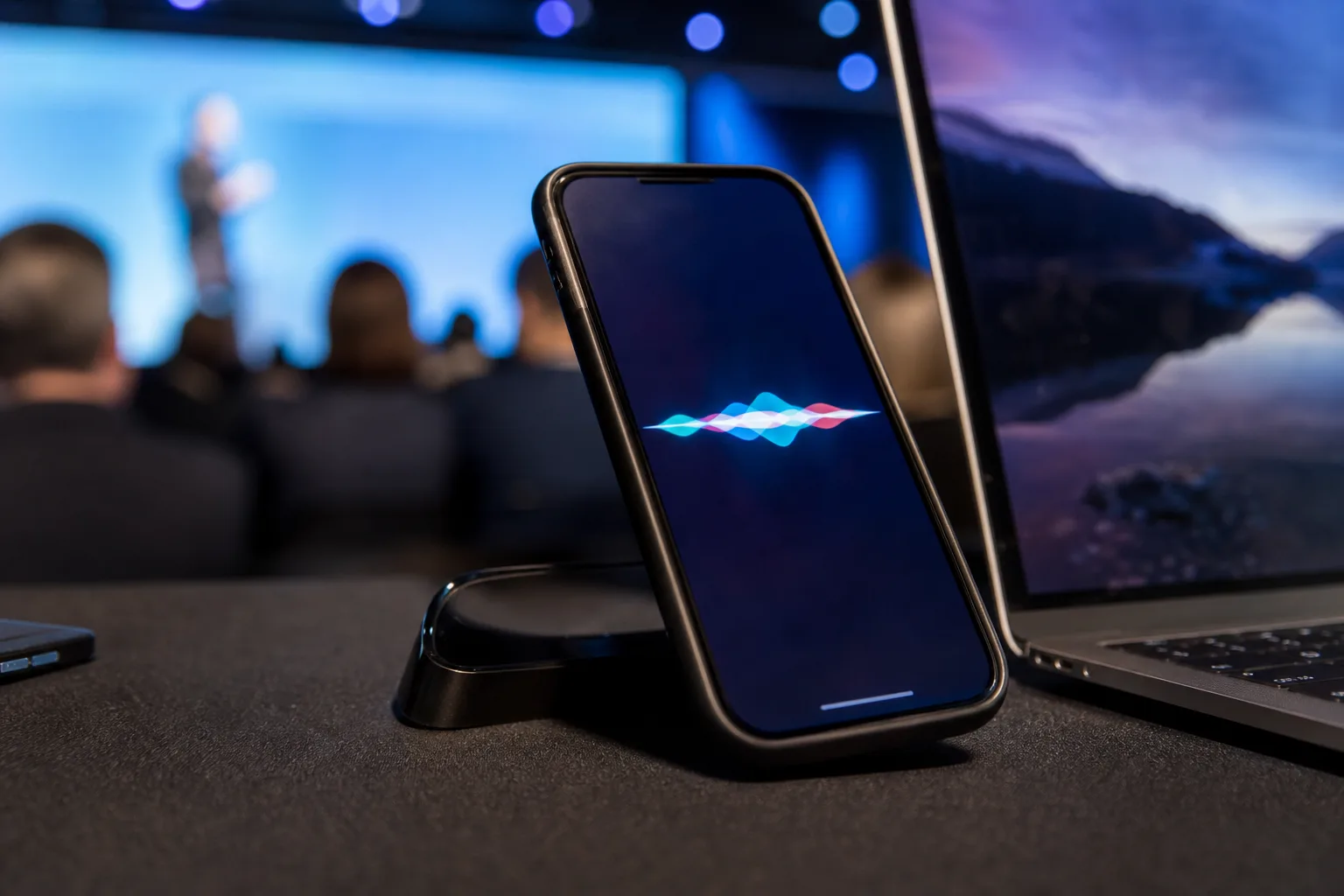
The likely trigger is the revamped Siri expected with iOS 27 this fall. Apple says the assistant will better understand what is on a user’s screen and take actions across apps. The company is also expected to offer a standalone, conversational Siri AI app with the familiar chat-style interface people now associate with ChatGPT.
Those are not lightweight requests. Asking Siri to set a timer is cheap and predictable. Asking it to understand a restaurant reservation in an email, compare it against a calendar conflict, pull the address from a message, and book a ride crosses into a more expensive class of computing. Do that repeatedly, across millions of people, and a free-for-all becomes hard to defend financially.
Apple AI subscriptions would give Apple a clean way to separate occasional use from power use without turning every Siri interaction into a nag screen. Think of it less like buying an app and more like choosing a mobile plan: most people can get by with the included amount, while the person constantly streaming video or tethering a laptop pays more.
That is probably the least irritating version of this strategy. The bad version would be Apple treating basic on-device intelligence as a premium feature after marketing it as standard equipment. Consumers have long accepted paying for storage, music, and television. Paying for an assistant that can understand a screen or summarize a document will be accepted only if it consistently saves time.
iCloud Plus is Apple’s natural billing machine
There is a reason Cook named iCloud Plus rather than unveiling a separate AI brand. iCloud Plus already teaches Apple customers to think of recurring monthly payments as part of owning an iPhone. Storage plans bundle practical benefits such as additional cloud space, Private Relay, and Hide My Email. Adding AI usage to that account is operationally simple and psychologically familiar.
Apple AI subscriptions also fit neatly into Apple’s broader services agenda. The company reported $30.74 billion in services revenue for the recent quarter, a category that includes iCloud Plus, Apple TV, and Apple One. Hardware sales still matter enormously, of course, but services offer steadier recurring revenue and generally healthier margins.
Frankly, Apple would be leaving money on the table if it gave unlimited remote AI access to every eligible-device owner forever. The more interesting question is whether the company can make the paid tier feel like value rather than a ransom note. Apple has a habit of charging a premium when it believes integration is the product. Sometimes that works beautifully; sometimes it produces a $3,499 Vision Pro-shaped reality check.
Apple gets another strategic benefit here: Apple AI subscriptions could reduce its dependence on any one outside model provider. Apple Intelligence currently routes some requests to OpenAI’s ChatGPT when users opt in, while Apple continues building its own systems. A paid capacity layer gives Cupertino room to add models, offer different levels of access, or absorb higher compute costs without having to redesign its consumer proposition every six months.
The limits will matter more than the label
Cook did not announce prices, plan names, or specific request caps. He also did not say whether Apple AI subscriptions will be bundled into existing iCloud Plus tiers, sold as an add-on, or folded into Apple One. Those details are the whole ballgame.
A low monthly price with generous access could turn iCloud Plus into the default AI subscription for people already living inside Apple’s ecosystem. Tight limits, vague definitions of “increased access,” or features held back from lower-paying customers would invite a much rougher response. Apple users tolerate upsells better than most because the company usually hides complexity well. Usually.
Apple will also have to explain what remains on-device, what goes to its private servers, and what may be passed to a partner service. The company has made privacy central to its AI pitch, and it should not treat those distinctions as footnotes when a subscription is involved. People deserve to know whether they are paying for more intelligence, more cloud processing, or both.
My read is that Apple AI subscriptions are less an admission that Apple Intelligence failed than an acknowledgement of where consumer AI is headed. The free tier gets people in the door; the subscription funds the expensive behavior that follows. Apple can make that arrangement feel almost invisible, but the upcoming Siri has to earn the privilege. If it cannot reliably handle the tasks Cook is hinting at, no amount of iCloud packaging will make users want to buy up the stack.
Apple has signaled the destination without showing the price board. The test now is distinctly Apple-like: can it turn an AI usage cap into something customers view as a sensible upgrade rather than yet another monthly bill?

