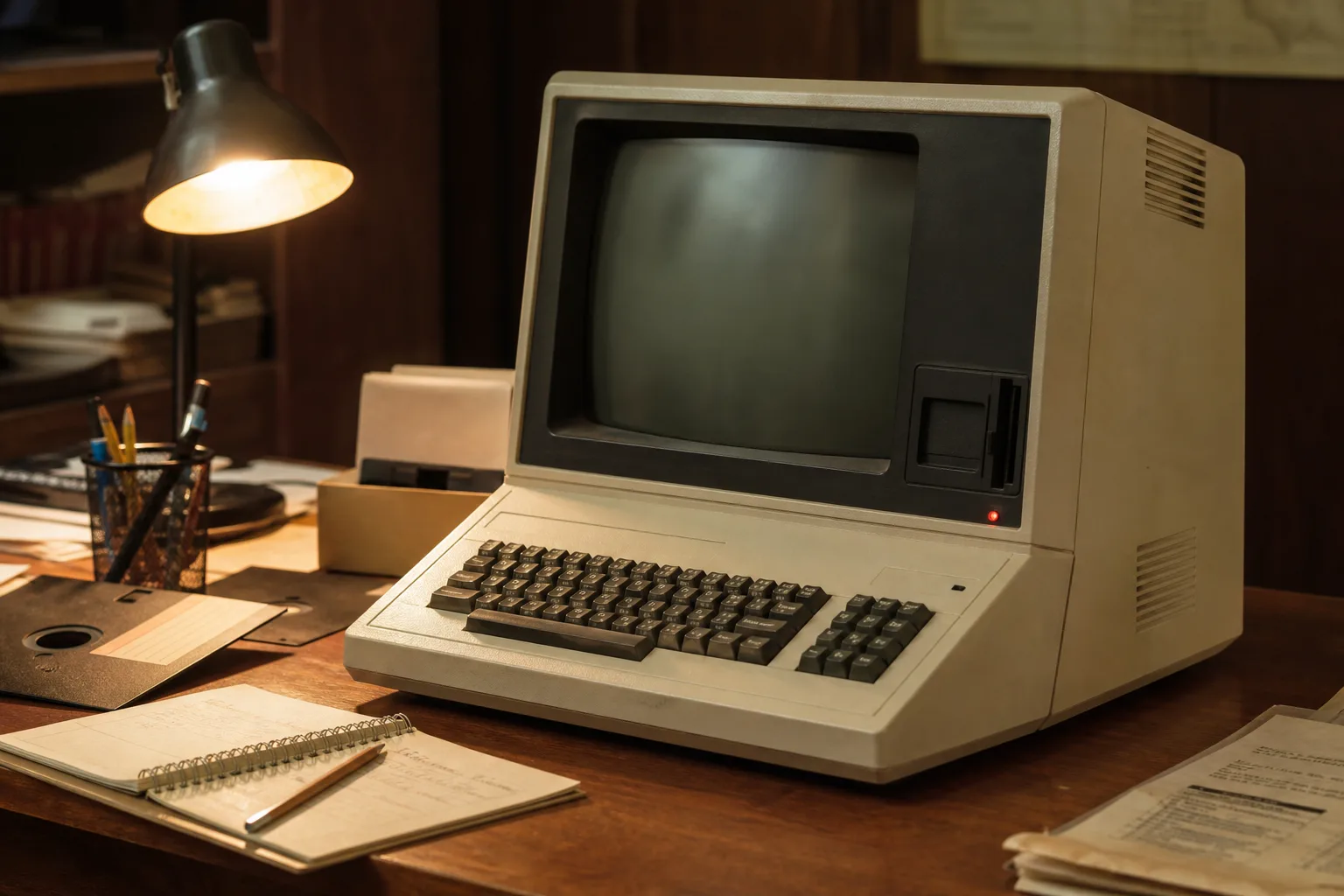
- Jef Raskin founded the Macintosh project at Apple as employee #31, long before Steve Jobs took credit for it.
- Jef Raskin designed the Mac to be graphical from the start — the myth that he wanted a text-based machine is simply false.
- Jobs took over the Macintosh team in mid-1981, effectively pushing Raskin out of the project he created.
- Raskin later designed the Canon Cat, a radical rethink of personal computing that was killed by poor marketing.
Table of Contents
Who Was Jef Raskin, and Why Does He Still Matter?
When most people think about who invented the Mac, the name that comes to mind is Steve Jobs. That’s one of the most persistent — and most wrong — origin stories in tech history. Jef Raskin is the person who actually founded the Macintosh project at Apple, doing so as the company’s 31st employee. He conceived, pitched, and began building a vision of personal computing that was genuinely different from anything that existed at the time. Jobs didn’t create the Mac. He took it over.
Jef Raskin left the Macintosh team in mid-1981 after Jobs assumed control of the project, and what followed was decades of historical revisionism — partly accidental, partly the inevitable result of Jobs’ outsized public persona. Understanding what Raskin actually believed, what he actually designed, and how far Apple has drifted from his original principles is more than just a history lesson. It tells us something important about how the industry thinks about design, usability, and who gets credit for ideas that shape the world.
The Business Case That Built the Mac
Jef Raskin didn’t get the Macintosh project greenlit by dazzling Apple’s internal visionaries. He bypassed them entirely. His target was Mike Markkula, Apple’s chairman at the time, and his pitch wasn’t mystical — it was commercial. People would buy a computer they could actually use without frustration. That was the core argument, and it was the right one.
To back it up, Raskin wrote a series of forward-looking white papers, the most famous being Computers by the Millions, written in 1979. The document laid out what personal computing would look like over the coming decade with striking accuracy. It asked a deceptively simple question at its close: what will millions of people actually do with these machines? At the time, that question was far from obvious. Most computers were tools for hobbyists and engineers. Jef Raskin was thinking about everyone else.
That white paper, along with other writings from the same period, remains available via archive collections of his work at jefraskin.com and is worth reading for anyone interested in the roots of consumer-facing software design. The thinking is clear, direct, and remarkably prescient.
Jef Raskin’s Mac Was Always Graphical — Stop Saying Otherwise
Here’s one of the most stubborn myths in computing history: that Jef Raskin’s original Mac concept was text-based, and that it was Jobs or others who pushed it toward a graphical interface. Raskin was unambiguous on this point. The machine was designed to be graphical from the ground up. Full stop.
The confusion seems to stem from two things being conflated. Jef Raskin was openly sceptical of the mouse as an input device — not because he opposed graphical interaction, but because he personally preferred trackballs and tablets. And he cared deeply about how text was handled within a graphical environment, wanting that side of the interface to be cleaner and more considered than it ended up being. Neither of those positions makes him a text-interface advocate. But the myth stuck anyway.
Some of the blame for that sits with Andy Hertzfeld, one of the Mac’s early core developers and later the creator of the folklore.org archive of Mac history. Raskin was direct about this: Hertzfeld built out a substantial historical record of the Mac’s development without actually interviewing Jef Raskin himself, and the result was a version of events full of errors. When primary sources are skipped in favour of secondhand recollections, this is what happens.
What Jobs Inherited — and What He Changed
By the time Steve Jobs formally took over the Macintosh project in 1981, Jef Raskin had already established the philosophical DNA of the machine: an all-in-one appliance form factor, a graphical interface built around usability rather than power-user complexity, and a design philosophy that started from the human experience and worked backward into the hardware and software. That approach — interface-first design — was not the industry norm. It’s still not universally applied today.
Jobs accelerated the project, brought resources to it, and gave it the commercial urgency that turned it into a shipping product. That contribution was real and shouldn’t be dismissed. But the foundational vision — the appliance-like enclosure that became the iMac lineage, the insistence that ordinary people deserved a computer they could understand — that came from Jef Raskin.
The irony is that Apple’s most celebrated industrial design achievements — the original iMac, the clean integrated aesthetic associated with Jonathan Ive, even the all-in-one philosophy of the iMac G5 with its screen-on-a-stalk design — trace directly back to the product principles Raskin insisted on before Jobs arrived. When asked whether he felt overlooked given that context, Raskin’s response was characteristically blunt: it’s not an important issue. Whether or not that reflects genuine indifference or something harder to name, it’s a remarkable attitude for someone who had legitimate grounds for grievance.
The Canon Cat and the Road Not Taken
After leaving Apple, Jef Raskin didn’t stop thinking about how computers should work. He kept going, and in 1987 he shipped the Canon Cat — a dedicated information appliance built around a completely different interaction model. No mouse. Instead, the machine used what Raskin called leap keys, which let users jump directly through documents and data using contextual search, without ever navigating a folder hierarchy or a menu system. It was genuinely different.
Canon, which manufactured and sold the device, didn’t know what to do with it. The marketing was a disaster. The Cat was discontinued after a short run, and a machine that might have represented a serious alternative trajectory for personal computing became a footnote. Was Jef Raskin disappointed? He said yes, simply and without elaboration. Would computing look different today if the Cat had succeeded? Probably, he said. That’s about as close to wistful as Raskin got in interviews.
The Cat’s interface ideas didn’t entirely disappear. Elements of it fed into Raskin’s later project, The Humane Environment (THE), which he worked on in his final years before his death in 2005. THE was an attempt to build an interface layer that removed the computer itself from the user’s mental model entirely. Not a better way to think about computing — a way to stop thinking about it at all, and just get things done.
Where Apple Went Wrong — By Raskin’s Own Measure
Jef Raskin’s critique of the Mac he helped create is worth sitting with. By the time he was giving interviews in the early 2000s, he felt the Mac had become a bloated system that had abandoned the simplicity it was built on. His benchmark was David Pogue’s Mac OS X: The Missing Manual, which ran to nearly a thousand pages and still wasn’t exhaustive. That, for Raskin, was a damning indictment — not of Pogue’s book, but of what Apple had allowed the Mac to become.
His view was that Apple had shifted to developing by accretion: adding features, layers, and complexity without any coherent principle guiding what should stay and what should go. The gap between using a Mac and using a Windows machine, he argued, had narrowed to the point where the Mac’s philosophical distinctiveness was largely cosmetic. Beautiful hardware, yes. A thoughtfully designed interface? Not anymore.
That criticism landed in 2003 or 2004. Fast-forward to now, and you could make a version of the same argument about the current Mac ecosystem — the proliferation of settings menus, the inconsistency between native and third-party apps, the weight of legacy decisions that nobody wants to unpick. The principles Jef Raskin cared about — putting people first, designing from the interface inward, minimising the cognitive load the computer imposes on its user — don’t expire. Apple’s relationship with those principles, however, has always been complicated.
Raskin believed his specific original vision for the Mac was outdated and irrelevant by the time he reflected on it. But he was equally clear that the underlying approach — human-centred, interface-first, complexity-hostile — remained as vital as it ever was. Looking at where the industry is today, with AI assistants promising to finally hide the complexity that interfaces never successfully eliminated, it’s hard to argue he was wrong about what mattered. He just never got to see whether anyone would actually solve it.