- A Bluetooth bomb scare forced a United Airlines 767 to turn back to Newark mid-flight over the Atlantic.
- The Bluetooth bomb scare was triggered when a teen’s speaker showed up as ‘BOMB’ on nearby devices.
- The incident highlights how discoverable device names can accidentally — or deliberately — cause serious disruptions.
- Airlines and security agencies have no standard protocol for Bluetooth-based threats, exposing a real policy gap.
Table of Contents
A Bluetooth Bomb Scare at 30,000 Feet
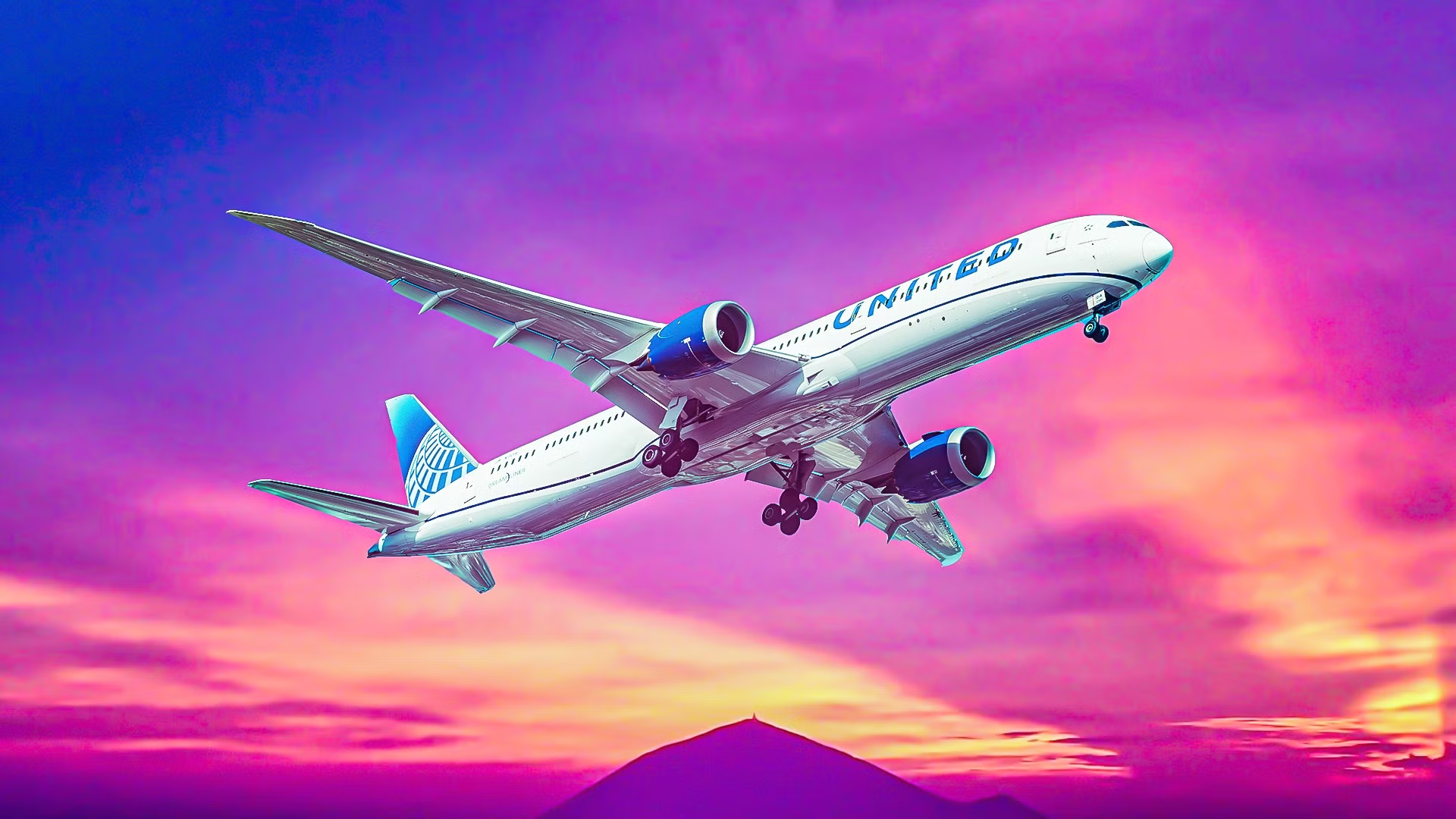
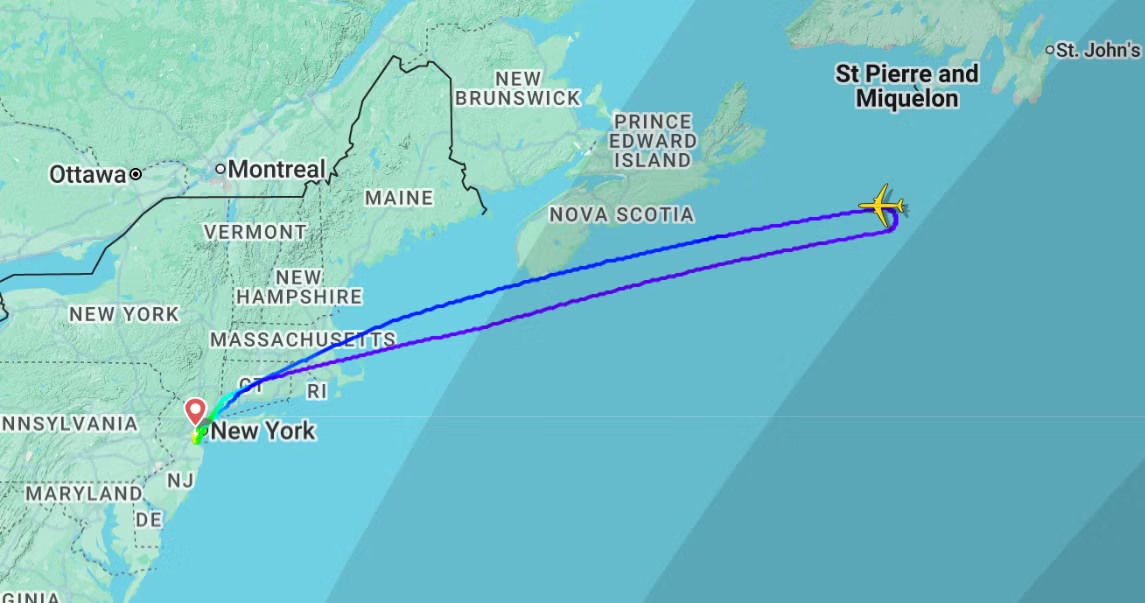
A Bluetooth bomb scare brought a transatlantic United Airlines flight to a grinding halt last week — not because of an explosive device, but because of what someone named their Bluetooth speaker. A Boeing 767-400ER operating as a United flight out of Newark Liberty International Airport was already well out over the Atlantic, bound for Palma de Mallorca, Spain, when the crew made the call to turn around and head back to Newark. The reason? A passenger’s Bluetooth device was broadcasting the name ‘BOMB’ to every phone and laptop in range.
It sounds almost absurd — and in hindsight, it probably was. A teenage passenger had apparently named their portable Bluetooth speaker ‘BOMB,’ almost certainly as a joke or a bit of adolescent humour with no malicious intent. But when another passenger spotted that device name showing up on their phone’s Bluetooth discovery screen, they did exactly what most security-conscious travellers would do: they flagged it to the crew.
How a Device Name Became a Security Incident
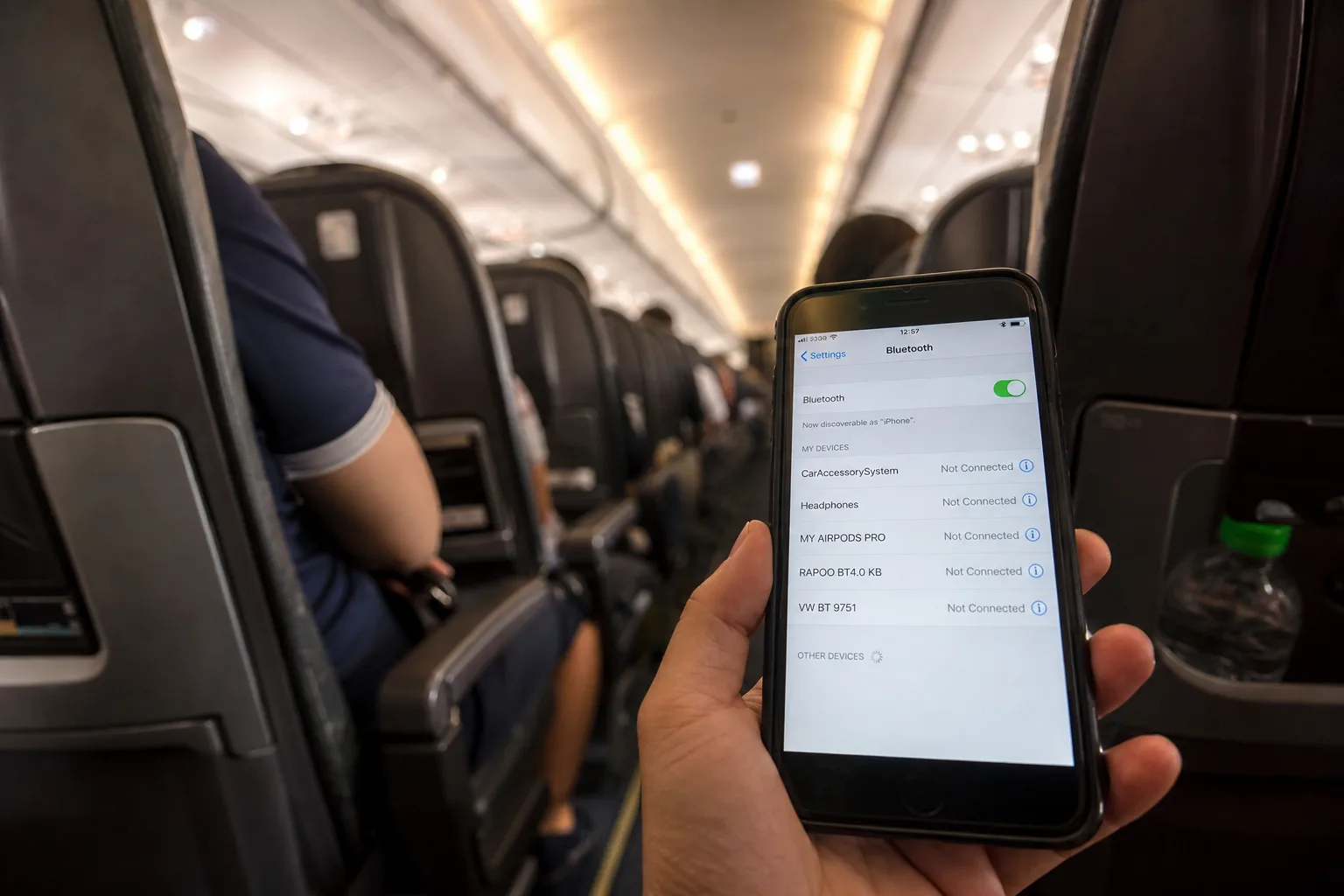
Here’s the thing about Bluetooth discovery: it’s completely passive. You don’t have to do anything to see nearby device names — your phone just shows them to you automatically whenever Bluetooth is enabled. So a speaker named ‘BOMB’ doesn’t stay a private joke. It becomes a broadcast. Every passenger within roughly 30 feet with Bluetooth switched on would have seen it pop up on their screen. This is precisely why a Bluetooth bomb scare can unfold so quickly — the trigger is visible to dozens of people simultaneously, with no action required on anyone’s part.
Flight crew are trained to take any indication of a threat seriously, and they did. The captain made the decision to divert, and the 767-400ER — a twin-engine wide-body that typically seats around 214 passengers in United’s configuration — executed a U-turn over the Atlantic and returned to Newark. Passengers had to sit through the anxiety of an unplanned return flight before the situation was assessed on the ground, the teen was identified, and the ‘device’ turned out to be nothing more than a Bluetooth speaker with an ill-chosen name.
No explosive was found. No charges have been publicly reported at the time of writing. The flight presumably departed again with a considerable delay, leaving a plane full of passengers significantly late to their Spanish holiday destination.
The Real Problem: Bluetooth as an Unregulated Vector
Strip away the teen-with-a-speaker element, and there’s a genuinely uncomfortable security question buried in this story. Modern aircraft cabins are saturated with Bluetooth signals. Passengers carry smartphones, wireless earbuds, laptops, smartwatches, portable speakers, and keyboards — dozens of discoverable devices per flight, all broadcasting their names to anyone who cares to look.
There is currently no formal pre-boarding screening process for Bluetooth device names. The Transportation Security Administration (TSA) checks for physical threats — weapons, liquids, prohibited items — but nobody is standing at the gate running a Bluetooth scan for inflammatory device names. That’s a gap. Not necessarily a dangerous one in most cases, but a gap that this incident just demonstrated can trigger a full bomb-threat response. A Bluetooth bomb scare requires no physical contraband whatsoever — just a poorly chosen device name and a cabin full of passengers with their wireless radios on.
Think about how easy it would be for a bad actor — or even just a provocateur — to name a device ‘BOMB’ or ‘EXPLOSIVE DEVICE’ and board a flight. They don’t need to carry anything. The Bluetooth bomb scare doesn’t require an actual bomb. The name alone, visible on every nearby phone, is enough to potentially force a diversion, disrupt hundreds of passengers, burn thousands of dollars in fuel and operational costs, and tie up law enforcement resources on the ground.
That’s not a hypothetical threat vector. It just happened.
Airline Diversions: The Enormous Cost of Caution
To be clear, the crew made the right call. When you’re a flight crew member over the Atlantic and someone reports seeing the word ‘BOMB’ on their screen, you don’t shrug and keep flying. The protocols exist for very good reasons, and the cost of ignoring a real threat would be catastrophic compared to the cost of an unscheduled diversion.
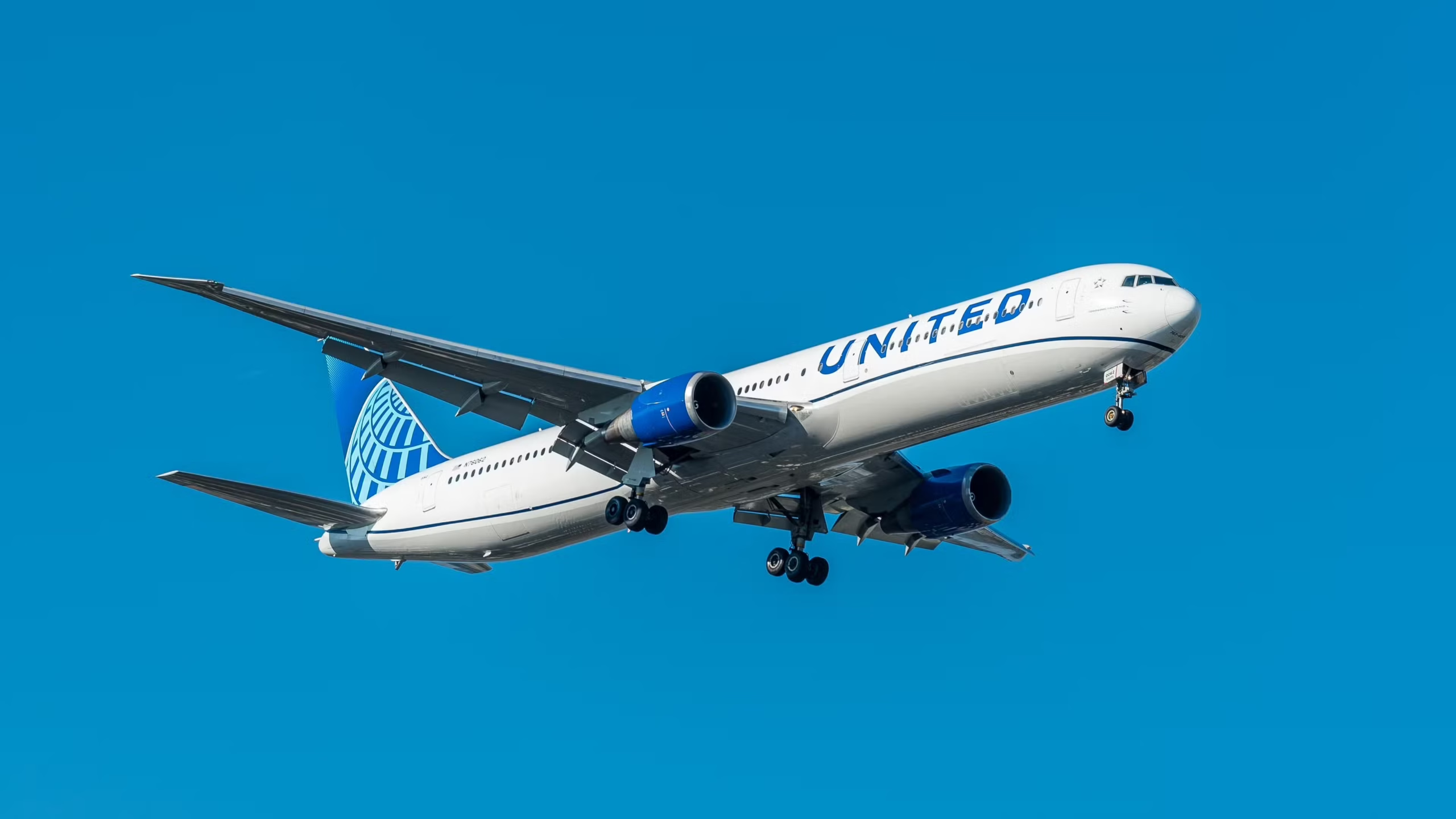
But those costs are still real. A transatlantic diversion on a Boeing 767-400ER isn’t cheap. Fuel alone for the return leg runs into tens of thousands of dollars. Add ground handling, crew rest requirements, rebooking costs for passengers who miss connections, and the operational ripple effect through United’s scheduling system, and you’re looking at a disruption that could easily reach six figures in total cost — all because a teenager thought ‘BOMB’ was a funny name for a Bluetooth speaker. Every Bluetooth bomb scare, however innocent its origin, carries that same price tag the moment a crew commits to a diversion.
United Airlines hasn’t commented publicly in detail on the incident beyond confirming the diversion. The airline industry regularly deals with bomb threats — the vast majority of which turn out to be hoaxes or false alarms — but the Bluetooth angle here is relatively novel. Most threats come via phone calls, written notes, or verbal statements. A passive Bluetooth broadcast is a different kind of trigger, and one that existing protocols weren’t specifically designed to handle.
What Should Actually Change
The easiest fix here is obvious: don’t name your Bluetooth devices anything that sounds like a threat. That’s genuinely not a hard ask. But relying on common sense has never been a viable security strategy, and this Bluetooth bomb scare proves the point.
A more structural response would involve adding a Bluetooth scan to pre-boarding security checks — either as a manual step by gate agents or as an automated scan at the gate. The technology to do this is trivially simple. Any smartphone can run a Bluetooth discovery scan in seconds. Flagging device names containing certain terms before boarding is entirely feasible, and frankly probably overdue given how many wirelessly connected devices passengers now carry onto planes. Catching a potential Bluetooth bomb scare at the gate, before a flight is airborne over the ocean, would be a far cheaper and less disruptive outcome for everyone involved.
There’s also a broader question for the aviation security community about how they categorise and respond to Bluetooth-based incidents. Right now, a discoverable device name reading ‘BOMB’ gets processed through the same response chain as a verbal bomb threat — which, as this incident showed, means a full diversion. Whether that’s the proportionate response for every variation of this scenario is worth examining. A tiered assessment process that could quickly triage Bluetooth-sourced alerts before committing to a full diversion would save airlines significant resources while still taking security seriously.
The teenager in this story almost certainly didn’t understand the chain of events their speaker name could set in motion. But the next person who boards a flight with a device named ‘BOMB’ might know exactly what they’re doing — and the disruption they can cause costs them nothing at all.