

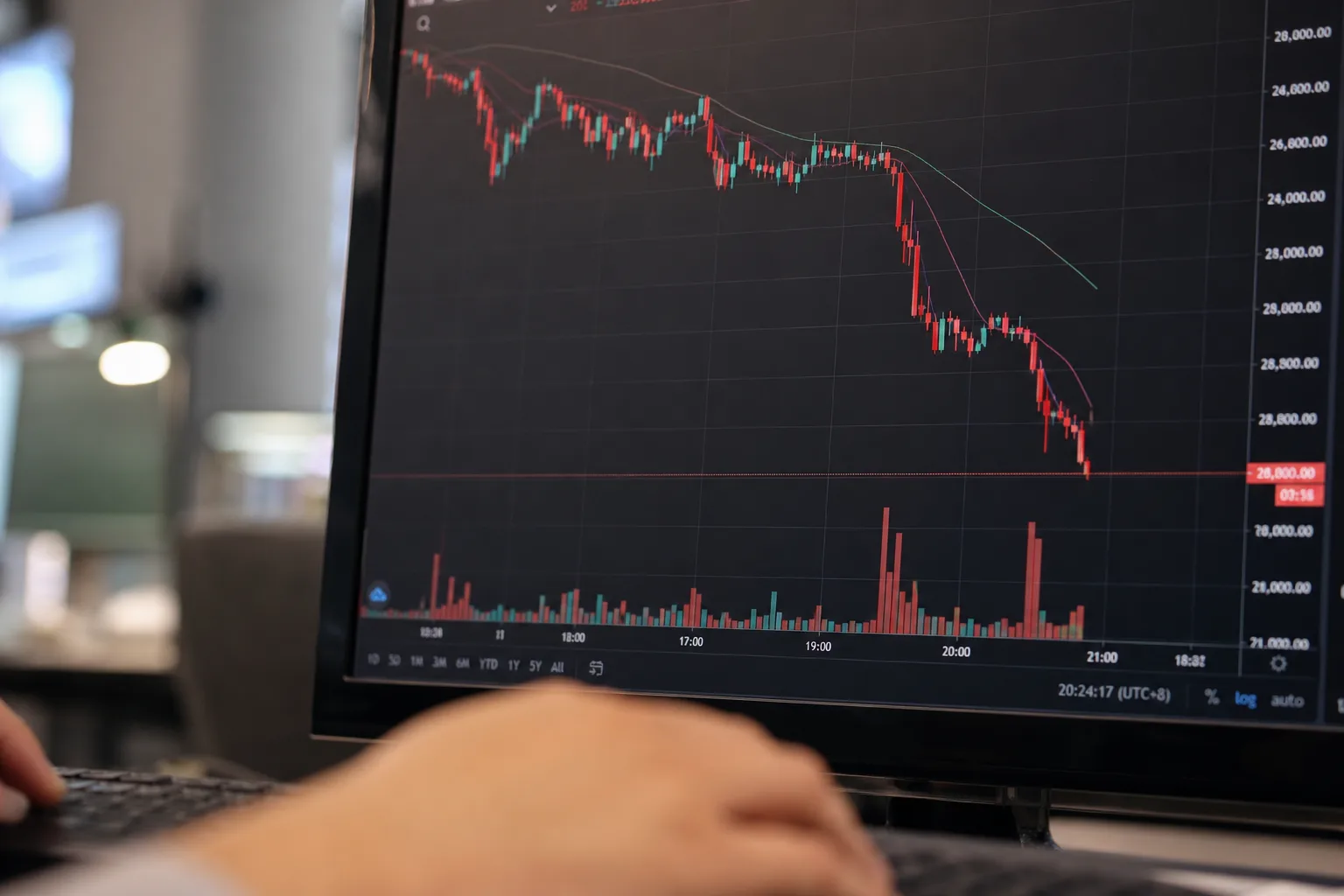
- XRP price drop pushed the token to a 15-week low near $1.30, even as cumulative ETF inflows reached roughly $1.42 billion.
- The XRP price drop exposes a critical gap: bullish flow data hasn’t translated into actual buying pressure on spot exchanges.
- Over 25 million XRP left exchanges in late May, a signal that often implies accumulation — yet sellers kept pushing price lower.
- Thin liquidity on Binance, near its lowest since January 2020, is amplifying every burst of spot selling despite positive headlines.
Table of Contents
XRP Price Drop Reaches a 15-Week Low — and the Bulls Can’t Explain It
The XRP price drop that played out in late May and into June is the kind of market moment that should make traders stop and question their assumptions. XRP slid to around $1.30 on June 1 — its weakest level in roughly 15 weeks — while simultaneously sporting what most crypto playbooks would call a bullish backdrop. Cumulative inflows into spot XRP ETFs had climbed to approximately $1.42 billion. Tens of millions of tokens were leaving centralized exchanges. Ledger activity was ticking upward. And yet: sellers kept winning.
That’s the contradiction sitting at the center of XRP’s current story. The flow data says one thing. The price chart says something colder and more immediate. Understanding why those two narratives have diverged tells you a lot — not just about XRP, but about how crypto markets actually price assets in 2025.

What the ETF Numbers Actually Mean
Let’s start with the headline figure that bulls keep pointing to. According to SoSoValue data, spot XRP ETF products pulled in approximately $11.8 million on May 29 alone, pushing cumulative net inflows to around $1.4 billion. That’s real money. It means institutional and retail investors are still choosing to gain XRP exposure through regulated wrappers rather than retreating entirely from the asset.
But here’s the problem: ETF inflows don’t hit Ripple’s order books. When a fund manager buys shares in a spot XRP ETF, the ETF issuer may accumulate XRP on the back end — but that process is structured, paced, and insulated from the live tug-of-war happening on Binance, Coinbase, or Kraken at any given moment. The capital is entering a wrapper, not a bid stack.
This distinction matters enormously during a drawdown. If a wave of spot sellers decides to press price through a key support level at 3pm on a Tuesday, the fact that $11.8 million flowed into an ETF earlier that day won’t stop them. The ETF inflow is a slow-moving signal. Spot selling is immediate. Right now, immediacy is winning. The XRP price drop is a direct consequence of that timing mismatch between institutional flows and real-time order-book pressure.
The broader crypto ETF landscape adds useful context here. SoSoValue’s ETF tracker has shown XRP products holding up relatively well even during periods when Bitcoin and Ethereum ETFs faced net outflows. That relative resilience is genuinely interesting — it suggests XRP has found a sticky investor base in the regulated product space. What it doesn’t do is guarantee price support when liquidity thins out and sentiment sours on the spot side.

Exchange Outflows Tell a Mixed Story
The exchange flow data, sourced from Santiment, adds another layer of complexity to the XRP price drop narrative. The sequence went something like this: roughly 22.80 million XRP moved onto exchanges — a sign of potential sell-side preparation — before approximately 25.24 million XRP subsequently moved off exchanges in late May. Bulls latched onto that second number as confirmation of accumulation.
And in isolation, they’re not wrong to. Coins leaving exchanges typically reduce the supply sitting close to the sell button. It can indicate long-term holders moving assets into cold storage or custody solutions, positioning away from active trading venues. In a healthier market environment, that kind of outflow sequence can help firm up a price floor.
The issue is that you can’t look at the outflow without remembering the inflow that preceded it. A meaningful chunk of supply had already moved toward exchanges before the reversal happened. Some of that supply almost certainly found sellers. And critically, the outflow that followed couldn’t undo the damage — XRP still hit a multi-month low. If 25 million tokens leaving exchanges can’t stabilize price, it forces a harder question: how much more direct, aggressive spot buying would actually be required to turn this around?
It’s also worth putting these numbers in perspective. XRP’s 24-hour trading volume on centralized exchanges was running around $1.62 billion on June 1, according to market data. DEX volume, by contrast, was a rounding error — approximately $1.4 million. This is fundamentally a CEX-driven market. Price discovery happens on centralized venues, which means exchange flows and order-book dynamics are where every macro narrative — ETF demand, accumulation signals, developer activity — eventually gets stress-tested against actual money. Every time that stress test has run recently, the XRP price drop has been the result.
Thin Liquidity Is the Real Culprit Behind the XRP Price Drop
If you’re looking for the most convincing explanation for why the XRP price drop has persisted despite supportive flow data, the answer is probably market structure — specifically, liquidity conditions that have deteriorated to multi-year lows.
Binance’s 30-day XRP liquidity index recently sat near 0.043, which represents its lowest reading since January 2020. That’s not a minor footnote. It means the market depth that would normally absorb selling pressure and cushion price moves has thinned out significantly. When a market is liquid, even a surge of selling gets spread across a deep order book and price moves are contained. When liquidity thins, a comparatively modest burst of spot selling can carve through support levels that, on paper, looked well-defended.
Layer on top of that the derivatives picture: all-exchange open interest was hovering around $2.9 billion, while futures volume was running at approximately 6.8 times spot volume. That’s a derivatives-heavy market, which has its own implications. When spot conviction is weak and leverage is high, positioning can cascade. A relatively small move in spot price can trigger a cascade of liquidations or stop-loss orders in futures, amplifying the move beyond what the underlying flow data would suggest is justified.
This is why comparing XRP’s current situation to previous cycles using the same rulebook is dangerous. The presence of ETF products, the growth of institutional custody, and the expansion of regulated exposure wrappers have all added new demand channels. But they haven’t replaced the fundamental reality that XRP’s marginal price is still being set in thinly liquid spot markets by traders making real-time decisions. Those traders are currently treating every bounce as an exit opportunity, which is precisely why each attempted recovery has so far failed to reverse the XRP price drop in any meaningful way.
The Sell-Zone Pattern That Won’t Clear
One of the more telling aspects of the current XRP price drop is how long this behavioral pattern has been building. This isn’t a sudden reversal — it’s the continuation of a trend that’s been visible for months. Late buyers who entered XRP during earlier rallies are increasingly finding themselves underwater, and each bounce back toward their entry points becomes an opportunity to reduce losses rather than add exposure. That dynamic turns potential recovery zones into fresh resistance areas.
The key technical level traders are watching is $1.34. A clean reclaim of that price with sustained volume would suggest that spot buyers are finally willing to defend ground rather than wait for a lower entry. Failure to reclaim $1.34 puts $1.31 — and potentially lower — back in play. And below $1.31, the constructive flow narrative starts to look less like a delayed catalyst and more like a misread of market conditions.
XRP’s market cap still sits around $80.87 billion, keeping it comfortably inside the top five cryptocurrencies by size. That scale provides some context for the numbers involved — $1.42 billion in ETF inflows sounds significant but represents less than 2% of total market cap. The flow signals are real. They’re just not large enough, direct enough, or fast enough to overwhelm spot sellers who are motivated and operating in a thin market.
What Has to Change for Flows to Actually Matter
The honest answer is that ETF inflows and exchange outflows will only start moving the XRP price drop needle when spot conviction shifts. That shift doesn’t come from data — it comes from traders deciding that holding through volatility is worth it, and that buying dips near current levels has positive expected value.
That sentiment shift is hard to manufacture. It tends to emerge from one of two places: a broader crypto market rally that lifts all assets and creates FOMO-driven spot buying, or a catalyst specific to XRP — a regulatory development, a major partnership announcement, or a meaningful expansion of real-world utility — that gives fresh buyers a reason to step in aggressively.
Until one of those conditions arrives, the flow data will keep telling a bullish story that the spot market keeps refusing to confirm. Relative ETF strength is genuinely encouraging for XRP’s long-term institutional narrative. But in the near term, price is set by whoever is willing to buy or sell right now — and right now, sellers still have the upper hand.

