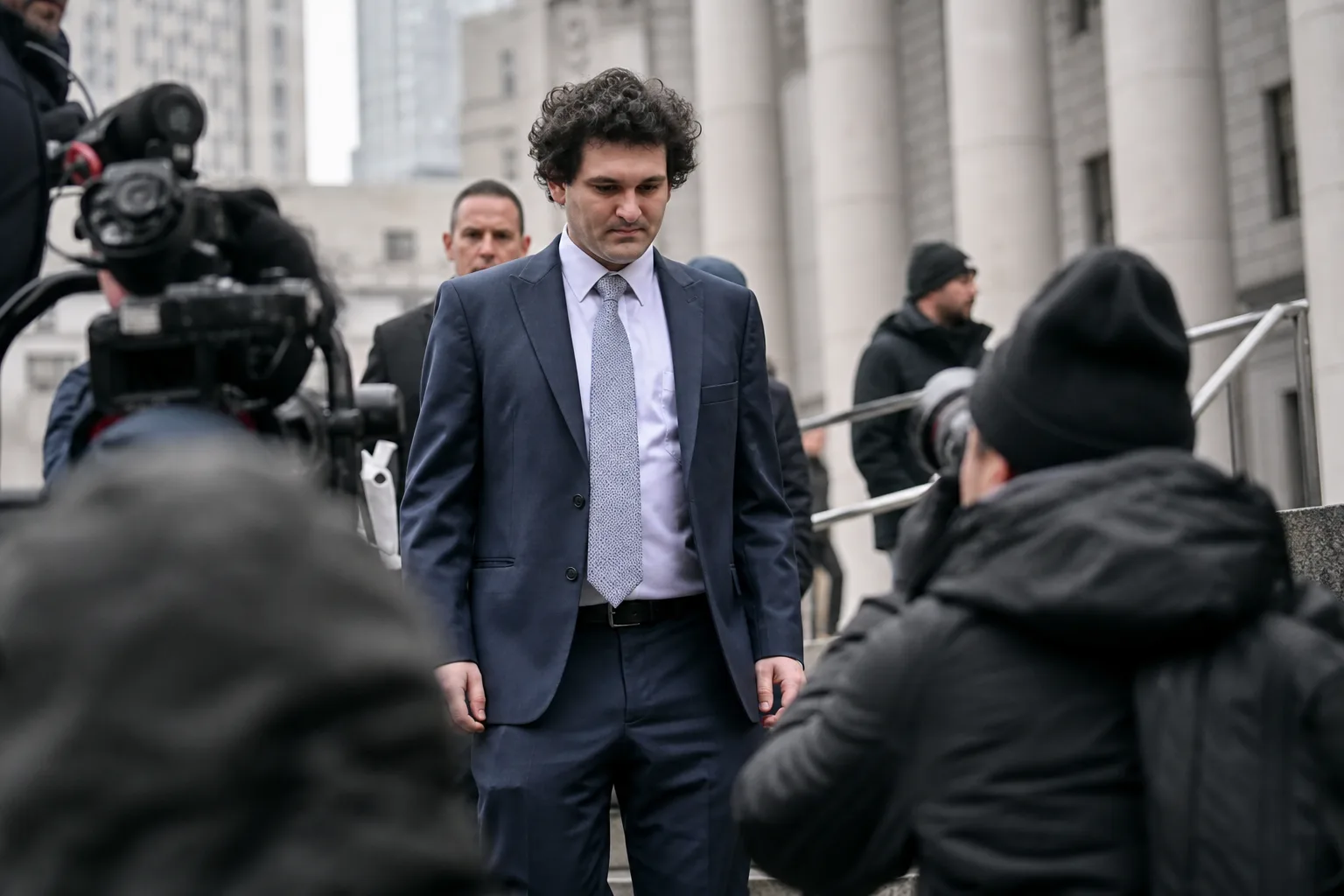
- The Sam Bankman-Fried appeal was rejected by a three-judge Second Circuit panel on Friday, upholding his fraud conviction.
- The Sam Bankman-Fried appeal argued his trial was unfair, but judges found the government’s evidence against him overwhelming.
- The court ruled that intent to eventually repay customers does not exempt anyone from wire fraud charges under U.S. law.
- Bankman-Fried has separately filed for a new trial and formally requested a pardon from President Donald Trump this week.
Table of Contents
The Sam Bankman-Fried Appeal Is Over — and He Lost
The Sam Bankman-Fried appeal came to an end on Friday the way most legal observers expected it would: badly for the former FTX chief. A three-judge panel at the Second Circuit Court of Appeals unanimously rejected Bankman-Fried’s effort to overturn his 2023 criminal conviction on fraud and conspiracy charges, finding his arguments that the trial was conducted unfairly to be, frankly, unconvincing.
The ruling was blunt. The panel described the government’s case against Bankman-Fried at trial as, in their own words, ‘robust’ — and that’s putting it conservatively. Prosecutors had presented an avalanche of evidence, testimony from co-conspirators who had already pleaded guilty, and a paper trail that linked Bankman-Fried directly to the misuse of billions in customer funds funnelled through Alameda Research, his affiliated trading firm. Winning the Sam Bankman-Fried appeal against that kind of trial record was always going to be an uphill climb.
What Bankman-Fried’s Team Actually Argued
The defence mounted three broad lines of attack in the Sam Bankman-Fried appeal. First, that trial judge Lewis Kaplan made procedural errors in how he handled objections and evidentiary rulings — limiting what the defence could argue before the jury. Second, that Bankman-Fried should have been allowed to argue that the assets he’d redirected were in investments that would eventually appreciate, potentially making customers whole. And third, that FTX’s structure as a margin futures trading platform meant customers had implicitly accepted the risk of temporary loss of access to their funds.
The Second Circuit panel wasn’t buying any of it. On the question of Judge Kaplan’s handling of the trial, the ruling acknowledged that district courts have ‘broad discretion’ in managing proceedings — and then went further, saying the panel actually agreed with the judge’s specific rulings rather than simply deferring to that discretion. That’s a meaningful distinction. It wasn’t just ‘the judge had the right to do it’; it was ‘the judge was right.’
Why ‘I Meant to Pay Them Back’ Isn’t a Legal Defence
The most legally interesting part of the Sam Bankman-Fried appeal involves the intent-to-repay argument. Bankman-Fried’s team pushed the idea that because he planned to eventually return customer funds — and because some of Alameda’s investments did gain value — there was no genuine intent to defraud. It’s the kind of argument that might sound intuitive to a non-lawyer. If you plan to give something back, is it really theft?
Under U.S. federal wire fraud law, the answer is yes. The statute explicitly covers temporary misappropriation of money or property, not just permanent theft. As the court put it: ‘Whether the assets purchased by Bankman-Fried appreciated in value is irrelevant as to whether he committed fraud.’ The moment customer funds were moved under false pretences — regardless of what Bankman-Fried thought would happen next — the crime was complete. This is a crucial precedent for crypto cases more broadly, where ‘I was going to make everyone whole with the next trade’ has become something of a recurring refrain.
The Margin Trading Argument Falls Apart
Perhaps the most creative legal argument raised in the Sam Bankman-Fried appeal was the one about FTX’s platform structure. The logic went: FTX offered margin futures trading, which means customers already accepted that their funds could be temporarily unavailable or at risk. Therefore, Bankman-Fried transferring funds to Alameda was just… part of that arrangement.
The court’s response was sharp and precise. ‘The fact that some FTX customers opted into margin trading, and thus temporary deprivation of their money, is beside the point,’ the ruling read. ‘Some opted into margin trading, some did not. No one opted into having their money transferred under false pretences to Alameda.’ That single line dismantles the argument entirely. Opt-in risk tolerance for a disclosed trading mechanism is categorically different from secret misappropriation. Conflating the two isn’t a legal grey area — it’s a mischaracterisation of what fraud actually is.
A Hearing That Foreshadowed the Outcome
Those who followed last November’s oral arguments in front of the Second Circuit panel weren’t surprised by Friday’s decision. The judges repeatedly interrupted Alexandra Shapiro, the attorney representing Bankman-Fried, peppering her with pointed questions and pushing back hard on the defence’s reasoning. Appellate oral arguments often signal where the judges are leaning — and that hearing sent an unmistakable signal that the Sam Bankman-Fried appeal was in serious trouble.
What’s also worth remembering is the broader context of how this conviction came about. FTX’s collapse in November 2022 was one of the fastest and most destructive implosions in financial history. A company that had been valued at billions of dollars earlier that year filed for bankruptcy within days of a CoinDesk report revealing the precarious state of Alameda’s balance sheet. Customers lost billions. The crypto market shed hundreds of billions in value. Bankman-Fried was arrested in the Bahamas weeks later.
What Comes Next for Bankman-Fried
The Sam Bankman-Fried appeal was never his only card. Bankman-Fried is also pursuing a separate motion for a new trial in federal court — a distinct legal mechanism that doesn’t rely on the same arguments that failed at the Second Circuit. New-trial motions can be based on newly discovered evidence or other factors not fully addressed in an appeal, so that pathway isn’t automatically dead.
Then there’s the pardon request. Earlier this week, Bankman-Fried formally asked President Donald Trump to pardon him — a move that lands in an interesting political moment. Trump has reportedly granted pardons to a string of crypto-adjacent figures over the past 18 months, including various other crypto figures. But Trump has previously said he has no plans to extend that same clemency to Bankman-Fried. Notably, FTX’s former chief was associated with Democratic political donations — a fact that has not gone unnoticed in Washington, and almost certainly hasn’t helped his case with the current White House.
The broader takeaway from Friday’s ruling is that the U.S. justice system’s treatment of the FTX collapse has, at least through the appellate level, held firm. Key co-operators — including Caroline Ellison, Nishad Singh, and Ryan Salame — have already been sentenced. Bankman-Fried received a lengthy prison sentence following his conviction. The Sam Bankman-Fried appeal makes it considerably harder to walk any of that back. For a crypto industry still rebuilding its reputation after the 2022 wreckage, the finality of that accountability matters — even if it doesn’t undo the damage done to the people who trusted FTX with their money.
Frequently Asked Questions
What were the main arguments in the Sam Bankman-Fried appeal?
Bankman-Fried’s team argued his trial was procedurally unfair, that he was blocked from presenting certain legal arguments, and that his intent to repay customers should have negated fraud charges. The Second Circuit rejected all of these arguments, finding the trial judge acted within his broad discretion.
Does Sam Bankman-Fried have any remaining legal options?
Yes. Separately from the appeal, Bankman-Fried is seeking a new trial in federal court. He has also formally petitioned President Donald Trump for a pardon this week, though Trump has previously indicated he has no plans to grant one.
Why did the court reject the ‘eventual repayment’ defence?
Federal wire fraud law covers temporary misappropriation of funds, not just permanent theft. The judges confirmed that whether Bankman-Fried intended to repay customers later, or whether his investments gained in value, is legally irrelevant — the act of moving funds under false pretences was itself the crime.
Did any FTX customers consent to having their money used by Alameda Research?
No. The court specifically addressed Bankman-Fried’s argument that FTX was a margin trading platform where customers accepted risk. Judges noted that while some customers opted into margin trading, nobody consented to having their funds secretly transferred to Alameda Research under false pretences.