- A crypto whale opened a $22.3M leveraged long on the SpaceX IPO synthetic token SPCX, already sitting on over $1.15M in unrealized profit.
- The SpaceX IPO priced shares at $135, but synthetic SPCX is trading around $175 — a 30% premium that signals intense early demand.
- Historical IPO data shows companies with high price-to-sales ratios like SpaceX’s 94x often deliver deeply negative three-year returns for post-debut buyers.
- Analysts including Morningstar’s Nicholas Owens and NYU’s Aswath Damodaran both warn the SpaceX IPO is priced well above fair value.
Table of Contents
A $22.3 Million Bet Before the Bell Rings
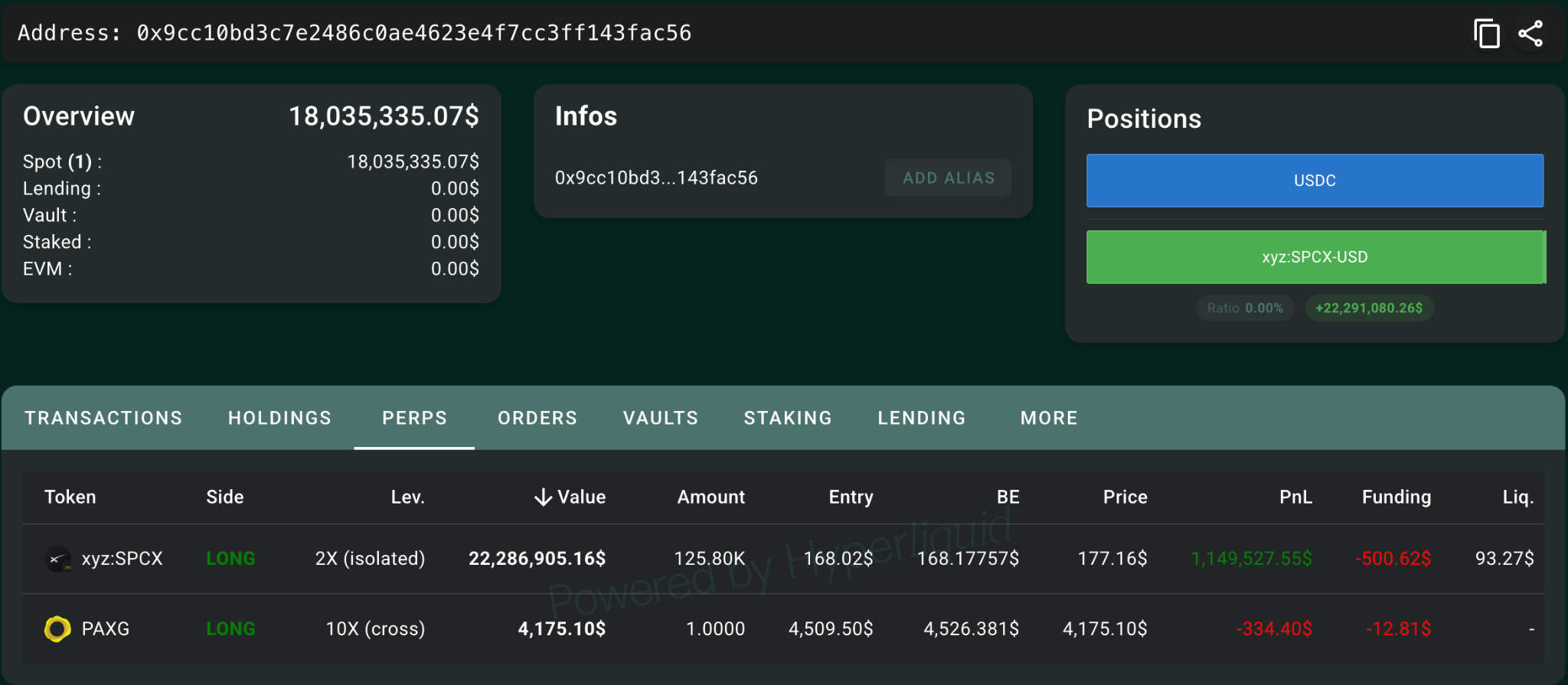
The SpaceX IPO hasn’t even started trading on Nasdaq yet, and already the speculative money is piling in — in the most 2025 way imaginable. On Hyperliquid, a decentralized perpetual exchange, on-chain data from Hypurrscan shows a single wallet (tagged as ‘0x9cc1…’) opening a 2x isolated long position on “xyz:SPCX” worth approximately $22.29 million. That’s not a rounding error. That’s a whale making a very deliberate, very large bet that SpaceX shares will keep climbing after they hit the public market.
The trader entered the position near $168 per synthetic share. SPCX has since moved to around $175, handing the whale roughly $1.15 million in unrealized profit — and that’s on a position that’s cost just over $500 in funding fees so far. The risk side of the ledger, though, is just as striking: the liquidation level sits near $93.27, meaning a drop to that price would trigger an estimated $9.4 million loss. That’s the nature of leveraged perpetuals. The upside looks exciting until you see the cliff on the other side.
Why Crypto Markets Are Trading the SpaceX IPO at a 30% Premium
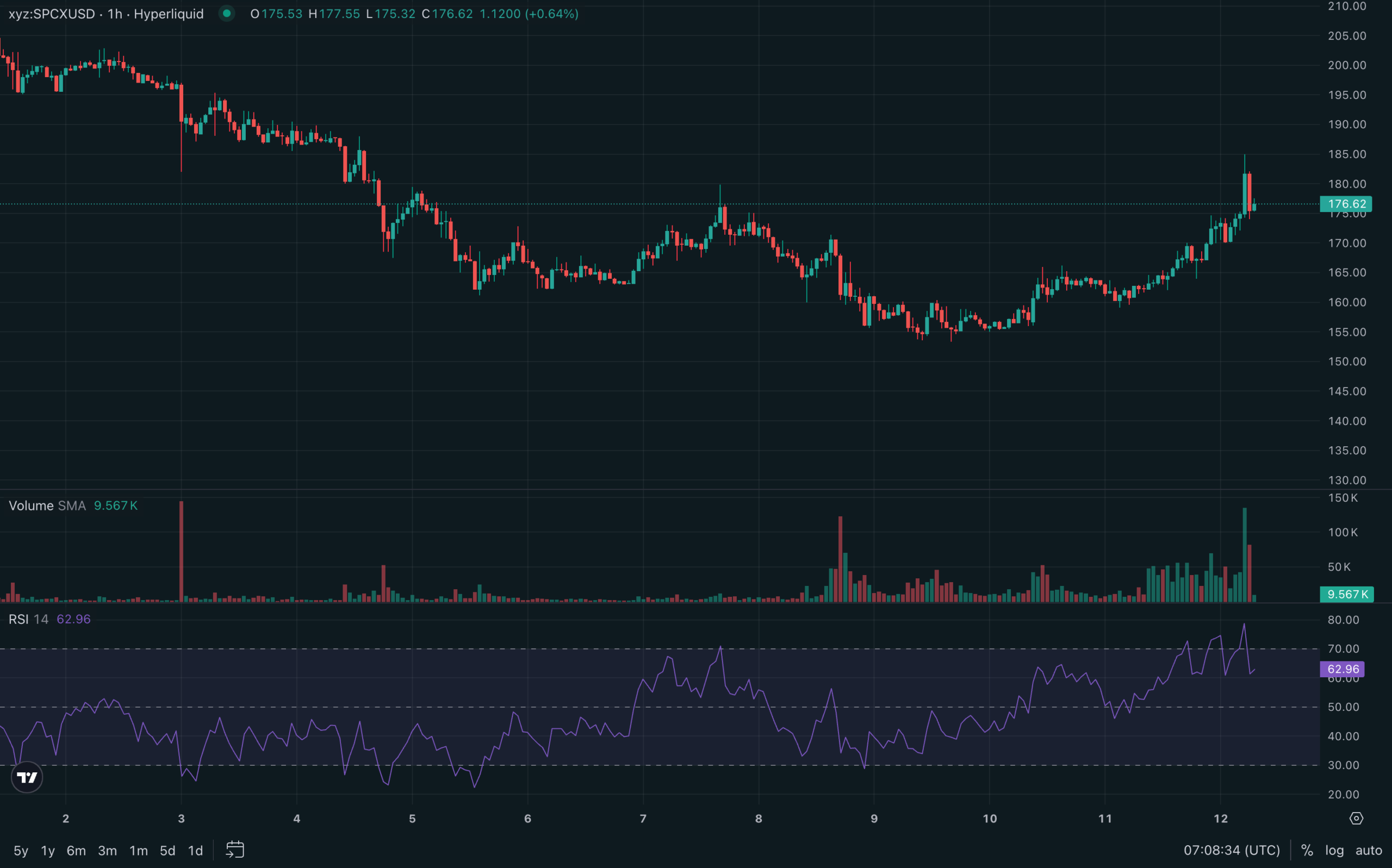
Here’s what makes this particularly interesting. The SpaceX IPO officially priced at $135 per share, targeting a raise of $75 billion through the sale of around 555.6 million shares. That prices the company at a valuation of roughly $1.77 trillion. But on Hyperliquid, synthetic SPCX is already trading hands at about $175 — a full 30% above that offer price. Crypto traders aren’t waiting for Wall Street’s verdict. They’re writing their own.
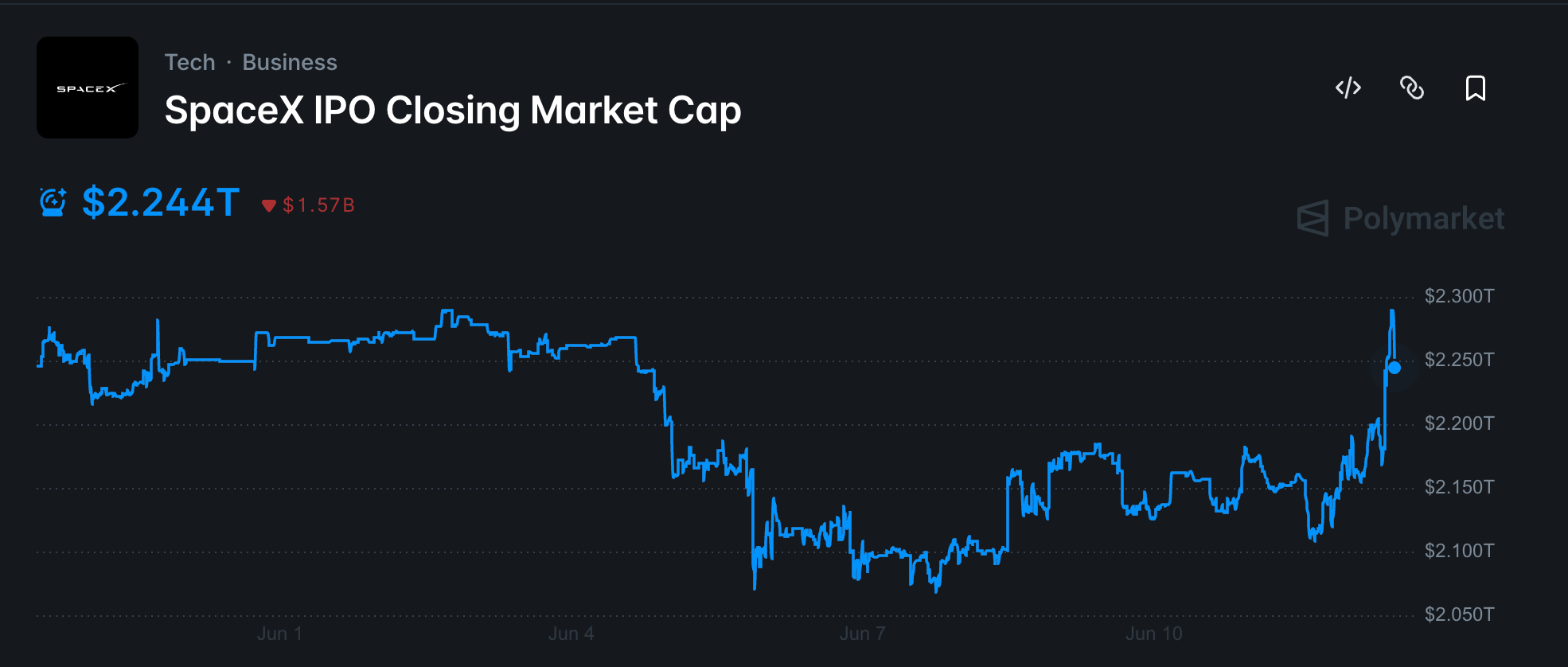
And they’re not alone. Derivatives offered by IG International are implying a SpaceX valuation of around $2.4 trillion, which is more than 35% above the IPO-implied figure. Meanwhile, on Polymarket, prediction market participants are giving 56% odds that SpaceX closes its first official trading day with a market cap somewhere in the $2 trillion to $2.5 trillion range. Across every available proxy market, the directional consensus is the same: up, and sharply.
What’s driving this? Partly it’s genuine belief in the Elon Musk premium — the idea that anything associated with him carries a speculative multiplier that defies traditional valuation models. Partly it’s the sheer scarcity of access. For years, SpaceX has remained one of the most coveted private companies in the world, with retail investors locked out entirely. The IPO is their first real entry point, and pent-up demand has a way of inflating opening prints.
SpaceX IPO Valuation: What the History Books Actually Say
Enthusiasm is one thing. Profitable investing is another. The SpaceX IPO arrives carrying one of the richest valuation multiples in recent memory — roughly 94 times trailing sales. That’s not a typo. Ninety-four times. For context, that figure alone puts it in rarefied, and historically treacherous, territory.
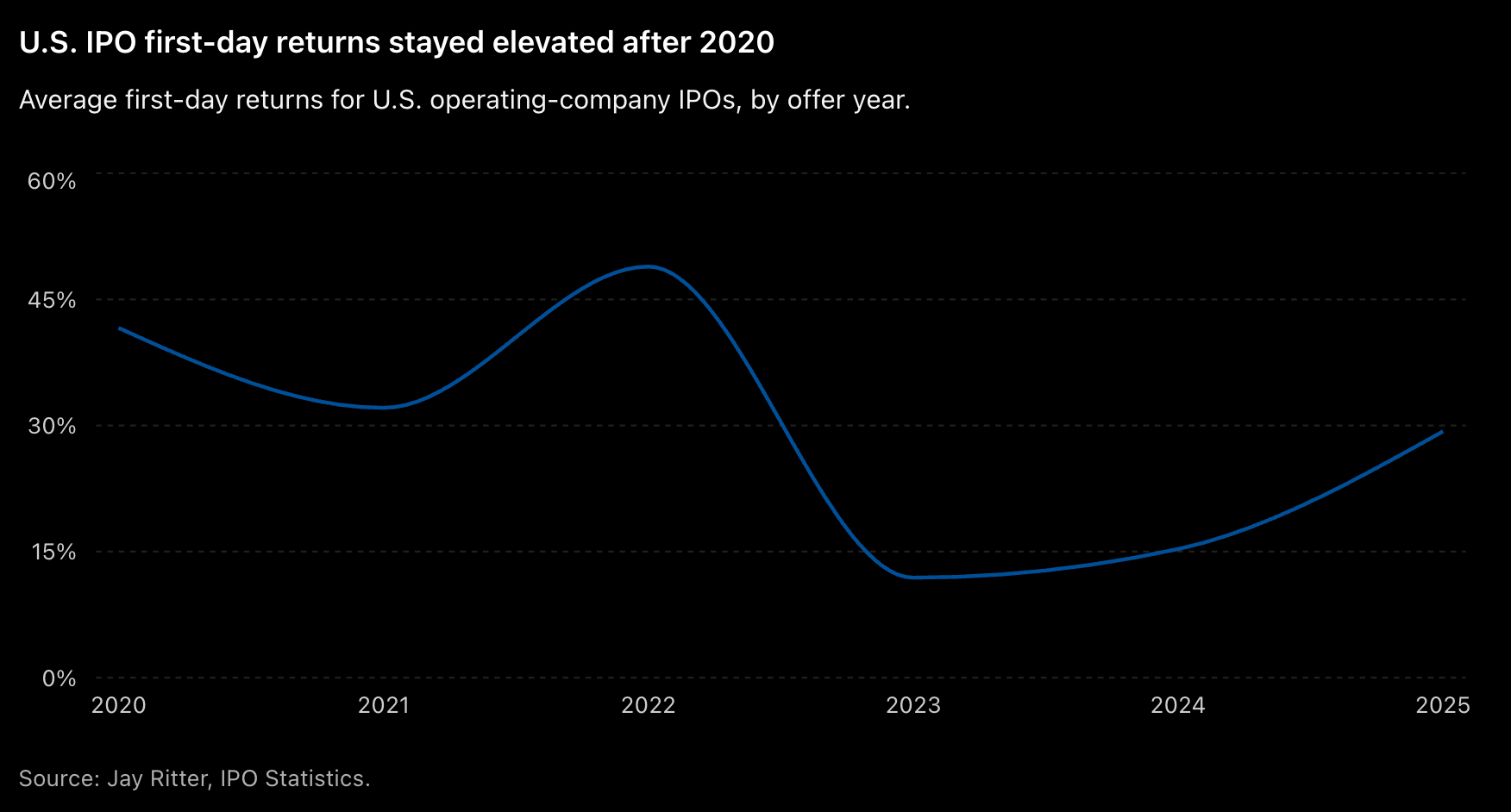
Jay Ritter’s comprehensive IPO database, widely regarded as the gold standard for long-run IPO performance data, offers a sobering framework here. Among all US IPOs from 2020 to 2025, the average first-day gain was around 30%. That sounds great — until you realize that nearly all of that upside flows to institutional investors and insiders who received shares at the offer price. Retail buyers chasing the opening print are already playing a different game.
More damning is the long-run data. Ritter’s numbers from 2001 to 2024 show that companies with positive first-day returns averaged a 29.6% debut pop, but then underperformed the broader market by 8.5 percentage points over the following three years. The IPO euphoria is real. The staying power often isn’t.
At the extreme end of the valuation spectrum — IPOs with trailing revenue above $100 million and price-to-sales ratios above 40 — the numbers get genuinely ugly. Buyers at the first close saw an average three-year return of -44.8%. SpaceX is going public at nearly 94 times trailing sales. Draw your own conclusions.
Recent IPOs Tell a Familiar Story
You don’t have to dig through academic databases to find cautionary examples. The recent IPO landscape is littered with them. Cerebras Systems (ticker: CBRS), a semiconductor company, priced its Nasdaq debut at $185 per share. It opened at $350 on day one — roughly double the offer price — and closed near $311. Impressive first-day headlines all around. Then came the slow bleed. The stock eventually fell to around $197, a roughly 50% drop from its opening-day peak.
Rivian and Uber followed similar arcs. Both generated enormous early excitement. Both stumbled badly once the lockup expiration windows opened and insiders became free to sell, flooding the market with supply at exactly the moment retail enthusiasm was peaking. Lockup expirations are the quiet killer of first-day darlings, and the SpaceX IPO will face the same structural pressure in due course.
The Experts Aren’t Buying the Hype
It’s not just data nerds sounding cautious. Some of the most respected names in equity analysis have been remarkably direct about what they see as a pricing problem with the SpaceX IPO.
Morningstar’s Nicholas Owens put his fair-value estimate at around $780 billion — roughly 55% below the $135 IPO price. He’s not hedging his language either, describing the company as ‘significantly overvalued’ and advising investors to wait for the stock to settle before considering entry.
NYU finance professor Aswath Damodaran, whose valuation work on high-profile tech companies has become required reading for anyone serious about this space, landed in a similar zip code. His fair-value range for SpaceX sits around $1.25 to $1.3 trillion, and he’s called the $135 offer price ‘rich’ — which, from Damodaran, is about as pointed a criticism as you’ll get.
Analyst ‘The Fundamental Investor’ was even more direct in a post on X, suggesting the stock is ‘very likely’ to drop below its IPO price, potentially leaving retail buyers underwater for years.
The Bigger Picture: Crypto Markets as IPO Speculation Engines
There’s a meta-story buried in all of this that deserves attention. The fact that a single trader can open a $22 million leveraged position on the SpaceX IPO outcome — through a synthetic perpetual contract on a decentralized exchange, days before the stock actually lists — says something important about where financial speculation has arrived in 2025.
Hyperliquid and similar platforms have effectively become shadow price discovery venues for high-profile equity events. Whether that’s healthy or not is a debate for another day. What it clearly demonstrates is that the boundary between crypto markets and traditional equity markets is becoming increasingly porous. Traders who once had no mechanism to act on pre-IPO conviction now have multiple, and they’re using them aggressively.
For SpaceX specifically, the 30% premium baked into synthetic SPCX pricing creates a genuinely tricky setup. If the stock opens near $175 on Nasdaq — in line with what crypto markets are signaling — buyers at that price are already starting from a valuation that Damodaran thinks is roughly $500 billion too rich. The opening trade might feel like a win. Whether it still feels that way in three years is a very different question.
Frequently Asked Questions
What is the SpaceX IPO price and valuation?
SpaceX priced its IPO at $135 per share, selling around 555.6 million shares to raise $75 billion. That puts the company’s IPO valuation at approximately $1.77 trillion. The stock is expected to trade on Nasdaq under the ticker SPCX.
What is the SPCX synthetic token and how does it relate to the SpaceX IPO?
SPCX is a synthetic pre-IPO perpetual contract tied to SpaceX, letting crypto traders speculate on the IPO outcome before regular equity markets list the stock.
Why do high-valuation IPOs tend to underperform after their debut?
According to Jay Ritter’s IPO data, among IPOs with trailing sales above $100 million and price-to-sales ratios above 40, buyers at the first close saw an average three-year return of -44.8%. High expectations baked into the price leave little room for growth and amplify any disappointment.
What do analysts say about whether SpaceX is overvalued at its IPO price?
Morningstar’s Nicholas Owens values SpaceX at around $780 billion — roughly 55% below the IPO price — and calls it significantly overvalued. NYU professor Aswath Damodaran puts fair value closer to $1.25–$1.3 trillion, describing the $135 offer price as ‘rich.’