

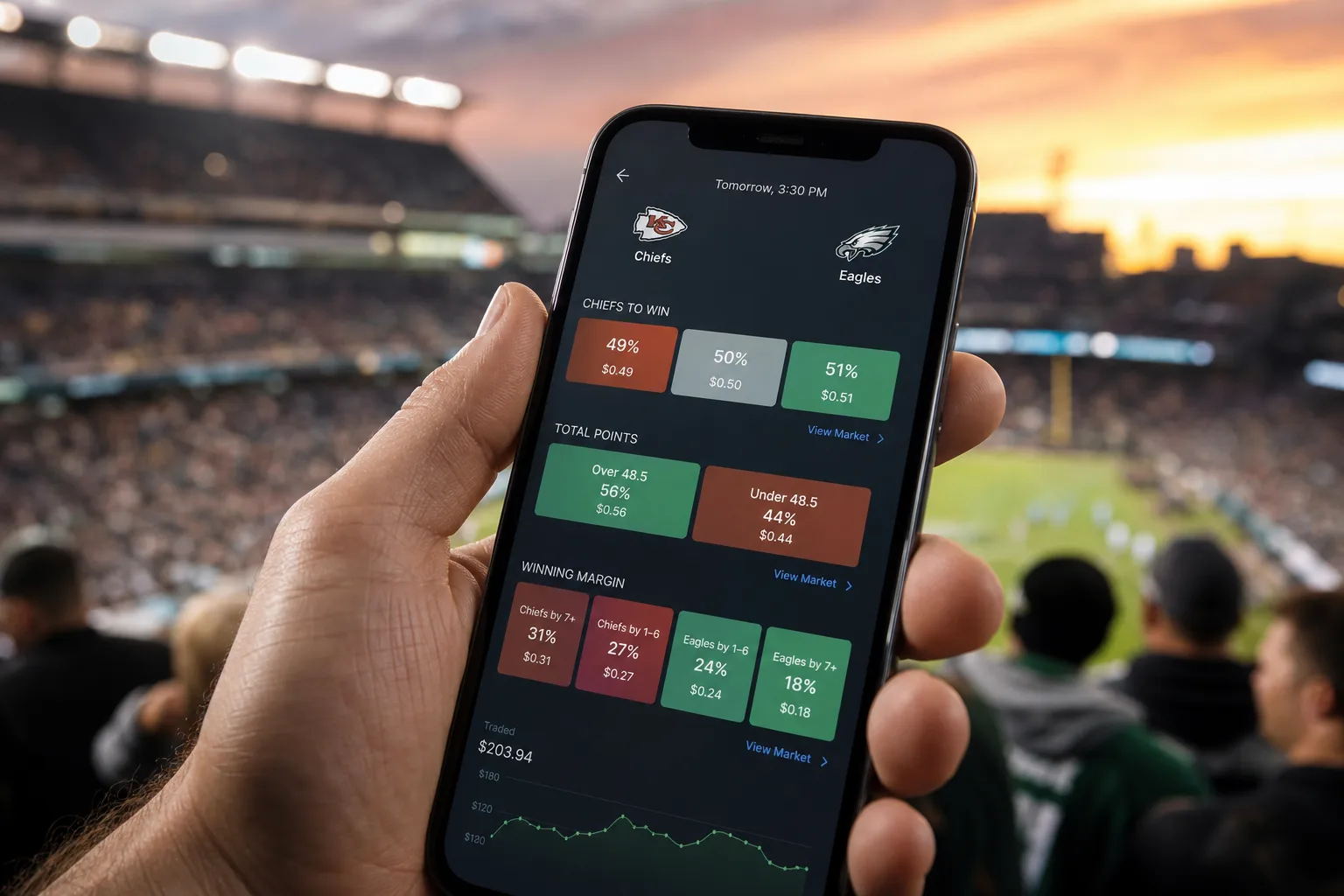
- Prediction markets could see up to $10 billion in consumer volume during the 2026 FIFA World Cup, per Bernstein analysts.
- Bernstein calls the tournament a watershed moment for prediction markets, with Kalshi and Polymarket leading early momentum.
- Robinhood is using the World Cup to commercially launch Rothera, its CFTC-licensed prediction exchange.
- Coinbase crossed $100 million in annualized prediction markets revenue within two months of launching the product in early 2026.
Table of Contents
The World Cup’s Billion-Dollar Side Bet
The 2026 FIFA World Cup kicked off Thursday across North American stadiums, and while billions of fans are tuned in to the sport itself, a different group of very interested observers is watching something else entirely: the flow of money through prediction markets and sportsbooks. According to analysts at investment firm Bernstein, this tournament could be the single biggest catalyst the emerging prediction market sector has ever seen — projecting more than $3 billion in incremental betting handle and as much as $10 billion in broader consumer volume uplift across sports betting and prediction platforms combined.
That’s a remarkable figure, especially when you consider that summer has historically been the dead zone for online sports betting in the US. No NFL. No NBA playoffs. The World Cup doesn’t just fill that void — it obliterates it.

Part of what makes 2026 different is sheer scale. FIFA expanded the tournament to 48 teams this cycle, producing 104 matches in total — roughly 60% more bettable inventory than any previous World Cup. Every additional match is another contract, another market, another reason for a casual fan to open an app they might never have touched before. The tournament is also being hosted across the US, Canada, and Mexico for the first time, which brings an entirely different level of domestic engagement to what is normally a European-timezone-dominated event.
Prediction Markets Are Already Moving Before Kickoff
The numbers coming in even before the opening whistle are striking. DraftKings disclosed this week that its annualized consumer volume in May rose 24% month-over-month to $1.3 billion, while total volume traded jumped 34% to $3.1 billion. Bernstein’s analysts flagged this as part of a steep three-month ramp — not a one-month blip — suggesting the World Cup is amplifying a trend that was already well underway.
Kalshi and Polymarket have been the two names most associated with the prediction markets resurgence over the past year. Both have scaled quickly, according to Bernstein, predominantly picking up users in California, Texas, Georgia, and Florida. But the analysts’ core argument is that those platforms have so far largely been winning over early adopters — and the World Cup represents the clearest opportunity yet to go mainstream.

The Bernstein team has a memorable way of framing how prediction markets relate to traditional sportsbooks: ‘TikTok, not Napster.’ In other words, they don’t think platforms like Kalshi are going to cannibalize DraftKings or FanDuel and leave them for dead. The analogy is apt. TikTok created an entirely new category of content consumption that pulled in people who weren’t heavy YouTube users. Prediction markets, the argument goes, are creating a new layer of sports engagement — attracting users who might find a traditional point-spread bet confusing but are comfortable trading a contract that says ‘Spain wins the World Cup’ at 18 cents.
Robinhood, Coinbase, and the Race to Own the Category
The most telling sign that prediction markets have arrived as a genuine business category is who’s now competing for a slice of it. Robinhood is using the World Cup as the commercial launch vehicle for Rothera, its own CFTC-licensed prediction markets exchange. That’s a meaningful move — Robinhood built its entire brand on making financial products accessible to first-time investors, and it’s now applying that same playbook to event contracts. The timing is deliberate: the tournament gives Rothera an immediate, globally relevant event catalog to launch with.
Coinbase, meanwhile, has been on an even faster trajectory. The company said it crossed $100 million in annualized prediction markets revenue within just two months of launching the product in early 2026, through a partnership with Kalshi. That speed of monetization is genuinely notable — it suggests there was pent-up demand sitting in Coinbase’s existing user base that prediction markets simply unlocked. World Cup contracts are now live through that partnership, giving Coinbase’s millions of users a direct on-ramp into the category during the sport’s biggest global event.
The fact that both Robinhood and Coinbase — platforms built primarily around equities and crypto respectively — are now competing in prediction markets tells you a lot about where the product category sits in 2026. It’s no longer a niche corner of crypto-native speculation. It’s becoming a standard feature that any consumer finance platform with ambitions needs to offer.
A Trillion-Dollar Market by 2030?
Bernstein’s long-term projection is the figure that will really get people’s attention: the analysts believe prediction markets are on a path to hitting trillion-dollar annual volume by 2030. That’s a bold call, but the trajectory supports it. Kalshi and Polymarket’s growth has been steep. DraftKings’ volume ramp is already in motion. Coinbase hit $100 million in annualized revenue in two months. Robinhood is now entering the ring.
The regulatory picture has also cleared considerably. The CFTC’s stance on event contracts has become more accommodating, and platforms like Kalshi and Robinhood’s Rothera are operating with full licensing rather than navigating legal grey areas. That matters enormously for institutional confidence and, just as importantly, for App Store approvals and mainstream marketing campaigns.
There’s also the question of what happens after the World Cup ends. The history of sports betting in the US shows a consistent pattern: major events pull in new users, and a meaningful share of them stick around. If the World Cup delivers the volume Bernstein is projecting, the platforms that convert casual tournament bettors into habitual prediction market traders will be sitting on a formidable advantage heading into the 2026 US midterms, the next NFL season, and beyond.
For now, the market’s own verdict on the tournament’s winner — based on contract prices on Myriad, the prediction platform run by Dastan — has Spain at 18% and France just behind at 17%. Whether those odds shift dramatically over the next month is almost beside the point for the platforms. The real win is every new user who opens an account to find out.
Frequently Asked Questions
How big could prediction markets get by 2030?
Bernstein analysts believe the World Cup could accelerate customer acquisition into what they project will be a trillion-dollar volume market by 2030, driven by platforms like Kalshi, Polymarket, and new entrants including Robinhood and Coinbase.
What are prediction markets and how do they differ from sports betting?
Prediction markets let users trade contracts tied to the outcome of real-world events — sports, politics, economics — using market prices to reflect probabilities. Unlike traditional sportsbooks, they operate more like financial exchanges, and some are regulated by the CFTC rather than state gaming authorities.
Which prediction markets platforms are active during the 2026 World Cup?
Kalshi, Polymarket, Coinbase (via its Kalshi partnership), and Robinhood’s new Rothera exchange are all offering World Cup contracts. DraftKings is also seeing significant volume growth, having disclosed rising consumer and total trading volumes ahead of the tournament.
Why is the 2026 World Cup bigger for betting than previous tournaments?
The 2026 tournament expanded to a 48-team format, producing 104 total matches — roughly 60% more bettable events than prior World Cups. That extra inventory is driving elevated volume projections from analysts.

