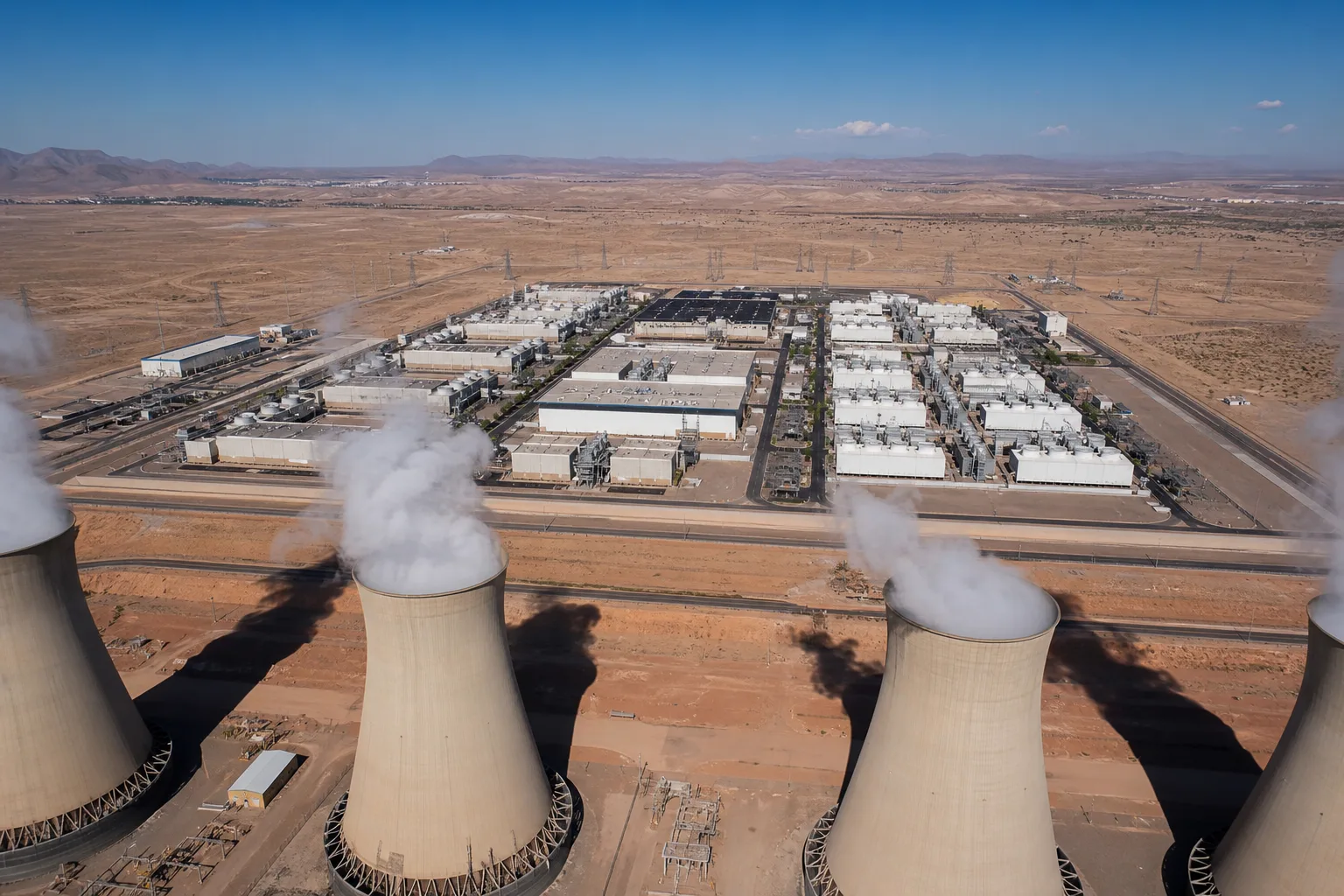
- Amazon data center water use reached 2.5 billion gallons in 2025, dropping 2% despite expanding global operations.
- Amazon data center water use efficiency is claimed to be seven times better than the industry average, per a peer-reviewed study.
- Amazon compared its water efficiency favorably against Microsoft, Google, and Meta — but the methodology isn’t exactly apples-to-apples.
- The figures exclude indirect water consumption from power plants supplying electricity, a significant gap critics will likely highlight.
Table of Contents
Amazon Finally Puts a Number on Amazon Data Center Water Use
For the first time, Amazon has publicly disclosed how much water its global data center network consumes — and the number is staggering. Amazon data center water use totaled 2.5 billion gallons in 2025, the company confirmed, at a rate of 0.12 liters per kilowatt-hour of electricity consumed. That’s the kind of figure that makes the abstract concept of ‘cloud computing’ suddenly feel very physical. Those cat videos, AI chatbot queries, and Prime Video streams are, in a real sense, drinking water.
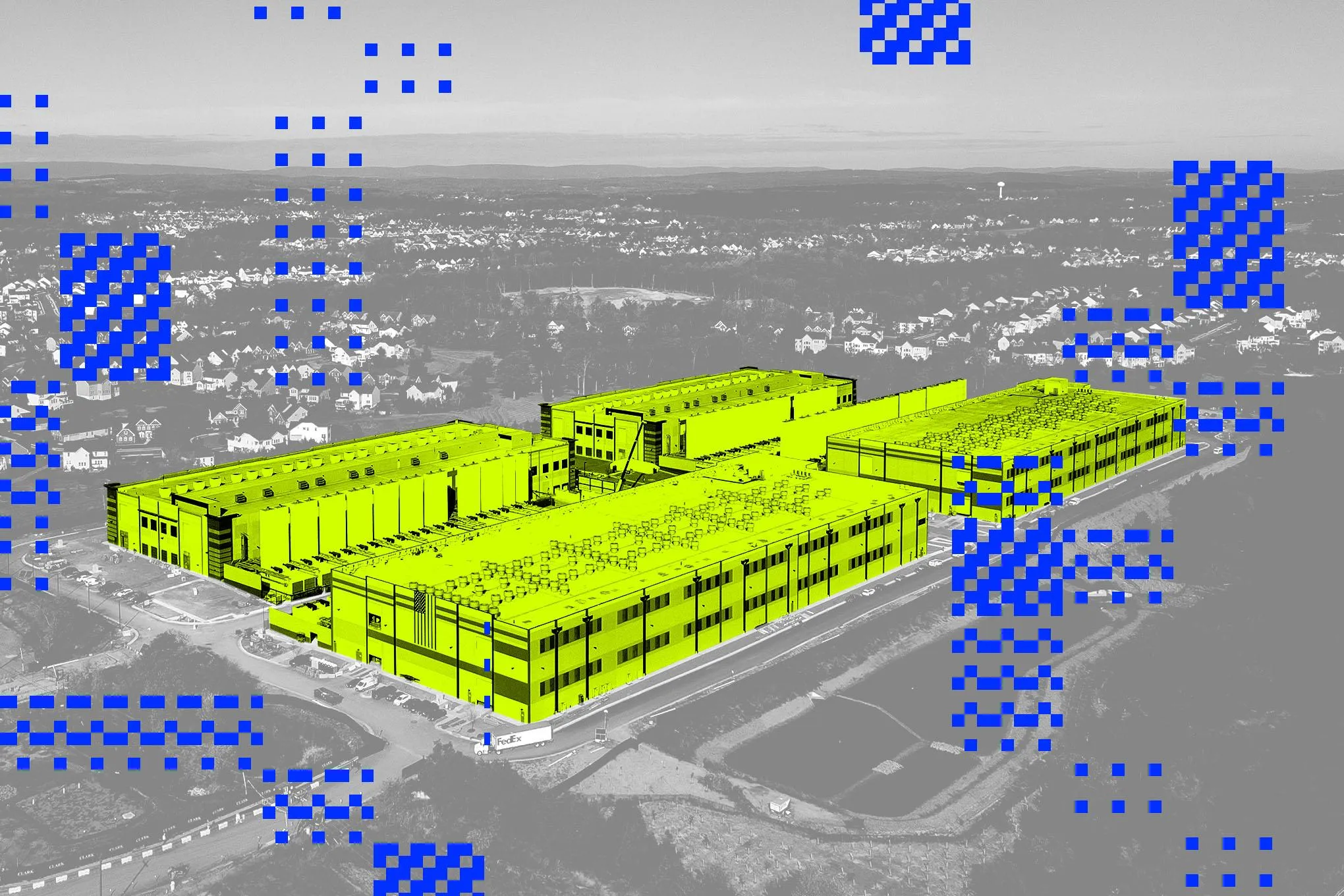
What makes the timing notable is that this disclosure didn’t arrive during a planned sustainability report cycle or ahead of an investor call. It came right after Seattle passed a one-year moratorium on new data center construction — a moratorium that Amazon’s own employees reportedly advocated for. Whether Amazon was getting ahead of a regulatory story or genuinely felt the moment demanded transparency, the effect is the same: we now have a number to work with. Amazon data center water use is no longer an estimate — it’s a disclosed figure companies and regulators can hold the company to.
The Efficiency Claim — and Its Convenient Comparisons
Amazon didn’t just drop a raw figure and walk away. The company also positioned itself as an industry leader on efficiency, claiming its data centers are seven times more water-efficient than the industry average. That figure is anchored to an adjusted number from a peer-reviewed research paper published last year — a methodological choice that will inevitably invite scrutiny, since ‘industry average’ can be defined in ways that flatter the company doing the measuring. Understanding Amazon data center water use in context requires knowing exactly which baseline Amazon is measuring against.
More eyebrow-raising is the comparative chart Amazon included in its report, which stacks its 0.12 liters-per-kWh figure against Microsoft, Google, and Meta. On that chart, Amazon comes out looking cleanest. Google, the report suggests, uses water at a significantly higher rate per unit of electricity. But there’s a catch buried in the details: the Google figures appear to reflect water consumption specifically tied to Gemini AI data centers, not Google’s total global operations. Amazon, by contrast, is reporting across all of its facilities. That’s not a minor asterisk — it’s a fundamental difference in scope that makes the comparison more marketing than analysis.
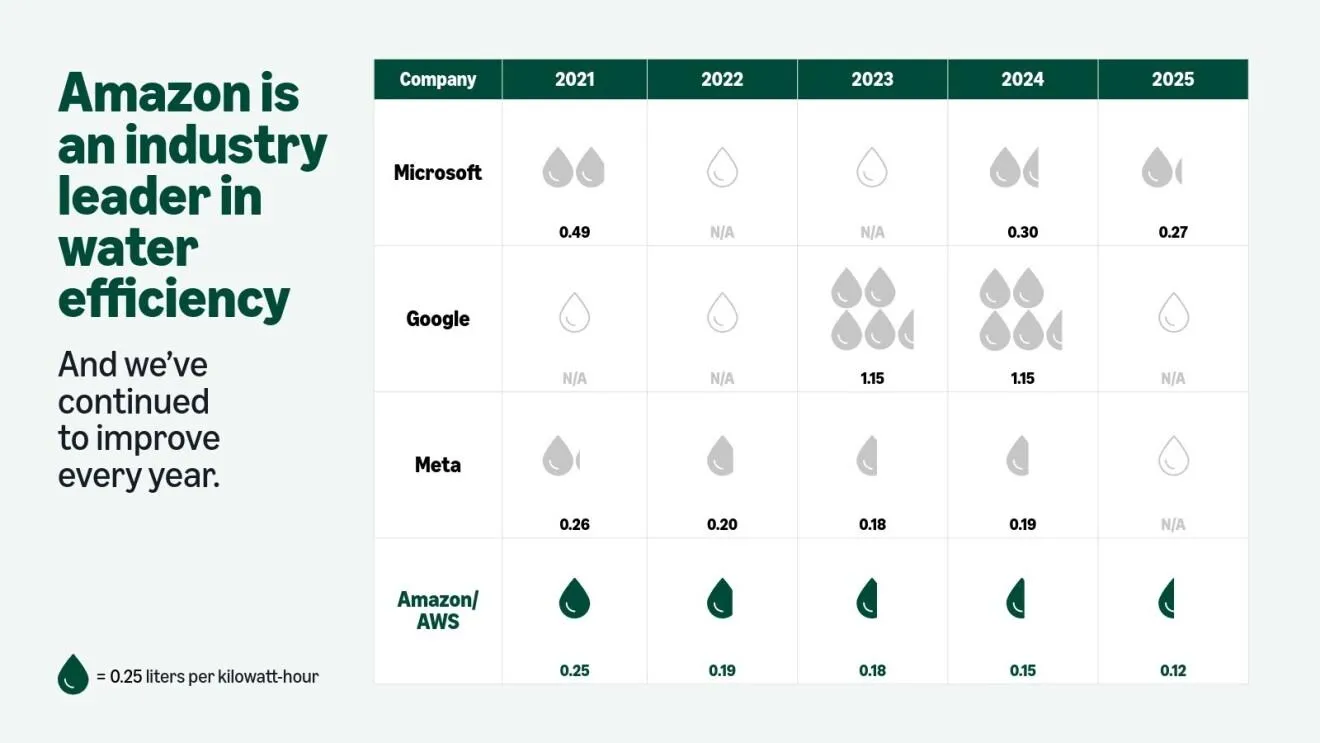
Microsoft and Meta face their own scrutiny here too. Microsoft’s sustainability disclosures have already drawn attention for showing rising water consumption as the company ramps up AI infrastructure. Meta hasn’t been immune to criticism either. The broader point is that all four of these companies are building out data center capacity at a pace that makes efficiency gains difficult to celebrate in isolation — if you’re using water 10% more efficiently but you’ve doubled the number of facilities, the net impact on local water supplies can still be negative.
How Amazon Actually Cools Its Servers
Amazon says that roughly 90% of the time, its data centers rely entirely on air cooling — no water involved. Amazon data center water use kicks in during what Amazon describes as the hottest hours of the hottest days, when evaporative cooling systems take over to prevent servers from throttling or failing under extreme heat. The company has also been raising the temperature thresholds its servers can tolerate, which reduces how often water-based cooling is needed in the first place.
This approach isn’t unique to Amazon. Google, Microsoft, and Meta all use variations of hybrid cooling strategies, balancing energy efficiency against water efficiency depending on local climate conditions. Data centers in cooler climates — Scandinavia, the Pacific Northwest, parts of Ireland — can lean more heavily on outside air, while facilities in Phoenix or Singapore face a much harder trade-off. Amazon’s global average figure of 0.12 liters per kWh will naturally reflect that mix of locations.
What the Numbers Don’t Tell You
Here’s where Amazon data center water use disclosure gets uncomfortable. The 2.5 billion gallon figure covers only direct operational water use inside the data centers themselves. It doesn’t include the water consumed by the power plants generating the electricity those facilities run on — and that’s not a rounding error. Thermal power plants, including the natural gas plants that still supply a meaningful portion of the US grid, use significant quantities of water for cooling. When you’re running data centers at the scale Amazon operates, indirect water consumption through the electricity supply chain can rival or exceed direct usage.
Construction is the other missing variable. Building a new data center — concrete, steel, HVAC systems, cooling towers — consumes water. As Amazon continues its aggressive expansion to support AWS and its AI ambitions, new facilities are coming online constantly. None of that construction-phase consumption appears in the 2.5 billion gallon figure. Critics tracking Amazon data center water use over time will need to account for this gap to understand the true resource footprint.

This isn’t unique to Amazon — most corporate sustainability disclosures have similar gaps. But it does mean that ‘we used 2% less water than last year’ needs to be read with appropriate skepticism. The trend is positive, but the complete picture is murkier than the headline number suggests.
The Seattle Moratorium and the Bigger Pressure Building on Big Tech
Seattle’s one-year pause on new data center construction is a small but symbolically significant moment. The fact that Amazon employees themselves pushed for it signals something shifting inside these companies — or at least among portions of their workforces who live near the infrastructure they’re building. Water rights and usage are increasingly contentious in the American West, and communities near large data center campuses in states like Virginia, Arizona, and Nevada have been vocal about the strain on local resources.
The AI build-out is turbocharging all of this. Training and running large language models is computationally intensive in a way that older cloud workloads simply weren’t. More compute means more heat, more cooling, more water. Amazon data center water use will almost certainly face upward pressure as the company expands its AI infrastructure — Amazon, Microsoft, Google, and Meta are all spending tens of billions of dollars on that expansion, and it doesn’t happen in a vacuum. It lands in specific places, draws on specific water sources, and has real consequences for the communities around those facilities.
Amazon’s disclosure, even with its limitations, is a step toward the kind of accountability the industry needs. But a single annual figure — especially one that excludes power plant water and construction — isn’t enough to settle the question of whether Big Tech’s AI ambitions are compatible with responsible resource stewardship. Regulators in the EU are already moving toward mandatory reporting requirements for data center environmental impact. If Amazon and its peers don’t get ahead of that trend with genuinely complete disclosures, the transparency they’re choosing today may soon be the minimum the law requires. A fuller accounting of Amazon data center water use — one that captures indirect and construction-phase consumption — is the standard the industry will eventually need to meet.
Frequently Asked Questions
How does Amazon data center water use compare to Google and Microsoft?
Amazon reports using 0.12 liters of water per kilowatt-hour of electricity. Its own data suggests Google, Microsoft, and Meta all use more water per kWh — though Google’s figures cited appear to be specific to Gemini AI data centers, not total operations, making a direct comparison tricky.
Why do data centers use so much water?
Data centers generate enormous heat. Most cool their servers using air, but during the hottest periods many switch to evaporative cooling, which uses water to lower temperatures efficiently. Amazon says it relies on water cooling only during the hottest hours of the hottest days.
Does Amazon’s water figure include power plant water usage?
No. Amazon’s 2.5 billion gallon figure covers direct data center operations only. It doesn’t account for the water consumed by the power plants generating the electricity those facilities run on, nor water used during new data center construction.
What triggered Amazon to release this water data now?
The disclosure came shortly after Seattle passed a one-year moratorium on new data center construction — a move that Amazon’s own employees reportedly helped push for. The timing strongly suggests external pressure played a role in the company’s rare transparency on water consumption.