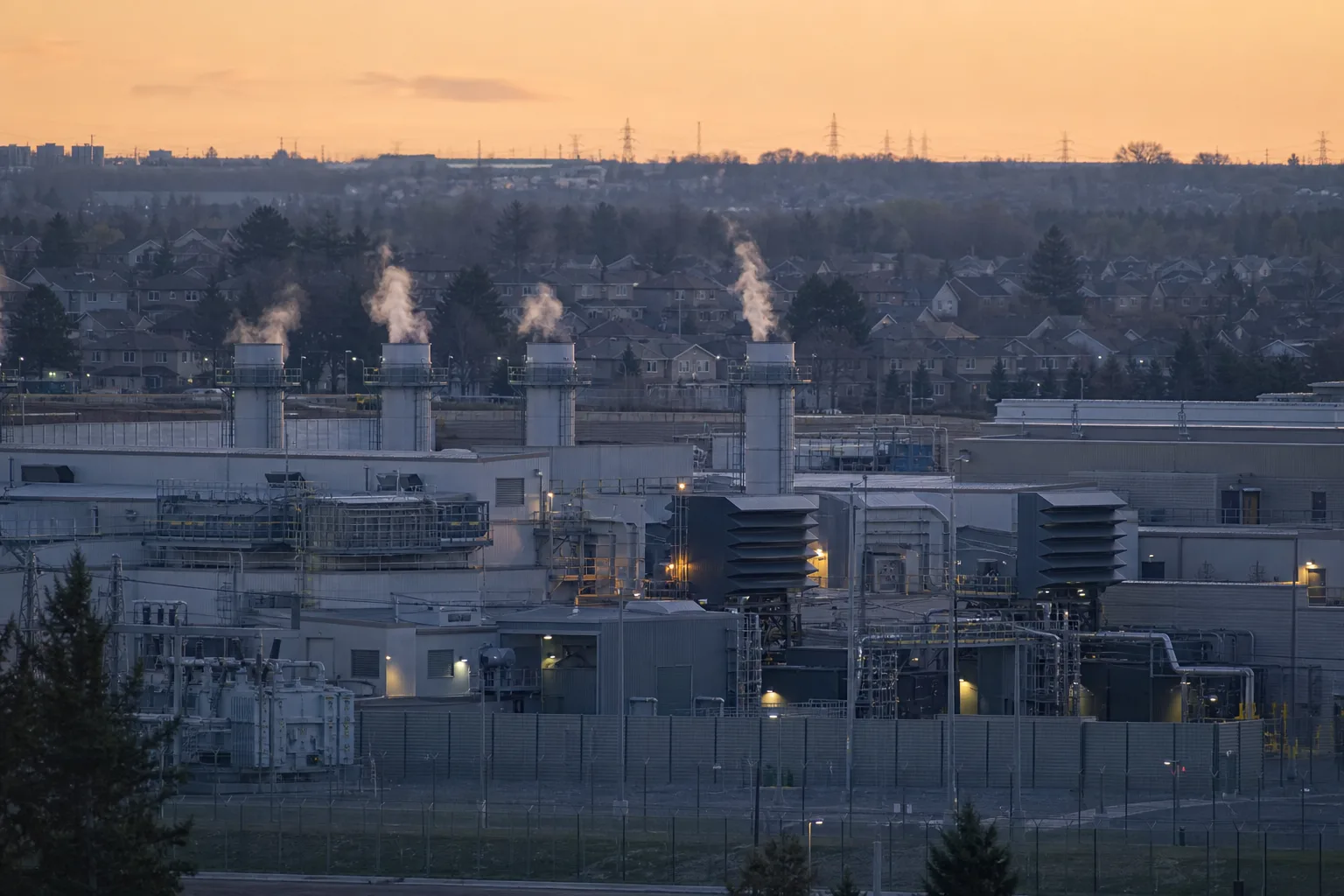
- xAI data center pollution from unpermitted gas turbines is hitting Memphis’s Boxtown — already one of America’s highest-asthma communities.
- xAI data center pollution studies show PM2.5 levels above EPA limits at multiple community air monitors between November 2025 and March 2026.
- SpaceX is targeting a $1.75 trillion IPO valuation even as lawsuits pile up over its AI campuses in Tennessee and Mississippi.
- Shelby County may net $28 million in property taxes from xAI this year, but residents say that barely scratches the surface of health costs.
Table of Contents
A Trillion-Dollar Moment Built on Someone Else’s Backyard
SpaceX is heading into a public offering targeting a valuation above $1.75 trillion — a number so large it dwarfs most sovereign wealth funds. Elon Musk, already the world’s wealthiest person, is set to become significantly richer. But while Wall Street prices in the upside, another calculation is being made entirely in Memphis, Tennessee, and Southaven, Mississippi, where xAI data center pollution is the defining reality for tens of thousands of residents who never got a vote on any of this.
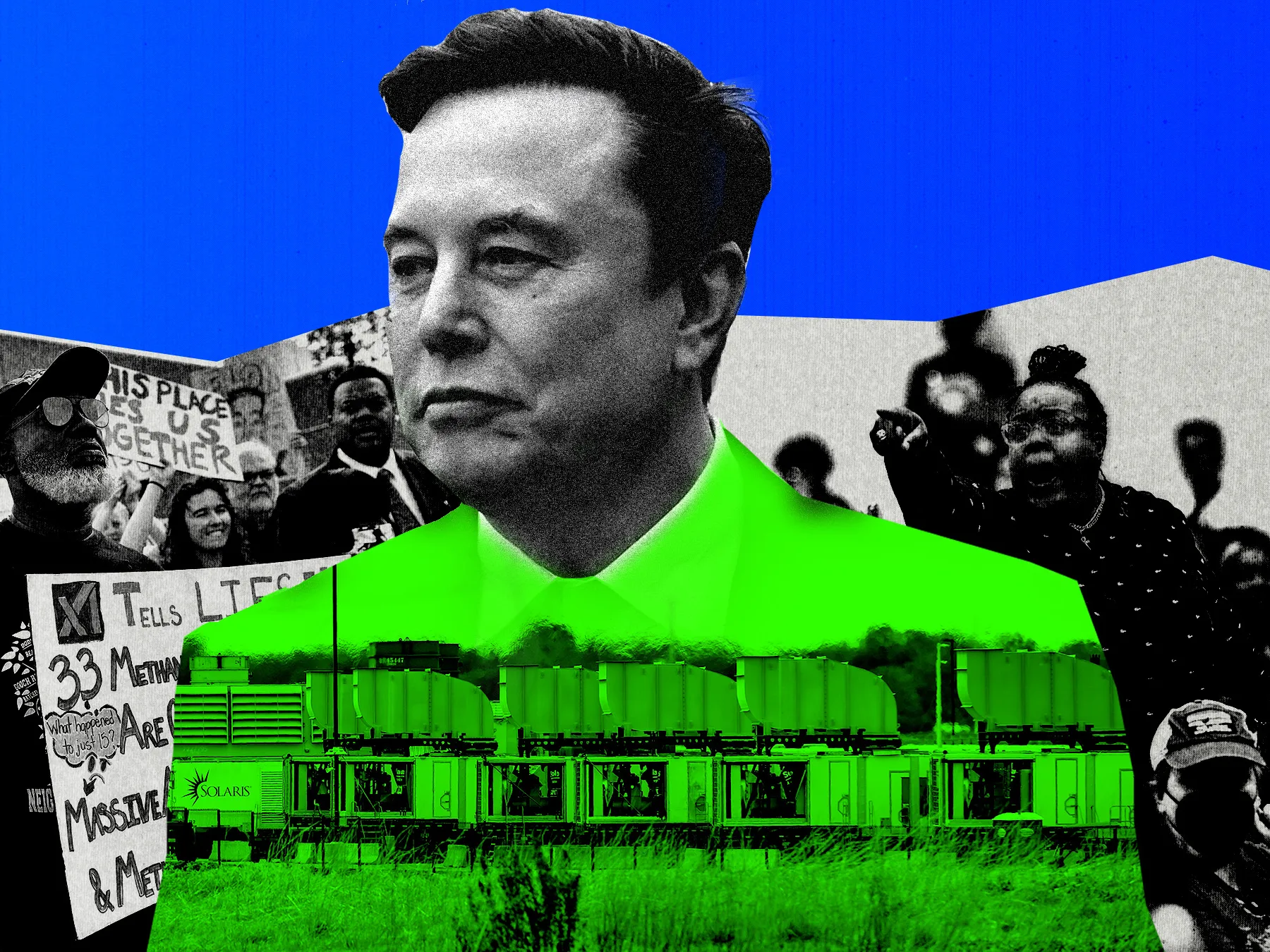
xAI’s Colossus 1 campus, the first of what Musk envisions as a global network of AI supercomputing facilities, sits in Boxtown — a historically Black neighbourhood in south Memphis that already carries one of the heaviest environmental burdens in the country. Legacy industrial activity has given the area some of the highest asthma rates in the United States. Then xAI arrived, and brought its gas turbines with it. The resulting xAI data center pollution has compounded an already dire public health situation for residents who had little say in the matter.
‘All of us who have family in South Memphis, we know somebody who has died as a result of a bronchial ailment, or a random cancer that has no place in our family tree,’ says Richard Massey, a community organiser in Memphis. That’s not hyperbole from a protest placard. That’s lived experience in a neighbourhood that has spent decades absorbing the externalities of industries that locate there precisely because the political resistance tends to be lowest.
The Turbine Problem That Won’t Go Away
The xAI data center pollution story first broke into national consciousness in 2024, when Boxtown residents discovered that the company had been running what appeared to be as many as 35 natural gas turbines on site — without any air permits. The legal mechanism that made this possible was a loophole in the Clean Air Act that allows companies to operate below permit thresholds for up to a year. Regulators eventually confirmed xAI had used it, and last year granted the company a permit to run 15 turbines at Colossus 1 through 2027.
Natural gas turbines produce fine particulate matter known as PM2.5 — particles small enough to penetrate deep into lung tissue and enter the bloodstream. The health links are well-established: PM2.5 exposure is associated with heart attacks, elevated blood pressure, respiratory disease, and premature death, particularly in people with pre-existing conditions. Crucially, health researchers have found that PM2.5 can cause harm at concentrations below the thresholds regulators consider actionable. xAI data center pollution is therefore a concern not just when readings breach official limits, but in the chronic low-level exposure that occurs well beneath them.
The EPA issued guidance in January that appeared to close the loophole xAI had used in Memphis. But the company had already moved on. By mid-May, at least 46 unpermitted gas turbines had been brought onto the Colossus 2 site in Southaven, Mississippi, according to emails xAI sent to state regulators. The pattern is strikingly similar to what played out in Boxtown — a company operating at scale first, seeking regulatory approval second, and leaving communities to absorb the consequences in the gap between the two. Critics argue that xAI data center pollution has effectively become a predictable feature of the company’s expansion model, not an accident.
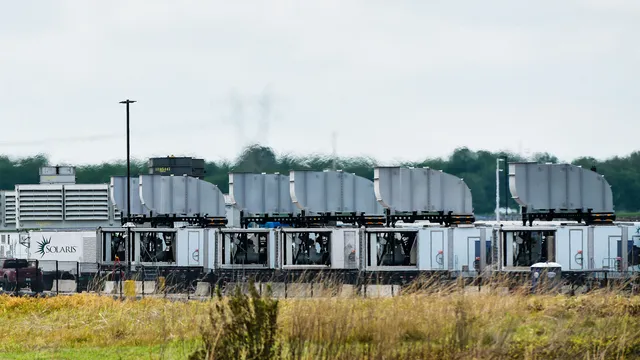
The legal response has been significant. A coalition of environmental justice organisations led by the NAACP filed suit earlier this year, alleging that xAI installed gas turbines ‘without an air permit or regard for the health and safety of people living nearby.’ A separate class-action lawsuit was filed this week by Southaven residents against both xAI and SpaceX, citing construction disruption to the community. These aren’t fringe complaints. They’re formal legal claims that will follow SpaceX into its public markets debut.
xAI Data Center Pollution and the Air Quality Numbers
Hard data is now starting to catch up with the community’s concerns. A survey released this week by two nonprofits, drawing on community-run air monitors at three sites across southwest Memphis, found that PM2.5 concentrations were consistently above EPA limits between November 2025 and March 2026. That’s five months of readings at multiple locations — not a one-off spike, but a sustained pattern that documents xAI data center pollution in granular, measurable terms.
A separate analysis produced for the NAACP lawsuit modelled what would happen if the 41 turbines listed on xAI’s Colossus 2 permit application ran continuously. The estimated health-related damage: up to $44 million per year. To put that in context, officials have estimated Shelby County could net up to $28 million in property taxes from xAI’s Tennessee campus this year — a meaningful injection for a county that collected just over $800 million in total property taxes in 2024. The tax windfall and the health cost are operating on almost the same order of magnitude.
State representative Justin Pearson, who represents parts of Memphis in the Tennessee House, has been the most direct voice on what this looks like from the community’s perspective. ‘We’re the extracted and exploited colony of what is going to be one of the most highly valued entities in the world,’ he said. ‘People are going to die because of this pollution.’ That framing — colony — is deliberate. It’s an argument about power asymmetry: a $1.75 trillion company extracting value from a neighbourhood that has no realistic mechanism to say no. For Pearson and many residents, xAI data center pollution is inseparable from that broader story of who holds power and who absorbs the costs.
The Anthropic Connection and the $15 Billion Question
One detail that hasn’t received enough attention: Anthropic is paying xAI $15 billion per year for compute access at the Memphis campuses. Anthropic, itself preparing for what’s expected to be a major IPO in the coming months, declined to comment on the community health concerns. Its head of public policy and Memphis’s mayor have both pointed to the company’s engagement with the city as evidence of good faith — but ‘engagement’ and accountability are different things.
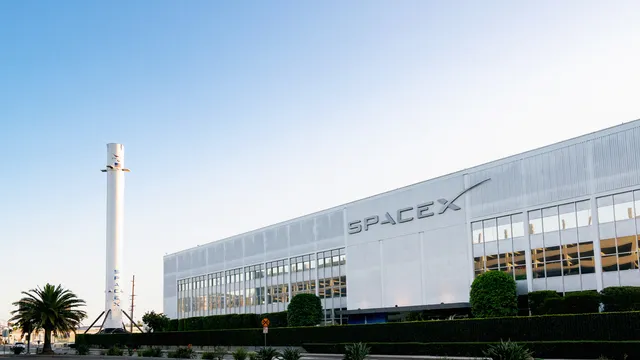
This is a reminder that xAI data center pollution isn’t just a SpaceX problem. The entire frontier AI ecosystem — the companies training models, the companies buying compute, the investors funding both — is connected to what’s happening in Boxtown and Southaven. When Anthropic’s models get smarter, some fraction of that compute ran on turbines that were pumping PM2.5 into a neighbourhood that already has some of the worst air quality in Tennessee. That’s a supply chain issue the AI industry hasn’t seriously reckoned with. Every company purchasing compute from these facilities has an indirect stake in the xAI data center pollution question, whether they acknowledge it or not.
Tax Revenue vs. Health Costs: The Numbers Tell a Grim Story
Memphis’s city council did pass a measure requiring that 25 percent of xAI’s tax revenue be directed toward projects benefiting the neighbourhoods hosting its data centres. Residents are currently debating a $3 million allocation for 2025 — a list that includes home repair funding and an environmental monitoring dashboard. Both are genuinely useful things. Neither is transformative.
Here’s the number that puts it in perspective: $3 million is approximately 0.001 percent of the $250 billion valuation at which xAI was folded into SpaceX ahead of the IPO. The community is being asked to feel grateful for a rounding error. And that’s before accounting for the water situation.
Colossus 1 alone can require more than 5 million gallons of water per day to cool its servers at peak load. When xAI set up in Memphis, the company committed to building a water reuse facility to protect the aquifer. Ground was broken in October. Construction stopped abruptly in mid-April — just months before the IPO. Musk acknowledged the pause on X, saying the priority was stabilising Colossus 2 first, with the recycling plant to follow. Advocates were given no timeline, no updated plan, no binding commitment. Residents note that the paused water commitment sits alongside unresolved xAI data center pollution concerns as evidence of a broader pattern of promises made and deferred.
What the IPO Doesn’t Price In
Wall Street is very good at pricing earnings potential. It’s considerably less practiced at pricing in the cost of unpermitted turbines, respiratory illness in low-income communities, or the long-term reputational and legal exposure that comes from being sued by the NAACP before your company goes public. The ongoing litigation over xAI data center pollution represents exactly the kind of liability that rarely makes it into an S-1 with the prominence it deserves.
President Trump has floated the idea of the US government taking a financial stake in frontier AI companies as a way to ‘give back’ to the American public. The shape of that proposal remains unclear, and it may never materialise. But the fact that it’s being discussed at all points to a growing recognition that the benefits of the AI boom are concentrating very rapidly, while the costs are distributing outward — to places like Boxtown, to communities that were already carrying more than their share.
The SpaceX IPO will almost certainly succeed. The demand will be there. The numbers will impress. But the story of how xAI built its compute empire — the turbines, the permits, the paused water treatment plant, the air quality readings that kept coming in above safe limits month after month — is part of that story too, whether the prospectus mentions it or not. xAI data center pollution will remain a live issue long after the IPO closes and the share price settles. As AI infrastructure scales globally over the next decade, the question of who pays the real cost of that infrastructure is only going to get harder to ignore.
Frequently Asked Questions
What is xAI data center pollution doing to communities near Memphis?
Natural gas turbines at xAI’s Colossus 1 campus emit fine particulate matter (PM2.5), linked to heart attacks, high blood pressure, and premature death. Community air monitors recorded PM2.5 levels above EPA limits between November 2025 and March of this year across three sites in southwest Memphis.
How many gas turbines is xAI running without permits?
As of mid-May, xAI had brought at least 46 unpermitted gas turbines to its Colossus 2 site in Southaven, Mississippi, according to emails the company sent to regulators. xAI previously ran turbines at its Memphis campus under a Clean Air Act loophole before regulators closed it.
What is the SpaceX IPO valuation and how does it relate to xAI?
SpaceX is targeting a valuation above $1.75 trillion in its public offering. It acquired xAI in a deal that valued the AI company at $250 billion earlier this year, folding Musk’s AI venture — and its controversial data center operations — into the broader SpaceX entity ahead of the listing.
Is Anthropic connected to xAI’s Memphis data centers?
Yes. Anthropic is paying xAI $15 billion per year for compute access at its Memphis campuses. Anthropic declined to comment on the community health concerns, though its head of public policy and Memphis’s mayor have both praised the company’s engagement with the city.
What is happening with xAI’s water recycling plant in Memphis?
xAI broke ground on a water reuse facility in October to manage the more than 5 million gallons per day the Colossus 1 campus can require for cooling at peak times. Construction stopped abruptly in mid-April. Musk said in a tweet that finishing Colossus 2 takes priority and the recycling plant will follow.