The SpaceX acquisition of Mesh Optical Technologies has cleared its first major regulatory hurdle, with the Federal Trade Commission completing an expedited antitrust review of the potential deal. Bloomberg first surfaced the news through an FTC filing, and it tells you a lot about how seriously Elon Musk is taking SpaceX’s pivot from a rocket company into a full-stack compute provider.
Table of Contents
Who Built Mesh Optical — and Why That Matters
Mesh Optical Technologies isn’t some random hardware startup that caught Musk’s eye. It was founded last year by Travis Brashears, Cameron Ramos, and Serena Grown-Haeberli — three engineers who spent years at SpaceX building the optical inter-satellite links that keep Starlink’s constellation of thousands of satellites talking to each other at high speed across the vacuum of space. That’s genuinely hard engineering. Designing laser communication systems that stay locked on a target moving at orbital velocity, across thousands of kilometres, is a different discipline from most networking work done on the ground.
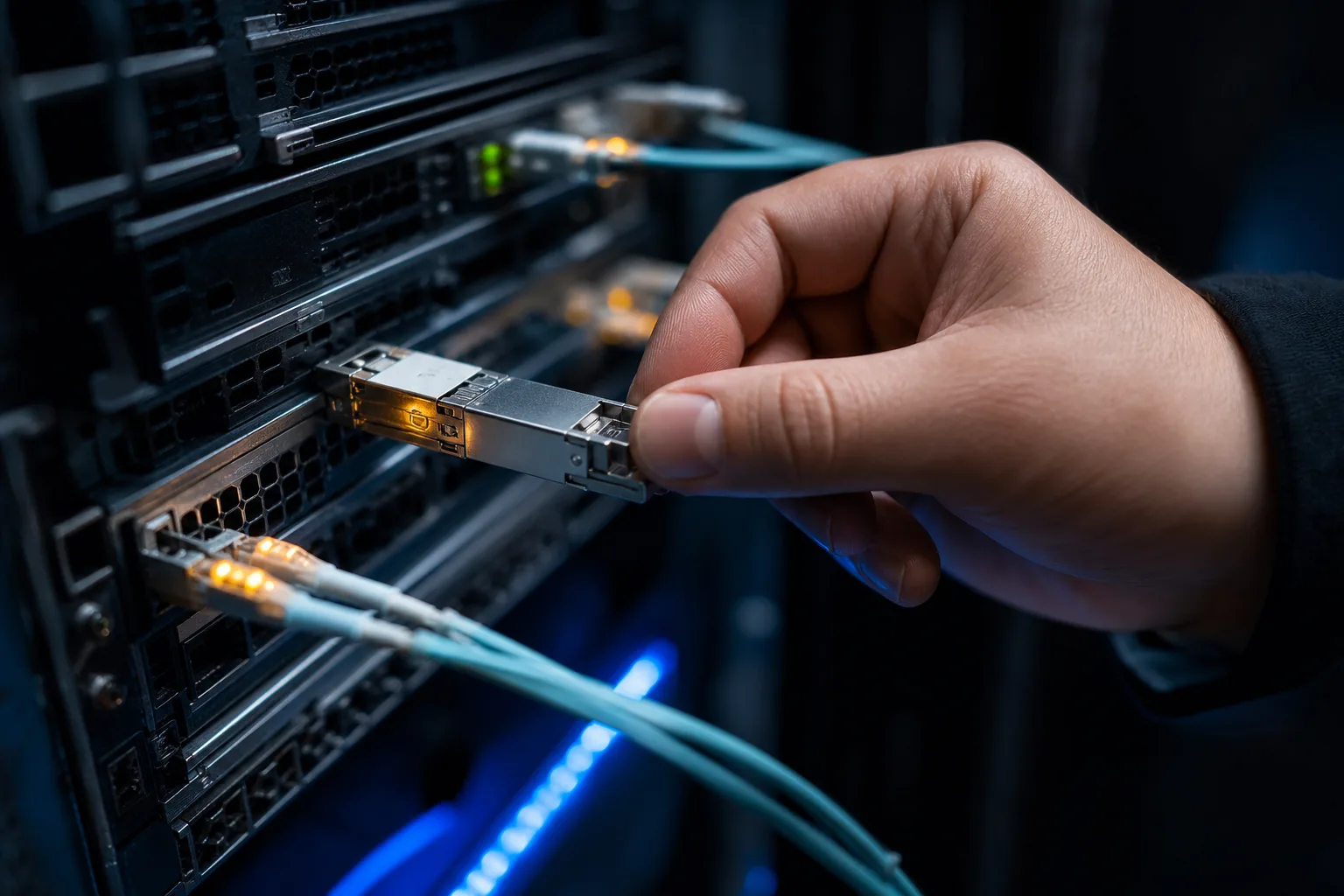
The trio saw a commercial opening when they left SpaceX: the same physics that makes optical links ideal in space — no interference, no resistance, enormous bandwidth — also makes them attractive inside a data center. Traditional copper-based electrical interconnects have served the industry well, but as AI workloads push GPU clusters to consume ever-greater bandwidth between nodes, the limitations of electrical signalling are becoming an increasingly visible bottleneck. Optical transceivers, which encode data as pulses of light rather than electrical signals, offer lower latency and meaningfully better energy efficiency. For a sector that’s currently consuming electricity at a rate that’s alarming grid operators globally, the efficiency angle alone is worth paying attention to.
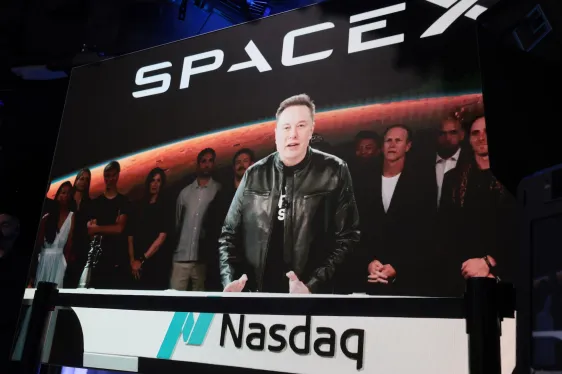
Mesh Optical came out of stealth in February, announcing a $50 million Series A led by Thrive Capital. That’s a notable backer — Thrive has a strong track record picking infrastructure-layer bets — and the round validated that serious money was already betting on the founders’ ability to translate their satellite networking expertise into terrestrial hardware. Within months of going public, the company is apparently already in acquisition talks with its founders’ former employer. The SpaceX acquisition of Mesh Optical would mark a swift homecoming for a team that left to prove an idea, and largely succeeded.
SpaceX Acquisition of Mesh: The Strategic Logic
To understand why the SpaceX acquisition of Mesh makes sense right now, you need to look at what SpaceX has been doing on the compute side. The company — which is newly public — has quietly been signing compute capacity agreements with some of the biggest names in AI. Anthropic, Google, and open-source AI developer Reflection AI have all reached agreements with SpaceX to use capacity at its data centers. That’s not a coincidence or a side project. Selling compute to AI labs is a serious revenue stream, and one that puts SpaceX in direct competition with AWS, Microsoft Azure, and Google Cloud — all of which have been pouring billions into their own infrastructure.
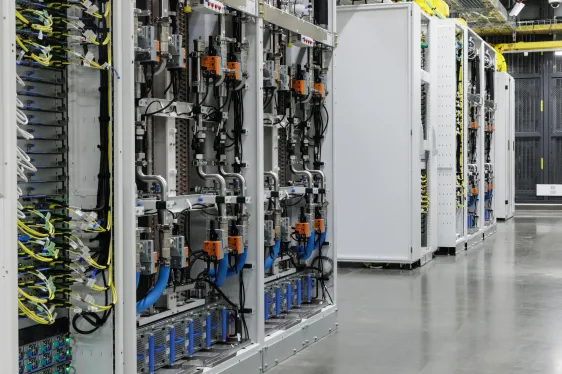
Competing at that level means you can’t afford to be running data centers on second-rate interconnect hardware. The hyperscalers have all been investing heavily in custom silicon and next-generation networking — Google has its own TPUs and custom network ASICs, Microsoft has been building out its optical networking layer, and Amazon has Trainium and custom Ethernet fabric. If SpaceX wants its compute offering to be credible at scale, it needs to own the hardware stack as deeply as possible. The SpaceX acquisition of Mesh Optical is a direct response to that pressure.
Bringing Mesh Optical in-house would give SpaceX proprietary optical transceiver technology designed by people who already understand how SpaceX builds systems. That institutional alignment matters. There’s no onboarding curve, no IP licensing negotiation, no risk of a key supplier pivoting to a competitor. It’s vertical integration of the kind Musk has repeatedly shown he prefers — Tesla builds its own chips, SpaceX builds its own engines, Starlink builds its own ground terminals. Seen through that lens, the SpaceX acquisition of Mesh Optical is less a surprise than an inevitability.
The FTC’s Fast-Track Review — and What It Signals
The FTC’s decision to expedite its antitrust review is worth pausing on. The agency has the option to conduct an extended “second request” investigation for deals that raise complex competition questions. The fact that it didn’t do that here suggests the commission didn’t see obvious red flags — Mesh Optical is a young, pre-revenue startup with no dominant market position, and the deal doesn’t obviously foreclose competition in an existing market.
That said, the FTC under its current leadership has been more willing than its predecessors to scrutinise tech acquisitions — particularly those where a large incumbent is buying a nascent competitor that might have otherwise grown to challenge it. The fast-track clearance is probably a reflection of Mesh Optical’s early stage rather than any ideological shift in how the agency views Musk’s expanding empire. The SpaceX acquisition of Mesh Optical still has to close on its own terms; regulatory clearance just removes the main external obstacle.
Could This Technology Eventually Go to Space?
Here’s where the story gets genuinely interesting. SpaceX’s long-term ambitions include orbital data centers — computing infrastructure operating in low-Earth orbit, potentially serving latency-sensitive applications that benefit from being closer to the edge of the network, or providing compute capacity that’s simply outside the jurisdiction of any single government. It sounds like science fiction, but SpaceX has already demonstrated that it can build and operate complex hardware in orbit at scale. Starlink is the proof of concept.
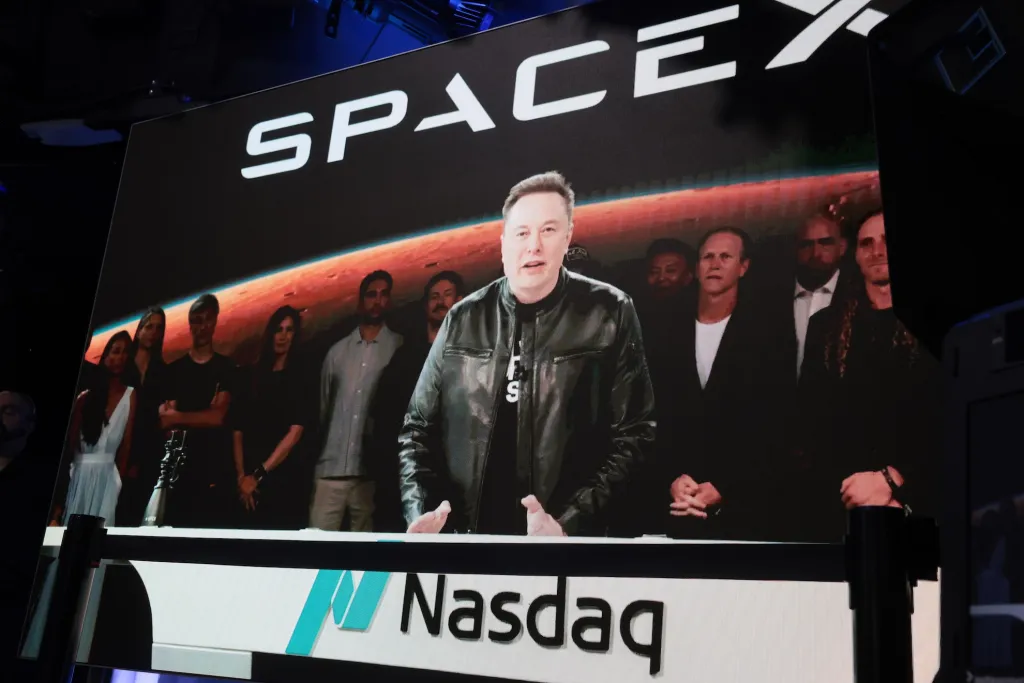
If the SpaceX acquisition of Mesh closes, it would give SpaceX engineers access to optical transceiver designs from a team that already built hardware for use in space. The terrestrial versions would presumably be optimised for data centers, but the underlying expertise in miniaturised, power-efficient optical systems has obvious applications in an orbital environment where every watt and every gram counts. It’s not a stretch to imagine that the SpaceX acquisition of Mesh Optical reshapes that company’s technology roadmap in ways that would never have been possible as an independent startup.
A Recurring Pattern in Musk’s Playbook
What’s notable about this deal is how cleanly it fits a pattern. Musk has a habit of identifying where technology he’s already using in one context could be redeployed commercially in another. Starlink’s laser inter-satellite link technology — developed by the same people now building Mesh Optical — was originally a technical necessity for keeping a megaconstellation synchronised. Now it’s potentially the foundation of a new hardware business that could differentiate SpaceX’s data center offering from every other cloud provider on the market. The SpaceX acquisition of Mesh Optical is that thesis made concrete.
It’s also a reminder that SpaceX’s engineering talent pool is increasingly being treated as a source of startup founders — and that Musk, whether through acquisition or through the pull of the broader xAI/SpaceX/Tesla ecosystem, tends to keep that talent in orbit around his companies. Whether that’s a healthy dynamic for the wider startup ecosystem is a separate question, but for SpaceX’s infrastructure ambitions, it’s proving to be a reliable pipeline.
The data center market is currently in the middle of a capacity arms race driven almost entirely by AI training demand. The companies that control the best hardware — not just the GPUs, but the networking, the cooling, the power distribution — are the ones that will be able to attract the biggest clients. SpaceX is clearly trying to be one of those companies. The SpaceX acquisition of Mesh Optical, if the deal closes, would be a small but precise piece of that larger puzzle.
Frequently Asked Questions
What is the SpaceX acquisition of Mesh Optical about?
The potential acquisition of Mesh Optical Technologies would bring a startup specializing in optical transceivers for data centers under Elon Musk’s control. The deal was revealed in a Federal Trade Commission filing, which confirmed the agency expedited its antitrust review. Mesh Optical emerged from stealth in February with a $50 million Series A led by Thrive Capital.
Who founded Mesh Optical Technologies?
Mesh Optical was co-founded by Travis Brashears, Cameron Ramos, and Serena Grown-Haeberli — three former SpaceX engineers who built the optical communication links that keep Starlink’s satellites interconnected.
Why does SpaceX want optical transceiver technology?
Optical transceivers use light rather than electrical signals to move data, making them faster and more energy-efficient. As SpaceX scales its data center business — with clients including Anthropic and Google — improving the underlying hardware becomes a direct commercial priority.
Does the FTC’s approval mean the deal is finalised?
FTC clearance means the agency has completed its expedited antitrust review and won’t challenge the transaction on competition grounds. It doesn’t confirm the deal is signed or closed — but it removes the main regulatory hurdle for the acquisition to proceed.