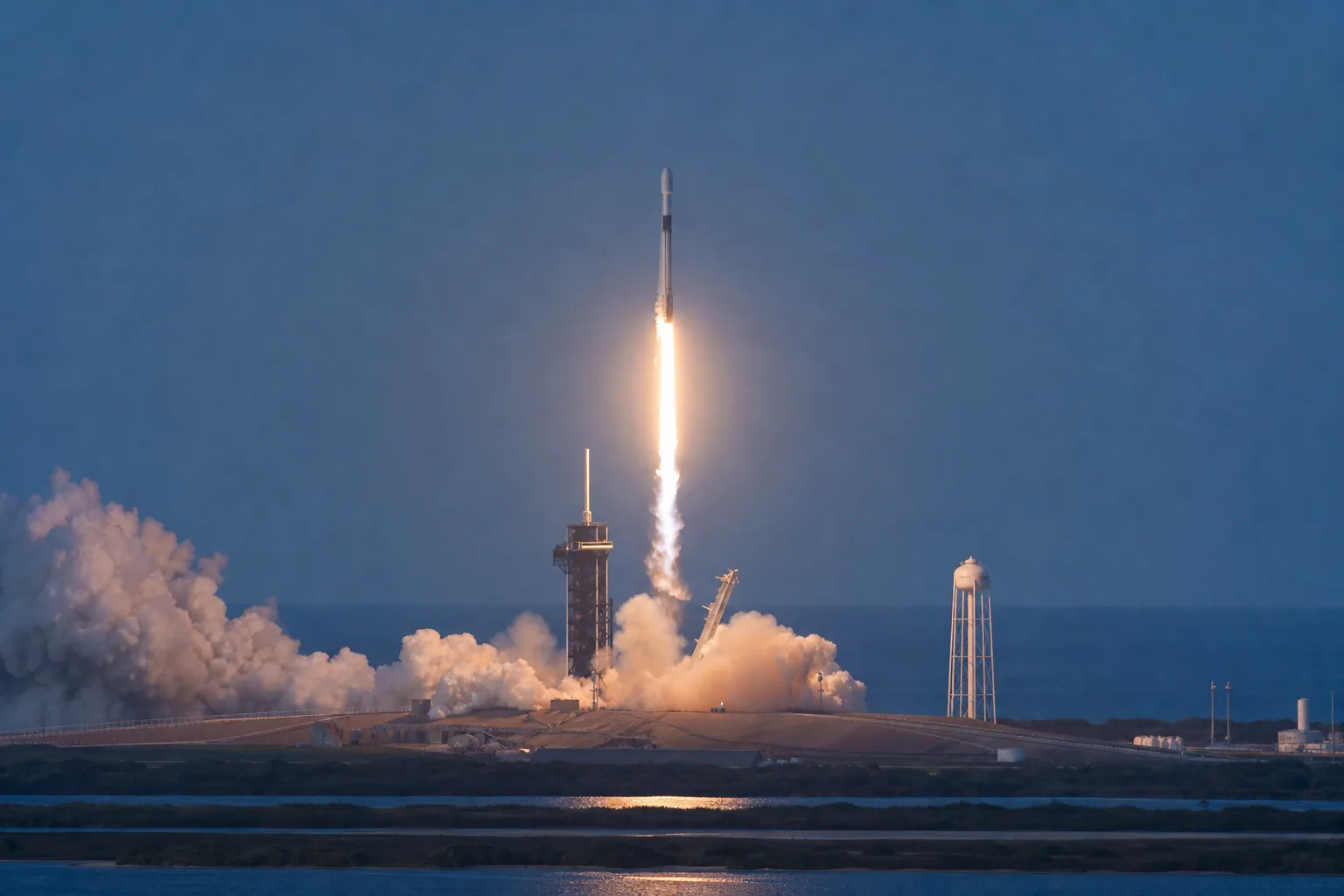
- SpaceX launched 24 new Starlink satellites on June 11, pushing the total constellation past 10,600 in orbit.
- The Starlink satellites were carried by a Falcon 9 booster completing its impressive 34th mission from Vandenberg.
- The launch happened days before SpaceX’s anticipated IPO on the NASDAQ, adding unusual market significance.
- Booster B1071 landed successfully on the droneship ‘Of Course I Still Love You’ in the Pacific Ocean.
Table of Contents
Starlink Satellites Keep Coming — Now Past 10,600 Strong
SpaceX added another 24 Starlink satellites to its ever-growing low Earth orbit constellation on Thursday, June 11, lifting off from Space Launch Complex 4 East at Vandenberg Space Force Base in California at 8:05 a.m. local time. The deployment, confirmed roughly an hour after launch, pushed the total number of Starlink satellites in orbit beyond 10,600 — a figure that would have seemed almost fictional just five years ago. Space historian and tracker Jonathan McDowell confirmed the updated count, as he reliably does after every SpaceX batch deployment.
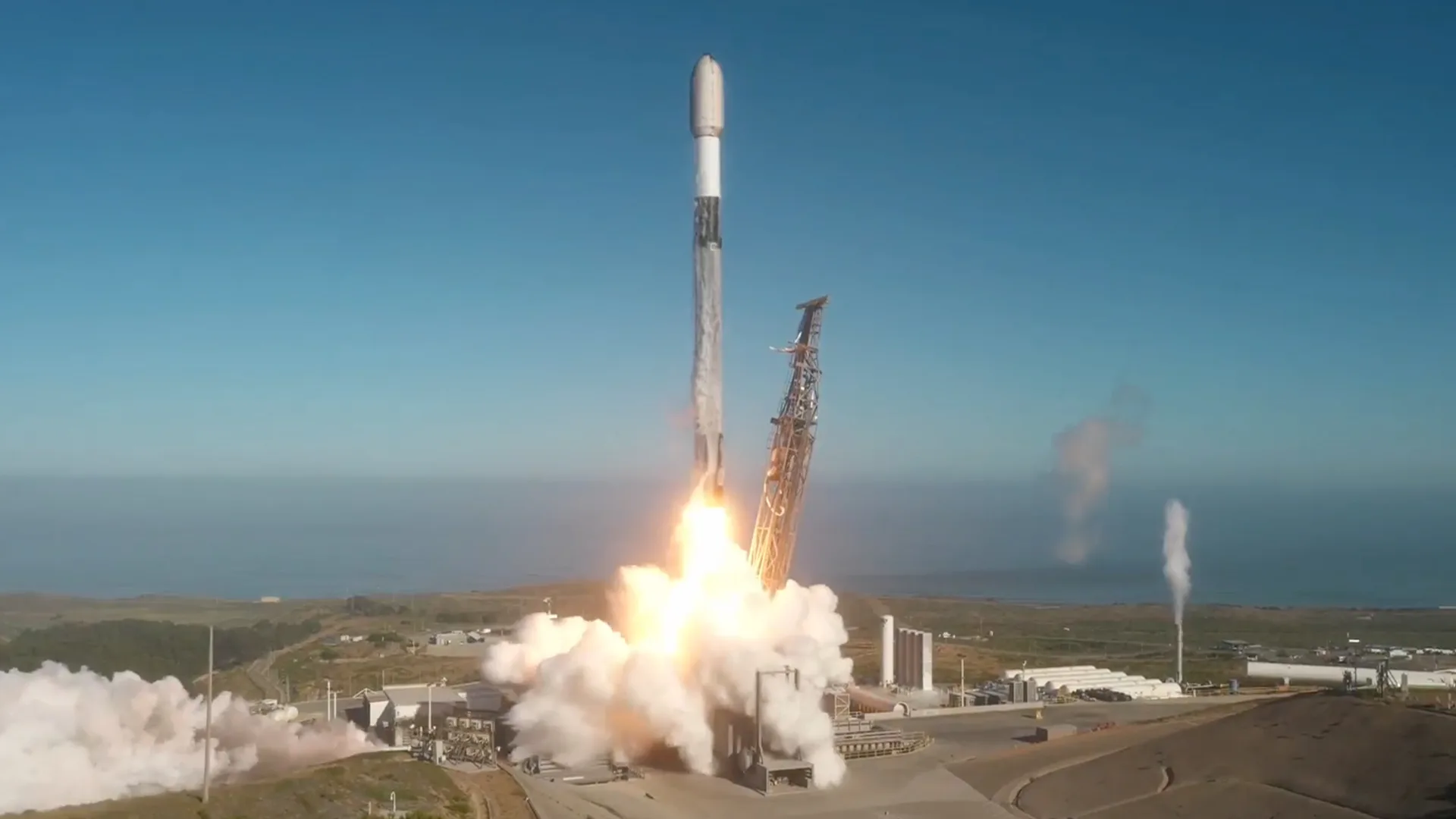
This was the Group 17-44 batch — a designation that, to most people, blurs into the background noise of SpaceX’s relentless launch cadence. But the sheer scale of what that number represents is worth pausing on. Ten thousand six hundred satellites. For context, the entire history of human spaceflight produced fewer than 15,000 orbital launches total over six-plus decades. SpaceX has placed more than 10,000 functional internet relays into orbit in roughly six years. The pace is staggering, and it shows no signs of slowing.
A Booster With a Lot of Frequent Flyer Miles
The workhorse behind Thursday’s mission was Falcon 9 first-stage booster B1071, which notched its 34th flight — a number that, not long ago, would have seemed like science fiction for a rocket component. After separating from the upper stage, B1071 made a controlled descent and touched down squarely on the autonomous droneship ‘Of Course I Still Love You,’ positioned in the Pacific Ocean ahead of the mission. Clean recovery. Almost routine, at this point.
What makes B1071’s count particularly interesting right now is its proximity to the all-time reuse record. Booster 1067 set that mark just three days earlier, on June 8, completing its own record-breaking mission. B1071 is now one flight behind. Whether SpaceX treats that as a milestone to trumpet or just another line in the mission manifest is an open question — the company has a habit of letting its hardware speak for itself. Either way, the reusability story here is remarkable. A rocket booster completing 34 orbital missions is the kind of engineering achievement that still deserves more attention than it typically gets.
The IPO Shadow Over Every Launch This Week
You can’t look at this launch in isolation this week. SpaceX’s long-anticipated IPO on the NASDAQ was looming over every piece of company news, and that includes 67th Falcon 9 flights carrying batches of Starlink satellites from the California coast. The timing matters because Starlink is, arguably, the most commercially significant part of the SpaceX business — the division most likely to drive investor valuation conversations once the company is publicly traded.
Every Starlink launch between now and the IPO is, in a very real sense, a live demonstration of the product that investors are being asked to believe in. The June 11 mission could have been the final SpaceX launch before going public, but another Starlink deployment was already scheduled for Friday morning in Florida — notably, before markets open. Whether that timing was deliberate or coincidental is hard to say, but the optics are clean: SpaceX heading into its IPO week with back-to-back successful launches and a constellation that just crossed a fresh milestone.
The IPO has been one of the most closely watched potential market events in the tech and space sectors for years. SpaceX has stayed private longer than almost any comparable company at its scale, and founder Elon Musk has historically been ambivalent — at best — about the obligations that come with public markets. The eventual NASDAQ listing represents a significant shift, not just for SpaceX as a business, but for how the broader market will value the commercial space sector going forward.
67 Launches and Counting — The Cadence Is the Product
Thursday’s flight was SpaceX’s 67th Falcon 9 launch of 2025, and the 660th completed mission in the company’s history since its first launch in 2008. At 67 launches through roughly the first half of the year, SpaceX is on pace to comfortably exceed its previous annual records. The company has been quietly redefining what ‘high launch cadence’ means for the entire industry.
For comparison, the entire global launch industry — every country, every company combined — averaged fewer than 100 orbital launches per year through most of the 2010s. SpaceX is now approaching that number alone, in a single year, with a single rocket family. That’s not a boast; it’s an operational reality that competitors and regulators alike are having to reckon with.
The Vandenberg launch was the latest in a drumbeat that rarely stops. SpaceX typically runs Starlink missions from both the East and West coasts, using different orbital inclinations to fill coverage gaps in the constellation. The Group 17-44 designation points to a specific shell in the Starlink architecture — the kind of orbital slot management that requires both hardware reliability and a launch schedule that functions more like a commercial airline than a traditional space program.
What 10,600 Starlink Satellites Actually Means for Broadband
The 10,600-satellite figure isn’t just a vanity metric. The size and density of the Starlink constellation directly affects the quality of service SpaceX can deliver — latency, speeds, and geographic coverage all improve as more satellites fill the orbital shells above Earth. The company has been progressively rolling out its Gen 2 satellites alongside the original design, with the larger, more capable hardware offering higher throughput per unit.
Starlink now serves customers across more than 100 countries, competing directly with traditional ISPs in rural areas and positioning itself as the default connectivity option for maritime, aviation, and remote industrial use cases. The recent deals with airlines and the growing presence in disaster-response scenarios — most visibly in conflict zones and hurricane-struck regions — have turned Starlink into something bigger than a broadband alternative. It’s becoming infrastructure.
That infrastructural role is exactly what makes the IPO narrative so compelling to prospective investors. SpaceX isn’t just selling internet access; it’s selling the pipes that the next generation of global connectivity runs through. Whether the market will price that vision accurately — or overcorrect into speculative excess — is the real question hanging over this week’s NASDAQ debut. If the launch cadence of the past six months is any guide, SpaceX will keep sending up Starlink satellites regardless of what the stock does on opening day.
Frequently Asked Questions
How many Starlink satellites are currently in orbit?
As of mid-June 2025, there are more than 10,600 Starlink satellites in low Earth orbit, according to space tracker Jonathan McDowell. SpaceX routinely launches batches of satellites to continuously expand and refresh the constellation.
When is the SpaceX IPO and where will it trade?
SpaceX is targeting a listing on the NASDAQ stock market. The Vandenberg launch on June 11 took place the same week as the highly anticipated IPO, making it one of the final orbital missions before the company goes public.
How many times has SpaceX reused a Falcon 9 booster?
The current reuse record belongs to Booster 1067, which completed its record-setting mission on June 8. Booster B1071 is one flight behind that mark after completing its 34th mission on the June 11 Starlink launch.
What is the ‘Of Course I Still Love You’ droneship?
It’s one of SpaceX’s autonomous drone ships stationed in the ocean to catch returning Falcon 9 first-stage boosters. The ship was prestaged in the Pacific Ocean and recovered Booster B1071 following the June 11 Starlink launch.