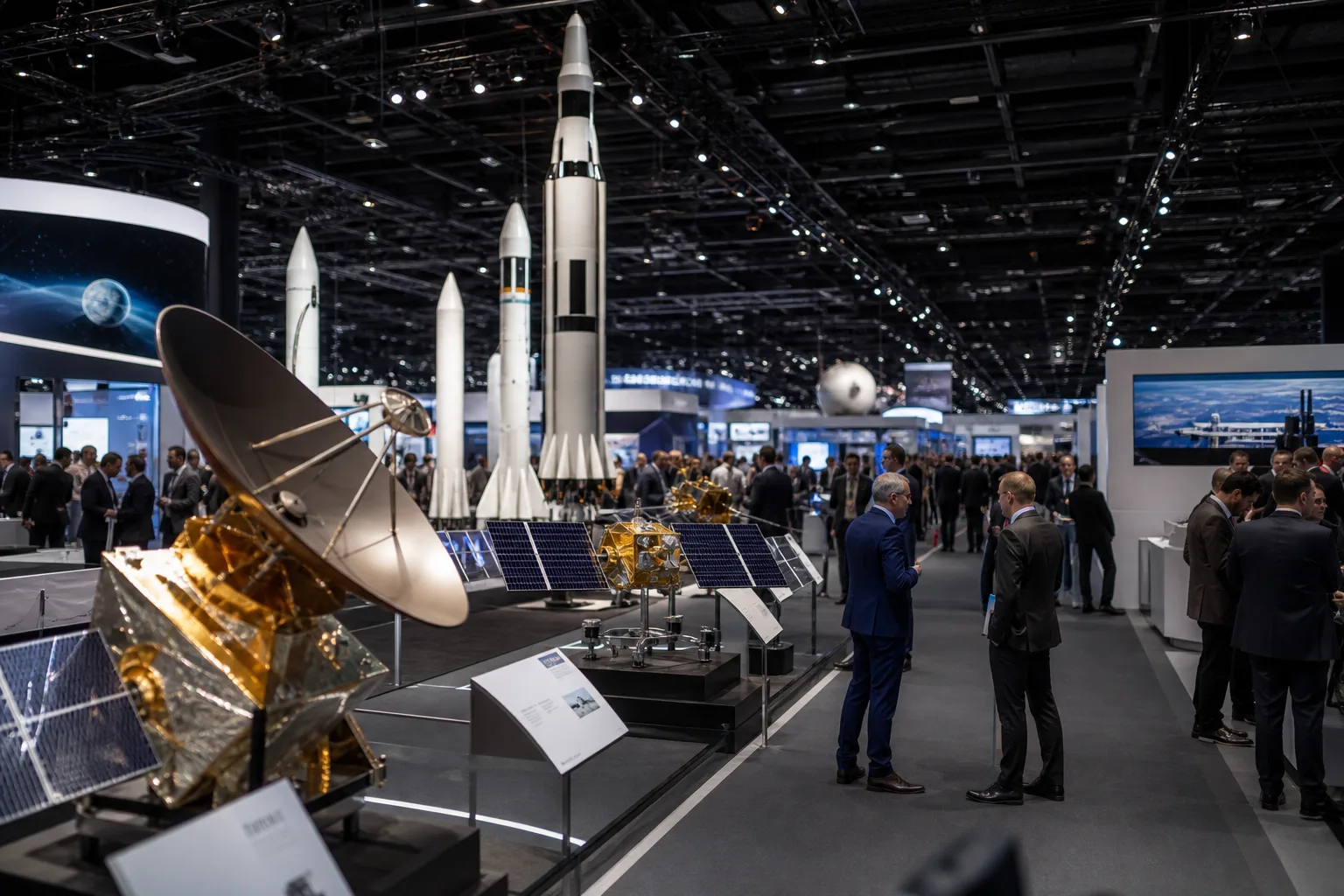
- ESA space priorities in 2026 centre on exploration, resilience, and the long-term health of Europe’s space industry.
- ESA Director General Josef Aschbacher briefed media to outline ESA space priorities directly.
- Europe faces growing pressure to compete with the US and China on launch capability, satellite infrastructure, and deep-space ambitions.
- The ILA Berlin briefing signals ESA is taking a more assertive public stance on where European space investment must go next.
Table of Contents
ESA Space Priorities Take Centre Stage at ILA Berlin 2026
When ESA Director General Josef Aschbacher recently briefed media representatives, it wasn’t just a routine press briefing. The ESA space priorities he laid out — spanning exploration, infrastructure resilience, and the structural future of Europe’s space sector — reflect an agency that knows exactly what’s at stake, and isn’t shy about saying so. Europe’s position in the global space race has never been more uncertain, and Aschbacher used the platform to make the case that the continent needs to move faster, invest smarter, and stop depending on others to get its payloads off the ground.

ILA Berlin is one of the most important aerospace events on the European calendar. Held at Berlin Brandenburg Airport, it draws defence contractors, commercial launch providers, satellite manufacturers, and government delegations from across the continent. For ESA, showing up with a clear narrative here isn’t optional — it’s a statement of intent to the industry partners and member state representatives who ultimately fund and shape the agency’s programmes.
Why Resilience Is No Longer Just a Buzzword
Of the themes Aschbacher addressed, resilience may be the one that carries the most political weight right now. Europe’s access to space has looked uncomfortably fragile over the past few years. The retirement of Ariane 5, delays in getting Ariane 6 to a reliable operational cadence, and the fallout from Russia’s invasion of Ukraine — which grounded Soyuz launches from Kourou almost overnight — exposed just how thin the margin was. ESA space priorities have shifted accordingly, with independent and reliable launch capability sitting near the top of the agenda.
It’s not just about rockets. Resilience in the European space context means ensuring that critical services — Earth observation, navigation via Galileo, secure communications — can’t be switched off or disrupted by geopolitical events outside Europe’s control. When you’re talking about infrastructure that underpins everything from agricultural planning to military logistics, that’s a serious conversation. Aschbacher’s willingness to frame it in those terms publicly is itself significant.

Exploration Ambitions: Where Does Europe Fit?
On the exploration front, ESA space priorities reflect a careful balancing act. The agency is a partner in NASA’s Artemis programme — European Service Module units have been essential to the Orion spacecraft — and ESA astronauts are in the pipeline for lunar surface missions. But Europe isn’t just a subcontractor in someone else’s story. Aschbacher has been consistent in pushing for a more defined European identity in deep-space exploration, one that goes beyond providing hardware for American-led missions.
There’s also Mars. ESA’s ExoMars programme had a turbulent few years following the severing of ties with Russia’s Roscosmos, which had been a key partner on the Rosalind Franklin rover mission. ESA has since been working to get that mission back on track with a new launch strategy, and it remains a symbol of Europe’s ambition to do serious science beyond Earth orbit on its own terms. The question of timeline and funding is never far away, but at ILA Berlin the framing was forward-looking.
You also can’t have a conversation about European exploration ambitions without acknowledging the commercial dimension. SpaceX has fundamentally changed what’s economically possible in space. ESA’s own space transportation agenda acknowledges that the agency needs a thriving commercial ecosystem around it — not just traditional prime contractors, but startups and scale-ups capable of moving at a different pace. Getting that ecosystem to genuinely flourish in Europe, rather than watching talent and capital drift to the US, is one of the defining challenges Aschbacher faces.
The Future of the European Space Sector
Perhaps the most strategically loaded part of the ILA briefing was the discussion of the European space sector’s future as an industry. Europe has world-class capabilities — Airbus Defence and Space, Thales Alenia Space, OHB, and a growing constellation of newer players — but it’s been slower than the US or even some Asian competitors in converting that capability into a self-sustaining commercial engine. Government contracts still dominate the revenue picture for most European space companies in a way that their American counterparts have been moving away from.
Aschbacher’s framing at ILA suggests ESA is thinking hard about how to change that dynamic. The agency’s role isn’t just to commission satellites and fund science missions — it increasingly needs to act as a catalyst, de-risking investment for private capital and creating the conditions for a European commercial space economy that can compete on the world stage. That means procurement reform, it means new financial instruments, and it means being honest with member states about the scale of investment required to stay relevant.
The comparison with defence spending is apt. Europe spent years underfunding NATO commitments and then had a sharp awakening about the consequences. Space infrastructure — dual-use, strategically vital, and increasingly contested — deserves the same level of seriousness. There are signs that message is landing in Brussels and in national capitals, but turning political will into budgets takes time that the sector can’t always afford to wait for.
What the ILA Briefing Signals for ESA’s Direction
Reading between the lines of Aschbacher’s media briefing, a few things stand out. ESA space priorities in 2026 aren’t just a wish list — they’re a response to a genuinely changed strategic environment. The agency is operating in a world where space is contested, commercial, and critical to national security in ways it simply wasn’t a decade ago. The old model of patient, consensus-driven European space governance is under pressure to adapt.
Aschbacher has shown he’s willing to make that case loudly. Whether ESA’s member states respond with the funding and political commitment the moment requires is the bigger question. ILA Berlin 2026 won’t be the last place he makes that argument — but it may prove to be one of the more consequential ones.