

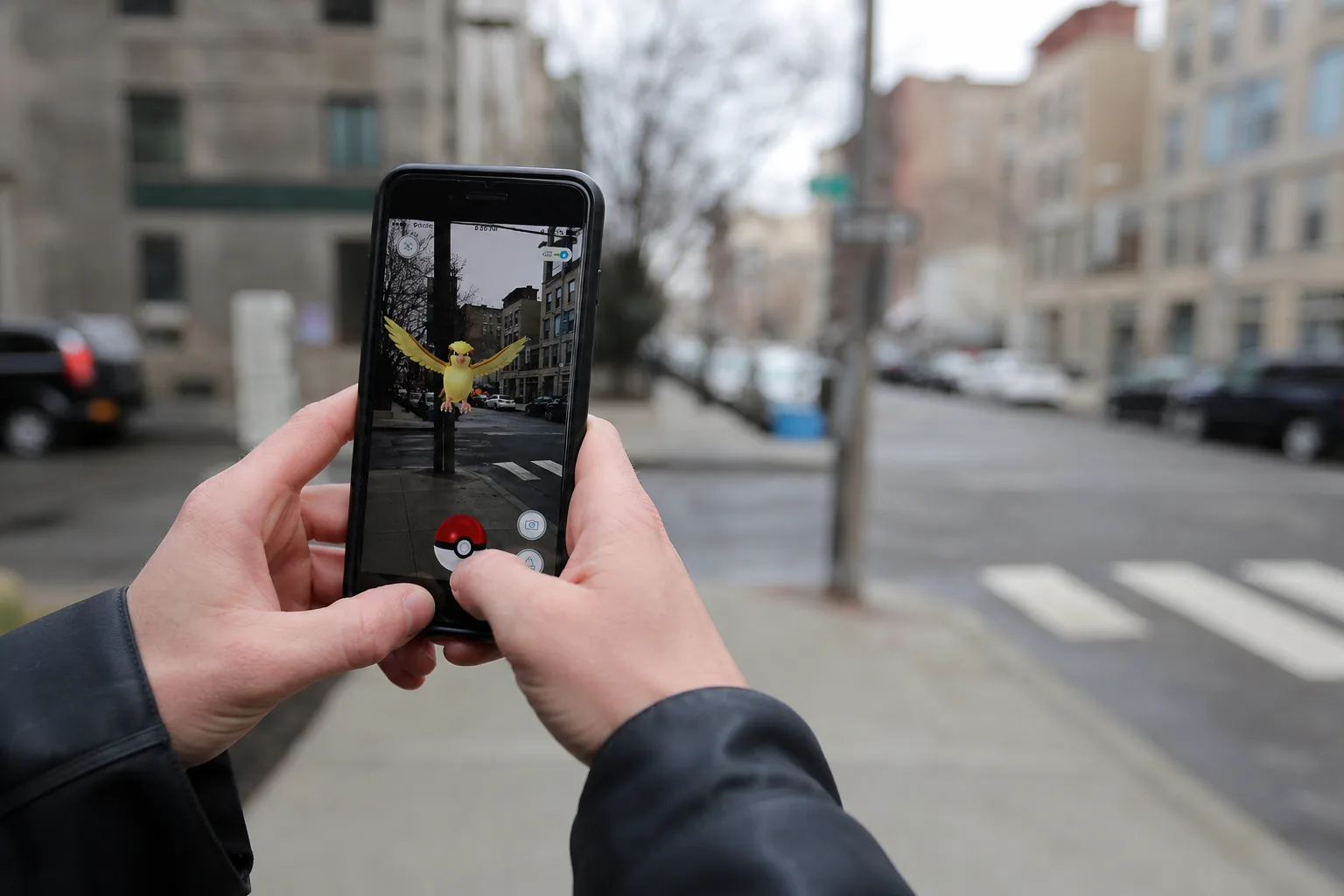
- Pokémon Go drone training concerns have resurfaced after a Dutch report linked player scan data to military navigation systems.
- Niantic Spatial, a spin-off from Niantic, is collaborating with Vantor, a geospatial firm with known government and defence contracts.
- No single document directly proves player scans ended up in combat systems, but the circumstantial chain is difficult to ignore.
- With GPS jamming now a continent-scale capability, camera-based Visual Positioning Systems are becoming critical to modern drone warfare.
Table of Contents
The Pokémon Go Drone Training Question Nobody Asked
The Pokémon Go drone training story is one of those uncomfortable tech narratives that arrives slowly, then all at once. For years, the casual assumption was that Niantic’s data harvesting was a quirky footnote — the price you paid for catching a Pikachu in your local park. A new investigation by Dutch publication Trouw is now arguing that the price tag may have been significantly steeper than anyone imagined, potentially extending to battlefield applications most players never signed up for.
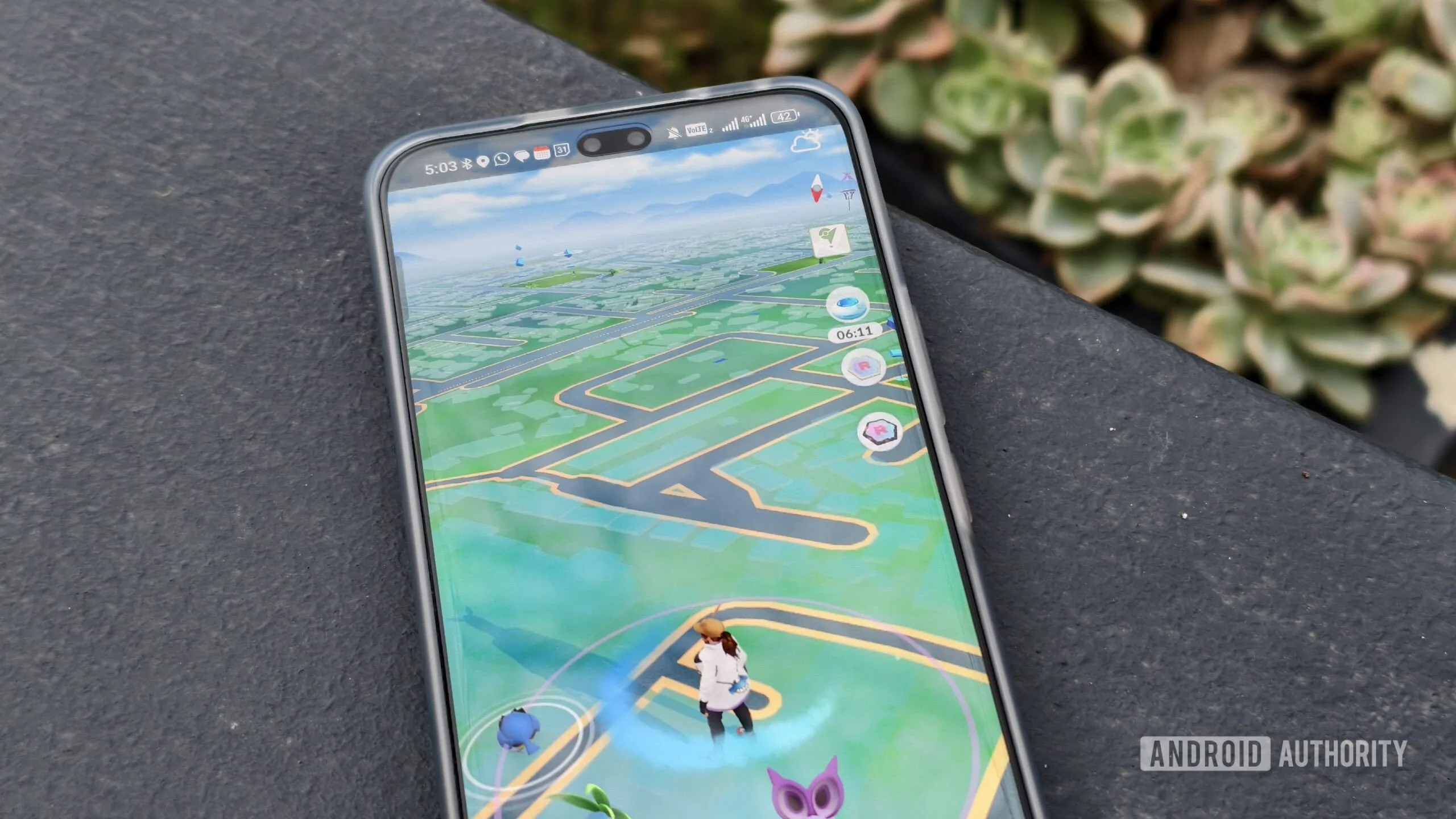
The core question is this: did millions of ordinary people, wandering streets and parks with their phones raised, unwittingly contribute to Pokémon Go drone training by helping build systems that now help military drones identify and navigate to targets? The honest answer, at this point, is that we don’t know for certain — but the available evidence makes for uncomfortable reading.
How Pokémon Go Became One of the World’s Biggest Mapping Projects
When Pokémon Go launched in July 2016, it became a cultural moment almost overnight. People walking into traffic, trespassing in cemeteries, congregating in public parks at midnight. The game was genuinely unlike anything that had come before it in terms of mainstream augmented reality adoption.
What was less discussed at the time was what Niantic was quietly building on the back of all that enthusiasm. The game’s mechanics actively encouraged players to scan real-world locations — PokéStops, Gyms, and later explicit ‘Scan a PokéStop’ missions — submitting 3D visual data of their surroundings in exchange for in-game bonuses. Multiply that by tens of millions of active players across dozens of countries, and you have what is arguably one of the most extensive crowdsourced visual mapping operations ever conducted. Researchers and journalists now describe this process as effective Pokémon Go drone training at a global scale.
Niantic was never shy about its broader ambitions. The company has consistently described its goal as building a ‘living map of the world’ — a persistent, photorealistic 3D model of real environments that could underpin future augmented reality applications. The Visual Positioning System, or VPS, is the technical expression of that goal. Where GPS tells a device where it is based on satellite timing, a VPS tells a device where it is based purely on what the camera can see, matching imagery against a reference database of previously scanned environments. It’s an elegant idea. It’s also, as it turns out, extremely useful for things beyond catching fictional monsters.
Niantic Spatial, Vantor, and the Defence Connection
Last year, Niantic spun off its VPS and geospatial mapping work into a separate entity called Niantic Spatial. The move was framed publicly as a way to accelerate commercial development of the technology across industries beyond gaming — logistics, robotics, enterprise AR. Standard tech-spin narrative. But Trouw’s reporting draws attention to a specific partnership that sits awkwardly alongside that framing.
Niantic Spatial has a working relationship with Vantor, a software firm specialising in geospatial intelligence. Vantor’s portfolio isn’t limited to civilian applications. The company’s work includes developing navigation and guidance systems for drones and autonomous military robots — systems designed to help machines move through and understand physical environments, even when traditional positioning methods aren’t available.
The Pokémon Go drone training concern crystallises right there. The chain, as Trouw constructs it, runs something like this: players scan environments through the game, that data trains Niantic’s VPS models, Niantic Spatial commercialises those models, Vantor licenses or collaborates on that technology, and Vantor’s output ends up in military systems. There’s no single document that locks every link in that chain. Niantic hasn’t confirmed that player-sourced scans specifically fed into models shared with Vantor. But the structure of the relationships makes the Pokémon Go drone training question entirely legitimate.
Why GPS Jamming Makes This More Than a Privacy Story
If this were only a story about data privacy — company collects more than users realise — it would still be worth reporting. But the military-technology angle elevates the stakes considerably, and the timing is not incidental.
Across the past two years, GPS jamming and spoofing have become normalised tools of modern conflict. In Eastern Europe, aircraft navigating near conflict zones have reported GPS failures across areas spanning hundreds of thousands of square kilometres. Commercial aviation in the Baltic region has flagged repeated disruptions. Finland, Estonia, and other NATO members have documented incidents suggesting that state-level actors are actively exploring continental-scale GPS disruption as a strategic capability.
For military planners, that creates a real problem. Drones that depend entirely on GPS become unreliable or useless in contested environments. A visual positioning system — one that navigates by reading the physical world through a camera rather than relying on satellite signals — sidesteps that vulnerability entirely. Which is precisely why defence contractors and government agencies are investing heavily in VPS development right now, and why the origins of the training data underpinning those systems suddenly matters. In that context, Pokémon Go drone training isn’t a fringe theory; it’s a logical inference from the technology’s documented capabilities.
The Pokémon Go drone training concern, then, isn’t just about whether Niantic was transparent with its users. It’s about whether crowdsourced civilian data, gathered through a consumer entertainment product, is an appropriate source for systems used in lethal military applications. Those are very different ethical questions, and they demand very different answers.
What Niantic Has — and Hasn’t — Said
Niantic’s privacy policy does disclose, in fairly broad language, that scan data may be used to improve its mapping and positioning technologies. What it doesn’t do — and arguably can’t do in a living document subject to change — is itemise every downstream use that data might eventually serve. The gap between what a policy technically permits and what a user could reasonably anticipate is enormous, and the Vantor relationship sits squarely in that gap. For many observers, that gap is precisely what makes Pokémon Go drone training such a difficult issue to dismiss.
Neither Niantic nor Niantic Spatial has publicly addressed the Trouw investigation in detail at the time of writing. Vantor hasn’t commented publicly either. That silence isn’t itself evidence of wrongdoing — companies routinely don’t comment on partnership specifics — but it doesn’t do anything to dispel the questions being raised.
It’s also worth placing this in a broader context. Niantic is far from the only tech company whose data pipelines lead somewhere users didn’t anticipate. Google Maps has been used for military planning. Social media geotags have been used for targeting. Fitness app Strava reportedly exposed the locations of classified military bases through its user activity heatmaps. The pattern is consistent: consumer-facing apps gather data at scale, the commercial and strategic value of that data extends well beyond the original product, and users find out well after the fact.
The Bigger Question for Anyone Who Plays Mobile Games
The practical implication here goes beyond Pokémon Go specifically. Any app that asks you to scan your environment — AR games, shopping apps that let you ‘try’ furniture in your room, navigation tools that want your camera feed — is gathering spatial data that could, in principle, serve purposes far removed from its stated function. The training data economy is largely invisible to the people whose behaviour and environments constitute it. Pokémon Go drone training is simply the most visible example of a dynamic that almost certainly extends across dozens of popular applications.
Regulators in Europe have been more aggressive than most in trying to address these dynamics. The EU’s GDPR framework imposes real requirements around purpose limitation — data gathered for one purpose shouldn’t simply be repurposed for something entirely different without disclosure. Whether what Niantic and Niantic Spatial have done crosses that line is a question worth putting to data protection authorities, particularly given the defence-adjacent nature of what’s alleged.
As drone warfare continues to evolve and nations race to develop resilient navigation systems that can’t be jammed or spoofed, the value of real-world visual training data will only increase. That makes the Pokémon Go drone training story less of a historic curiosity and more of a preview — a first look at what happens when the world’s most popular location-based game becomes, perhaps unintentionally, one of the world’s most prolific military mapping tools.
Frequently Asked Questions
What is the Pokémon Go drone training controversy about?
The Pokémon Go drone training controversy centres on concerns that environmental scans submitted by players were used to develop Niantic’s Visual Positioning System, which may have ultimately informed military drone navigation tools built by a partner firm called Vantor. No direct proof has been published, but a report attempts to show how the circumstantial links could imply a trickle-down effect.
What is Niantic Spatial and how does it relate to military drones?
Niantic Spatial is a spin-off launched by Niantic to foster development of its Visual Positioning System technology. It has a collaboration with Vantor, a geospatial intelligence firm that develops navigation systems for drones and military robots, raising questions about where Niantic’s player-sourced training data ultimately ends up.
What is a Visual Positioning System and why does it matter for drones?
A Visual Positioning System uses camera imagery rather than satellite signals to determine location. As governments increasingly develop the ability to disrupt GPS positioning at a large scale, VPS technology is becoming increasingly important for military drones that need reliable navigation in GPS-denied environments.
Did Niantic tell players their scans could be used for military purposes?
There is no indication Niantic explicitly disclosed to players that their environmental scans might contribute to military navigation research. The data use is governed by Niantic’s privacy policy, which most players are unlikely to have read in full before submitting scans in exchange for in-game rewards.

