

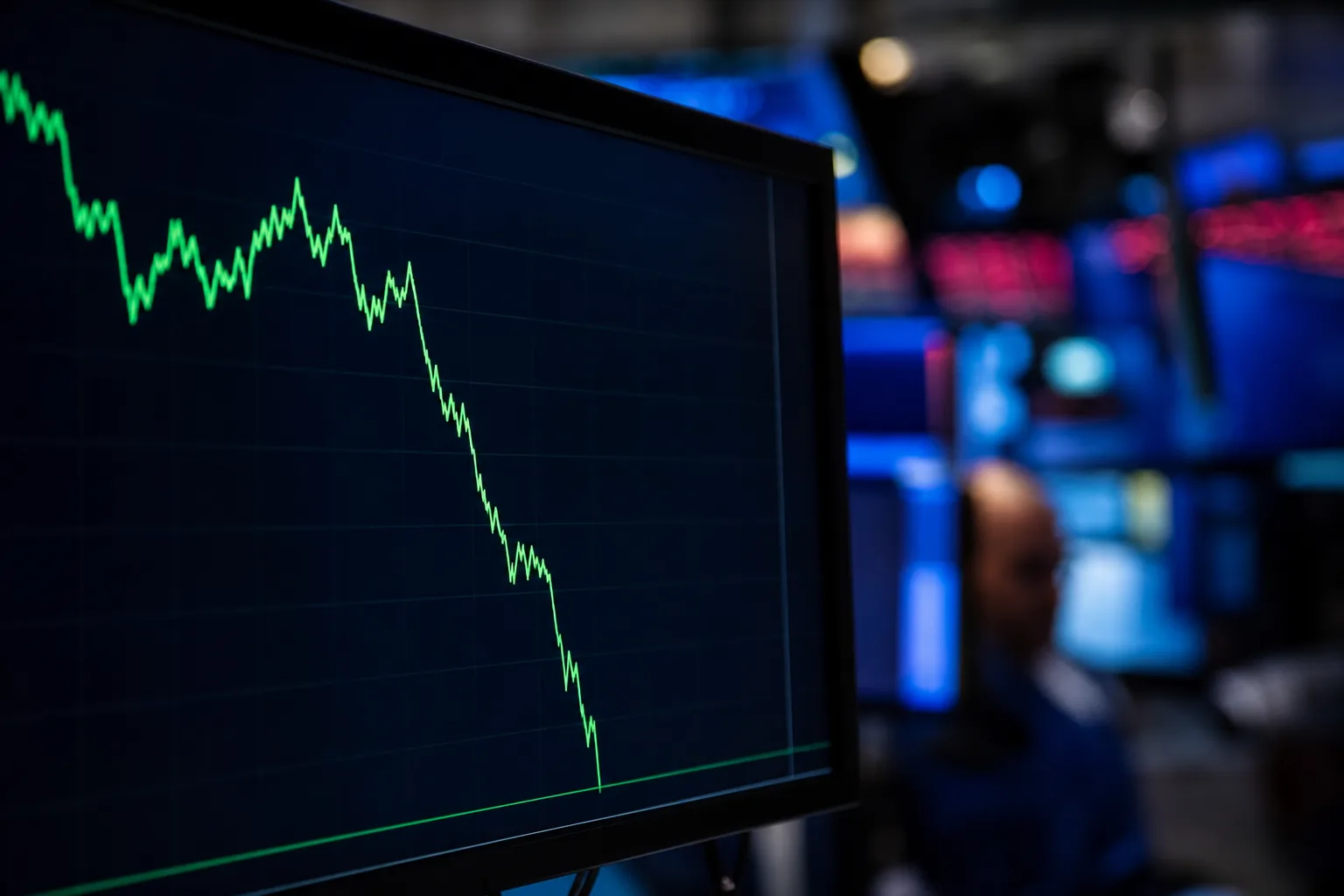
- Avalanche Treasury’s Nasdaq debut saw shares collapse sharply following a merger.
- The Avalanche Treasury Nasdaq listing marks a new vehicle for institutional exposure to the AVAX token.
- The company plans to acquire over $1 billion worth of AVAX tokens over time to accelerate ecosystem growth.
- The rough debut raises questions about investor appetite for crypto-native treasury companies modelled after Strategy.
Table of Contents
Avalanche Treasury Nasdaq Debut: A Rough First Day
The Avalanche Treasury Nasdaq listing arrived with considerable fanfare — and promptly shed a significant portion of its value on day one. The company made its public markets entrance following a merger, positioning itself as a dedicated treasury vehicle for the Avalanche blockchain and its native token, AVAX. Whatever optimism surrounded the deal during negotiations, the market’s opening verdict was unambiguous.
A severe single-day drop is not a minor wobble. It’s the kind of move that resets expectations, forces a rethink of the valuation thesis, and — if history is any guide — tends to linger in the minds of retail investors who bought in early. Whether this represents a genuine mispricing of the Avalanche Treasury Nasdaq merger or a broader cooling of appetite for crypto treasury companies is the question worth examining.
What Avalanche Treasury Actually Does
The company’s core proposition is straightforward, even if the execution carries significant risk: accumulate AVAX at scale, hold it on the balance sheet, and use the public company structure to attract institutional capital that might otherwise stay out of direct crypto markets. The stated ambition is to acquire more than $1 billion worth of AVAX over time — a figure that would make it one of the largest single holders of the token outside of the Avalanche Foundation itself.
The model isn’t new. It’s essentially the same playbook that Michael Saylor wrote for Bitcoin with MicroStrategy — now rebranded as Strategy — taken and applied to a layer-1 smart contract blockchain with a fraction of Bitcoin’s market cap and liquidity. That distinction matters enormously. Bitcoin’s market cap sits north of $1 trillion; AVAX, while a top-20 asset, operates in a far thinner market. Buying $1 billion of AVAX without moving the price in your own favour is a non-trivial operational challenge.
Still, the strategic logic has some coherence. Avalanche has carved out a real niche — particularly in enterprise blockchain deployments and institutional DeFi — and having a publicly listed company actively supporting the ecosystem and token price could, in theory, provide a meaningful tailwind. The Avalanche Treasury Nasdaq vehicle is designed precisely to channel that institutional interest.
The Broader Trend: Crypto Treasury Companies Go Mainstream
Avalanche Treasury isn’t operating in a vacuum. The past twelve months have seen a wave of companies either pivoting to or launching as crypto treasury vehicles, riding enthusiasm generated by Strategy’s extraordinary run. When Strategy’s shares outperformed nearly every asset class in 2024 on the back of its aggressive Bitcoin accumulation, it was inevitable that copycats would emerge — for Bitcoin, for Ethereum, and now for layer-1 tokens like AVAX.
The logic of the Avalanche Treasury Nasdaq listing follows a familiar pattern: list on a major exchange, gain access to traditional capital markets, acquire the underlying asset, and create a leveraged proxy for investors who want crypto exposure inside a regulated equity wrapper. For pension funds, family offices, and retail investors in jurisdictions with clearer equities regulation than crypto regulation, these vehicles genuinely fill a gap.
But the model has visible fault lines. When the underlying asset is Bitcoin — the most liquid, most recognised, most institutionally accepted digital asset in existence — the treasury company model has a built-in floor of credibility. When the underlying asset is AVAX, the same architecture carries additional layers of execution risk, ecosystem risk, and token-specific volatility that are harder to underwrite. Observers watching the Avalanche Treasury Nasdaq stock in its opening sessions will be weighing precisely these concerns.
Reading the Drop: Overpricing, Sentiment, or Something Deeper?
First-day drops of this magnitude on Nasdaq aren’t unheard of for SPAC-adjacent deals or mergers where pre-listing enthusiasm ran hot. The valuation placed on the merger suggested serious backing and serious ambition. But markets often re-price aggressively once a security is actually tradeable and the full range of investors — including short-sellers — can express their views.
There’s also a timing question. The Avalanche Treasury Nasdaq debut came during a period when crypto markets remain sensitive to macro signals, regulatory noise out of Washington, and the general ebb and flow of risk appetite. Even a solidly constructed crypto treasury company can find its debut strangled by broader sentiment if the timing is off.
What’s harder to dismiss is the structural concern: does the market actually want a listed AVAX treasury company right now? The institutional appetite for Bitcoin as a treasury asset has been validated by ETF inflows and corporate balance sheet adoption. The same consensus hasn’t formed around altcoin-native treasury vehicles. That’s not a death sentence for the model, but it does mean Avalanche Treasury has a harder job building conviction than its Bitcoin-focused peers.
What Comes Next for Avalanche Treasury
The company’s path forward hinges on a few things. First, whether it can begin accumulating AVAX at scale without triggering adverse price dynamics. Second, whether the Avalanche ecosystem itself continues to grow — particularly in the institutional DeFi and gaming sectors where Avalanche has been most active. Third, and most practically, whether the Avalanche Treasury Nasdaq stock can stabilise and attract the kind of long-horizon investors the treasury model requires.
A steep opening drop doesn’t necessarily mean the story is over. Several companies have stumbled badly on debut and recovered — but recovery typically requires either a sharp improvement in fundamentals or a change in market conditions that re-rates the asset class as a whole. For Avalanche Treasury, the best advertisement it could produce would be AVAX itself performing strongly as the company builds its position.
The wider implication here extends beyond one bad debut. If crypto treasury companies start proliferating across different layer-1 tokens — each listing on Nasdaq or NYSE with billion-dollar accumulation ambitions — markets will eventually have to develop a more rigorous framework for valuing them. Right now, that framework is still being built in real time, one volatile opening day at a time.

