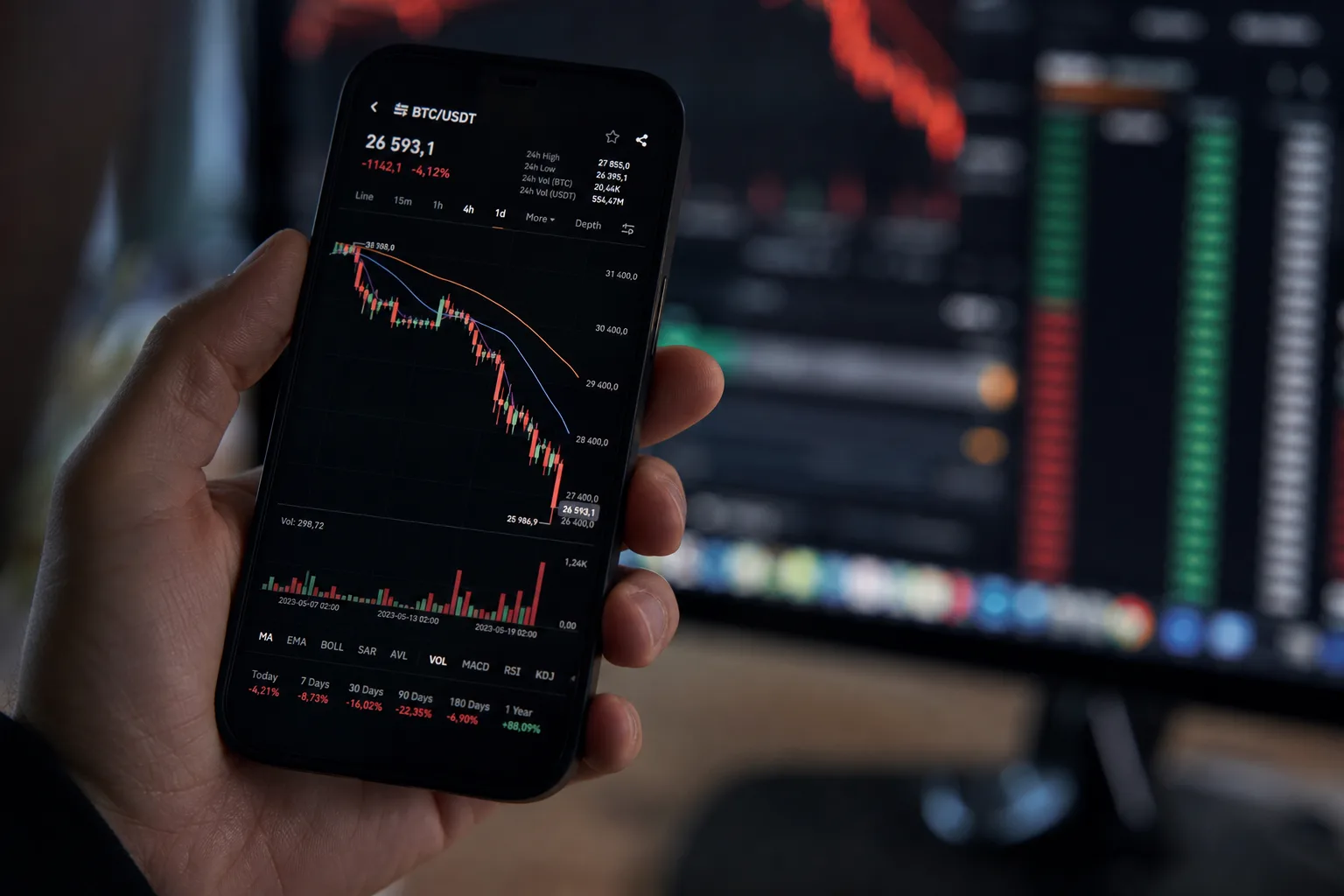
The XRP price is clinging to the $1 mark by its fingernails — and right now, that line looks increasingly fragile. The token briefly touched $1.01, marking its worst level of the year and sitting dangerously close to territory it hasn’t visited since November 2024. A 43% year-to-date decline is a brutal number by any measure. But strip away the price chart for a moment, and the picture onchain looks surprisingly different.
- XRP price has dropped 43% year-to-date in 2026, briefly touching $1.01 — its lowest level since November 2024.
- XRP price may be forming a bottom as whale wallets show consistent net accumulation of 5.14 million XRP per day.
- Binance’s XRP reserves fell by roughly 100 million tokens in one month, suggesting coins are moving to cold storage.
- Spot XRP ETFs have attracted $243 million in cumulative inflows since April, reflecting steady institutional demand.
Table of Contents
XRP Price Under Pressure — But Onchain Data Tells Another Story
Price and sentiment have a habit of diverging before meaningful reversals, and that appears to be exactly what’s playing out with XRP right now. While short-term traders are watching the $1 threshold with genuine anxiety, the data flowing across exchanges and blockchain analytics platforms paints a portrait of accumulation rather than panic selling.
Crypto analyst Amr Taha, tracking data through CryptoQuant, flagged a striking shift at Binance specifically. The exchange’s XRP reserve has tumbled to its lowest point since March, shedding roughly 100 million XRP over the past month alone. As of June 25, Binance held approximately 2.68 billion XRP, down from 2.78 billion on May 12. That’s not a rounding error — it’s the largest absolute outflow among major trading platforms during this stretch.
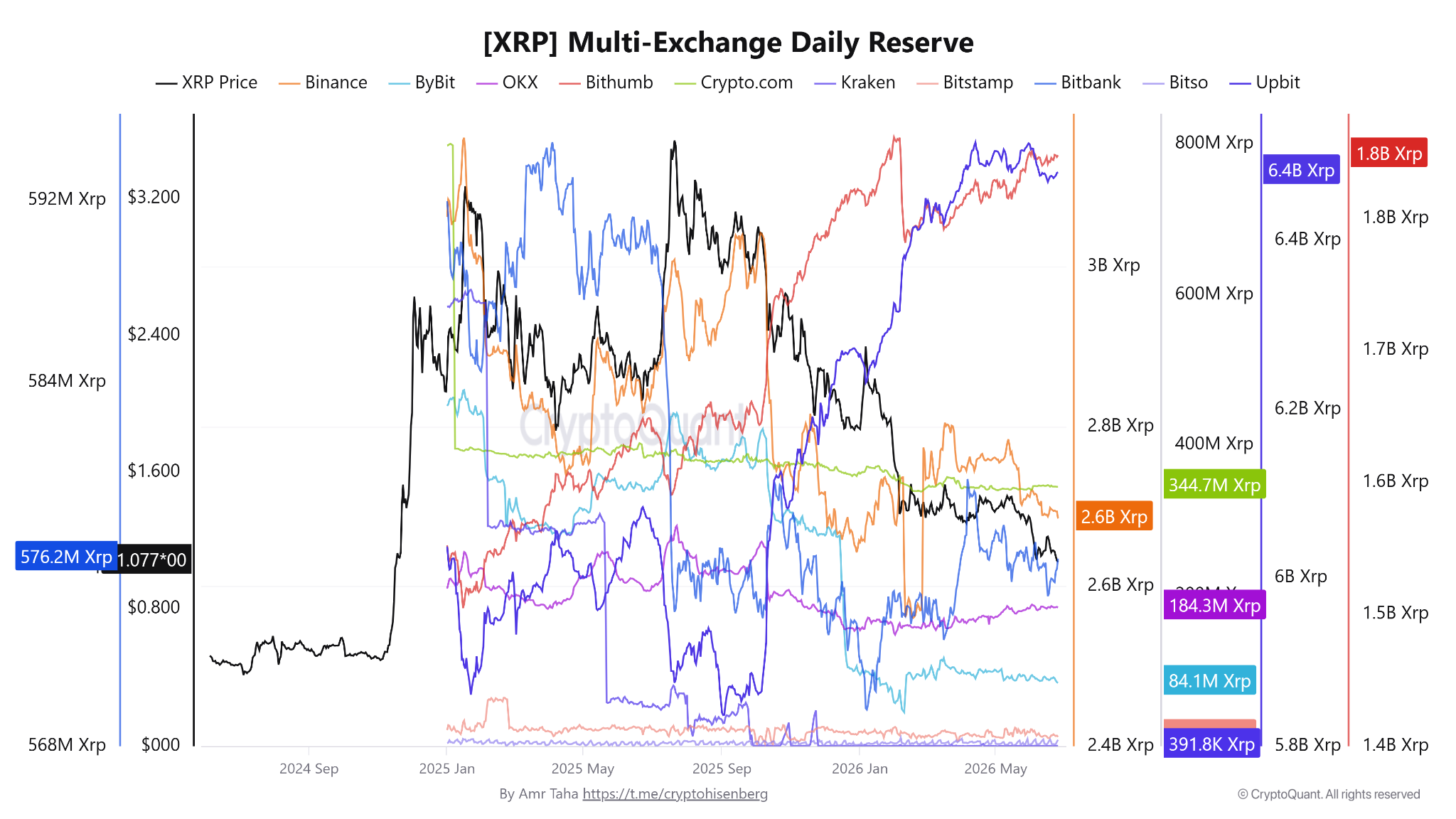
The trend isn’t isolated to Binance. Upbit’s XRP reserve dropped from 2.51 billion to 2.48 billion between May 31 and June 25. Bybit’s holdings fell from 92 million to 82 million XRP between June 2 and June 25 — a steeper percentage decline than any other major platform. Across the board, XRP is moving off exchanges, and that matters for anyone tracking the XRP price closely.
The conventional read on falling exchange balances is straightforward: coins that leave exchanges are generally headed to cold storage or self-custody wallets. They’re not positioned for immediate sale. When that trend persists across multiple platforms simultaneously, it tends to reflect a broader shift in holder intent — from short-term trading to longer-term conviction.
Seven Consecutive Days of Net Withdrawals on Binance
Taha also highlighted what he described as a significant shift in Binance transaction behaviour. Since June 17, XRP withdrawal transactions on the exchange have outnumbered deposits for seven straight days. By June 23, the seven-day withdrawal share had climbed to 53.8% — its highest reading since June 2024 — while the deposit share fell to 46.1%, the weakest since the same period.
It’s worth being precise about what this metric tracks: it measures transaction count, not raw XRP volume. So it’s telling us that users are initiating more withdrawal actions than deposit actions, regardless of the size of each transaction. The qualitative signal — that users are pulling coins away from the exchange rather than sending them in — has now persisted for the longest unbroken stretch in approximately a year.
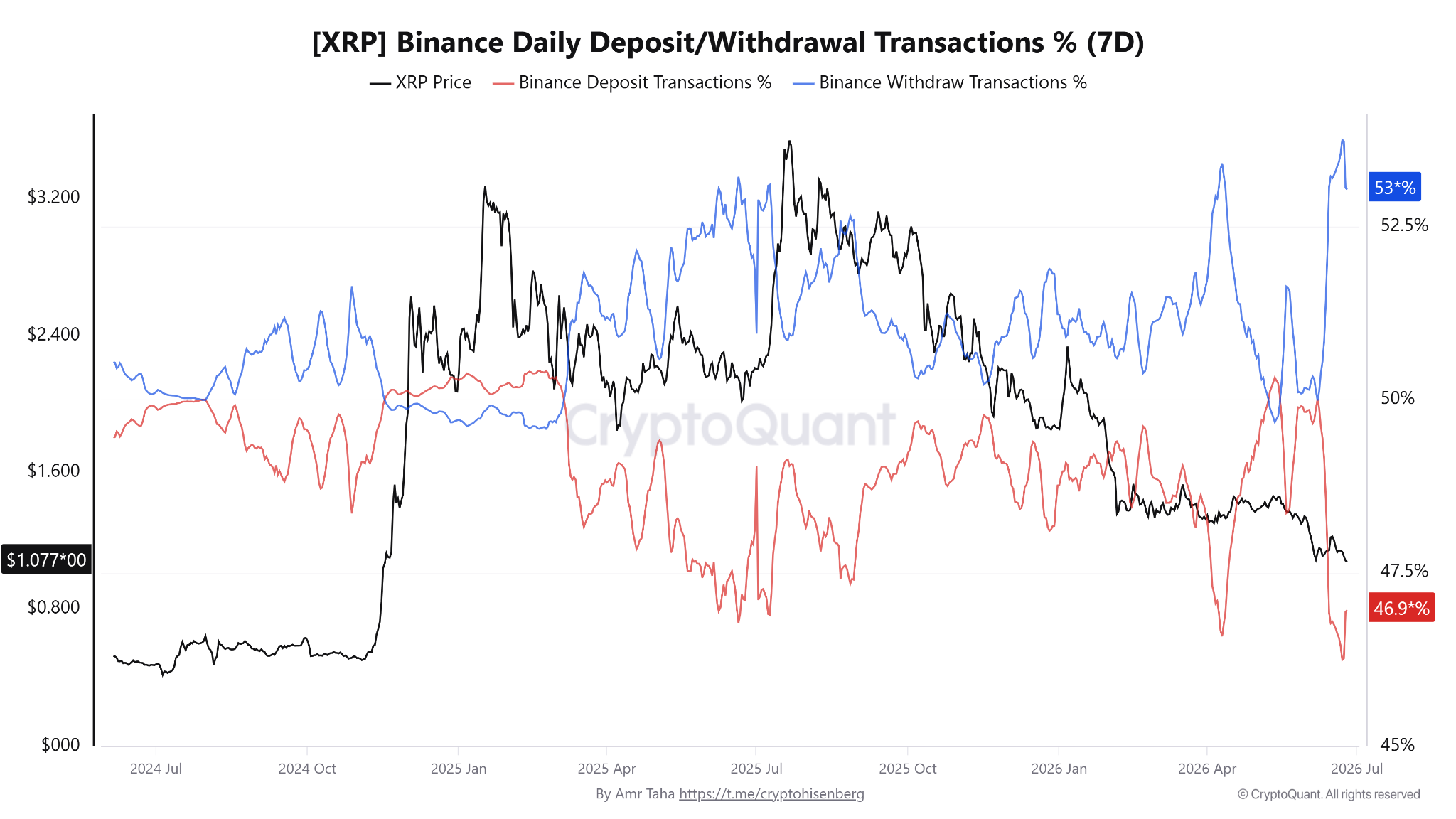
That streak coincides with the XRP price sitting near annual lows. In other words, the people who are moving coins aren’t doing it to sell into weakness — they appear to be buying the dip and taking custody. That’s a psychologically meaningful pattern, even if it doesn’t guarantee a price floor.
Whale Accumulation Remains Steady Throughout 2026
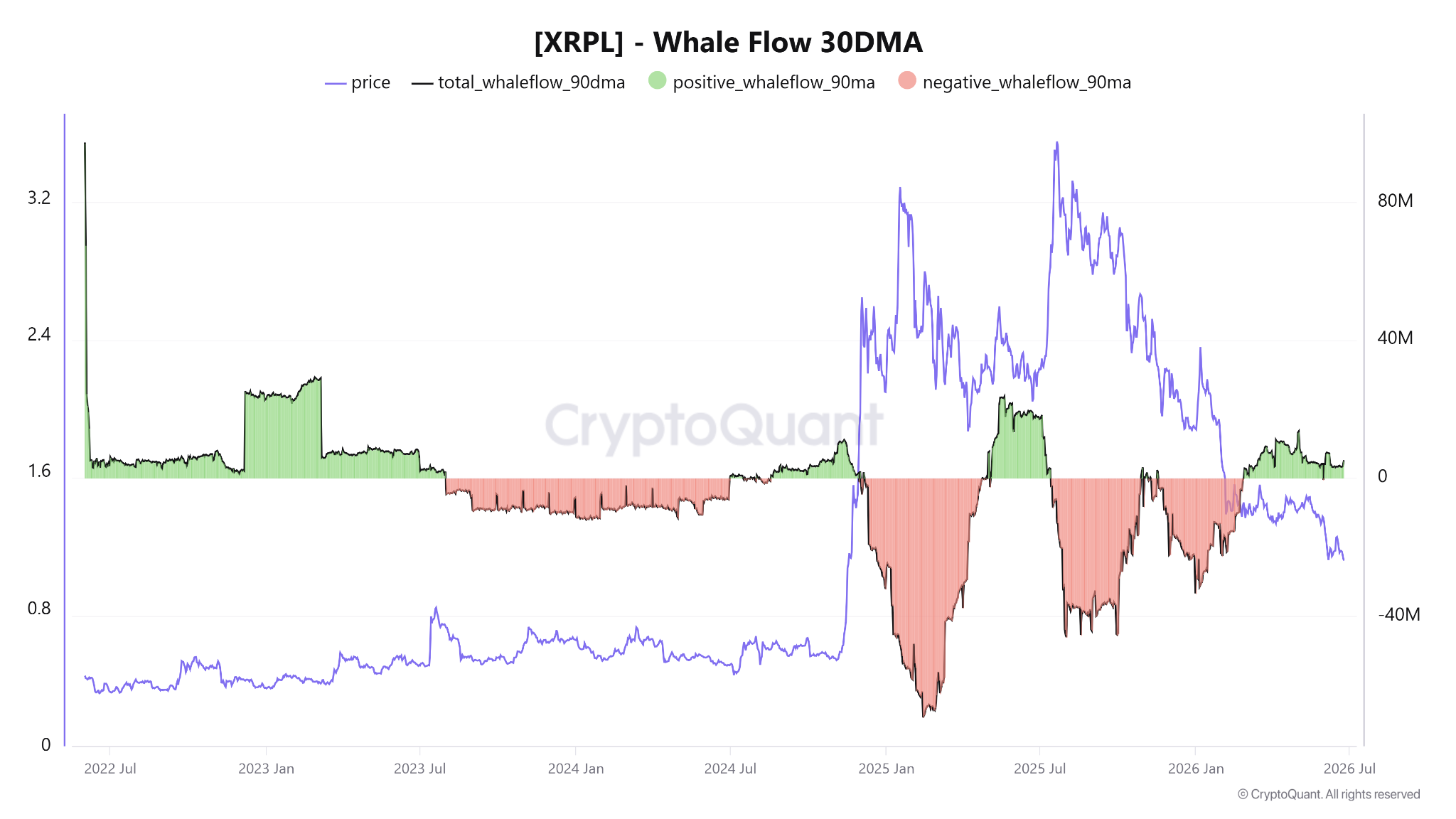
Large wallet behaviour adds further weight to the accumulation narrative. XRP whale flow on the 90-day moving average has remained positive throughout the quarter, averaging 5.143 million XRP per day in net inflows to large wallets. These aren’t retail traders; these are holders with enough capital to move markets. Consistent daily accumulation at that scale — sustained through a 43% drawdown — suggests this cohort sees value at current XRP price levels rather than a reason to exit.
This kind of divergence between price action and large-holder behaviour has been a recurring feature of crypto cycles. It doesn’t make a recovery inevitable or imminent, but it does suggest the selling pressure isn’t coming from the people with the biggest positions. When whales are net buyers while retail sentiment sours, that asymmetry tends to be informative.
Institutional Demand: Spot XRP ETFs Cross $243 Million Since April
Institutional participation is arguably the most structurally interesting development here. Spot XRP ETFs — a product category that barely existed a year ago — have now attracted $243 million in cumulative net inflows since April 2026. June alone added $31 million, with $2 million flowing in on June 24.
These aren’t speculative numbers for a nascent product. In a market environment where the XRP price has shed nearly half its value year-to-date, institutional buyers are still deploying capital through regulated wrappers. That’s a different kind of demand signal than exchange flows — it reflects portfolio allocation decisions made by funds and advisors who typically operate with longer time horizons and stricter due diligence requirements.
The ETF inflow story also speaks to the broader institutionalisation of crypto markets that’s been underway since the approval of spot Bitcoin ETFs in the United States in early 2024. XRP’s ETF product gaining traction during a price drawdown is actually more meaningful than inflows during a rally — it suggests demand is driven by valuation, not momentum chasing.
What Happens If XRP Price Breaks Below $1?
Technically speaking, the picture for XRP remains bearish on higher timeframes. The token is trading just above a level that, if broken, would represent its first sub-$1 close since November 2024. The higher-time-frame market structure hasn’t shown signs of reversal, and momentum indicators haven’t given bulls much to celebrate this year.
If the XRP price decline does extend, the next meaningful area on the chart is a fair value gap stretching from $1 down to $0.63. This is an unfilled price region created during the explosive rally of late 2024, when XRP surged rapidly enough to leave a gap between supply and demand zones. In technical analysis, these gaps tend to act as magnets — prices frequently revisit them before establishing a firmer base.
Versan Aljarrah, founder of Black Swan Capitalist, is focused on a much longer lens. He argues that XRP has spent years constructing a large accumulation range on both weekly and monthly charts, characterised by a series of higher lows. His view is that the XRP price is still deep within a multi-year base — and that extended consolidations of this nature historically produce powerful directional moves once price eventually breaks the range. His price target sits at $10, which would represent roughly a 900% gain from current levels.
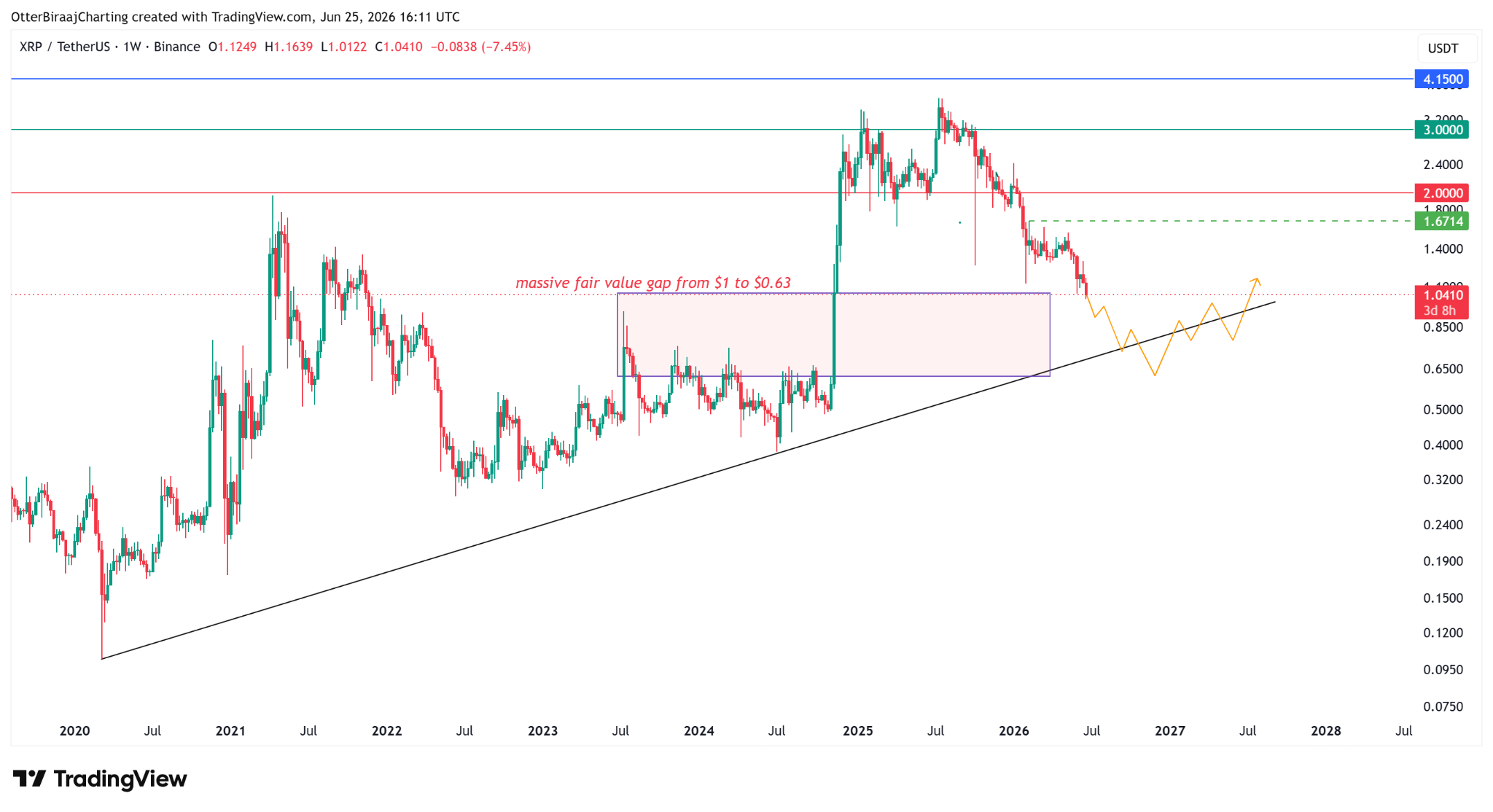
That’s an ambitious call, and it’s worth treating any long-range crypto price target with appropriate scepticism. But the structural argument — that a multi-year base with higher lows is a constructive technical formation — has genuine merit regardless of where one lands on the specific number.
The Gap Between Price and Network Health
What makes the current XRP situation genuinely interesting is the disconnect between what the market is pricing and what the network data is showing. The XRP price is telling a bearish story. Falling reserves, persistent withdrawals, whale accumulation, and institutional ETF buying are telling a different one.
These divergences don’t always resolve in favour of the onchain signal — markets can stay irrational far longer than any model suggests. But the weight of evidence here is notable: multiple independent indicators are pointing in the same direction at the same time, during a period of maximum price pessimism.
Whether $1 holds or XRP dips into the fair value gap below it, the underlying network positioning looks materially different from what you’d expect if large, informed participants were positioning for a prolonged collapse. The next few weeks will test whether that conviction is well-placed — and whether the gap between the price and the data eventually closes from below or from above.
Frequently Asked Questions
Why is XRP price falling in 2026?
XRP price has declined 43% year-to-date, driven by broader crypto market weakness. The token hit $1.01 in late June 2026, its lowest point since November 2024, and remains technically bearish on higher timeframes with no confirmed reversal yet.
What does declining exchange supply mean for XRP price?
When XRP moves off exchanges, it typically means holders are storing coins rather than preparing to sell. Falling exchange supply across Binance, Upbit, and Bybit suggests net accumulation — historically a constructive signal for future XRP price recovery.
How much have spot XRP ETFs raised since April 2026?
Spot XRP ETFs have accumulated $243 million in cumulative net inflows since April 2026, including $31 million in June alone. This represents consistent institutional participation even as XRP price has continued declining.
What is the key support level if XRP price drops below $1?
If XRP price breaks below $1, the next meaningful area is a fair value gap between $1 and $0.63 — an unfilled price region created during the sharp late-2024 rally. This zone could attract buyers if the decline extends further in coming weeks.